

Greetings from St. Louis

My name is Rachel Gagnon, and I’m writing from the Pulitzer Foundation for the Arts - a “non-museum” located in the middle of a city that’s located in the middle of America.
The Pulitzer has been in St. Louis for seven years now, and I’ve been a part of it for over four of them. Like many young arts organizations, the Pulitzer has grown dramatically over the years and continues to evolve. Unlike many, we’re difficult to define, which can be considered a part of our identity too – hence the “non-museum” part. Over the next few posts I’ll be writing about that, our approach to exhibitions and programming, blog and web topics (of course!) and the arts landscape that we’re a part of in this city. Stay tuned!
New guest blogger: Rachel Gagnon

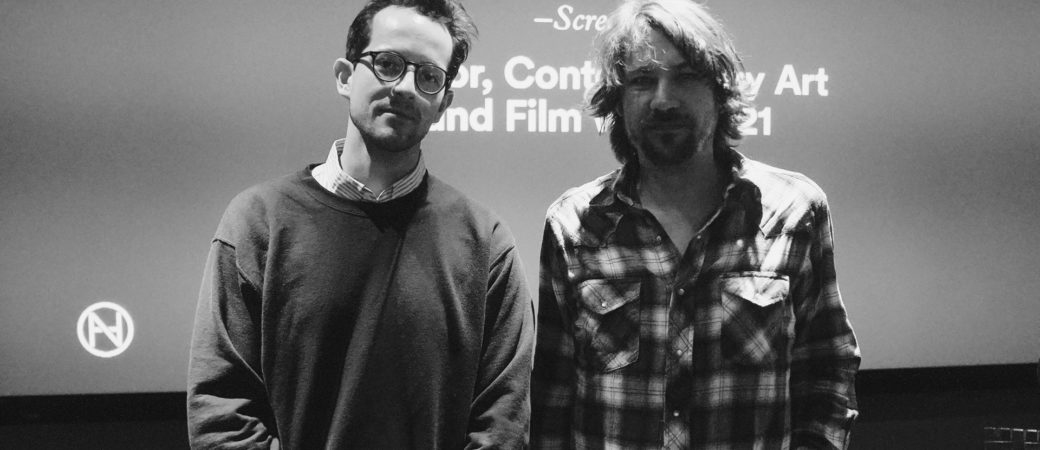
Thanks to Hrag Vartanian for a record number of fantastic posts. You can follow his post-Art21 adventures back on his own site, www.hragvartanian.com. For the next two weeks, Rachel Gagnon will be blogging with us. Rachel graduated from the University of Missouri-Columbia and has worked at the Pulitzer Foundation for the Arts in St. Louis ever since. As the Public Relations Coordinator, she helped establish the PR and marketing structure for the institution. Three years ago, she co-founded a shared blog with the Contemporary Art Museum St. Louis–2buildings1blog–which was one of the first museo-blogs on the scene. With the addition of Website Coordinator to her title, she helped overhaul the Pulitzer’s website, leading it from a static source of information to the dynamic site it is today. This site, along with online exhibition catalogues, have won numerous awards from local AIGA to Webby Honoree, in addition to a recent Communication Arts web pick of the day.
Do-Ho Suh at Louis Vuitton in Paris

On view at Espace Louis Vuitton through December 31, 2008, Metamorphoses: Korean Trajectories features Korean-born artists who work with ideas of transformation, particularly in the human figure, society and architecture.
Since the 1988 Seoul Olympic Games, Korea has continued to evolve economically and technologically, and has simultaneously witnessed the rise of contemporary artists, reflecting the country’s dynamic growth. Metamorphoses explores “a wealth of metaphors for a post-modern humanity in which humor and the absurd serve to question the representation of man.” Curated by Hervé Mikaeloff, the exhibition includes Do-Ho Suh (Season 2), Beom Kim, Hyungkoo Lee, Ham Jin, Sookyung Yee, Yong-seok Oh, Heryun Kim, Jeon Joonho, Suejin Chung, and Flying City Collective. The Collective, which consists of artists who interpret the city as a mental map and apply their interpretations to urban reality, has created an installation based on an imaginary metropolis in a window of the Maison des Champs-Elysées.
L’Espace Louis Vuitton is located at 101 Avenue des Champs-Elysées.
Pound for Pound

If appropriation is the highest form of flattery, then I love this Barbara Kruger Photoshop Tutorial. Of course it couldn’t be called plagiarism because there is no such thing in the art world, is there? We shall pick up this thread another time. In the interim, compare a Damien Hirst spin painting to one done by Alfons Schilling, made fifty years ago! Quite the spinning image.
It has been steady entertainment reading the numerous takes on the Hirst sale at Sotheby’s, from Robert Hughes’ evisceration of the “simple-minded” works to Ben Street’s less fuming Letter from London. Guardian writer Carol Jacobi even chimes in that Hirst is merely following in the footsteps of the 19th-century William Holman Hunt, comparing the AYBA’s (Aging Young British Artist) sidestepping of his galleries to the pre-Raphaelite painter’s circumvention of the Royal Academy of 1866.
Net take home pay aside, what I find truly staggering in all this is Hirst’s immense production. All 223 of the lots were dated 2008! According to my math, that’s almost one a day so far, and probably a count of many more considering there must be a few formaldehyde lemons laying around the shop. Holman Hunt, in contrast, sold one painting that he had been working on for six years.
It takes money to make money, or at least hire a massive studio. It might be fascinating to compare the Hirst crew to those of other historically prodigious outputters like Man Ray, the Warhol factory or Peter Paul Rubens. Though a more adequate analogy might be stickered to the hyper-paid athletes from the NBA or major league baseball. But the market cannot be faulted for giving the fans what they want. One feeds the other after all, and Michael Jordan would not be the same without his classic Air Jordans.
However, the true defining excess of the contemporary art market is not the crazy prices that living artists are commanding—better artists than philistines, I say—but rather the production costs of their works. Remember the $4.1 million (this is not a misprint) tab for Ai Wei Wei’s Fairytale project at Documenta? Notice the difference in production and prop value from Matthew Barney’s first Cremaster (Cremaster 4) to the last (Cremaster 3)? Long gone are the romanticized notions of a Basquiat squatting in his gallerist’s basement, making do with cheap paints and canvases while churning out masterpieces. Nowadays artists are setting up Motor City-like studios overnight, with a host of live-in assistants grinding pigments around the clock. And this is by no means a bad thing.
What I saw and what I’d like to see…a reality television show called Budget Swap in which two artists–one with a studio of 50 assistants and the other with 50 bucks to his name—test their creative mettle by flip-flopping their production budgets for three months. The artists would share other equivalent variables such as educational background and aesthetic philosophy, in order to even the playing field while isolating the $ factor. What works would come as a result and how would this inform the state of creativity and its indebtedness to production’s coffers, if anything? Or will the cream of the crop always have its say?
Art Fag in the City, IMing with Paddy Johnson

It’s been fun blogging for two weeks on Art21 and I thought it was only appropriate to end with an interview with art blog legend Paddy Johnson. She’s the mastermind behind the fabulously named Art Fag City.
Last week, I caught up with her online.

[According to Paddy, the soundtrack for this chat is: Fleet Foxes’ “White Winter Hymnal” (video)]
Hrag Vartanian: So I saw your tweet today: “Embracing my Maximum Sorrow. I am mediocre. Mediocrity is in me.” I figured you were writing….do you feel mediocre whenever you write even if it’s not true?
Paddy Johnson: To make a short story long, my desk is a TOTAL DISASTER so I was looking at these flyers from Kevin Bewerdorf’s show I saw close to three weeks ago now and the pamphlets, which have this kind of weird corporate/web look to them, ask you to embrace your mediocrity. So I was doing that by twittering mediocrity (Paddy’s recent review of the show is here).
HV: So was that why you were feeling mediocre? They suggested you feel mediocre or you interpreted them that way?
PJ: Well the mantra the PDF asks you to repeat is “I am mediocre, mediocrity is in me…so I did it.”
HV: Wow…that’s kind of deep, or wait…maybe it’s shallow.
PJ: But to answer your question, I think there are times when we all feel mediocre for some reason or another…so I struggle with that sometimes.
HV: Do you ever feel that about art blogging?
PJ: Sometimes, but usually I cure myself of that by rereading posts I’ve forgotten about.
HV: I know you write about new media a lot. Do you consider your blog a form of new media?
PJ: Only in the sense that the Internet is still relatively new and evolving. People are already getting fairly used to using the Internet—it feels increasingly inaccurate to describe publishing that way. To be honest, I think comment moderation (as aspect of blogging that can reasonably be described as new media) is trickier than blogging itself, should a blogger really invest in that aspect of it.

When Art Breaks…Or Was That Part of the Work?
While I was in DUMBO for the art festival last Saturday, I witnessed someone accidentally knocking over a sculpture. It was the work of Minji Kim, a participant in the 2008 Triangle Arts Workshop.
Before the accident, I spoke to Kim and she told me that the piece was about her difficult relationship with her father. She explained it was one that needed lots of attention. To prove her point, she pointed to one column that was covered with Popsicle sticks inscribed with the words of Sylvia Plath.
During the whole time I talked to her she was looking around nervously.
“How did you adhere the 2×4s to the ground?” I asked.
“I didn’t,” she said. At that point I knew why she was on edge—any small movement could destroy the delicate equilibrium.


And then it happened. As I walked away some older woman knocked it down as she appeared to be putting on her jacket.

There was some confusion and people couldn’t figure out what was going on. Kim rushed over and herded some friends to put Humpty Dumpty back together again.


All I could do was wonder if Minji’s relationship with her father was equally catastrophe prone.
Matthew Ritchie | Architect Benjamin Aranda
EXCLUSIVE: Architect Benjamin Aranda, of Aranda/Lasch, discusses his contribution to artist Matthew Ritchie’s anti-pavillion project The Morning Line (2008), produced in collaboration with engineer-architect Daniel Bosia & Arup AGU, and physicists Paul J. Steinhardt and Neil Turok.
Comissioned by Thyssen-Bornemisza Art Contemporary for the 3rd Bienal Internacional de Arte Contemporáneo de Seville, The Morning Line opens today and will be on view through January 11, 2009 at the Centro Andaluz de Arte Contemporáneo in Seville, Spain.
Matthew Ritchie’s artistic mission has been no less ambitious than an attempt to represent the entire universe and the structures of knowledge and belief that we use to understand and visualize it. Ritchie’s encyclopedic project (continually expanding and evolving like the universe itself) stems from his imagination, and is cataloged in a conceptual chart replete with allusions drawn from Judaeo-Christian religion, occult practices, Gnostic traditions, and scientific elements and principles.
Matthew Ritchie is featured in the Season 3 (2003) episode Structures of the Art:21—Art in the Twenty-First Century television series on PBS.

ART21: What conceptual challenges emerged while working on The Morning Line (2008)?
ARANDA: One of the great meetings we had on this project was with the physicist Paul J. Steinhardt, whose theories on the universe influenced the structure of the project. Steinhardt is the physicist who developed the cyclical model of the universe, which is an alternative theory of how the universe was formed with multiple big bangs.
It was a landmark meeting for us because Steinhardt confirmed a suspicion we all had: that at the root scientific breakthroughs — what underlies them — is an enormous amount of intuition. He said that while science is very empirical, some of the initial breakthroughs are formed through these very intuitive moments that are then substantiated through more empirical calculations and research. Continue reading »
Matthew Ritchie Venice Video
On Matthew Ritchie’s The Evening Line project at the Bienniale Architecture in Venice, via MINI Space blog:
It’s not just about architecture here in Venice. Matthew Ritchie is an artist who recreates the universe as art with paper, lights and installation. For the Biennale he has collaborated with Aranda/Lasch and Daniel Bosia/Arup AGU to create a huge installation made up of fractals and site specific designs.
Faster Pussycat, Link, Link

While the financial sector may be ailing, the wealth of links in the blogosphere suggests the Dow Jones of online life continues to climb.
>> Art Fag City has been leading the coverage of the big “Aesthetic of Terror” controversy that surfaced at the Chelsea Art Museum last week when curator Manon Slome quit—the question is why?…it gets a little complicated, so check out all the info on AFC here, here and here;
>> Art News Blog posts about 10 things they hate about art blogging…some of them I can relate to but I’ve never had an artist ask me to sell their work;
>> Ed Winkleman asks if street art is the new barometer of the art market;
>> C-Monster takes a gander at the Outsiders NY extravaganza which includes works by Faile, Bast, Invader, Blu & others;
>> a piece by Banksy surfaces in Soho, but the blogosphere later discovers that it was executed by an ad company with the Brit’s ok…Public Ad Campaign writes: “To say that a collaboration like this between Street Art and the public advertising world ‘takes the air out of this works impact’ is an understatement.”
….um, does someone smell a sellout?; and
>> Joanne McNeil at Tomorrow Museum juxtaposes some radiant paintings by Dan Witz of women and their portable electronic devices with an intriguing exploration of the question we’ve all been dying to have answered (oh wait, maybe that’s just me), “New Media in Fiction: Will There Ever Be an ‘iPhone Novel?‘”
*************
Image caption: A view of an anonymous performance during this past weekend’s Art Under the Bridge Festival in DUMBO.
Tomorrow: When Art Breaks
Farnsworth House Flooded

Record rains on September 14th flooded Mies van der Rohe’s Farnsworth House in Plano, Illinois. 18 inches of water filled the modern masterpiece, damaging fixed wood panels and an armoire, while the movable furniture, which was placed on top of milk crates prior to the flood, was spared. The house stands on columns five feet above ground, which were inadequate against the surfeit of water brought on by Tropical Storm Lowell and remnants of Hurricane Ike.
Decades of suburban development and expansion around the flood plain of the Fox River in Plano have left no place for the rains to seep in. Hence, since it was built more than fifty years ago, the Farnsworth House “has suffered seven 100-year floods” (Edward Lifson). The deluge this time brought water levels 14 feet above normal.
After several days, the waters subsided while damage assessment and relief efforts were quickly mobilized. The architectural landmark will certainly be closed the rest of the year, and significant funds are still needed to assist with the cleanup and restoration. For further updates and ways to contribute, go to the Farnsworth House website.
The house itself is seen as one of the purest examples of modernist architecture in its “pared down minimalism.” Its understatements can almost be extracted one by one in this lovely work, Le Baiser/The Kiss, by Iñigo Manglano-Ovalle (Season 4).