Pop (and) Art

May 30th, 2008

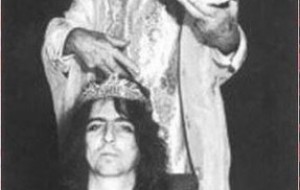
Salvador Dali and Alice Cooper

The relationship between fine art and pop music is characterised most often by a specific historical period in Europe and America, the mid-sixties, which is probably the closest point there has been or will be between the two disciplines. Like its relationship with cinema, art was never completely comfortable with pop music, all smiles in public but laughing behind its back when the coast was clear. In reality, Warhol’s peelable banana on the first Velvet Underground record had little or no relation, aesthetically, to the music it contained. Double Elvis has more to do with Barnett Newman than The King. Maybe that’s partly to do with the unbridgeable gap between them: a still point of time versus three unfolding minutes; in market terms, coy flirtation (at most) versus out-and-out capitulation. In pop music, the commercial imperative has produced some of the greatest masterpieces of twentieth-century culture; in art, selling out retains its weird taboo. I imagine Rirkrit Tiravanija lost a few fans by designing a Gap t-shirt; pop music is so bound into commercialism that no-one bats an eye when Keith Richards poses for Louis Vuitton.

It’s usually implied, as befits Western cultural hierarchy, that art borrows from popular culture — that it redeems it, even — as part of a post-Duchampian mindset that lends the artist a kind of alchemical magic touch. Base matter becomes gold. But it’s when pop music returns the favour, taking art as its inspiration, that stranger and more interesting things happen. The Modern Lovers’ Pablo Picasso, David Bowie’s Andy Warhol, Lou Reed and John Cale’s Songs for Drella album — it’s often when art is transmitted by other means that you end up returning to it, refreshed. Who wouldn’t love Van Gogh after hearing Jonathan Richman’s Vincent Van Gogh: “He loved, he loved life so bad/His paintings had twice the colour other paintings had”?

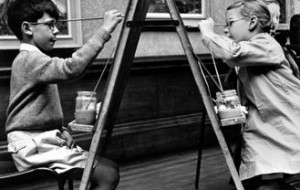
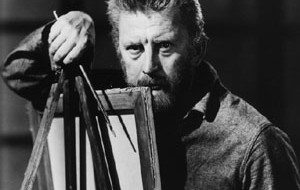
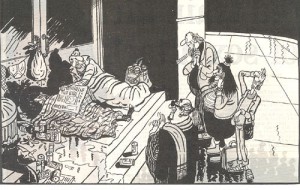
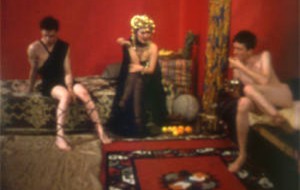
Picture: Salvador Dali (standing) and Alice Cooper (sitting)

Louise Bourgeois’ River Life at Hauser & Wirth

May 30th, 2008

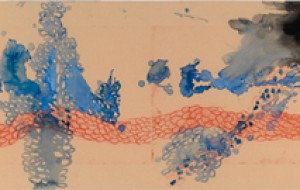
Louise Bourgeois, “La Rivière Gentille.” 2007. Mixed media on paper. Courtesy Hauser & Wirth Zurich.

Opening this Saturday at Hauser & Wirth Zurich is an exhibition of Louise Bourgeois’ (Season 1) beautiful series on paper La Rivière Gentille (2007). Occupying three tiers around the gallery, the 42 medium-scaled mixed media sheets interweave imagery and phrases from a text the artist wrote in the mid 1960’s. Using a continuous palette of blue, red, and black, the series contemplates Bourgeois’ childhood in France, where life was always lived by a river. From the Creuse in Aubusson, to the Seine in Choisy-le-Roi, to the Bièvre in Antony, the river played a primary role in her childhood. The water recounts memories of a planted garden by the river’s bank to dyed skeins hanging from the trees, the latter a reference to the family’s business of tapestry restoration, which required the water’s high tannin level.

Like all of Bourgeois’ imagery, there is a contradiction of appearances and meaning. Water can be life-giving as well as destructive. It is also a metaphor for the unbroken thread weaving past and present, revealing “moments of ecstasy, vivid incidents and dark passages… dwelling upon sensate experience – the physical world of things and the pleasure they bring – whilst summoning the inexorable, onward flow of existence.”

Berliner Salon: First steps in Kraków + Mike Kelley and Raymond Pettibon at auction

May 30th, 2008

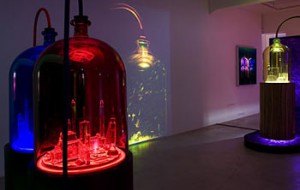
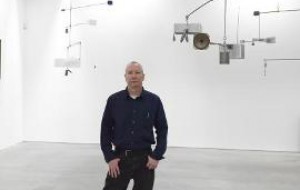
Mike Kelly, “Kandors,” Installation view, 2007. Copyright Fredrick Nilsen. Courtesy Mike Kelly and Jablonk Galerie, Cologne/Berlin.

Yesterday witnessed the inauguration of an exhibition at the National Museum in Kraków, Poland that is being heralded as the “first step towards a collection of Western contemporary art.” In fact, that’s the exhibition’s title. Rafael Jablonka, the owner of two eponymous galleries in Cologne and Berlin, has lent 50 major works from his private collection to the museum for 18 months (with the noted intention of eventually lending them permanently) by Nobuyoshi Araki, Miquel Barceló, Francesco Clemente, Eric Fischl, Mike Kelley (Season 3), David LaChapelle, Sherri Levine, Andreas Slominski, Philip Taaffe and Andy Warhol. The resulting exhibition should be accredited with providing a solid contemporary base for the museum’s infant post-modern collection, with represented mediums ranging from Levine’s conceptual minimal sculpture and LaChapelle’s sensationally staged photography to Taaffe’s large-scale organic abstraction and Kelley’s technicolor videos inspired by pop culture comics.

The opening, which I was fortunate to attend, was packed and the after-dinner/buffet was upbeat, classy, yet relatively laid-back, considering the event’s scale and historical significance. This can probably be attributed to Jablonka’s personality, a refreshing combination of no-frills practicality, compassionate generosity and, let it be said, the party stamina of someone half his age (aka my age). When I left the after-after-party around 2 am, held at the local art bar whose name I frankly can’t remember, Jablonka and Co. were still holding court on the dance floor, getting down to the funk/soul DJ set and putting me and my brethren of 20-somethings to shame. Dear Rafael Jablonka, R-E-S-P-E-C-T.

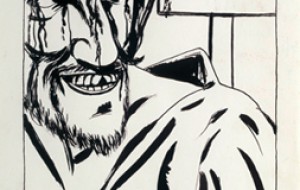
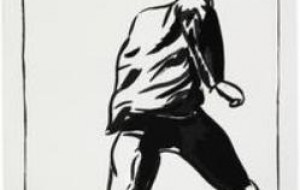
On the Berlin beat, there will be an auction this weekend at the restaurant/club Rodeo, located above C/O Berlin in the historic former post-office’s beautiful cupola, which will include works by artists such as urban vandal collective Faile, Mike Kelley, Raymond Pettibon (Season 2)and Terry Richardson. Due to limited seating, reservations are required and can be made at this address: fly@art-advise.com. The auction begins at 5pm on Sunday. For more information about available works, estimates and the auction itself, click here. Schoenes Wochenende.

Sally Mann on Denmark’s radar

May 30th, 2008

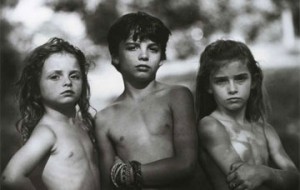
sally_mann_3.jpg

Following is a special report on Season 1 artist Sally Mann, just in from our fabulous former intern Karen Johanne Bruhn, now back home in Copenhagen…

During the past few weeks, American artist Sally Mann has received a lot of attention in Denmark in connection with the opening of her retrospective exhibition, Sally Mann: Photographs at The National Museum of Photograpy in Copenhagen. National TV and newspapers have featured her in numerous interviews and features; the Royal Library screened Steven Cantor’s documentary on Sally Mann, What Remains, and she also gave an artist talk for approximately 500 listeners on a recent sunny Friday night.

The retrospective exhibition focuses on three of Sally Mann’s artistic projects: Immediate Family, Deep South and What Remains. The overall themes in the poetic and romantic—yet nonconformist—sequences of pictures are beauty, death, and the passing of time. The pictures are intimate and personal, but concurrently deal with universal memories, emotions, joys, and fears. They expose a beauty but also bear a touch of melancholy and sentimentality within, thereby becoming pleasant as well as devastating for the viewer.

What makes Mann an outstanding photographic artist is not only her choice of often banal and easily accessible motifs, but also their unique approach to the photographic process. Whereas most photo-based artists work with new digital techniques, she has chosen to return to the origin of photography: Deep South as well as What Remains are made from wet plate collodion negatives. At present, this process, which was primarily used in the period after Frederick Scott Archer’s proclamation of the technique in 1851, has almost been replaced by other techniques. Continue reading »

Josiah McElheny | “Conceptual Drawings for a Chandelier, 1965″

May 29th, 2008

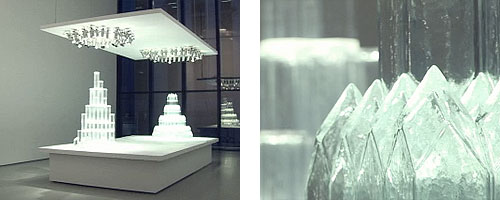
EXCLUSIVE: Josiah McElheny discusses his film Conceptual Drawings for a Chandelier, 1965 (2005), shot at The Metropolitan Opera in New York.

Josiah McElheny creates finely crafted, handmade glass objects that he combines with photographs, text, and museological displays to evoke notions of meaning and memory. McElheny’s work takes as its subject the history of Modernism and the impact it has made on society, aesthetics, and contemporary thought.

Josiah McElheny is featured in the Season 3 (2005) episode Memory of the Art:21—Art in the Twenty-First Century television series on PBS.

blog-jm-cdfc-row1.jpg

ART21: Could you talk about the impetus for your film Conceptual Drawings for a Chandelier, 1965? You’re known primarily as a sculptor, so why did you decide to make a film?

MCELHENY: Well, my first idea wasn’t a film. Instead I wondered wouldn’t it be really interesting to remake one of those, not as a chandelier, but as a sculpture so you could really get close to it? Continue reading »

Pre-Teen Wolf

May 28th, 2008

Gallery Education at its very best.

I spent last Sunday morning at the National Gallery with a large group of very small children in front of Sassetta’s early Renaissance painting of St Francis and the Wolf of Gubbio. Magic Carpet storytelling at the National Gallery is an enormously popular weekend activity; as the name implies, a large and magical carpet is rolled out in front of a chosen painting and an educator tells a story directly or indirectly related to the subject of the painting.

While inciting the group into a collective fist-thumping on the carpet (to simulate the wolf’s nocturnal scampering around the walls of the city), it occurred to me to consider the differences in using representational and abstract art within a gallery education context. Working with the modern and contemporary art collection at the Museum of Modern Art, New York, it became clear to me that the freedom with which children were able to engage with works of art was appropriate to the openness of the works themselves. Very young children, in particular, responded with ease and enthusiasm to many works that teenagers found more challenging. Art made out of splashes and drips to them was the very definition of art in any case. Interpreting its relation to the real world was occasionally a matter of somewhat impatient explanation (”that’s a fox, obviously“).

The National Gallery collection, however, which spans about 700 years of Western European painting, is entirely concerned with representational narrative work, to which children respond in very different ways. As an educator, it can be challenging to encourage children to think creatively about evidently devotional or didactic works of art, especially those of the early Renaissance. There remains in both cases a desire on the educator’s part to facilitate a measured response to a work that respects an object’s historical context and apparent intention.

As difficult as these things are to assess, I suspect that most educators would see their role as enabling children and teenagers to gain both comfort and confidence in approaching art from any period, which necessarily involves directing them towards appropriate responses via observation and conversation. To what extent, though, are interpretations ‘guided’ by educators - and is this their role? I’d love to hear other educators’ experiences of working with art of all periods and the challenges involved.

Matthew Ritchie at White Cube

May 28th, 2008

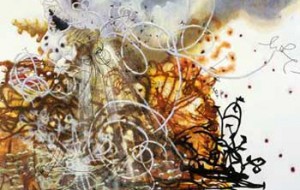
Matthew Riochie, “Forge.” 2007, Oil and marker on linen. COurtesy Jay Jopling/White Cube and Andrea Rosen.

Matthew Ritchie’s Ghost Operator opened last week at White Cube and will run until June 28. The Season 3 artist’s enveloping installation transforms the entire gallery using an array of scale and media, including paintings, drawings, sculpture, projections, interactive components, and a floor covered in plastic tarot cards. The linchpin of Ghost Operator is The Green Language, a spectacular light-box painting of a quantum sky and sea that acts as an umbrella environment linking all the other elements. Ritchie’s work contends with chance, probability, the vastness of the universe and the human attempt to rationalize and process such infinite limits.

Finding a Balance (Part 2)

May 28th, 2008

lauren-beltramo.jpg

Many thanks to Yolanda, MK, William, and Suzanne for their responses to our third post last week. To continue the conversation, I’d like to address some of the comments made and then push some ideas further….

Finding a Balance (Part 1),” last week’s post, was written to inspire conversation and ideas about where teaching students to engage with and discuss art fits into the curricula we already teach. Yolanda commented that talking about art after students create something is perhaps the best place to start, since students can reflect on their process and will “have more to bring to the table.” I agree that having experience with media will allow students more options when it comes to discussing and analyzing art. Students are more prepared to discuss their art and the works of others if they have some experience with the materials. For example, students will often dismiss installation art as “decorative” until they have gone through the steps to create an installation themselves. Creating a work in the spirit of Jackson Pollock is just “splattering paint all over the place” until students try to come up with a composition they are satisfied with.

William stated in his post that “many of those making critical decisions about education have little understanding of what art is” and how it connects to human experience and aesthetic expression, which is true. Art educators aren’t saddled with standardized testing and the joys that go with preparing for exam after exam, but this also means that an introductory studio art course can be wildly different from school to school. We not only are faced with teaching those that make the critical decisions about how our work is interconnected to life itself, but we’re also faced with the challenge of finding a balance when it comes to making art with students and teaching them to engage with art through speaking and writing about it.

Continue reading »

Do-Ho Suh in “Psycho Buildings”

May 27th, 2008

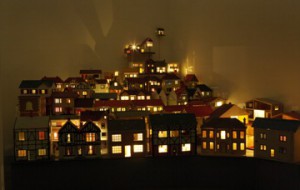
Rachel Whiteread, “Village”, 2006-2008, Mixed media. Copyright © Rachel Whiteread. Courtesy Gagosian Gallery.

New work by Art21 artist Do-Ho Suh (Season 2) is on view today through August 25, 2008 in the exhibition Psycho Buildings: Artists and Architecture at The Hayward Gallery in London. To inaugurate their anniversary season, ten artists from around the world have been invited to transform the indoor and outdoor spaces of the Hayward this summer. Suh will recreate a 1:5 scale replica of the house he grew up in South Korea crashing into a redbrick New England apartment block. According to a sneak preview report in The Guardian, Suh’s installation is inspired by The Wizard of Oz.

From the Gallery’s web page: “This exhibition marks The Hayward’s 40th anniversary as one of the world’s most architecturally unique exhibition venues. Taking its title from a book by artist Martin Kippenberger, the exhibition brings together the work of artists who create habitat-like structures and architectural environments that are mental and perceptual spaces as much as physical ones. Viewers enter and explore a series of atmospheric, spatially dynamic constructions that use elements of light, colour, smell and design to trigger profound visceral responses that heighten their attention to the relationship between the individual and their surroundings.”

Other artists included in the exhibition are Atelier Bow-Wow, Michael Beutler, Los Carpinteros, Gelitin, Mike Nelson, Ernesto Neto, Tobias Putrih, Tomas Saraceno, and Rachel Whiteread (installation pictured above).

Elegy for Robert Rauschenberg

May 23rd, 2008

Painting relates to both art and life. Neither can be made. (I try to act in that gap between the two.)
— Robert Rauschenberg, 1959

Elegy for Robert Rauschenberg is an homage to an artist who was my personal hero, and my nemesis, in my student years. He was my hero because of the infallibility of his touch, and the constancy of his ability to invent and re-invent the potency and power of visual art — to push the boundaries of what art could be. He was my nemesis because I saw him as pure genius and his every gesture as perfection — conditions that were not, I thought, possible for others to attain. But my joy and delight in his work continued and my pleasure in talking with him from time to time over the years was enormous.

Curated by Paul Schimmel, Robert Rauschenberg: Combines was shown in early 2006 at The Metropolitan Museum of Art in New York. On seeing it there, and upon learning that there were no plans to film it, I asked Bob for permission to do so at the next venue, The Museum of Contemporary Art, Los Angeles.

This elegy is dedicated to the memory of Robert Rauschenberg (1925-2008) and to the memory of his friendship with my late husband, Earle Brown (1926-2002), whose music has been intertwined and juxtaposed here with images of the glorious Combines.

blog-rr-elegy-row2.jpg

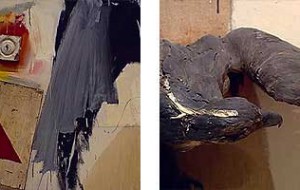
Elegy for Robert Rauschenberg has been created from footage filmed by Art21 at The Museum of Contemporary Art, Los Angeles during the 2006 exhibition of Robert Rauschenberg: Combines. Among the works seen in whole or in part are Minutiae (1954); Interview (1955); Monogram (1955-59); Canyon (1959); Gift for Apollo (1959); Black Market (1961); Empire II (1961); Pantomime (1961); Ace (1962); and Gold Standard (1964).

The video is set to music composed by Earle Brown who, along with Rauschenberg, was a member of a small group of friends in the 1950s that included John Cage, Merce Cunningham, Morton Feldman, Jasper Johns, and Christian Wolff, among others. In the spirit of that long-ago friendship, and in the collaborative spirit of that time and group, excerpts from the following works by Brown have been selected and collaged, with permission of The Earle Brown Music Foundation, for this video: Music for Violin, Cello, & Piano (1952); Octet I (1953); Folio and 4 Systems (1954); String Quartet (1965); New Piece (1971); and Special Events (1999).

blog-rr-elegy-row1.jpg

blog-rr-elegy-row3.jpg

VIDEO | Producer: Susan Sollins. Camera: Bob Elfstrom. Sound: Ray Day. Editor: Lizzie Donahue. Special thanks to Robert Rauschenberg’s Studio and David White; Paul Schimmel and The Museum of Contemporary Art, Los Angeles; The Earle Brown Music Foundation and Thomas Fichter.

PHOTO | Production stills, 2008. © Art21, Inc.