Mark Bradford | Paper
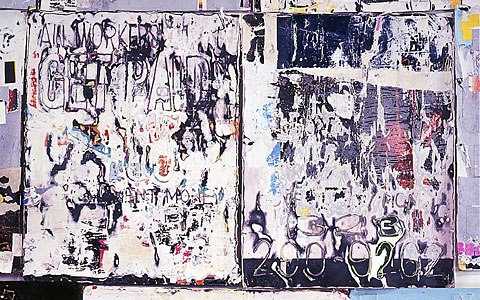
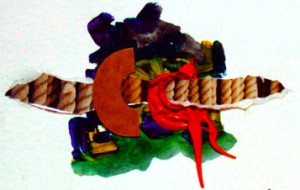
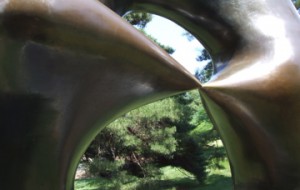
EXCLUSIVE: Mark Bradford painting Ridin’ Dirty (2006) in his Los Angeles studio.
Mark Bradford transforms materials scavenged from the street into wall-sized collages and installations that respond to the impromptu networks—underground economies, migrant communities, or popular appropriation of abandoned public space—that emerge within a city. Bradford’s work is as informed by his personal background as a third-generation merchant in Los Angeles as it is by the tradition of abstract painting developed worldwide in the twentieth century.

SEE: More images, videos, and news for Mark Bradford.
LEARN: Mark Bradford is featured in the Season 4 (2007) episode Paradox of the Art:21—Art in the Twenty-First Century television series on PBS.
DISCUSS: What do you think about this video? Leave a comment!
PHOTO | Mark Bradford, Ridin’ Dirty, detail, 2006. Courtesy Sikkema Jenkins & Co.
VIDEO | Producer: Susan Sollins & Nick Ravich. Camera: Bob Elfstrom. Sound: Ray Day. Editor: Monte Matteotti. Artwork courtesy: Mark Bradford.

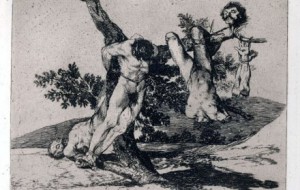
I’m hard-pressed to remember the last time I found a thank you note from a President Elect presidential candidate in a gallery exhibition’s press file. But there it was, at Peter Blum SoHo, sandwiched between praise from the New York Times and the Village Voice, a letter from Barack applauding Peter for the timeliness of his gallery’s current exhibition: Francisco de Goya’s Los Desastres de la Guerra (The Disasters of War) print series.
Goya (1746-1828) made these etchings circa 1810-1820 in response to Spain’s War of Independence against Napoleon’s armies (1808-1814). Filtering traditions of history painting through caricature, irony and emotional immediacy, this complete set of eighty prints (first published in 1906) retains its power to conjure the visceral horror and inhumanities of war. Physical atrocity is expressed in Great Deeds! With Dead Men! where the dead weight of the central figure pulls against the ropes that bind his naked body to a barren tree, which is decorated by the body parts of his comrades; equally disturbing, in I saw it, is the terror on the faces of the father and child who look at something beyond the picture frame—rather than revealing the it, Goya uses these facial expressions to give license to our darker imaginings. Throughout the series, the aftermath of war is shown in desiccated landscapes where vultures pick at corpses.
Matching the arresting content of these prints is their compositional ingenuity: in They Do Not Agree, nearly half the plate was left unetched; the chaotic foreground gives way to the background via a single face that fades from dense to sparer hatchmarks and eventually to a blank page—a formal operation pulverizes a figure into thin air. 200 years after it was created, this work remains formally, psychologically and, unfortunately, thematically relevant.
It’s generous of Peter Blum to show us The Disasters of War while probably dispensing with a summer’s worth of exhibition-generated gallery income. And judging from Obama’s thanks to him for “the countless ways you’ve supported our campaign,” this is not all he’s doing for the Democratic Party.
Still, standing in this white box in SoHo, the surprise of flipping from the familiar layout of the New Yorker’s art listings to Barack’s official red, white and blue letterhead made me wonder what it could really mean if the contemporary artworld “took action.” So a thought experiment: what if the exhibition were revised from Goya’s Disasters of War to OUR Disasters of War and instead of the 80 prints wrapping around the elegant gallery space, a sign in its window that read: “Peter Blum SoHo is closed through November while its staff works for the Obama campaign wherever Barack needs us.” (Imagining this on a large scale serves up the appealing image of the rural south being flooded by New York gallerina/gallerino transplants working for the future of our country.)
A similar idea was posed by the artist Mary Kelly when she suggested to Connie Butler, curator of the recent exhibition WACK! Art and the Feminist Revolution, that the exhibition consist not of objects, but of participatory consciousness raising sessions about the issue of feminism.
I was inspired by seeing both The Disasters of War and WACK!, but with a whole host of upcoming shows on theme of Democracy in honor of the election season (previews to come), I think it’s worth considering what contemporary art and its artworld can and can’t do to effect Change We Can Believe In.
Goya’s Los Desastres de la Guerra (The Disasters of War) is on view at Peter Blum SoHo, 99 Wooster Street until August 1 and will reopen August 26-September 1.
Slowing Down and Visualizing Approaches, Part 2

Following up on last week’s column, I was thinking about ways to slow down during the summer months and properly recharge for the upcoming school year. I also got to thinking about ways to inject new artists, media and themes into my teaching while preparing during the summer. Three ways I wanted to share include…..
Vacationing with a sketchbook and at least one way to make art:
New ideas come on suddenly. Without a way to take notes and perhaps create an example of the idea itself, some of the best stuff gets lost.
Getting together with other teachers to rethink and update curriculum maps:
I happen to be blessed in this area because I work with a tremendous team of teachers in Nyack who are willing to visualize new approaches to make the classes we offer more interesting for students AND teachers. We spent a full day together early in July to update and revise one of our core foundations courses and now each of us have the remainder of the summer to work off of that session in order to revise and update other advanced electives we teach.
Exploring exhibitions in person and online:
While we can’t possibly get to everything we want to see over the summer, many galleries and museums offer fantastic slideshows and background information on their exhibits. If you can’t get to the exhibit you want to see, check it out online and take note of where the show may be traveling. You might be able to see it in another city or at another time.
Teachers who incorporate contemporary art into their classes are constantly involved in a process of choosing who and what to share with students. What are some ways you make these decisions during the summer months?
Shahzia Sikander at Ikon Gallery
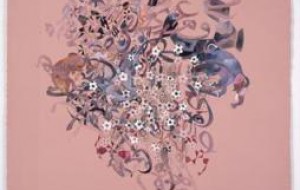
Works by Season 1 artist Shahzia Sikander are on view at Ikon Gallery July 30 through September 14, 2008 in what constitutes the artist’s first major solo exhibition in the UK and her largest to-date in Europe. Shahzia Sikander: Intimate Ambivalence primarily focuses on works created in the last two years, including large-scale gouaches and a wall drawing made specifically for Ikon. A selection of early works will be presented alongside recent pieces that will be on view to the public for the first time.
Also included in the exhibition are a suite of graphite portraits of novices and monks resulting from Sikander’s recent travels to Laos. According to Ikon Gallery, these drawings “[establish] an interesting conceptual parallel between the monks’ changing lives under the influence of tourism and the artist’s ongoing preoccupations: contemplation of our ever-changing world where issues of mutability and transformation are crucial.” Visit Ikon’s online Media Gallery to view a brief slideshow related to Intimate Ambivalence.
Ikon Gallery is housed in the neo-gothic Oozells Street School in Birmingham, UK. Over the past 40 years, the space has developed a reputation for innovation, internationalism and excellence. Click here to learn more about Ikon and the four areas the make up their artistic program.
Badlands at Mass MOCA

Badlands: New Horizons in Landscape is currently on view at MASS MOCA (Massachusetts Museum of Contemporary Art). The exhibition considers the traditions of landscape painting and picks up the thread with work that addresses contemporary ideas of exploration, population of the wilderness, land usage, environmental politics and the relativity of aesthetic beauty.
The artists in the show include, among others, Vaughn Bell, Center for Land Use Interpretation, Joe Smolinski, Nina Katchadourian, Alexis Rockman, Anthony Goicolea, and Season 4’s Robert Adams. In ways harking back to history and dismissing it altogether, each re-invents the genre of landscape painting while addressing current anxieties over the human-effected environment.
“From the earliest renderings on cave walls, man has been compelled to depict the world around him…Badlands comes at this critical time, an era when the world is more ecologically aware yet more desperately in need of solutions than ever before.”
New Guest Blogger: Emily Liebert

Join me in welcoming Emily Liebert, our next guest blogger. At the moment, Emily is getting her PhD in art history at Columbia where she studies American art of the 60s and 70s as well as contemporary African art. She has worked at the Chinati Foundation in Marfa, TX, Creative Time, The Andy Warhol Foundation and MoMA. Recently she has given lectures on the Center for Land Use Interpretation at MoMA’s graduate symposium and on contemporary uses of photography in Ghanaian funerals at the Triennial of African Art. In addition to her academic research, Emily has worked as a recipe researcher and tester for cookbooks and has spent some time on a stage as a comedienne. Food and comic timing, who could ask for anything more?
Many thanks to Amy Mackie for her contributions, especially her post Socially Acceptable. Keep a look out for Amy’s next projects at the New Museum, she is currently working on a special commissioned project with multi-media artist Jeremy Deller that will culminate in the construction of a mobile Iraqi War museum.
Berliner Salon: Obama, Brotherhood and XV. Rohkunstbau

After Obama‘s electrifying speech at the Siegessäule this past Thursday, it seems appropriate to mention the fifteenth installment of Rohkunstbau, a trilogy entitled THREE COLORS- BLUE WHITE RED, the final chapter of which (RED) opened two weeks ago at its new location at Villa Kellermann on the Heiliger Lake in Potsdam, which the press release describes as possessing “a layered and ambiguous aristocratic, bourgeois and proletarian history.”
The exhibition coincides with the sixtieth anniversary of the United Nations General Assembly’s Declaration of Human Rights, which states, “All human beings are born free and equal in dignity and rights. They are endowed with reason and conscience and should act towards one another in a spirit of brotherhood.” The participating artists, Marc Bauer, Guy Ben-Ner, Richard Hamilton, Britta Jones, Alexandra Khlestkina, Jonathan Monk, Jose Noguero, Bettina Pousttchi, Cornelia Renz and Brigitte Waldach, were asked to create work that addressed their understanding of “brotherhood” in the politically-charged, geographically fragmented and fundamentally combative climate of our contemporary times.
From the press release, “At no time in recent history has the idea of an international brotherhood of man been under greater threat. The United Nations, the promulgator of ‘endowed with reason and conscience and should act towards one another in a spirit of brotherhood,’ appears today to be a deeply troubled organisation. Within Europe a sense of a shared human endeavour seems equally problematic and put into doubt and question. Contemporary artists engaging with the subject matter becomes as a result a prescient means to discuss and open up issues related to what was once taken as a given, namely the brotherhood of life declared as the meaningful manifestation of our shared human existence.”
THREE COLORS- RED is on view until October 5th. For more information on the exhibition, click here. Schoenes Wochenende.
Smockshop in Chinatown

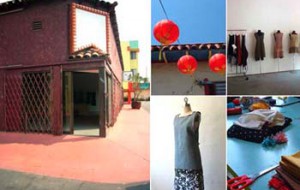
The Smockshop, Andrea Zittel‘s artist run enterprise that generates income for artists whose work is either non-commercial or not yet self sustaining, will be opening a store in Los Angeles Chinatown from June 27 through September 21st.
“We produce and sell smocks: a simple double wrap around garments designed by Andrea Zittel (Season 1) – then sewn by artists who often reinterprets the original design based on their individual skill sets, tastes and interests. As an active testament to Zittel’s principle that “rules make us more creative”, each resulting smock is completely unique and one of a kind.”
Summer Smockshop will be located on 936 Mei Ling Way, in the former Rental Gallery Space. Now that’s a wrap.
Pierre Huyghe | “Anlee”
EXCLUSIVE: Pierre Huyghe’s videos One Million Kingdoms (2001) and Two Minutes Out of Time (2000), part of the collaborative project No Ghost Just a Shell (1999-2003) with Philippe Parreno.
Pierre Huyghe’s films, installations, and public events range from a small-town parade to a puppet theater, from a model amusement park to a wildlife expedition in Antarctica. Revealing the experience of fiction to be as palpable as anything in daily life, Huyghe’s playful work often addresses complex social topics such as the yearning for utopia, the lure of spectacle in mass media, and the capacity of cinema to shape memory.

SEE: More images, videos, and news for Pierre Huyghe.
LEARN: Pierre Huyghe is featured in the Season 4 (2007) episode Romance of the Art:21—Art in the Twenty-First Century television series on PBS.
DISCUSS: What do you think about this video? Leave a comment!
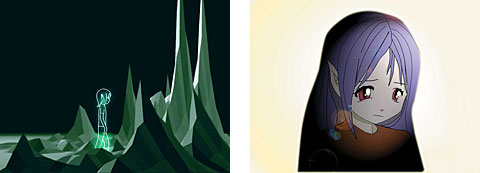
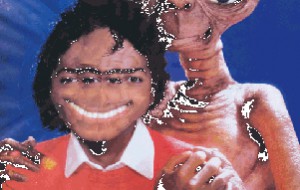
PHOTO | Pierre Huyghe, No Ghost Just a Shell (collaboration with Philippe Parreno), 1999-2003. (Left) One Million Kingdoms, video still, 2001; (Right) Anlee, original image, 1999. © Pierre Huyghe, courtesy Marian Goodman Gallery, Paris/New York.
VIDEO | Producer: Susan Sollins, Charles Atlas & Nick Ravich. Camera: Martial Barrault. Sound: Gilles Metivier. Editor: Mark Sutton. Artwork courtesy: Pierre Huyghe. Thanks: Marian Goodman Gallery.
Kara Walker in Malaga
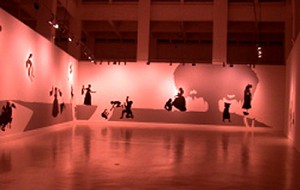
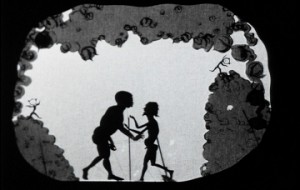
The Black Road, a new installation by Kara Walker (Season 2), is currently on view at the Malaga Contemporary Art Center. Inspired by early cinematography, magic lanterns, and 18th century French royal court cut-outs, her signature paper silhouettes are on display along with paintings, drawings, and video.
Walker’s work touches upon themes such as apartheid, exploitation, gender issues, social injustice, and slavery. “It is a harsh and conscious critique of the ‘shadows’ of our society and the modern world, forever disguised behind the apparent simplicity and shape of her iconographies.”
The Black Road runs through August 31st.