New guest blogger: Paul Schmelzer

February 23rd, 2009
Photo by Simon Martinez

Photo by Simon Martinez

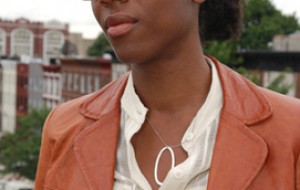
Thanks to Naomi Beckwith for her series of clever and perceptive posts. Up next is Paul Schmelzer. Paul is a Minneapolis-based writer and editor focusing on the intersection of art, media, and politics. Author of the blog Eyeteeth: A Journal of Incisive Ideas, he was editor of the Walker Art Center magazine for nearly ten years and founding editor of the Walker blogs. He’s now editor of the nonprofit news site, the Minnesota Independent, and managed its nationally recognized coverage of protests at this fall’s Republican National Convention in St. Paul. A past editor at Adbusters magazine, his interviews with artist Rirkrit Tiravanija, activist Winona LaDuke, and architect Cameron Sinclair appear in the book Land, Art: A Cultural Ecology Handbook (Royal Society of the Arts). His freelance writing has appeared in publications and on sites including Alternet, City Pages, Ode, The Progressive, Utne Reader, Raw Vision and Worldchanging.com. His project Signifier, Signed–in which he asked celebrities including Yoko Ono, Matthew Barney, James Brown and Studs Terkel to sign not an autograph, but his name—was excerpted in Cabinet magazine.

Oliver Herring | Legacy

February 20th, 2009

DOWNLOAD VIA ITUNES | SUBSCRIBE VIA RSS

EXCLUSIVE: Artist Oliver Herring discusses what he perceives as generational shifts in our relationship to the camera, mortality, and legacy, accompanied by scenes from his five channel video installation Little Dances of Misfortunes (2001) — created after 9/11 — which depicts amateur dancers illuminated by phosphorescent body paint. Little Dances of Misfortunes is currently on view (through June 14, 2009) at The Frances Young Tang Teaching Museum and Art Gallery at Skidmore College as part of Oliver Herring’s 15-year career survey Me Us Them.

Among Oliver Herring’s earliest works were his woven sculptures and performance pieces in which he knitted Mylar, a transparent and reflective material, into human figures, clothing and furniture. Since 1998, Herring has created stop-motion videos, photo-collaged sculptures, and impromtu participatory performances with ‘off-the-street’ strangers, embracing chance and chance-encounters in his work.

Oliver Herring. "Little Dances of Misfortunes," production still, 2001. Courtesy the artist and Max Protetch Galelry, New York.

Oliver Herring. "Little Dances of Misfortunes," production still, 2001. Courtesy the artist and Max Protetch Gallery.

Oliver Herring. "Little Dances of Misfortune," production still, 2002. Courtesy the artist and Max Protetch Gallery, New York

Oliver Herring. "Little Dances of Misfortunes," production still, 2001. Courtesy the artist and Max Protetch Gallery.

VIDEO | Producer: Wesley Miller & Nick Ravich. Interview: Susan Sollins. Camera: Joel Shapiro. Sound: Roger Phenix. Editor: Jenny Chiurco. Artwork Courtesy: Oliver Herring.

I Have Decided to Love Contemporary Art

February 20th, 2009

Days have passed since St. Valentine’s Day and the flowers are giving off a sweet waft of imminent mortality, which may make them a dubious token of love. But I am a fan of flowers and even Valentine’s Day (in principle more than practice) and can’t get through one without coming back to Ryan Trecartin’s video work, Valentine’s Day Girl, which features a young woman so obsessed with love symbols that Christmas carols hasten her demise.

Love doesn’t make frequent appearances in contemporary art in any serious way aside from the occasional Robert Indiana icon—which I would like to think of as less saccharine as its reception (though it has become a backdrop for a giant make-out session for the Philadelphia tourism industry). Trecartin’s video hasn’t anything to do with love and everything to do with obsession, hysteria, and other psychic excesses.

Kalup Linzy has created a cast of mostly-in-drag-characters, the melancholic Taiwan being paramount, who sing and act out their love lives with Fassbinder-esque theatrics and solipsism. Parodying a range of screen-based traditions—from early cinema to music videos—Linzy’s characters work out their anxieties about their careers and love lives with no sense of resolution, though partying is often a sufficient antidote.

You need to a flashplayer enabled browser to view this YouTube video

If the work of Trecartin and Linzy are any indication, then the representation of things outside of reason, such as emotions, tend to find their representation outside of rationality as well. Never mind the much-anticipated return of affect to contemporary art—love is as crazy does.

But let’s allow that art can be a forum for things not easily spoken about or ways to speak, even to no one in particular or everyone at the same time. Brooklyn-based photographer Lauren Silberman has been recording communities or trying to create them through her projects and sometimes the photos become public postcards very much in the vein of Gillian Wearing’s confessional signs.

Lauren Silberman, "Valentine," 2009.

Lauren Silberman, "Valentine," 2009.

Such utterances need not be totally sentimental—even Wearing’s photography of the same period have depicted people in a mise-en-abime of x-rated narcissism, where the subjects are not holding statements but pictures of themselves…umm…loving themselves. And such lasciviousness brings us right back to the pagan roots of Valentine’s Day: a festival of lust and fertility.

There are some projects that are appropriately bawdy and bodily while maintaining a simultaneous sense of play and critique. Insert magazine made its appearance around Valentine’s 2007 as a sampler of both high and low-brow culture captured in a way that makes Barthes sound scandalous. Better yet, Insert plays on its form (a small zine that could exist inside a larger book or magazine) and is droplifted into other publications by its creators: Ryan Holmberg, Garrett Riccardi, Marco Roso, and Lan Tuazon. The zines are distributed by a generous act of civil disobedience while recuperating eroticism—its creator calls it “bookf**king”. If you’re lucky enough to come across one, share it with the ones you love.

The greatest thing I have learned about love and art is best expressed on this poster I saw in the art academy in Martinique:

"I have decided to love contemporary art"

"I have decided to love contemporary art"

This statement, “I have decided to love contemporary art,” says everything about making a conscious committing to those things that are difficult and challenging even when outside the realm of reason.

BOMB in the building week 3

February 20th, 2009
One of the signs Paul Chan made for his 9th Ward production of "Waiting for Godot." Courtesy of Creative Time via Flickr (http://www.flickr.com/photos/creativetime)

One of the signs Paul Chan made for his 9th Ward production of "Waiting for Godot." Courtesy of Creative Time via Flickr (www.flickr.com/photos/creativetime)

This week we find BOMB artists all over the Internets:

Here’s a double bonus, both a preview of some of the folks who’ll be in the next issue of BOMB, and some links to what they’ve been up to:

You need to a flashplayer enabled browser to view this YouTube video

Obama Special, Part 2

February 19th, 2009
Photograph of President Obama's inauguration by Doug Mills/The New York Times.

Photograph of President Obama's inauguration by Doug Mills/The New York Times.

This continues my previous post about the laptop DJ/performance artist Girl Talk, in which I situate him in a lineage of intersections between art and music and suggest a link between his concert on November 16, 2008 at Terminal 5 in New York and the election of Barack Obama a week and a half earlier.

Girl Talk’s referencing of Obama through video projections at this performance made explicit his connection with the then-president-elect—not a personal but a formal affinity. The form in question is, simply put, miscegenation: the elimination of difference through the blending of categories. This form was stressed throughout Obama’s campaign, both as a personal attribute of the candidate himself and as his fundamental message that he would transcend Bush-era ideological polarization and unite the country behind common goals. Likewise, in Girl Talk’s mixture of fragments of highly recognizable popular songs, different genres coexist in delirious combination—an effect exploited in his concerts, in which the crowd is invited onstage to take up the role of performer. This is from the opening moments of the 11/15 show at Terminal 5:

You need to a flashplayer enabled browser to view this YouTube video

Why compare an arty DJ and our current president? To make a case for the value of art that entertains.

Continue reading »

“Imperfect Moments: Mapplethorpe & Censorship Twenty Years Later” at ICA in Philadelphia

February 18th, 2009

Robert Mapplethorpe, "Self Portrait," 1975

Robert Mapplethorpe, "Self Portrait," 1975

Last week, people from far and wide gathered for a special conference titled “Imperfect Moments: Mapplethorpe and Censorship Twenty Years Later,” which was co-presented by the Institute of Contemporary Art (ICA) and the Philadelphia Exhibitions Initiative at The Pew Center for Arts & Heritage.

This two-day symposium commemorated the 20th anniversary of the infamous 1988 exhibition Robert Mapplethorpe: The Perfect Moment, which sparked a firestorm of controversy when some US congressionals took offense to funds provided by the National Endownment for the Arts (NEA) being used to exhibit Mapplethorpe’s graphic sexual imagery.

The retrospective of more than 150 works, many of them depicting gay subcultures, proved too hot to handle and a number of museums found themselves on the frontline of controversy—the Corcoran Gallery of Art in Washington, DC canceled their presentation of the show and the director of the Cincinnati’s Contemporary Arts Center was tried for obscenity and acquitted—and some politicians used the ICA show as an example of how federal grants were misused by the cultural community.

mapplethorpe3

Robert Mapplethorpe, "Self Portrait," 1988

The late Sen. Jesse Helms (R-NC) spearheaded the fight against the Mapplethorpe show and introduced a floor amendment that banned NEA grants from being used to “promote, disseminate or produce obscene or indecent materials, including but not limited to depictions of sadomasochism, homoeroticism, the exploitation of children, or individuals engaged in sex acts; or material which denigrates the objects or beliefs of the adherents of a particular religion or non-religion.”

Today, Mapplethorpe is best remembered for this lightning rod moment, which catapulted the NEA into a crisis. It would soon become one of the key moments in the formation of what came to be known as the “culture wars” of the 1990s.

Now two decades later, the ICA is revisiting the controversy and has brought together world-renowned artists, critics, and scholars to examine the exhibition’s legacy, as well as the issues that artists and art institutions face today.

patti

Patti Smith performing at the ICA. Photo via www.philebrity.com and by Dan Murphy (dandurphy.com).

Among the speakers and personalities who appeared at the Philadelphia conference were Janet Kardon, The Perfect Moment‘s original curator; Patti Smith, a former Mapplethorpe lover, collaborator, and subject, who performed last Thursday night (pictured above); an artists’ panel on “The Question of Freedom,” featuring Karen Finley, Tim Miller, and Andres Serrano—all related to one or another controversy involving the NEA; and an institutional panel moderated by Robert Storr, Dean of the School of Fine Arts at Yale University, on “The Question of Courage.”

For those of us that weren’t able to attend the conference, Tyler Green of Modern Art Notes broadcast the event using his Twitter account. Among his feed I’ve culled the following quotes and observations…by no means an exhaustive list:

  • [Michael] Brenson: Piss Christ title not used in NYT[imes] until 1998 #
  • [Andres] Serrano: Jesse Helms put me on the map. Jesse discovered me. #
  • Karen Finley makes first ‘stimulus package’ joke. Undergrads laugh. #
  • [Robert] Storr: Big institutions should speak up more when small institutions come under (various) attack(s) more often than they do. (Me: Amen.) #
  • Brenson, Storr: Felix G[onzales]-T[orres] as making conscious response to Mapplethorpe through interactivity of his work. #
  • Raymond Learsy: If the Feds think sooo little of the arts (via minor NEA $ increases), maybe art should tell the feds to get out of art. #
  • [Kathy] Halbreich: 1989 culture wars inst[itution]s have become irrelevant: NEA, Corcoran, SECA. (True.) #
  • All panelists: Important for institutions and staff to remain engaged and in conversation with people who oppose/disagree with you. #
  • Role of journalism, criticism in artistic controversy much discussed. Now, what happens next time because arts journalism is almost gone #

Twenty years down the road, I’m not sure if we, as a culture, are less shocked by some of the images in The Perfect Moment, but Green’s last point is particularly poignant today as we see dozens of newspapers and mainstream media outlets slashing arts critics and journalists from its staff. Who will be the people that speak out against censorship when another issue like this emerges? Who are the professionals who can parse the political posturing from valid issues surrounding the arts? My suspicion is that blogs, such as this one, will have to fill that vacuum. The cultural life of America is far too important to be left to the political tide.

Susan Rothenberg at Sperone Westwater

February 18th, 2009
Susan Rothenberg, "Red" (2008), oil on canvas. Courtesy Sperone Westwater.

Susan Rothenberg, "Red" (2008), oil on canvas. Courtesy Sperone Westwater.

At Sperone Westwater, pioneer painter Susan Rothenberg exhibits new works on canvas that depict fragmented compositions of the human body.  The thickly applied oil paintings are a departure from recent imagery influenced by the Season 3 artist’s physical surroundings in the New Mexico desert.

Though referencing the human form, Rothenberg’s favored minimal, expressionist mark-making here articulates “disembodied puppet legs, heads and arms to demonstrate how the representation of the figure can be transformed into a study of space and form.”

The exhibit opens February 19 and runs through April 11.

Say It Ain’t Sew

February 18th, 2009
Smock by V. Smiley

Smock by V. Smiley

Andrea Zittel’s traveling Smockshop makes its first appearance in Europe today before sadly closing shop for good.  This is the final opportunity to experience Zittel’s economic experiment, which invites other artists to take infinite liberties reinterpreting the Season 1 artist’s original double-wrap around smock design. The enterprise generates income for artists whose works may be noncommercial or insubsistent.  Since it was founded in 2007, almost 300 smocks have been made by the collaborative.

At Sprüth Magers, two artisans will turn out the goods inside the Berlin gallery for the first four days of the exhibition and make them available for purchase right after their production.  The smocks will remain on display until April 10.

After that, a bid adieu.

Hope and Change, Part 2

February 18th, 2009

hope

On February 13th I received this message, as many of you did, from Americans for the Arts:

Just moments ago, the U.S. House of Representatives approved their final version of the Economic Recovery bill by a vote of 246-183. We can now confirm that the package DOES include $50 million in direct support for arts jobs through National Endowment for the Arts grants. We are also happy to report that the exclusionary Coburn Amendment language banning certain arts groups from receiving any other economic recovery funds has also been successfully removed.

Picking up on a blog post written by my colleague Beth Allen on February 3rd, I started thinking about how political change will affect art education and our students. The beginning certainly hasn’t been easy. More than a few kids have come to school recently with stories about one (or both) parents losing a job, or the anxiety surrounding an impending layoff. Prior to the election, Americans saw plenty of murals, graphic designs, and examples of fine art that celebrated hope and urged involvement in the election. Less than a month into President Obama taking office, students throughout the country have had to deal with euphoria followed by the crushing reality of a reeling economy.

Prior to the Economic Recovery bill being passed, Beth Allen asked how political change will affect art. While the film is still being shot and sketches are still in the development phase, I am willing to bet we will soon see a panoramic assortment of images that represent change—painful, positive, passionate—as we move forward.

Please share images (or stories) reflecting how your students have responded to the changing political climate….

Sade 2.0

February 17th, 2009

Jacques-Louis David, "The Death of Marat," 1793 (Royal Museum of Fine Arts, Brussels)

Jacques-Louis David, "The Death of Marat," 1793 (Royal Museum of Fine Arts, Brussels)

On February 7th I drove to the Kasser Theater at Montclair State University to see a performance of The Investigation, a 1966 documentary drama by Peter Weiss (1916-1982), the expatriate German artist and writer best known for Marat/Sade.

This 80-minute version by the theater group Urwintore was conceived and directed by Dorcy Rugamba and Isabelle Gyselinx from an adaption by Jean Baudrillard (the original German production—culled verbatim from the Frankfurt Auschwitz trials of 1963-65—ran nearly five hours).

Urwintore is from Rwanda, and Dorcy Rugamba’s parents and six of his siblings were shot to death by Hutu militiamen on the first day of the Rwandan genocide.

This production is not Rugamba’s first examination of mass murder. In 1999, he co-authored and performed in Rwanda 94, described by Jon Henley of The Guardian as “an extraordinary, emotionally exhausting six-hour creation about his country’s 100 days of madness.” For Rugamba, the four years he spent touring with the work “’rebuilt me.’” In 2004, the play was brought to Rwanda, where the audience reaction was extreme: “’For genocide survivors, it was something far, far stronger than theatre,’” Rugamba recalled, “Everywhere we performed, people–especially women, who had undergone unimaginable tortures–were howling, passing out where they sat. The authorities had to station ambulances outside each venue to carry them away. Rwandans have trouble expressing their emotions, you see. They don’t like the raw and the crude, and this play was both. It was very real. It was like bursting a boil.’”

The Investigation, as performed by Urwintore in Kinyarwanda with English supertitles, has no exposition or narrative arc, and no verdict at the end–only testimony, accusations and denials. The actors wear stylish street clothes and the set is minimal. Yet when a witness declaims, “The society that built the camps is our society,” the emotional effect is stunning and ineffable.

How can art effect political change? The question implies an integral, activist role within a progressive agenda, yet the history of politics and art since Jacques-Louis David is fraught with paradoxes and complexities. Art’s essential element–its ability to transcend the circumstances of its creation–can be best described as “news that stays news.” But to do so would be to quote the radical modernist American poet and Fascist sympathizer, Ezra Pound. And so you begin to sense the difficulty of the problem.

Political change requires a collective engagement with a clear set of goals. While self-criticism is helpful and at times mandatory, nothing can be accomplished without a steadfast commitment to the cause. Art’s staying power is embedded in its interrogatory, multifaceted, subversive, uncomfortable and often self-contradictory apprehension of truth. It questions and reveals, exalts and purges. Marat/Sade examines the descent of the Enlightenment principles of liberty, equality, and fraternity into tyranny, paranoia and bloodlust. In Urwintore’s performance of The Investigation, the roles are passed from actor to actor; guilt and innocence are not endemic but migratory, and the values of an individual society can cut both ways, forming the character of perpetrators and victims alike. (In a move that provoked much criticism at the time of the original production, Weiss never includes the words “Nazi” or “Jew” in the dialogue.)

The political profundity of Urwintore’s work lies in its quiet devastation of our well-heeled complacency. The historical sweep of their performance reminds us that–as Sade knew better than most–the point of civilization isn’t necessarily to defeat barbarity, but to camouflage it.

Thomas Micchelli, an artist, writer and filmmaker, is Managing Art Editor of the Brooklyn Rail.