Weekly Roundup

March 30th, 2009
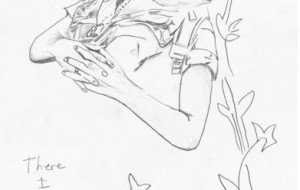
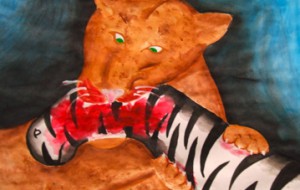
Collier Schorr, "There I Was (CS, CS)," 2007. Pencil on paper. Courtesy of 303 Gallery, New York.

Collier Schorr, "There I Was (CS, CS)," 2007. Pencil on paper. Courtesy of 303 Gallery, New York.

New guest blogger: Lila Kanner

March 30th, 2009

lilakanner

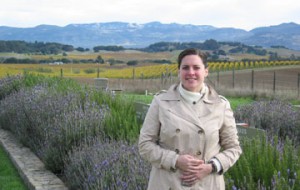
Thanks to Tim Ridlen for chronicling the art scene in his new adoptive hometown of NYC. Up next is Lila Kanner. Lila joined the staff at Artadia: The Fund for Art and Dialogue in 2006 and has been its Executive Director since 2008. Artadia’s mission is to encourage innovative practice and meaningful dialogue across the United States by providing visual artists in specific communities with unrestricted awards and a national network of support in Atlanta, Boston, Chicago, Houston, San Francisco, and New York. Prior to serving at Artadia, Kanner was the Associate Director of the Fabric Workshop and Museum, Philadelphia. From 1999 to 2002, she served as Director of Artist Services and Educational Programs at The Copley Society of Boston. She earned her master’s degree in Art History and Curatorial Studies from Columbia University in New York, and graduated cum laude from Wellesley College.

Letter from London: The Eighties Revival

March 30th, 2009

Julian Schnabel via the Times Online

Julian Schnabel via the Times Online

The new thing at Tate Modern, three rooms of mainly huge paintings from the 1980s, is timelier than it knows. These works are taken from the UBS collection, the investment bank that has funded the rehang of the Tate Modern permanent collection. As part of the deal, excerpts from UBS’ massive collection of works of art from the 50s to today are to be intermittently displayed to—this from the UBS website—”complement and strengthen the gallery’s own permanent collection.” UBS performed a similar feat in 2005 at the then just-opened MoMA in New York, displaying a large number of mainly huge paintings as the inaugural show in the top-floor exhibition spaces (to, it has to be said, a largely negative response). Now, not all of UBS’ collection consists of mainly huge paintings; it’s just that mainly huge paintings have of late taken on an unexpectedly affecting archaism, even anachronism. I walked around the three rooms of the display as though in a hall full of dinosaur bones. I overheard people saying, “Whoa – are those plates?” and “God, that’s a lot of paint,” much as kids say “Is that its head?” and “That was really alive once?”

It’s fatuous fun to play connect-the-dots between these stegosaurian remnants of a flush decade and the art of our own recent history, substituting Koons, Hirst, and Murakami for Paladino, Penck, and Salle. Yet there’s no doubt that textbooks written on the art of the pre-recession 2000s will use either a bejeweled skull, aluminum puppy, or Vuitton bag as its symbolic cover image. It’s also probably too much of a cheap shot to mentally relocate these vast works back to the boardrooms and corner offices in which they and works like them formed a splashy backdrop for billion-dollar deals. It’s not the art’s fault that it’s become, in the popular imagination, as inextricably linked with an idea of what the 80s were like as precipitous shoulderpads and stonewashed jeans. Potted versions of history hinder really looking at things, and art can’t be held responsible for its provenance nor be made to epitomize its epoch—one marked not by uniformity but by multifariousness in all strands of culture. All periods of time are cursed by history, doomed to be distilled into a succession of single moments, and the 80s always gets off worst. The UBS website neatly sums it up as “the decade of greed, hostile takeovers, rising share prices, and junk bonds.” Mental images are great for theme parties but a little misleading when it comes to art, and the 80s, more than any other decade, survives as a series of embarrassing stills, like a slideshow of a bad holiday.

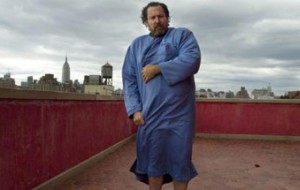
The 80s revival of expressionistic painting must be the most maligned of all moments in art history. Its patron saint, Julian Schnabel, has managed to about-face his career to such an extent that new audiences will discover his output in reverse, which many people would say isn’t such a bad thing. Schnabel has received, and continues to receive, a critical kicking for his perceived (ok, actual) arrogance about the importance of his work, most notably from Robert Hughes (he still refuses to discuss Hughes, as seen in his tantrum on 60 Minutes recently). The Tate is showing Schnabel’s Humanity Asleep from 1982, one of the works in the display owned by the gallery, and almost certainly the first time it’s been dragged out of the storeroom since about 1986. (The works in the show owned by Tate—Christopher leBrun and AR Penck among them—were all acquired within a year of their making, perhaps to recompense for the timidity of British art buying in the first half of the century, and have rarely been shown since then). Humanity Asleep is a massive (get used to it) painting on a plane of smashed saucers, showing the head of fellow artist Francesco Clemente alongside an unidentifiable other floating on a raft beneath a hovering St. Michael. The reference to classic history painting (the raft/The Raft) is of a piece with the historical brassiness of its time. It’s an unlovely painting that doesn’t aim to be loved but to be as awesome and dynamic as a wall-sized Gericault. And it is exciting to look at, in a kind of irrefutable muscular way: it’s a piece of self-mythologizing on a par with Matthew Barney, taking as its source the flotsam of a restless historical memory. It’s a bit facile to see the shards of crockery as representations of the fragmented modern consciousness, as Schnabel apologists often do (regurgitating that TS Eliot quote every time). What Schnabel is doing is not introspective and “irony-inflected” but energetic and assertive, giving painting a workout, telling it to get down and give him twenty. I nearly did.

The show’s big flaw is its lack of any work by female painters, the few figurative painters of that time whose star appears not to have waned, at least not as dramatically as those of their muscle-flexing male counterparts. The absence of work by Susan Rothenberg, Ida Applebroog, and Elizabeth Murray leaves a gaping hole in the show’s claims to encapsulate its time, giving it a lopsidedness and portentousness that would have been leavened by these artists’ more tentative and playful approaches. Clemente’s hilarious 1984 Self Portrait—a portrait of the artist as pensive troll—does lighten the load somewhat, and Enzo Cucchi’s fiery Leone dei Mari Mediterranea from 1979-80 sets a beaming masklike face (a Demoiselle on a good day) hurtling over a tiny green horse in a boat on a crimson sea. It’s a piece of whimsical myth-making told with a fluttering brush that’s a world away from the ham-fisted Sandro Chia on the opposite wall. What they share, though, is an urgency: to reassert painting’s role as supreme storyteller, something rarely found within the avant-garde tradition.

Unfortunately, the rhetoric of the show takes a reductive approach, slotting these wildly divergent artists into a historical continuum as though all of them swore a solemn oath to react against minimalism by asserting the creepy-sounding “artist’s hand.” The brochure for the show (no catalogue, sadly) claims that “what these artists share, in spite of their age and geographical differences, is their reaction to the art that dominated the preceding decade…minimalism and conceptualism.” The UBS collection website sums up the work along similar lines: “Turning against minimalism, the eighties see a return to more expressive forms of art.”

The dialectic of action/reaction is the dominant one in discussions of 20th-century art, and it makes all artists look like angsty teenagers trying to wind up their parents. Of course, the physicality of painting—and physicality is very much in evidence here; it’s a bit like going into a gym after Christmas, all mad sweaty grunting—can be just as conceptual, just as ideas-led as anything hands-off and self-consciously intellectual produced under the banner of conceptualism. It’s an old argument, which goes back to da Vinci’s paragones, his sniffy separation of making and thinking which values ideas over production. And it’s one that dominates our (still) post-Duchampian expectations of what art should be about (a standpoint held in place by institutions like the Tate), which leaves artists who assert making and telling somewhat in the shade. It’s also what makes them worth looking at, now of all times.

On the Demuxing Post

March 27th, 2009

You need to a flashplayer enabled browser to view this YouTube video

You need to a flashplayer enabled browser to view this YouTube video

In one of my previous posts, I mentioned the life of certain obsolete terms taking on new meaning. As the clock runs out on my brief stint as a guest blogger, I’d like to consider this the “demuxing” post.  This term probably isn’t familiar to most, but it comes from the term “multiplexing,” and it’s reverse “demultiplexing.” From wikipedia (multiplexing):

multiplexing (known as muxing) is a process where multiple analog message signals or digital data streams are combined into one signal over a shared medium. The aim is to share an expensive resource. For example, in telecommunications, several phone calls may be transferred using one wire. It originated in telegraphy, and is now widely applied in communications.

In working on some upcoming video screenings, I’ve come across the term “demuxing” in culling together source material, backing up DVDs, and converting video formats.  The easiest way to describe what this term means is a separation of the audio from the video information. I suppose we’re demuxing the world all the time as we sort out the visual from the aural.  Demuxing implies an undoing, working backwards to find the beginnings.

Likewise, reading a blog is like demuxing.  As many bemoan the end of long form writing with the rise of blogs, I suggest that blogging is best appreciated in long form, over time, read from the most recent to the very earliest.  As one who blogs, I appreciate that this form of writing allows for some permanence and a few reminders of the very recent events gone by, without an enormous amount of editing or predetermination.  I’ll say good bye with two of my favorite articles on blogging, one by Andre Sullivan and why he blogs, the other on something called “Me Feeds.”

Look for more of my posts on Bad at Sports, and see some of my video work in Chicago and in New York.

Call for writers: new Flash Points topic wants you!

March 26th, 2009
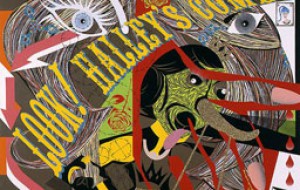
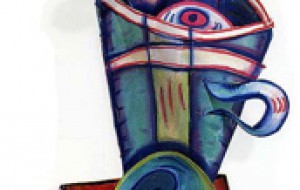
Lari Pittman, "Untitled #32 (A Decorated Chronology of Insistence and Resignation)," 1994. Acrylic, enamel, and glitter on panel, 84 x 60 inches. Private collection. Photo by Douglas M. Parker Studio. Courtesy the artist and Regen Projects, Los Angeles.

Lari Pittman, "Untitled #32 (A Decorated Chronology of Insistence and Resignation)," 1994. Acrylic, enamel, and glitter on panel, 84 x 60 inches. Private collection. Photo by Douglas M. Parker Studio. Courtesy the artist and Regen Projects, Los Angeles.

Attention writers! Our newest Flash Points topic, Contemporary Art + Economics, launches next week. This time, we’re opening up the editorial process and inviting you to participate. Have an idea for a post? Interested in what’s going down on Capitol Hill or how the current economic climate has affected the arts closer to home, in your own community? Propose a Flash Points blog post and have a chance to be featured on this site.

Questions we are interested in exploring include:

  • What is the value of art?
  • How can art adapt to a changing economic climate?
  • Considering the creative industries, what is the relationship between art, economic development, and urban renewal?
  • Artists and art professionals: what is the true cost of labor?
  • Why is arts education continually underfunded?
  • In both our current economic climate and past ones historically, what happens to art when the money dries up?
  • What do alternative models for arts funding look like?
  • Institutions and ethics: how do museums and other cultural centers maintain their mission and resources in economically challenging times?
  • How and why should we argue for art’s continued financial solvency?

We are eager to hear from a range of different perspectives, including those of you who work as artists, arts professionals, students, art educators, funders, organizers, and academics.

Email ideas and pitches to blog [at] art21 [dot] org. Deadline is Weds, April 8. This topic will be up through May 31, 2009.

Sikander Trifecta (incl. talk tonight at Cooper-Hewitt)

March 25th, 2009

stalemate_web

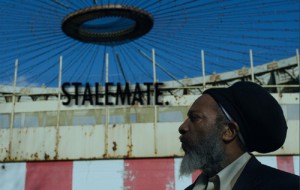
In New York City? Don’t miss Season 1 artist Shahzia Sikander‘s related activities around town, including an artist’s talk tonight.

Her curatorial exhibition, Shahzia Sikander Selects: Works from the Permanent Collection is currently on view at Cooper-Hewitt, National Design Museum and will run through September 7th.  To view the exhibition brochure click here.

In conjunction with Shahzia Sikander Selects, Cooper-Hewitt will be hosting a conversation between the artist and MoMA Director Glenn Lowry tonight. For more information or to buy tickets, visit the museum’s events page.

Finally, Sikander’s new exhibition, Stalemate at Sikkema Jenkins & Co., opens April 3 and will be up through May 2, 2009.

Remixing. Transformation.

March 25th, 2009

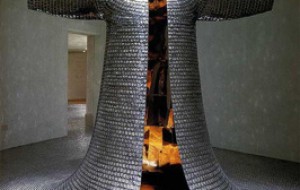
Do-Ho Suh, "Some/One", 2001

Do-Ho Suh, "Some/One," 2001

This week two of my classes will visit the Museum of Art and Design’s first major exhibit in its new space at Columbus Circle, Second Lives: Remixing the Ordinary. Among the works included in this magnificent show are sculptures by Do-Ho Suh, Tara Donovan, Jean Shin, and Sonya Clark. Two floors of the museum are devoted to surprising and often stunning works made from everyday materials, but the works go beyond what Roberta Smith of the New York Times calls, “…the massing of something small (plastic spoons, ladies’ pumps, spools of thread, dangling eyeglasses) into something large (a pyramid, a love seat, a view of the “Mona Lisa,” a chandelier).” This is what we intend to focus on in our visits.

Works like these teach students to think beyond conventional art media. They teach students that you do not need expensive art supplies to create beautiful and unique objects that become something else in the hands of an artist. They become forms and colors and textures that just happen to be spoons, pumps, spools of thread, and eyeglasses in the first place. Depending on the way the artist arranges the objects, the work can even become a teaching tool for interdisciplinary themes, such as Terese Agnew’s Portrait of a Textile Worker, created solely from clothing labels.

Terese Agnew, "Portrait of a Textile Worker", 2005

Terese Agnew, "Portrait of a Textile Worker," 2005

On a preview visit, I saw two people approach this particular work from across the room and their facial expressions went from wonder to surprise to a focused, silent stare. One woman began to cry. The more I stood and contemplated the labels that represented so many young lives, the more I felt like crying myself. Clothing labels arranged in a cute pattern can’t have this effect on people. It’s about transformation. And since so much in the world of contemporary art deals with transformation, this museum visit is an important step for my students to take in order to understand the breadth of visual possibilities in materials they encounter each and every day.

Strength in Limitations

March 24th, 2009

road-trip

On the drive from Chicago to New York City in a Budget rental truck, I had a conversation with a friend of mine regarding an ongoing gallery project called MWNM that she had been a part of in New York. Between the three of us splitting a truck to move our lives forever away from the Midwest, we managed to make the perfect Tetris puzzle of 15 collective years in a city that allowed for un-crowded living. Under such circumstances, our conversation touched on the limited space and time for young curators and artists to show work in a city like New York. The thought occurred to turn these limitations into the modus operandi for showing work, rather than seeing them as limitations. Just as we expunged the excess shells and comforts of Chicago apartment living for greater mobility, the driving force behind showing work should be the conditions that are given, not those expected, desired, or even most preferable.

MWNM storefront. Courtesy of MWNM

MWNM on the Lower East Side was procured through an arrangement with the realtors who were eventually looking to rent out the commercial space with a long-term lease.  The assumption was that having someone in the space—imagine young artist-types—would draw attention and create an audience for some type of profiting business.  This was not the idea of the realtor–far from it–but the lesson shall be: “ask and thou [might] receive.” The two women who run MWNM are none other than the two with whom I drove cross-country: Karen Archey and Alice Wells.

Imagine the way in which one might go about building a space. First, acquire the space: check.  Next, come up with a name and perhaps some type of mission statement. For MWNM, this is where step one conflicted with step two. The arrangement for the space did not allow for any permanent identity, or even assurance that events planned for the future would not get canceled before they could be executed. How could one expect artists and others to rely on a space that could close next week?  This was their limitation.

Not only would such a limitation affect the way they would go about hosting events and exhibitions, but it would also be reflected in the identity of the space.  The letters M-W-N-M are an acronym for the first two shows held in the space, titled Meet Waradise organized by Alice Wells and New Mourning by Karen Archey. Naturally this means that the space had no name until these first two shows had come into existence. I’m familiar and quite fond of the idea of generative titling–coming up with a title and letting that determine what might spill forth–but in fact this is a reversal that embraces the spirit of limitations in favor of a more exciting possibility.

This post comes as MWNM prepares for its last week. In truth, every week was their last week, but this time it’s a sure thing.  Their most recent exhibition, titled 93 DAYS, shares an archive of the space and the relationships that brought it about. Archey and Wells have also learned to work with the limitations of collaboration. Just as limitations should be embraced because they are the circumstances given, so should one’s community of artists and friends. I make note of this because I’m aware that there are many similar projects; this just happens to be the one closest to me.

For example, New York has been enlivened these days by the arrival of Elizabeth Dee’s X Initiative, a space set to exist for the space of one year only.  I imagine X is a product of the collapsed real estate market, just as was MWNM.  For those that say the recession is not good for art, I offer examples such as these to say: it might not be a qualitative shift, but it is indeed a shift, and that’s what counts.

The last series of events at MWNM will be on Sunday, March 29th at MWNM, 17 Orchard Street.

First Spring Round-Up

March 23rd, 2009
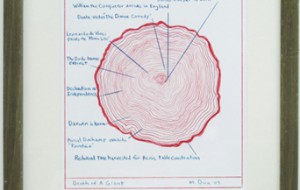
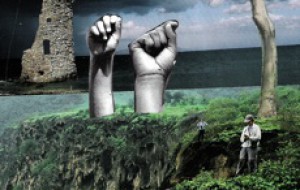
Mark Dion, "Death of a Giant" (2009). Courtesy the artist and Tanya Bonakdar Gallery.

Mark Dion, "Death of a Giant" (2009). Courtesy the artist and Tanya Bonakdar Gallery.

Things to see:

  • Mel Chin will be giving a free lecture on Tuesday, March 24, from 7:00 pm to 8:30 pm, at the Arlington Arts Center as part of the closing reception for PUBLIC/PRIVATE, an exhibition juxtaposing art out in the world that requires the viewer’s direct physical participation with works about the artist’s immediate social or domestic sphere. Chin’s talk will also serve as the kickoff for the FUNDRED/PAYDIRT Project in Arlington public schools.
  • Richard Tuttle‘s exhibition Walking on Air opened March 20th at Pace Wildenstein.  The show runs through April 25 and includes twelve new works of overlapping, dyed fabric cloths that suggest in non-ambiguous terms the relationship between the abstract and the real.
  • Also opening over the weekend was Ancient Evenings: Libretto, an exhibition of new drawings by Matthew Barney at Gladstone Gallery in Brussels.  Ancient Evenings is a seven act opera chronicling the seven stages the soul passes through after the death of the body, and is loosely based on Norman Mailer’s 1983 Egyptian-set novel. The show runs through May 9.

Letter from London: Plinth of Thieves

March 23rd, 2009
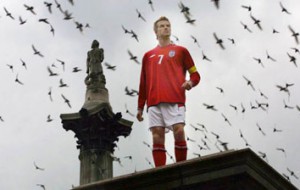
Effigy of David Beckham temporarily installed on the empty plinth in 2002

Effigy of David Beckham temporarily installed on the empty plinth in 2002

Good news! We’re living in “a golden age of public art,” characterized by “a change in art’s very nature, from an aesthetic, spiritual and intellectual function to a principally social one.” Woo hoo! What a relief, eh?

In London, public art means either the Turbine Hall commissions in Tate Modern or the famous Fourth Plinth—the empty plinth in Trafalgar Square used as a site for public art commissions for a few years now. Since the road that runs in front of the gallery was pedestrianized several years ago, the area has become a catch-all public space: amateur artists sketch out copies of Botticelli paintings, opera singers blast out an aria or two, people balance stuff on their noses and rattle buckets at the audience afterward. You might have seen the square occupied with hordes of unaccountably ecstatic people waving Union Jacks on the announcement of London’s hosting of the Olympics in 2012. It’s that sort of place, the city’s town square, center of innumerable celebrations of the various ethnicities that constitute London, meeting point for protesters and stag nighters and neon-backpacked Italian school groups.

The plinth’s prominence as the only one of the four not occupied by an equestrian bronze of a hero of war or empire made it an iconoclastic presence in this locus of national celebration. Previous commissions have aimed to “subvert” the historical resonance of the place: Rachel Whiteread displayed a flipped-over resin cast of the plinth itself, Marc Quinn showed a marble cast of thalidomide victim Alison Lapper, and Mark Wallinger put a life-size human figure on the plinth’s edge—a contemporary Christ with crown of thorns. For all of these artists, the plinth offered perhaps their most public venue and certainly made their work the most photographed of any they had produced up to then (Wallinger’s proposed huge horse at Ebbsfleet will certainly supersede that).

But as with so much public art, any subversive intent played second fiddle to civic demands founded on specific ideas about what public art is for. The question of more relevance, it seems to me, is what the public for art is. This is particularly relevant in the light of the latest commission for the fourth plinth: Antony Gormley’s One and Other, the sculptor’s proposal to allow members of the public to apply to occupy the plinth on their own, for an hour at any time of day, starting this summer for a total stretch of a hundred days.

The choice of Gormley as the winner of the commission is perhaps not surprising, as he is the creator of the UK’s most popular (ie, most reproduced, most pilloried, most parodied) public sculpture, The Angel of the North (which is, sadly, far better cared for than the unloved Stonehenge). The other submissions—from Tracey Emin, Bob and Roberta Smith, and Anish Kapoor—felt like truncated versions of more successful works by these artists in other contexts. Only Jeremy Deller’s proposal—a real burnt-out car destroyed in a civilian attack in Iraq—would have had a genuinely iconoclastic effect (referencing the display of spoils of war found on Roman triumphal columns that are the aesthetic forebears of Nelson’s Column in the center of the square). Gormley, who has a slightly awkward position within the canon of contemporary British art (as befits a supremely popular artist, he and his legions of followers feel as though they’re backing the underdog, and constantly bang on about it) has hit upon an idea of such perfect congruence with (post-) Blairite notions of what art should provide for the public that the sound of hands slapping foreheads in consternation was heard ringing from Parliament as soon as his idea was announced.

The way Gormley’s proposal will work is explained in some detail on the Fourth Plinth website, on which this spectacularly hubristic game plan is laid out:

[Gormley] is asking the people of the UK to occupy the empty Fourth Plinth in Trafalgar Square in London, a space normally reserved for statues of Kings and Generals, in an image of themselves, and a representation of the whole of humanity (!!!). [triple exclamation points mine]

Only a culture so profoundly in love, as the UK is, with the process of celebrification could endorse a proposal that equates mere self-expression with art. The project description is full of phrases that are begging for qualifying air quotes: “Participants will be picked at random, chosen from the thousands who enter, to represent the entire population of the UK” [italics mine]. Gormley has the temerity to suggest that he has been the victim of press “snobbery”; surely pomposity of that Meatlovian scale is crying out for some leavening criticism. The use of the political buzzword “participant” shows how neatly the rhetoric of contemporary art has, since 1997, dovetailed with the rerouting of political discourse towards an emphasis on “openness,” “transparency,” and “interactivity” while actually being none of those things. The suggestion of the term participant is that the person has an active role in the creation of the work of art, whereas the truth of much participatory contemporary art is that the participant simply becomes the medium for the artist to express whatever it is he or she is expressing (usually a toothless critique of the patron rubber-stamped by same).

For Gormley’s project, as for much contemporary political discourse, language is bent to purpose. That dreaded term empowerment is so beloved of official arts bodies when angling for funding is dragged in, but what does it mean here? And to what extent is this, in Gormley’s words, “about the democratization of art”? It means that after what will certainly be a protracted screening process, members of the public, who have conflated exposure with success, will be allowed to spend an hour of their time gesticulating slightly out of earshot above the tinkling fountains and rumbling buses. Some of them will moon Nelson. Gormley and the subsidizing bodies will feel good about “democratizing” art and “empowering the public.” That all this is happening in the shadow of the National Gallery, one of the world’s best collections of painting (and free to enter), has a ring of embarrassment about it. We get the public art we deserve, I suppose.