
What’s Cookin at the Art21 Blog: A Weekly Index

July 31st, 2009
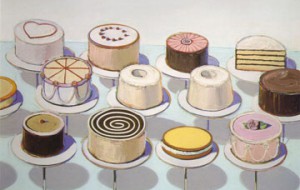
Detail of Cookin by Greg Brown of Whitney Hopter Graphics

Detail of "Cookin" by Greg Brown of Whitney Hopter Graphics

Hungry for some art? You haven’t missed out. It’s been marinating here all week! For your dining pleasure, stay awhile, there’s always something to share at this table.

In Flash Points:

  • Does art expand our ability to imagine? Guest blogger, Adrian Duran, says “Yes, but no, but yeah, but…” and Jonathan Munar, in his new column, “Art 2.1: Creating on the Social Web,” explores the possibilities of virtual worlds, with some compelling insight from the writer and producer of the documentary, Second Skin, Victor Pinero. Stay plugged for Part II of this interview next week!

Hey, are you into vintage? Check out this week’s BOMB contribution, a 2002 interview with Constant, first published in Issue 91 (1995). Cao Fei inspires aesthetic connections…

Step Inside the Artists Studio : Georgia Kotretsos talks with Brooklyn – based artist Jason Peters.

Adrian Duran, currently in  St. Louis Missouri, asks the question: What is the value of approximation in relationship to curating?

Jonathan Munar kicks off the weekend with a new Art21 Video Exclusive featuring Laylah Ali.

Enjoy!

Laylah Ali | Television

July 31st, 2009

DOWNLOAD VIA ITUNES | SUBSCRIBE VIA RSS

EXCLUSIVE: In her Williamstown, Massachusetts studio, artist Laylah Ali describes how the television cartoons she watched as a child inform the way she works and thinks today.

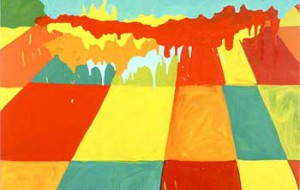
Laylah Ali creates gouache-on-paper paintings that take her many months to complete. Ali meticulously plots out in advance every aspect of her work, from subject matter to choice of color, achieving a high level of emotional tension in her paintings as a result of juxtaposing brightly colored scenes with dark, often violent subject matter.

Laylah Ali. "Untitled," 2004. Gouache on paper, 15 7/16 x 15 2/16 inches. Courtesy 303 Gallery, New York.

Laylah Ali. "Untitled," 2004. Gouache on paper, 15 7/16 x 15 2/16 inches. Courtesy 303 Gallery, New York.

Laylah Ali is featured in the Season 3 (2005) episode Power of the Art:21—Art in the Twenty-First Century television series on PBS.

VIDEO | Producer: Wesley Miller & Nick Ravich. Interview: Susan Sollins. Camera: Joel Shapiro. Sound: Tom Bergin. Editor: Jenny Chiurco &ampl Mary Ann Toman. Artwork Courtesy: Laylah Ali

Away Game

July 31st, 2009
Installation view of "Ideal (Dis-)Placements: Old Masters at the Pulitzer." Photo: Adrian Duran.

Installation view of "Ideal (Dis-)Placements: Old Masters at the Pulitzer." Photo: Adrian Duran.

I’m in St. Louis, visiting family and art museums that I can only get to once in a while. There were some hits, some misses, but this seems like an opportune moment to do some actual art reviewing. I’ve been feeling a bit guilty about the quantity of non-art that has been getting most of this press.

Here’s a great idea that didn’t go well. The Pulitzer Foundation for the Arts currently (through October 3) has on view Ideal [Dis-]Placements: Old Masters at the Pulitzer. To its great advantage, the Pulitzer Foundation is housed in a fantastic Tadao Ando building, poured concrete and those cute little recessed circles, plus a nicely calming, rectangular pool of water. There are loads of natural light and large, airy galleries.

The abundant natural light truly makes the Pulitzer a great venue for looking at works of art, though their usual collection of Richard Serra sculptures and other Minimalia doesn’t really make one aware of what that light can do. So, the introduction of old master paintings seems like a great idea. Oil paint and natural light are one of the world’s great pairings. Like beans and rice, Asterix and Obelix, Michael Jackson and Paul McCartney. Even the guy working the front desk was in on it. He told me something to the (paraphrased) effect of, “We wanted to see what would happen when we put the works in a setting like the one they were originally in.”

Quiz: What is wrong with the above statement?

Listen, I think the Pulitzer should get the prize for a noble effort, for bringing together a beautiful set of works from the St. Louis Art Museum and the Fogg at Harvard. Lovely things, the kind of works that really do it for me. Lots of 18th century Venetian painters, a Bartolomeo Vivarini Madonna and Child, a trio of wonderful canvases by Joachim Wtewael.

What went wrong is quite simple. Tadao Ando buildings are not good for viewing old master paintings unless the lights are on. And moreover, polished concrete is not “a setting like the one they were originally in.” Where’s the brocade, the charcoal braziers, the wafting incense, the stench of faded aristocracy and Grand Tourists? To try to convince anyone that looking at paintings with the light off is somehow more authentic is like trying to convince someone that Taco Bell is Mexican food. It’s an approximation, a bad approximation that is missing a million of the essential ingredients.

Attention all curators: I know you are much better at your jobs than I will ever be, so I am overstepping my bounds. But please don’t fall for the gimmicks. I know the economy is down and this is the climate where we pull things out of the basement, where we trade collections with other museums, but that doesn’t have to be done badly or disingenuously. I mean, hell, this exhibition had fantastic works in it. But the cheap premise absolutely undermined whatever good that may have supplied. I’d much rather go see a show called Good Paintings We Borrowed from the North Brunswick Museum of Contemporary Art than something plagued by an idea that seems like the bastard offspring of too much reception theory and curatorial studies pseudo-innovation. I mean, did we not learn from that thematic reinstallation of MoMA, or all of the shenanigans that surrounded the opening of Tate Modern?

Continue reading »

Inside the Artist’s Studio: Jason Peters

July 31st, 2009
Jason Peters at his studio in Salina Art Center.

Jason Peters at his studio in Salina Art Center.

Jason Peters is an artist based in Brooklyn, New York. Over the years, he has discovered his muse in found objects – whether they are tires, buckets, or another material that allows him to manipulate it in vast quantities. He is a builder, a maker, and a worker who often turns trash into precious and delicate structures by using modular elements, which he then interconnects like building blocks to create entirely new forms. Peters’s large organic, illuminated structures are playful and light. Somehow they seem easy, as if the artist simply gestured with his hands in space.

I’m rarely drawn to works that seduce my eyes and I never quite trust them, but in Peters’s case, there is a quality that made me reconsider this. It can easily happen to you too, if you view one of his light sculptures in person. You’ll instantly feel like you’re 5 years old all over again and carefree. You would not realize it right away, but after a few moments passed, you’d be able to hear yourself softly gasping with astonishment. You’d be convinced you’re inside some computer game, where a suspending glowing structure is shapeshifting as you walk around it.

Today I’m introducing you to Jason Peters. Let’s consider the limitations an emerging sculptor is faced with early in his career, and how these limitations currently work to his advantage.

Georgia Kotretsos: How important is having a studio for your practice?

Jason Peters: To begin with…having one would be nice but not having a studio has never stopped me from creating work. It was a combination of things in college, where I first began making large works – realizing that material manipulation comes at a cost. This is when I started using found objects in large quantities.

As this process evolved, I had no desire to accumulate or store materials. I only wanted to build the sculpture, document it, and move on to the next project. Also, I had nowhere to store my work or [sustained] interest in it per se, because the art market hadn’t yet value assigned value to my work. So I would either throw the works out or I’d put them back where I had found the materials in the first place – in the trash.

As an artist, I feel that the potential to create is within oneself. The times I had the opportunity to work at a studio were due to being an artist-in-residence. It has been great because it allows me to create 2D works. Being able to create without worrying is a wonderful thing.

drawing

Jason Peters, "Untitled," 2009. Drawing cutouts, 19 x 20 inches.

Living in Brooklyn, NY, I have a 40-60 hour-a-week fabrication job, which is how I survive. I have a place in my house where I make work, but it is not a studio setting. I make work when I can, and I do not particularly worry about making work all the time, since some days I get close to making a work and others I feel like I could lose my mind.

GK: Basically, you’re telling me you create in-situ installations, which are built directly on-site. Where do you usually show? What are the conditions that allow you to work at a given location each time?

JP: My works are the products of a systematic process consisting equally of conceptual, formal, and practical elements. I show at places that want to give me a chance. My first large-scale project was at the Center for Contemporary Arts in Santa Fe in 2004. It was my first self-produced solo show. I was brought there by the curator, Kathleen Haniggin, on whom I relied heavily to help with gathering access to materials and volunteers. I went there with a few ideas, but I knew that all could change depending on the material I would find (which would dictate what I could build). The works I build are site-specific because I rarely move any of them around. Recently I did [move my work], for [a project at] The Pulitzer Foundation for the Arts in St. Louis, MO; I will talk about that later on.

Continue reading »

An interview with Constant by Linda Boersma

July 31st, 2009

bomb_logo1 Welcome back to BOMB in the Building, where each week we are featuring a vintage BOMB interview relating to a Season 5 artist. This week, inspired by Cao Fei’s utopian vision as seen through her Second Life creations, we revisit an interview with the Dutch painter Constant Nieuwenhuys (a.k.a. “Constant”), whose New Babylon project from the ‘50s and ‘60s is perhaps more relevant today than ever. Recreated and featured prominently at Documenta in 2002, New Babylon presents itself as a series of questions in the artist’s own words: “Is it a social utopia? An urban architectural design? An artistic vision? A cultural revolution? A technical conquest? A solution of the practical problems of the industrial age?” Linda Boersma, who interviewed Constant for BOMB Issue 91, Spring 2005, suggests simply that “New Babylon is a design for future architectural structures, made for a society of creative people who are freed from stultifying everyday work.” Read the full interview here.

Symbolische voorstelling van New Babylon (detail) (Symbolic Representation of New Babylon), 1969, collage on paper, 55×60”. Photo: Victor E. Nieuwenhuys.

"Symbolische voorstelling van New Babylon" (detail) ("Symbolic Representation of New Babylon"), 1969, collage on paper, 55×60”. Photo: Victor E. Nieuwenhuys.

Linda Boersma: When I saw the New Babylon paintings again at Documenta, and when I looked at the photographs that were once taken of the models, then the interiors of New Babylon immediately made me think of the labyrinthine spaces that are now designed by computers and that you can enter virtually. In an interview that Rem Koolhaas conducted with you, you said you were building an enormous model that was intended to give a filmed impression of New Babylon. Has that ever taken place?

Constant: No, not really. There were some films made, by my son and by some other filmmakers. But a real film, such as I had in mind then, where I could show the aim of New Babylon with explanations, that never happened. That’s why I returned to painting: “illustrations” of New Babylon. What do you see when you walk through it? To show that, I had to return to painting. Plans for filming New Babylon always ended as a filmed interview with me. But I wanted someone to actually crawl inside those models with a camera. Because that’s what it’s about. What do you see when, once inside, you look around? The models are worked out in great detail. The whole project is now in the Municipal Museum in The Hague, and a filmmaker could quietly spend weeks or even months working there. I’m still waiting for someone to be able to do that. But of course, it can be done at any time, even after I’m dead, as the models are all available. I wouldn’t sell any of it, as I feel New Babylon should stay together. It was a project that I worked on for a decade and a half. This whole studio was one great workshop. It was full of models, and I had several assistants working with me. Making the models was very labor intensive, and without assistants I could never have managed it. I sold my paintings from the CoBrA period and used the proceeds to finance the New Babylon project. Later, because I had studied architecture, I lived partly on commissions for rebuilding playgrounds and the like.

Linda Boersma: You studied architecture?

Constant: Yes. For the New Babylon plan I naturally needed some architectural knowledge. Aldo van Eyck [a well-known Dutch architect and a friend of Constant’s] showed me a few tips. “I’ll give you my old course books, you can read those,” he said. And that’s what I did.

Linda Boersma: Did you ever get the urge to build a model that you yourself could walk into or to create an actual building or construction?

Constant: No. I’ve never felt a need to do that. New Babylon is an idea. I’ve always called it an illustration. An illustration to my story about another form of urban construction. I made some models for this, here, in this space, but also limited by the space.

Linda Boersma: You were and you still are a painter—you always emphasize this. But how did your interest in architecture come about?

Constant: That happened in Frankfurt at the beginning of the 1950s. I was alone with my son, who was seven at the time. It must have been 1951. Frankfurt was bombed flat during the war. I had been in Essen, Bochum. . . . The Ruhr was not nearly as bad. Frankfurt was indescribable. I’d borrowed a studio from a painter who was himself in Paris. I was working there for an exhibition in the Zimmergalerie Franck, and every morning I took my son to school. The walk to the school was across an enormous bombsite. A great heap of rubble, with here and there some places that had been flattened so you could walk over them like paths. There were some outer walls of houses still standing. A doorway, and some stretches of wall. It was a surreal landscape, and it inspired me enormously. If you walk through a town that lies in ruins, then the first thing you naturally think of is building. And then, as you rebuild such a town, you wonder whether life there will be just the same, or what will be different. Then you think about the influence of the surroundings.

Continue reading »

On Virtual Worlds: An Interview with Filmmaker Victor Pineiro, Part 1

July 30th, 2009
Cao Fei. Production still © Art21, Inc. 2009.

Cao Fei. Production still © Art21, Inc. 2009.

Admittedly, before beginning production research for our Season 5 segment on artist Cao Fei, I had very minimal experience with the virtual world of Second Life. “Minimal” as in: I downloaded the application a few years back, spent all of two minutes choosing my avatar’s appearance, flew around a few of the virtual environments, logged off, and never touched it again.

Among the aspects of my research was to figure out how to “film” in Second Life—an art called “machinima” to those in the know. The first person that I contacted for advice was Victor Pineiro, writer and producer of Second Skin, a documentary film about virtual worlds that was the talk of the town at its South by Southwest premiere in 2008. Second Skin employs effective use of machinima, illustrating dialogue with animations rendered from game engines. Machinima, however, is only the icing on the cake for this film.

Second Skin explores multiple aspects of the online gaming culture—including obsession, romance, family, teamwork, and fantasy. I spoke to Victor over email to discuss his experiences from the making of Second Skin. The first part of this interview below explores the relationship between the virtual world and the real world.

Jonathan Munar: A recurring theme in the work of Season 5 artist Cao Fei is this idea of taking on alternate personas that are, in part, reflections or extensions of inner fantasies. During the making of Second Skin, what did you observe about the relationship between your film’s subjects and their virtual world counterparts?

Victor Pineiro: The relationships between gamers and their avatars are as varied as the relationships between two people. Often you’ll find that the avatar is an aspirational representation of the gamer—an idealized version of the self. In some virtual worlds, like Second Life, you can modify your avatar to look exactly like you want it to, and many people try to replicate their looks, adding a bit more muscle, a bit less fat, some trendier clothes. On the other hand, sometimes a person’s avatar is merely their trophy rack, on which to hang all of the achievements and accolades they’ve garnered in the game—usually in the form of weapons and armor. For many the avatar is simply an object to gaze at—when questioned with their sexuality, many gamers who play opposite-gendered avatars reply that if they’re going to look at something for hours each day, they’d prefer it to be something they’re attracted to. And for some, the avatar is a person they can escape into—an alter ego that represents someone they’re not, but wish they could be.

Continue reading »

Meet the Season 5 Artist: Cao Fei

July 30th, 2009

The above video is excerpted from the Season 5 episode Fantasy, premiering on Wednesday, October 14, 2009 at 10pm (ET) on PBS (check local listings). Fantasy presents four artists — Cao Fei, Mary Heilmann, Jeff Koons, and Florian Maier-Aichen — whose hallucinatory, irreverent, and sublime works transport us to imaginary worlds and altered states of consciousness.

Who is Cao Fei and what does she have to say about fantasy?

Cao Fei was born in Guangzhou, China in 1978; she lives and work in Beijing. Cao’s work reflects the fluidity of a world in which cultures have mixed and diverged in rapid evolution. Her video installations and new media works explore perception and reality in places as diverse as a Chinese factory and the virtual world of Second Life. Applying strategies of sampling, role play, and documentary filmmaking to capture individuals’ longings and the ways in which they imagine themselves—as hip-hop musicians, costumed characters, or digitized alter egos—Cao Fei reveals the discrepancy between reality and dream, and the discontent and disillusionment of China’s younger generation. Depictions of Chinese architecture and landscape abound in scenes of hyper-capitalistic Pearl River Delta development, in images that echo traditional Chinese painting, and in the design of her own virtual utopia, RMB City. Fascinated by the world of Second Life, Cao Fei has created several works in which she is both participant and observer through her Second Life avatar, China Tracy, who acts as a guide, philosopher, and tourist.

On the subject of fantasy in art, Cao talks about the intermingling of dreams and reality in her work Whose Utopia (in the forthcoming Season 5 book):

In Whose Utopia (2006) there is an avatar-like element, with factory workers role-playing their fantasies. The theme of reality versus dream and fantasy is present throughout my works. And I think that settings or surrounding backgrounds have a profound influence on characters and how they relate to each other. So when I first got the invitation from Siemens Corporation to create a work my first thought was that this might be a good opportunity to shoot inside a factory. This is usually very difficult. At that time the topic of the Pearl River Delta as the factory of the world was still out there. I felt that I had to get a firm grasp of the whole picture, to go behind the scenes in the factory and discover something about the essence and soul of the place, before plunging into the creative process.

Every artist has a different approach to working on a project. What I had in mind was to discover some of the inherent problems in the system. When the work finally came out, some Western viewers reacted by saying how much they hate the idea of the world’s factory, the exploitation of multinational capital, and the poor treatment of workers it so often entails. But I don’t think Whose Utopia is about this. It’s not an exposé, nor is it about political correctness. Rather, it attempts to look at and examine a particular kind of reality from multiple angles—how workers are on the lookout for the opportunity to survive; where they are now versus the kinds of dreams they have; their experiences growing up; their nostalgia or memory of their hometowns, their traditional Chinese families, their life experiences living inland, and how they migrated into urban life; and their hopes and aspirations for the future. These are the main issues.

What happens in Cao Fei’s segment in Fantasy this October?

“Dear ladies and gentleman, I’m China Tracy—the avatar of Cao Fei—and I’m her interpreter.” Cao Fei’s digital Second Life alter ego acts as the English translator for the Chinese-speaking artist throughout the segment, guiding the viewer through seven multimedia projects.

A day-in-the-life is captured in the sensitive Milkman (2005), corporate culture is critiqued in the surrealistic Rabid Dogs (2004), while the assimilation of American pop culture by Asians is celebrated in Cao’s series of Hip Hop videos (2006). Through a blend of documentary and magical realism, the artist investigates various aspects of role play: costumed youth and their families in COSPlayers (2004), workers’ dreams come to life at a Siemens light factory in Whose Utopia (2006), and the simulated romance between avatars in i.Mirror by China Tracy (2007).

The segment culminates in the artist’s ongoing project, RMB City, an artificial island built in the 3D virtual world of Second Life that resembles a postmodern collage of landmarks, urban over-development, and Chinese landscape painting. The interactive work is shown in multiple ways: behind-the-scenes on computers in her Beijing studio, as an installation at the Serpentine Gallery in London (2008), and as Internet-based machinima shot during the opening ceremony/dance party in January 2009. “I think this project will lead to a foundation on which to experiment with utopian practices,” says Cao, who is turning the management of her imaginary city over to its online community.

Cao Fei. "RMB CITY 4," 2007. Digital c-print, 47 1/5 x 63 inches. © Cao Fei, courtesy the artist and Lombard-Freid Projects, New York.

Cao Fei. "RMB CITY 4," 2007. Digital c-print, 47 1/5 x 63 inches. © Cao Fei, courtesy the artist and Lombard-Freid Projects, New York.

What else has Cao done?

Cao Fei earned a BFA from Guangzhou Academy of Fine Arts in Guangzhou, China (2001). Her work has appeared in solo exhibitions at the Serpentine Gallery, London (2008); Orange County Museum of Art, Newport Beach, California (2007); Museum Het Domein, Sittard, Netherlands (2006); and Para Site Art Space, Hong Kong (2006). She has participated in the New Museum Triennial (2009); Carnegie International, Pittsburgh (2008); Prospect.1 New Orleans (2008); Yokohama Triennial (2008); and Istanbul, Lyon, and Venice Biennials (2007). Her work has appeared at the New Museum, New York (2008); Walker Art Center, Minneapolis (2007); P.S.1 Contemporary Art Center, New York (2006); and Asia Society, New York (2006).

Where can I see more of Cao Fei’s work between now and the Art21 premiere this October?

Cao Fei is represented by Lombard Freid Projects in New York. Her work can be seen as part of the exhibition Business as Usual at the Henry Art Gallery in Seattle until October 4th, 2009; the exhibition Dress Codes: The Third ICP Triennial of Photography and Video at the International Center of Photography in New York from October 2, 2009 to January 17, 2010; and The World is Yours at the Louisiana Museum of Modern Art in Denmark from September 5, 2009 to January 10, 2010. Her project in Second Life, RMB City, is on view and online 24 hours a day, 7 days a week.

What’s your take on Cao Fei’s inclusion in Season 5?

Tell us what you think by leaving a comment below!

Stepping Back….

July 29th, 2009

Art21 Educators from our summer institute last week

Our team of Art21 Educators

…. and taking a short vacation after a solid week of work with the Art21 Educators summer institute. Teaching with Contemporary Art will be back with a new column on Wednesday next week. See you then.

Yeah, but no, but yeah, but…

July 28th, 2009
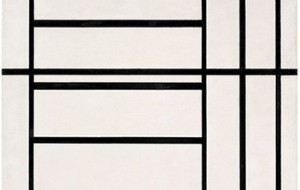
Piet Mondrian Composition No. 1 Composition with Red 1938-39 Oil on canvas mounted on wood support Courtesy of the Peggy Guggenheim Collection.

Piet Mondrian, "Composition No. 1 Composition with Red," 1938-39. Oil on canvas mounted on wood support. Courtesy the Peggy Guggenheim Collection.

Select ONE answer for ALL of the below questions:

  • Does art expand our ability to imagine?
  • What’s Matt Cassel without Randy Moss, Wes Welker and Bill Belichick?
  • What came first: the chicken or the egg?
  • City or United?
  1. Sporty Spice
  2. Sure, why not
  3. The $63 million man
  4. The egg

I love this. Truly and seriously, I absolutely love impossible-to-answer questions.

Who’s your favorite artist of all time? I always vote Titian, but I’m going to say Jeff Koons, if only in solidarity with my colleague from London Town.

If you could only take one album to a desert island what would it be? Probably Blue Train, but I almost said the first Wu-Tang album.

Why do I always make groups of three? Catholic school, ZZ Top, a vast Freemason conspiracy.

This is a fortuitous collision of a number of things I’ve been trying to crowbar into a single post for a minute, so I’m pleased that Art21 has made Question #1 this month’s Flash Points topic. I’ve been reading Elliot Kalb’s Who’s Better, Who’s Best in Basketball?, which attempts to use statistics to demonstrate the sequential superiority of the top 50 hoopsters of all time. Think Roger de Piles with a 360 slam-dunk. Fun stuff, but, like much of the academic endeavor, an attempt to fix and quantify the unquantifiable, or the invisible or the undemonstrable, like the definition for “undemonstrable” in the dictionary. But if Krauss gets “Modernist not-ground,” then I get undemonstrable.

Continue reading »

Art & Compassion at “New York’s Cathedral”

July 28th, 2009
stjohndivine01

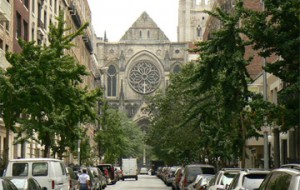
New York's St. John the Divine Cathedral, photo by Mark Larrimore via Flickr

Rev. Tom Miller is the Canon for Liturgy and the Arts at New York’s Cathedral of St. John the Divine, affectionately known as “New York’s Cathedral,” even though it is affiliated with the Episcopal Church.

As the largest Gothic cathedral in the world, St. John the Divine is a unique structure with a a one-of-a-kind mission to embrace the whole city. It is a grand structure which fully reopened last November, after a fire damaged the building in 2001. It has a majestic presence in the Morningside Heights neighborhood of Manhattan and since the early 1970s, it has fostered a strong and lasting relationship with the world’s performing and visual arts.

In the last few years alone, the Cathedral has hosted major exhibitions, including A Time For Hope, which showcased the arts of the autonomous region of Castille-Leon in northern Spain, and the Season South Africa show in 2004, which featured the work of 17 South African artists and was co-hosted by the Museum of African Art.

Rev. Miller is a thoughtful man whose urbane sensibility serves him well in New York. He explains that the Cathedral’s openness to contemporary art is multi-faceted, and he elucidates this point with some thoughts on Episcopalian theology and his personal views on the role of art in society.

When one work in the Season South Africa exhibit sparked controversy from school groups and Catholic organizations because of its contemporary take on the Pietà, he took it in stride and mentioned that it reminded him of a hymn which spoke about Christ making the unlovely, lovely. “No one is excluded,” he said. “Artists help us ask the difficult questions we shy away from.”

“In the Episcopal tradition, incarnation is an important part of the doctrine, but it’s not just in doctrine, devotion, or liturgy. So, it is part of tradition to think that everyone in the world, not just church people, are created with this creative impulse. Artists live to investigate and understand the world and sometimes advocate,” he says.

Rev. Miller works closely with Lisa Schubert, Vice President for Events, Marketing, and Communications at the Cathedral, and together they work to integrate visual arts into the Cathedral’s programming.

The following interview was conducted via email.

stjohndivine02

St. John the Divine's Peace Fountain with the Cathedral in the background. Photo by Alexander Kagan via Flickr.

Hrag Vartanian: Can you tell me about St John the Divine’s visual arts programming?

Rev. Tom Miller: Our visual arts programming invites both established as well as developing artists to install work that reflects on the human condition and those qualities of heart, mind, and soul that respond to a greater awareness of the sacred nature of human life (often in relationship to the divine, defined as broadly as possible).

HV: How does it fit into the mission of St. John?

TM: As New York’s Cathedral, we claim to be a House of Prayer (broadly defined) for All People, which means we have a profile beyond our denominational identity or doctrinal focus. Our mission is to serve the enlightenment of all people in ways of justice and peace, and in that regard, to encourage respect for the dignity of all human beings. Art helps us to do that, but we must necessarily move beyond “church art” and find other expressions of the many ways this divine purpose is perceived by many people. From a scriptural stand point, we claim the belief that God truly did and does come into the world so that we might have life and have it more abundantly. The late Archbishop of Canterbury, Michael Ramsey, among others, was fond of quoting Irenaeus: “The glory of God is a human life fully lived.” That’s my starting point.

A life fully lived necessarily has to do with art, since we are all disposed to it, and it serves us individually and collectively as an integrating agent that connects our hearts and minds and makes us more than we can know or be otherwise. This has something to do with the imagination, of course, and it has something to do with compassion.

Continue reading »