
Weekly Roundup

July 27th, 2009
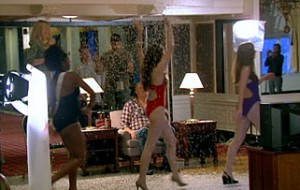
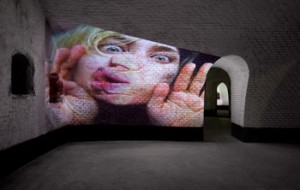
Cao Fei, "RMB City" (film still), , DVD, 6 minutes. Courtesy of the artist and Lombard-Freid Gallery.

Film still from Cao Fei, "RMB City," 2007. DVD, 6 minutes. Courtesy the Artist and Lombard-Freid Gallery.

  • Currently showing at the Museum of Contemporary Art Cleveland, There Goes the Neighborhood explores the many aspects of community, focusing on the evolution of architecture and landscape as it is embodied within a neighborhood’s past, present, and future. The exhibition features Willie Birch, Amy Casey, Clemens von Wedemeyer, Eva Struble, Dionsio Gonzàlez, Leslie Grant, Nina Pessin-Whedbee, Catherine Yass, Kristin Bly, Matthew Kolodziej, and Season 5 artist Cao Fei. Through August 16.
  • A retrospective of John Baldessari’s prints are on view now until Novermber 8th at San Francisco’s Legion of Honor. Over 100 prints are included in the exhibition that spans the four decades of the Season 5 artist’s post-painting period, 1970s to the present. Through November 8.

Letter from London: Jeff – Dumb and Blind(ing)

July 27th, 2009

Jeff Koons, 'Dogpool (Logs)', 2003-2008

Jeff Koons, "Dogpool (Logs)," 2003-2008

In Herbert Ross’s magisterial 1987 film The Secret of My Success, Michael J. Fox plays Brantley Foster, a charming chancer who works his way up (spoiler alert!) from mailroom to boardroom in his uncle’s corporation. Meeting him in his plush corner office, Foster makes a heartfelt appeal to give him a chance in the company. “What experience have you had?” asks his flustered uncle. “Practically none,” says Foster. “But I believe in myself. Doesn’t that count for something? I can do anything if I just get a chance!” Here’s where audiences divide, both Europeans and Americans simultaneously responding, “That’s so American!” with exact opposite meaning and inflection.

Here, too, is where Jeff Koons’s work comes in, whose career and persona (like that of Michael J. Fox, or his late sometime muse, Michael Jackson) is so inextricably tied to the 1980s culture of capitalist optimism that it’s a mild surprise not to see his jacket sleeves rolled to the elbow in the press shots for his new show in London. The sober, side-parted 54-year-old may have retained the sartorial trappings of his commodities broker past, but in his work (and in his interviews), he has conserved a kind of wild-eyed naivety too consistently maintained to be prefixed faux with any degree of confidence. Consistency, too, is the keynote of his work as a whole. Trompe-l’oeil inflatables – sculptures in heavy metal meticulously finished to resemble weightless objects – have been a preoccupation of Koons’s work since the mid-eighties, when works such as Aqualung and Boat (both from 1985) announced the artist as a successor to Warhol’s deflating Pop persona. Inflatables again (and the idea of the inflated, tumescent, or pumped-up—all of which have, in various contexts, been applied to Koons and his work over the years) dominate proceedings at the Serpentine Gallery, in Koons’s first show in England, entitled Popeye Series.

Caterpillar Ladder (2003), which greets visitors to the Serpentine, resembles a children’s inflatable toy thrust through the legs of an ordinary stepladder, but is made from such extraordinarily finished aluminum that every wrinkle and pucker (sorry) looks utterly, impossibly convincing. Very bored-looking guards are stationed at every other sculpture, presumably to restrain the inevitable incredulous knocking; they can’t help but act as reminders of the insane cost of each work, and the gentle appeasement of nervous lenders (many works are on loan from private collections). Koons’s meticulous illusionism aligns his work more with Dali’s seamless dreamscapes than Duchamp’s dumpster-diving, although allusions to both abound. Lobsters out of Dali’s Lobster Telephone feature in several works (as do waxed moustaches), and chairs and dustbins and saucepans suspend from or support inflatable animals as a kind of nod to Duchamp’s assertion of aesthetic nullity.

Yet it’s the affirmation of the seductive power of illusion that makes Koons an anti-modernist in spirit and a Copperfieldian in practice. Modernist tastemaking demands deferral of an image’s resolution, a perpetual nudging reminder that what you’re seeing isn’t real. Koons’s work leaps into the subconscious without asking permission, setting off childhood conflations of pleasure and fear with lusty abandon. Dolphin (2003), a faux-inflatable suspended from the ceiling from emergency-yellow chains, carries a cargo of kitchen utensils from its belly in parody of domestic drudgery, even pregnancy, powering upwards in mad, unmistakably sexual transcendence. A kind of triumphalist surging characterizes the other sculptures on display, in which glossy, unblinking eyes and goofy smiles carry cartoon animals through physical obstacles and beyond their actual weight, like a vaguely traumatic dream before a job interview.

Meticulousness also characterizes the suite of paintings on display, all of which to some extent repeat the themes of the sculptures. So it’s hard not to think of them as secondary, especially since they lay bare Koons’s dependence upon Pop Art of the 1960s so baldly. A Ben-Day Popeye and airborne Superman make labored allusion to Lichtenstein and Warhol, and the layering of semi-translucent popular imagery makes no apparent advance on Rosenquist or even Wesselmann, as momentarily engaging as they are to unpick. The appearance of Popeye is a critical slippery slope towards creaky puns (an ‘eye for Pop’? ‘Eye-popping’?), but plays out the theme of the surge of pumped-up American strength pretty effectively (as do the two pairs of pneumatic breasts in Elvis (2003), a reminder of Koons’s not-at-all-SFW Made in Heaven series). Koons’s earnest assertion that the character, born in 1929, alludes to the Great Depression and thereby parallels our current economic strife is an excellent example of the artist’s bait-and-switch tactic, in work and in interviews; it’s both coldly ironic and utterly sincere. The works, at best, are both.

Inflation and its semantic offshoots have peppered much of the critical reaction to Koons, whose work (alongside the skull, or the gags) has perhaps unwittingly marked its place as icon of economic boom and bust—big shiny inflatable things in billionaire lobbies readily reducible as symbol of transient avarice. Critical (or, really, uncritical) hot air has buoyed Koons from show to show, continent to continent, like a balloon bopped between children at a party. But separating Koons’s work from its atmospheric environment, letting out the air of institutional obsequiousness, critical fawning and skyrocketing auction prices, leaves the viewer with a body of work in which pleasure – with all of its troubling associations and resonances – is the oxygen of art, with the orthodoxy of contemporary art theory sucked out. In the words of Ferris Bueller, in another mid-eighties masterpiece, “a person should not believe in an ‘ism.’ He should believe in himself.”

On Painting

July 26th, 2009
Fig. 14 of Leon Battista Alberti, "On Painting," page 70. Penguin Books, 1991.

Fig. 14 of Leon Battista Alberti, "On Painting," page 70. Penguin Books, 1991.

I’m a PC, and I’m about to become a Mac. How is it that in this world of Al Gore-invented internet, Steve Jobs-overlorded life 2.0 and tweeting Twitter twits I can actually have a whole day of work completely undone by a single, cantankerous, God-forsaken PC? I swear, today was a good day and it’s been nearly two hours since I switched the thing on, and it only just now stopped making that quick, field of crickets clicking noise that all PCs make when they are deciding whether or not to continue living. It’s not even a Vista machine and I’m able to make and eat breakfast before IE and iTunes decide which is going to rule the roost for the day. IE: 2, iTunes: 0. Yesterday’s shenanigans lasted until 2pm, at which point I thought it would be satisfying to plug in my new government assisted and subsidized digital converter box. All that did was make it impossible to watch the DVD player. Turns out that the box makes your tv compatible with the new signal but the box isn’t necessarily compatible with the old antenna. Technology: 2, Adrian: 0.

So, the dog ate my homework, which I why I didn’t write anything the last few days. Plus, I was struck by an epidemic of mid-week, rainy day malaise, offset by the certainty that if I wrote about the baseball game that I went to Monday night, I’d lose some people’s attention. It did, however, get me to thinking about Fantasy, the theme of the moment for Flash Points.

Now, believe me, I don’t like baseball one bit, at least since Billy Martin retired. But I am constantly amazed at the way in which going to a game at the stadium, during which I not only had a big beer in a big plastic cup (non-commemorative), an absolutely excessive hot dog (with ketchup, mustard, kraut, and relish), and soft-serve ice cream in a plastic baseball helmet (Houston Astros? I thought they were supposed to be home team helmets. We’re not even in Houston.), I found myself in the most profound state of bliss since early last week. It’s such a stereotype. Americans at a baseball game—night game, weather clear, about 80/mid-20s for the Celcioids—drinking beer, eating excessively, piddling away time and money, eyeballs-deep in an economic collapse. Nero, loan me your fiddle. It was fantastic, fantastical, one of the most, nostalgia-laden, Hallmark card-worthy, saccharine moments anyone might ever have. One of those peculiar instances where fantasy and reality collide, much to everyone’s surprise and enjoyment. Reminds me of the passage in Mad Love when Breton finds the spoon with the slipper at the end. Hardly, but I love that sensation. That glint of the unheimlich, like in a Gregor Schneider haus, when it’s just strange enough. You know, been here before, I think I’ve seen this somewhere. Why can’t I remember?

Castellani Enrico, "Superficie rosa," 1963. Acrylic on canvas, 130x92x21 cm (possibly mislabelled). Courtesy Haunch of Venison.

Enrico Castellani, "Superficie rosa," 1963. Acrylic on canvas, 130x92x21 cm (possibly mislabelled). Courtesy Haunch of Venison.

Which brings me to Enrico Castellani. I don’t know the time-space rules on a blog, but I want to go way back in the past, to May, which was before June’s Biennale opening, so I suspect May doesn’t matter anymore? That was, like, OMG, so last Biennale ago. Anyway, back when the dinosaurs ruled the earth, I went to see the Castellani show at Haunch of Venison, way above midtown. I’ve known about Castellani’s work for a while, mainly because I’m obsessed with 1960s Italian painting and what it does to space. Lucio Fontana gets the most press, and probably rightfully so, but Emilio Vedova and Agostino Bonalumi certainly deserve as much attention. I can hear all my friends groaning. Castellani is the fourth Beatle.

What really struck me about this show, other than its absolute magnificence, was how traditional it looked, old even. Albertian.  The two works that really did it for me were two 1963 paintings, both listed as Superficie rosa, though the one is more bianca than rosa to me. I would know if I would have bought the catalog. Big mistake. The white one might as well be a diagram from Alberti’s On Painting. I have the 1991 Penguin Classics edition. Look at figures 6, 8-11, 13, 14 and try to tell me that Castellani isn’t going back to basics. He’s making leaps here as well. Superficie rosa—the red one—is even more interesting because it bends the corner. Castellani’s nails are gone, but the lines created by the join of the two canvases, what was reinforced by a drawn perspectival space in the white one, is now mediated by an actual, real-space bend. Albertian perspective, as actualized in a picture, at least at one point, presumed one flat field of vision at a time. A painting, that we’re standing in front of, on a perpendicular, looking at. Castellani has shifted this, elaborated it on two planes. The point, the vanishing point, what was supposed to be a nearly invisible point in the infinite distance has been transmogrified into one point among the infinity of others that make up the line that is the bend of the wall, the corner. Alberti has been multiplied outward and what should be our Albertian point of reference, where the canvases join, is offset, one among many. Maybe it’s not that exciting, that painting went from flat to spatial through the mechanism of spatializing flatness. Check out figure 14 again, and think about the line from G to F, the bend in the image. Maybe this is the ultimate tautology, but it makes sense. It makes sense that an Italian painter working at the end of painting as it had been since Alberti is using Albertian principles, not against themselves, but beyond themselves, to transcend painting. To keep it as painting, but still more than painting.

castellani-enrico-superficie-rosa-1963-acrylic-on-canvas-130-x-92-x-21-cm-probably-mislabelled-courtesy-of-haunch-of-venison

Enrico Castellani, "Superficie rosa," 1963. Acrylic on canvas, 130x92x21 cm (probably mislabelled). Courtesy Haunch of Venison.

Somewhere in there is a life lesson for me, that I keep telling myself so that I don’t forget it. Now, I wouldn’t follow half of my own advice, but I love those moments when I’m reminded how deep the history of art is, how long the memory of an artist can be, how negligent it is to look at anything in a vacuum. Remember that game Memory? It’s like flipping two tiles over.  Castellani, Castellani…where’s the other Castellani…there it is, the Alberti.

Jessica Stockholder | “Vortex in the Play of Theater with Real Passion: In Memory of Kay Stockholder

July 24th, 2009

DOWNLOAD VIA ITUNES | SUBSCRIBE VIA RSS

EXCLUSIVE: At her home in New Haven, Jessica Stockholder discusses the inspiration for “Vortex in the Play of Theater with Real Passion: In Memory of Kay Stockholder” (2000) at the Kunstmuseum St. Gallen in Switzerland. A temporary site-specific installation, the materials for the project include Duplo, work site construction containers, and elements from a theatrical stage.

A pioneer of multimedia genre-bending installations, Jessica Stockholder’s site-specific interventions and autonomous floor and wall pieces have been described as “paintings in space.” Her work is energetic, cacophonous, and idiosyncratic, but closer observation reveals formal decisions about color and composition, and a tempering of chaos with control.

Jessica Stockholder is featured in the Season 3 (2005) episode Play of the Art:21—Art in the Twenty-First Century television series on PBS.

VIDEO | Producer: Wesley Miller & Nick Ravich. Interview: Susan Sollins. Camera: Mead Hunt. Sound: Merce Williams. Editor: Jenny Chiurco. Artwork Courtesy: Jessica Stockholder

An Interview with Mary Heilmann by Ross Bleckner

July 24th, 2009

bomb_logo1 Welcome back to BOMB in the Building, where each week we’re featuring a vintage BOMB interview with a Season 5 artist. This week, we head back ten years to revisit a classic conversation with Mary Heilmann, conducted by Ross Bleckner. “Heilmann’s style defies the fashionable,” Bleckner writes, “her paintings contain a joy so contagious one smiles upon seeing them…[they] sing with a life force hard to match.” In this interview excerpt from BOMB Issue 67, Spring 1999, these old friends and peers discuss memory, nostalgia, and a body of work that was 40 years in the making. Read the full interview here.

Photo courtesy of Mary Heilmann

Photo courtesy of Mary Heilmann

Ross Bleckner: What do you consider yourself?

Mary Heilmann: Sometimes I’m a light artist and sometimes I’m a heavy artist. Significantly, in the making of our work, we artists channel the artists that worked before us.

RB: Naturally, but I think you’re a light artist. That’s what I’ve always liked about your work, the casual attitude. I’ve known you for a long time but I don’t know you that well. I think you’re very serious and something of a formalist. But it’s the character of your abstraction that’s always interested me. I can’t really say whether it’s backhanded—but it seems to be—which is now equated with ironic, but wasn’t back when I first saw your work. That’s what I mean by light. I don’t mean that as good or bad—I actually think it’s very interesting in your case. I remember seeing your paintings when I was a little pup.

MH: When you first showed up here in New York, you mean?

RB: Yeah. You were showing at Holly Solomon Gallery. And what was funny about your paintings is that they were simple—squares within squares, kind of quasi-minimalist, brightly colored—everything was slightly off register, even the shape of the canvas itself, right? The square would be lopsided.

MH: I don’t think so, not on purpose anyway. The interior square—

RB: Well maybe the interior square set up a perception that made me think of it as being slightly…goofy.

MH: Yeah, it’s true. It had that.

RB: You’ve managed to maintain that character for 30 or more years and it always seems very fresh to me. It’s actually what younger artists respond to in your work. What comes around goes around—that freshness, your approach to abstraction, seems very unencumbered. It gives the paintings a lightness. You could translate it emotionally or spiritually, but it’s like air. The paintings have a lot of air in them.

Anyway, take us back and give us an idea of the book you’ve been working on and what it means to you to go back over these 30 years—finding yourself with some new popularity.

MH: The book goes back to when I was born; it’s the story of my whole life. It’s to show that the paintings reflect events and visual events that I experienced ever since I was a little child. I put this book together because it was an opportunity to make something about my work that wasn’t just another art catalog. I wanted to make my own biographical book. And in it I’ve told some stories from my life, some little anecdotes, and I’ve chosen things that the paintings recalled. The painting Rio Nido has little spots of light—in the ‘40s we went to a summer vacation spot where it was common to put colored lights around the porches.

RB: They’re very popular. Pool motif.

MH: This was a working-class resort where teachers, nurses and policemen went. The memory of this place is just fantastic to me and that picture reminds me of it; that happens all along.

Continue reading »

Meet the Season 5 Artist: Mary Heilmann

July 23rd, 2009

The above video is excerpted from the Season 5 episode Fantasy, premiering on Wednesday, October 14, 2009 at 10pm (ET) on PBS (check local listings). Fantasy presents four artists — Cao Fei, Mary Heilmann, Jeff Koons, and Florian Maier-Aichen — whose hallucinatory, irreverent, and sublime works transport us to imaginary worlds and altered states of consciousness.

Who is Mary Heilmann and what does she have to say about fantasy?

Mary Heilmann was born in 1940 in San Francisco, California; she lives and works in New York. For every piece of Heilmann’s work—abstract paintings, ceramics, and furniture—there is a backstory. Imbued with recollections, stories spun from her imagination, and references to music, aesthetic influences, and dreams, her paintings are like meditations or icons. Her expert and sometimes surprising treatment of paint (alternately diaphanous and goopy) complements a keen sense of color that glories in the hues and light that emanate from her laptop, and finds inspiration in the saturated colors of TV cartoons such as The Simpsons. Her compositions are often hybrid spatial environments that juxtapose two- and three-dimensional renderings in a single frame, join several canvases into new works, or create diptychs of paintings and photographs in the form of prints, slideshows, and videos. Heilmann sometimes installs her paintings alongside chairs and benches that she builds by hand, an open invitation for viewers to socialize and contemplate her work communally.

On the subject of fantasy in art, Heilmann talks about how wonder, life experiences, and previous works anchor her abstractions (in the forthcoming Season 5 book):

A body of work starts by daydreaming, imagining, looking at my own work, the work that’s already around in the studio, and also looking at the work on the computer. All the images that I’ve done are on the computer now. And the work is always made by morphing previous work.

When minimalism ended and post-modernism started for me, I started giving the pieces fanciful titles that related to some kind of narrative that was going on with me. So the titles are often like a three-word poem that is a part of the piece. It’s really opened up my work to where I can make an abstract-expressionist, gestural painting next to a geometrical painting next to an image of a piano, and it kind of makes sense for me. I keep a diary and I just make notes about whatever happened the day before. I write in it in the morning. I have had it now for about twenty years, so I can look back and see what was going on—and I like to read it and remember how I felt way back. Actually, remembering and then expressing emotion in the art is something that I like to do.

What happens in Heilmann’s segment in Fantasy this October?

“Every piece of abstract art that I make has a back story,” says Mary Heilmann, who relays youthful fantasies of wanting to be a Catholic martyr, her childhood dream to become an artist, as well as the antagonism she experienced in school when transitioning from pottery to painting.

Shown completing a new body of work, which includes the shaped canvas Two Lane Blacktop (2008), the segment begins in the artist’s secluded Bridgehampton studio on Long Island. “There are two realities going on in the same painting,” she explains, referencing the collision of deep and shallow space in a single work, the painting as both physical object and pictorial depiction, and the final abstraction and its often fanciful, poetic title. “My spiritual life is very important to me and I think the artworks are icons,” says Heilmann, who believes in the ecumenical power of art to “transport a person in a soulful, rich way, without having any fear of punishment or Hell or sin.”

The segment also features scenes from Heilmann’s video slideshow Her Life and her touring retrospective To Be Someone (2008) at the Wexner Center for the Arts in Columbus, Ohio, where she’s designed colorful chairs on wheels that viewers can use to relax, meditate, or socialize with one another and have “a conversation through the work.”

Mary Heilmann. "Go Ask Alice," 2006. Oil on canvas, 36 x 48 inches. Photo by John Berens, © Mary Heilmann, courtesy the artist, 303 Gallery, New York and Hauser & Wirth Zurich London.

Mary Heilmann. "Go Ask Alice," 2006. Oil on canvas, 36 x 48 inches. Photo by John Berens, © Mary Heilmann, courtesy the artist, 303 Gallery, New York and Hauser & Wirth Zurich London.

What else has Heilmann done?

Mary Heilmann earned a BA from the University of California, Santa Barbara (1962), and an MA from the University of California, Berkeley (1967). Heilmann has received the Anonymous Was a Woman Foundation Award (2006) and grants from the National Endowment for the Arts and the Guggenheim Foundation. She has had major exhibitions at the Parrish Art Museum, Southampton, New York (2009); New Museum of Contemporary Art, New York (2008); Wexner Center for the Arts, Columbus, Ohio (2008); and Orange County Museum of Art, Newport Beach, California  (2007), among others. Her work has appeared in Whitney Biennials (1972, 1989, 2008) and is in many collections, including the Museum of Modern Art, New York; Whitney Museum of American Art, New York; and Orange County Museum of Art.

Where can I see more of Heilmann’s work between now and the Art21 premiere this October?

Mary Heilmann is represented by 303 Gallery in New York and Hauser & Wirth in London and Zurich

What’s your take on Heilmann’s inclusion in Season 5?

Tell us what you think by leaving a comment below!

Reflections on the Art21 Educators Institute

July 22nd, 2009

Benjamin Morales working at Cheim and Read's "The Female Gaze"

Benjamin Morales working at Cheim and Read's "The Female Gaze"

I’m sure everyone has had moments of blissful exhaustion- those times when you pushed yourself over a certain period, gotten to the end and said, “That was outstanding…. and I’m completely fried.”

That pretty much sums up our pilot institute for Art21 Educators.

After five days of working, thinking, walking, seeing, talking, planning, debating, sharing, listening, investigating and creating, we said farewell, for now, to the 15 teachers who joined us from across the country. Jessica Hamlin, Marc Mayer and myself, along with our superhero-intern, Joy Lai, looked at each other and let out a nervous and very satisfied laugh after everyone had left the sixth floor classroom at NYU yesterday afternoon. What a week!

The institute started with Oliver Herring greeting participants in one of the small auditoriums at NYU and immediately getting everyone to perform one of his famous TASK projects. There were no formal introductions, no go-around-the-circle-and-introduce-your-partner silliness. Participants got to know each other, in more ways than one, by participating with Oliver to create a massive art work that filled the stage and the first few rows of the auditorium. Then we introduced ourselves.

After a working lunch and previewing some of the season 5 video, participants then introduced themselves using a Pecha Kucha format- 10 slides, 10 seconds each. The intros were simple, to the point, visually exciting, and never included the line, “I was a lonely child…..” Everyone participated, including Jessica, Marc and myself.

The final part of day one included an introduction to some of the unit planning participants would be doing, and a look into how big questions and themes can drive units of instruction. Afterward, we were delighted to have Susan Sollins, Executive Director at Art21, host a reception at her loft in Manhattan. The day ended much like the week ended- we were all tired and had smiles touching the backs of our heads.

Day two started with a workshop on using the Art21 Educator Guides and working with big ideas. We shared strategies for using film in the classroom and making the viewing of film active vs. passive. At lunch, we were treated to a live webinar with Olivia Gude who arranged a two-hour presentation and discussion from her home in Chicago. This wasn’t just food for thought, it was a five course meal. Later that day, we had a chance to look at student work samples in small groups and connect some of what Olivia discussed with what participants were sharing in our second day.

Friday began with a Media Literacy workshop that introduced participants to different ways they can bring video and online resources into the classroom. As the morning ended we packed up our stuff and headed to Oliver Herring’s studio in Brooklyn for a studio visit before seeing a few gallery exhibits in Chelsea in the late afternoon. The day ended at Half King, a favorite spot in Chelsea for relaxing after gallery-hopping.

Participants had the chance to enjoy New York City over the weekend, since our institute was scheduled from Wednesday through Tuesday, and visited a variety of museums and galleries as they prepared units of study for presentation on Tuesday. Many came back with wonderful stories about artists and art works they discovered. Many also had a chance to discover New York City in ways they wouldn’t have if the institute was scheduled in a Monday through Friday format.

The entire day was spent at the Museum of Modern Art on Monday. Everyone spent some extra time preparing their units as well as being introduced to strategies for working with students in museum and gallery settings. Lisa Mazzola, one of the many excellent educators on staff at the museum, helped make our visit both enjoyable and productive, and later that evening everyone got together with other Art21 staff members for supper in the East Village as we headed into our final day.

Tuesday began with a tutorial on filming in the classroom with our Art21 Production Coordinator, Larissa Nikola-Lisa, since part of our work with the teachers over the next year will include participants shooting video and documenting their teaching. We also had the chance to introduce other online resources and ways we will communicate about our work before being joined by Art21 artist Jessica Stockholder at lunch, who shared images of her sculpture  and thoughts on being both an artist and an educator at Yale University.

The final part of our last day included all participants sharing their units of study in small groups and getting critical feedback. It was thrilling to see the teachers share how their thinking and planning had taken shape over the week. It was even more thrilling to see them give each other constructive criticism that truly made the units even better.

Now, before I go, let me just say one thing…. This group was not normal. They worked well together, laughed a lot and helped one another consistently. We are very lucky to be working with them. There wasn’t a single person in the group who spent the week explaining why they can’t do certain things in their school or district. There wasn’t a single person in the group who spent the week monopolizing the conversation and preventing others from sharing their expertise, and again, we all know this isn’t normal. There are always personalities who fit these descriptions when you get a group of teachers together, and we are so fortunate to have a team of educators in our pilot year that are flexible, creative, respectful of one another, and excited to work on this project.

We’re excited, too. And the smile is still touching the back of my head.

Because You’re Worth It

July 22nd, 2009

VIDEO: Ali Jersey Art 21 from Jamtron on Vimeo.

Clever, irreverent, earnest…is this the best spoof of Art21 of all time?

Things That Made Me Go Hmmm…

July 21st, 2009

Hello again and Happy Scopes Monkey Trial Day, though it wasn’t a good day for the monkey.

That went fairly well, or so I’d like to think. People responded (your checks are in the mail) and the multi-limbed game of blog pong begins. I’ve emplaced a new system. Blogging begins right as the coffee peaks and ends right around that time where the pre-lunch blood sugar is low and the inevitable grouchiness begins. Optimal circumstances. It’s an absolute lock that I’ll have what Timothy Egan called an “itchy Twitter finger,” though he said that in the context of Sarah Palin and crystal meth. Hmm. And I don’t Tweet. That fake Christopher Walken and Chad Ochocinco are impossible to keep up with.

It did occur to me that I might have gotten a bit slappy on the cakes, so I’ve done what every self-respecting art historian does when they need to tone it down a bit. I’ve been thinking about Adorno. Now, before everyone gets really excited (put away the streamers and screw the top back on the champagne), know that I’ve been thinking about Adorno similarly to the way that SportsCenter thinks about games: partially, superficially, with maximum speed, and minimum engagement. But hear me out.

I’m not here to dispute the viability of Adorno and Horkheimer’s theory of the Culture Industry. I actually like it quite a bit, because I think it’s mostly true, though like all other theories in its requirement of suspension of disbelief. And it allows me to grumble endlessly about whatever it is about American life that bothers me, which is really convenient — far more so than those Segway things ever were.

I think MTV actually helped undo the Culture Industry. Maybe only once, but somewhere between the time “Video Killed the Radio Star” and MTV killed Britney’s chances at a normal adolescence, something really remarkable happened. Right about the Summer of 1989, MTV began broadcasting Public Enemy’s “Fight the Power” video.

Continue reading »