Some Thoughts on China + Transformation

August 31st, 2009

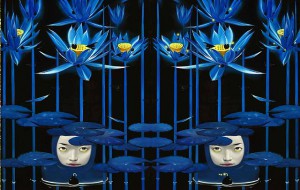
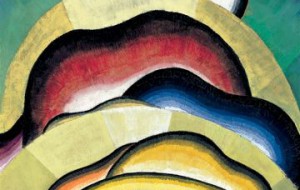
Mu Li "The Fruits of Blue Lotus Flower"

Mu Li "The Fruits of Blue Lotus Flower"

In the final week of the Transformation series, I’ve asked a number of people with diverse points of view to offer their thoughts on the topic.

To kick things off, I introduce Ellen Pearlman, a Brooklyn & Beijing-based writer, curator, critic and film maker, who shares her thoughts about the notion of Art + Transformation in regards to China’s art scene:

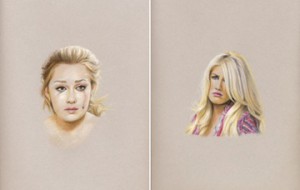
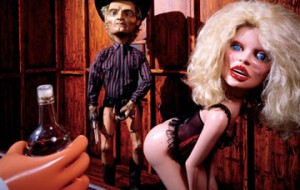
Cao Fei, one of the featured artists on Art21, came of age during China’s accelerating transformation playing out through Second Life scenarios issues of fragility, loss and alienation. Other young Chinese artists are also delving into issues of their country’s transformation. International cities like Shanghai just had its first gay festival and though Beijing remains the art hub, second tier industrial and provincial regions like Wuhan and Sichuan and Hangzhou are also adding their voices into the mix. Instead of the block buster exhibits mounted by more recognized artists experiments are exploring themes of infantilism and powerlessness with new Chinese Anime, existentialism and ennui with WAZA, and issues of cultural dislocation and transgression with O Zhang.

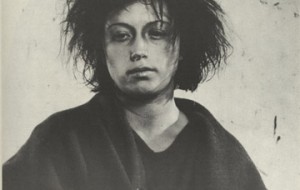
O Zhang, "Daddy and I" No. 16

O Zhang, "Daddy and I" No. 16

Continue reading »

Weekly Roundup

August 31st, 2009

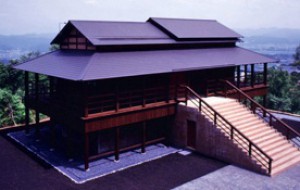
James Turrell, "House of Light," 2000. © Photo: Kamome Courtesy Echigo-Tsumari Triennial

James Turrell, "House of Light," 2000. © Photo: Kamome. Courtesy Echigo-Tsumari Triennial

  • House of Light (2000), a permanent installation in Kawanishi, Japan by Season 1 artist James Turrell, will be open through September 14 as part of the 2009 Echigo-Tsumari Art Triennial. The mechanical roof of this popular accommodation facility slides back to reveal the changing light and colors of the sky through a rectangular opening. “In the interior space,” Turrell writes, “one can experience a soft transforming light” by way of “familiar Japanese idioms such as shojii (paper sliding door) and tokonoma (alcove).”
  • The Miami gallery O.H.W.O.W. will participate in an exhibition at the Macro Contemporary Art Center in Rome next month by setting up a shop to sell their New York Minute Poster Pack. The bundle includes prints by Barry McGee (Season 1), Aurel Schmidt, Dan Colen, Chris Johanson, Evan Gruzis, Kon Trubkovich, Tauba Auerbach, Ben Jones, JD Samson, and the late Dash Snow. Read more on Slamxhype.
  • Juxtapoz Magazine gives a sneak peak at Barry McGee’s installation for the 20th anniversary exhibition at the Armory Center for the Arts. The space, located in Pasadena, Ca., has commissioned 20 contemporary artists that they have worked with in the past, to make new site-specific art works both inside and outside of the Armory.
  • Pierre Huyghe (Season 4) is included in the exhibition and performance series Høvikodden Live 09 in Oslo, Norway. The annual Henie Onstad Art Centre event takes the interplay between different forms of art as its focus; this year’s curators investigate the voice as medium and metaphor. Concerts and other programs will take place in the galleries alongside static works of art.

What’s Cookin at the Art21 Blog: A Weekly Index

August 28th, 2009
lucille_ball_whatscookin1

Lucille Ball, Source: Google Images

So many places to go and art to see…let’s get started…

Thank you Trong for updating us on the whereabouts of some very special Art21 artists.

Guest blogger Quinn Latimer writes about select things which are readable, playable and (of course) visible: Let Them Read Books / Play Records

Ah yes (!) the weekly letter Letter from London by Ben Street: Hot Scots Part Un

Gastro Vision: Aesthetics of Urban Farming Part II by Nicole Caruth. If you missed Part I, check it out here.

For a selection of quotes curated by guest blogger Quinn Latimer, visit her specially-curated Chain Link Fence.

..and the Not-So-Powerful (Part – One), another insightful addition to the column Teaching with Contemporary Art by Joe Fusaro.

In the latest installment from our upcoming season: Meet the Season 5 Artist: Cindy Sherman, a post by Wesley Miller.

“ArtPrize: An Experiment in De Centralized Curation and Competition” by Kevin Buist. Participate in the discussion here

From Here to There (and Back Again) — Quinn Latimer reviews the exhibition “Holbein to Tillmans” at the Schaulager Museum in Basel, Switzerland.

Artist Davis Thompson-Moss discusses his experience appearing as a performer, alongside his brother, in two videos by Oliver Herring.

Georgia Kotretsos’ Inside the Artist’s Studio talks to agrisculptor Flo McGarrell, who divides his time between Vermont and Haiti, and creates work which “hacks” waste to make it useful again.

And Cindy Sherman is interviewed by Betsy Sussler, in this week’s bombastic contribution from BOMB Magazine.

Cindy Sherman interviewed by Betsy Sussler

August 28th, 2009

Welcome back to BOMB in the Building, where each week we’re featuring a vintage BOMB interview relating to a Season 5 artist. Inspired by Cindy Sherman’s “Transformations,” this week we head back 24 years for a seminal interview with the photographer, conducted by BOMB’s own editor in chief, Betsy Sussler. “Sherman’s earliest photographic work displayed her posed tauntingly in sets. Mimicry, mostly of ‘50s and ‘60s film, they anticipated a voyeuristic response,” Sussler wrote in BOMB Issue 12, Spring 1985. “It was not only Sherman emoting but Sherman becoming different personalities.” Read the full interview here.

sherman_04_body

Betsy Sussler: When did you decide to be an actress in your photographs? Do you consider it acting?
Cindy Sherman: I never thought I was acting. When I became involved with close-ups I needed more information in the expression. I couldn’t depend on background or atmosphere. I wanted the story to come from the face. Somehow the acting just happened.

Continue reading »

Inside the Artist’s Studio: Flo McGarrell

August 28th, 2009
img_0876cropped

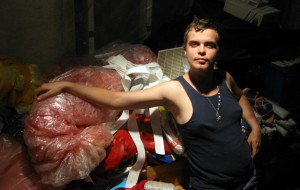
Flo McGarrell at his studio in Vermont.

Flo McGarrell is a visual artist based in Newbury, Vermont, USA and Jacmel, Haiti. He was born in Rome, Italy to American expatriate artists. McGarrell received a B.F.A. in Fibers and an M.A. in Digital Arts at the Maryland Institute College of Art in 1998. He then attained an M.F.A. in Art and Technology Studies at The School of the Art Institute of Chicago where he implemented his hybrid skills in sculpture and digital craft to create architectural scale inflatable sculptural interiors animated with air pressure, light, sound, and video projections. He is currently serving as the director of FOSAJ, a non-profit art center in Jacmel, Haiti.

McGarrell is a full-time resident of Jacmel and during the summer months he retreats to his studio in Vermont. In Haiti, McGarrell’s studio is located on the second floor of FOSAJ, which was previously a coffee warehouse. The FOSAJ space also serves as his living quarters, a place for his assistant, Zaka, and somewhere to hang his hammock.

Zaka tickling Stacy, FOSAJ office/studio/living quarters.

Zaka tickling Stacy, FOSAJ office/studio/living quarters.

McGarrell tells me that Jacmel is a place where the senses awake–it is visually rich and energetic. The view outside the window is the bright Haitian sunlight, the ocean, coconut palms, almond and mango trees. The breeze brings him smells such as burning trash, cigarette smoke, marijuana from the beach and, in the evenings, the bar next door blasts Kompa music.

It wasn’t so long ago that McGarrell excelled in the making of inflatable sculptures, now specializes in “agrisculptures.” I will say no more. I encourage you to visit his latest show called I Agrisculpture at AVA Art Center and Gallery in Lebanon, New Hampshire.

The artist adds, “All of the pieces fall under the definition ‘Agrisculpture’ and are part of home-scale food production systems. All works are made with secondhand, found, intrinsically colored plastic, organic material and plants. All pieces are the result of experimentation undertaken in Roswell, New Mexico, Newbury, Vermont, and Jacmel, Haiti.”

My interview with the artist is below and it is an absolute pleasure introducing you to this gutsy artist and friend.

Georgia Kotretsos: Flo, you have a base in Newbury, Vermont, and another in Jacmel, Haiti. Does each space accommodate different studio needs or do you feel like an artist at work in one place more than the other?

Flo McGarrell: I seem to be an artist-person who has only a little separation between art and life–if you will please excuse the cliché. Specifically, I attack whatever I am working on with an obsessive compulsion that we creative types are often afflicted with. It doesn’t stop no matter where I am, regardless of whatever else I am doing. The objects of my ministrations include sculpture, art direction for film, performative identity adjustments, installation, kleptomaniac collecting schemes, so I must be poised to work wherever I am at all times. Whether it’s from my own body, or my car, a suitcase, a friend’s house or anywhere else I find myself.

Continue reading »

Oliver Herring | Participant Davis Thompson-Moss

August 28th, 2009

DOWNLOAD VIA ITUNES | SUBSCRIBE VIA RSS

Artist Davis Thompson-Moss discusses his experiences appearing as a performer, alongside his brother, in two videos by Oliver Herring: BASIC (2003) and THE DAY I PERSUADED TWO BROTHERS TO TURN THEIR BACKYARD INTO A MUD POOL (2004).

Among Oliver Herring’s earliest works were his woven sculptures and performance pieces in which he knitted Mylar, a transparent and reflective material, into human figures, clothing and furniture. Since 1998, Herring has created stop-motion videos, photo-collaged sculptures, and impromptu participatory performances with ‘off-the-street’ strangers, embracing chance and chance-encounters in his work.

VIDEO | Producer: Wesley Miller and Nick Ravich. Interview: Eve Moros Ortega. Camera & Sound: Joel Shapiro and Roger Phenix. Editor: Jenny Chiurco. Artwork Courtesy: Oliver Herring. Special Thanks: Davis Thompson-Moss.

From Here To There (and Back Again)

August 28th, 2009

Jeff Wall, “Citizen” (1996). Gelatine silver print on aluminium panel, framed, 192 x 244 cm. Photo: Öffentliche Kunstsammlung Basel, Martin P. Bühler, courtesy Kunstmuseum Basel, © Jeff Wall.

Jeff Wall, “Citizen” (1996). Gelatine silver print on aluminium panel, framed, 192 x 244 cm. Photo: Öffentliche Kunstsammlung Basel, Martin P. Bühler, courtesy Kunstmuseum Basel, © Jeff Wall.

Collection shows, by their very nature, often feel more like “Best of…” CDs than a well-curated mix-tape. They usually feature the hits—a stripe-y Barnett Newman, an invariably awesome Pablo Picasso—but context and a coherent thesis is usually, almost inevitably, missing. How to connect the Picasso to the Newman without invoking a stutter and hiss on the tape (as elucidated by the invisible crease in the white wall they share), by which we know that one work really wasn’t supposed to follow the other, and that a lucid argument about their relationship might be lacking?

These were some of my thoughts, anyway, on entering “Holbein To Tillmans” (there’s a leap for you), the Schaulager’s summer show of some 200 works culled from the Kunstmuseum Basel’s deeply quirky collection (Holbein and friends, an orgy of Swiss Alpine landscapes, a remarkable group of Ab-Ex works bought in toto on a trip to New York in 1958) as well as a few others from the Emanuel Hoffmann Foundation.

Matching the Schaulger’s own improbably seismic concrete-and-concrete space, deftly orchestrated by local heroes Herzog & DeMeuron, the exhibition’s scope—the Middle Ages to the present—is large in the extreme. The curatorial premise, by necessity, is vague in the extreme: to look at all the works “with today’s eyes,” and to perceive the “world around us by looking at people or things.” If this sounds doubtful, the show succeeds by merit of the works themselves, as well as by odd and inspirational pairings that together advance a kind of humanist argument: everything’s linked—past, present, future—and we’re all in this together.

Rodney Graham, “Allegory of Folly: Study for an Equestrian Monument in the Form of a Wind Vane” (2005). Lightbox, two parts, each: 306 x 141 x 18 cm. Photo: Tom Bisig, Basel, courtesy Kunstmuseum Basel, © Rodney Graham.

Rodney Graham, “Allegory of Folly: Study for an Equestrian Monument in the Form of a Wind Vane” (2005). Lightbox, two parts, each: 306 x 141 x 18 cm. Photo: Tom Bisig, Basel, courtesy Kunstmuseum Basel, © Rodney Graham.

Continue reading »

ArtPrize: An Experiment in Decentralized Curation and Competition

August 27th, 2009

Maya Lin, "Ecliptic"

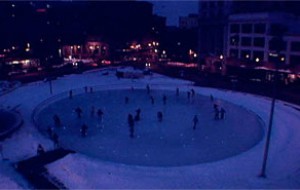
Maya Lin’s (Season One) “Ecliptic” in Rosa Parks Circle, Grand Rapids, Michigan. (Production still from the Art:21 episode, Identity, © Art21, Inc. 2001.)

There’s been a fair bit of talk lately about how the recession is affecting artists, the art market, and art institutions. And with good reason, pocket books are tight everywhere, and most art, no matter its intended relation to market forces, can’t exist without some kind of capital. It’s not a coincidence that this is also the era of the rise of social media. Facebook, Twitter, and the like are facilitating massive realtime networks that are free (as long as you’re connected). These networks become a conduit of exchange for new kinds of goods, and value is now being measured in new ways. Stock prices still matter, but Google rankings are starting to matter, too. Content is aggregated by algorithms that calculate value from the unconscious input of millions of users.

How does this new method of exchange and valuation affect the art world? If social networks naturally become markets, placing value on instantly exchanged bits of info, what would happen if we gave that value a monetary correlation, apart from a traditional marketplace? I’ve been working to help develop an new art event that seeks to do exactly that. ArtPrize is a radically open art competition. The annual event will run September 23 to October 10 in Grand Rapids, Michigan. Hundreds of artists from around the world have created online profiles, which are a cross between an artist bio and an open-ended proposal. Hundreds of property owners, institutions, and public spaces in downtown Grand Rapids have volunteered to open their space to artists. We’ve built ArtPrize.org to enable these artists and venues to connect to one another, without a central curator or jury. If that weren’t unorthodox enough, the winner of the cash prize (currently the world’s largest, at $250,000, with additional prizes for the rest of the top ten) will be decided by public vote. Anyone can come to Grand Rapids, register to vote for free, and rank each entry with either an up or a down vote, online or by text message.

Continue reading »

Meet the Season 5 Artist: Cindy Sherman

August 27th, 2009

The above video is excerpted from the Season 5 episode Transformation, premiering on Wednesday, October 21, 2009 at 10pm (ET) on PBS (check local listings). Whether satirizing society or reinventing icons of literature, art history, and popular culture, the artists in TransformationPaul McCarthy, Cindy Sherman, and Yinka Shonibare MBE — inhabit the characters they create and capture the sensibilities of our age.

Who is Cindy Sherman and what does she have to say about transformation?

Cindy Sherman was born in 1954 in Glen Ridge, New Jersey; she lives and works in New York. In self-reflexive photographs and films, Cindy Sherman invents myriad guises, metamorphosing from Hollywood starlet to clown to society matron. Often with the simplest of means—a camera, a wig, makeup, an outfit—Sherman fashions ambiguous but memorable characters that suggest complex lives lived out of frame. Leaving her works untitled, Sherman refuses to impose descriptive language on her images, relying instead on the viewer’s ability to develop narratives as an essential component of appreciating the work. While rarely revealing her private intentions, Sherman’s investigations have a compelling relationship to public images, from kitsch (film stills and centerfolds) to art history (Old Masters and Surrealism) to green-screen technology and the latest advances in digital photography. Sherman’s exhaustive study of portraiture and self-portraiture—often a playful mixture of camp and horror, heightened by gritty realism—provides a new lens through which to examine societal assumptions surrounding gender and the valuation of concept over style.

On the subject of transformation in art, Sherman describes how changing the way she looks has been a lifelong interest (in the forthcoming Season 5 book):

When I was a kid, I would be alone in my room and just play with makeup. Probably there’s some psychological reason why, but I was doing it at a time when it was not really p.c. for women to be wearing much makeup. In the ’50s, women did do all this stuff to themselves that wasn’t natural—and yet as the ’60s progressed and the ’70s moved on, it was all about being natural. I kind of missed the before and after of what it does to you—and the transformation. So I would just play—to see what makeup could do.

In college when I did it, I would become a character and then think, “Well, gee, here I am as Lucille Ball. What do I do now?” There’d be some friends in the other room watching Saturday Night Live and I’d just go sit with them and hang out. It became sort of a thing, a little more like performance. I started to go to parties in character. When I moved to New York I did it a few times, but suddenly it wasn’t the same. In the city I felt like I needed my own sort of ‘street armor’ just to deal with the people out on the street and the real crazy people who looked like some of my characters I didn’t want to be confused with them. But I remember going to a couple of parties as characters. I felt like people wouldn’t know I was there and it wouldn’t really matter because I didn’t know them anyway. Or it was kind of an interesting disguise.

What happens in Sherman’s segment in Transformation this October?

“It’s kind of an interesting thing to see yourself,” says Cindy Sherman about discovering her uncanny childhood photo album A Cindy Book (c. 1964–75) as an adult. Sherman decided to update the book by adding circled photos of herself and writing ‘that’s me’ under each, faking more mature handwriting with new additions. “It’s interesting to see your evolution…to think that that’s really the same person now.” Projects done in college—the animated film Doll Clothes (1975) and the photo-collaged cut outs in A Play of Selves and Murder Mystery People (both 1976)—culminate in the character-driven work she’s best know for today. “I didn’t want to make what looked like art,” she says about her series Untitled Film Stills (1977-80), explaining that “film has always kind of been more influential to me than the art world.”

The segment surveys thirty years of untitled works in which the artist photographs herself in various scenes and guises, grouped into informally-named series such as fairy tales, centerfolds, history portraits, Hollywood/Hampton types, and clowns. Sherman used a digital camera and green screen for her most recent series of society portraits, modifying each image’s “background with the same kind of license that a painter would take.” Sorting through test shots at the computer, Sherman leads the viewer through her iterative process of creating the matronly woman in Untitled (#468) (2008). “It was such a change for me to see them really big…because suddenly they seemed much more tragic,” she says about life-size photographs on view at Metro Pictures gallery in New York (2008). “I can’t imagine really doing this my whole life,” she says, with the segment later following her to a thrift store where, upon finding several “wacky pants” she wonders if this shopping trip “might be inspiring a whole new series.”

Cindy Sherman. "Untitled (#425)," 2004. Color photograph, 72 1/2 x 91 1/2 inches, (framed). © Cindy Sherman, courtesy the artist and Metro Pictures.

Cindy Sherman. "Untitled (#425)," 2004. Color photograph, 72 1/2 x 91 1/2 inches, (framed). © Cindy Sherman, courtesy the artist and Metro Pictures.

What else has Sherman done?

Cindy Sherman earned a BA from State University College, Buffalo, New York (1976). Among her awards are the Guild Hall Academy of the Arts Lifetime Achievement Award for Visual Arts (2005); American Academy of Arts and Sciences Award (2003); National Arts Award (2001); a John D. and Catherine T. MacArthur Foundation Award (1995), and others. Her work has appeared in major exhibitions at Sprüth Magers, Berlin (2009); Jeu de Paume, Paris (2006); Museum of Modern Art, New York (1997); and the Museum of Contemporary Art, Los Angeles (1997), among others. Sherman has participated in many international events, including SITE Santa Fe (2004); the Venice Biennale (1982, 1995); and five Whitney Biennials.

Where can I see more of Sherman’s work between now and the Art21 premiere this October?

Cindy Sherman is represented by Metro Pictures in New York. Her most recent series of works can be seen at Gagosian Gallery in Rome through September 19th. Her work can also be seen in the group exhibitions The Female Gaze at Cheim & Read in New York (through September 19th); in Sonic Youth etc.: Sensational Fix at Malmö Konsthall in Sweden (through September 20th); and as part of the 2010 ICP Triennial at the International Center of Photography in New York (September 19th through January 4, 2010).

What’s your take on Sherman’s inclusion in Season 5?

Tell us what you think by leaving a comment below!

….and the Not-So-Powerful (Part One)

August 26th, 2009

Sculpture by Julian Silverman

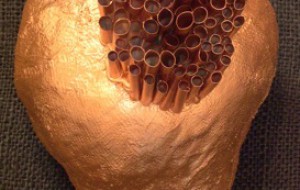
Sculpture by Julian Silverman

Ever since the blog post Jessica Hamlin wrote a few weeks back regarding my “Teaching About Power” unit I’ve been feeling a little guilty. Don’t get me wrong, I’ve gotten wonderful e-mails and phone calls. The video turned out really well. The footage looks excellent. The students are articulate about their work, and the art work makes some powerful (?) statements about power itself.

I just wish all units went that well.

So to satisfy my need for, oh, I don’t know, full disclosure, I want to share some stories over a few columns about units that didn’t go well and the things that happened as a result.

Prior to teaching high school and college courses, I spent eleven years teaching middle school and I wouldn’t trade the experience for anything in the world. Teaching middle school students taught me a ton about management- both classroom and behavior- and it allowed me to, quite frankly, get back inside an adolescent’s mind from time to time. My first Not-So-Powerful story involves a group of 7th graders getting caught up in my initial excitement over installation art. We were learning about various forms of three-dimensional sculpture, the conversation got to this new form of sculpture called installation, and everyone was suddenly psyched to create one. In less than a full class period, I managed to map out how 30+ kids were going to create installations all over the school building in the next week. I felt like a genius. I remember driving home feeling so satisfied that FINALLY, we would have some contemporary art gracing the school. Real stuff!

The week started out fine. One installation involved creating an abstract solar system in plaster. Another focused on a series of footprints that went to mysterious, less visited places in the building.

Then the clocks were attacked.

Two students, on their own time, with their own materials, decided to very carefully place large, brightly colored “dots” over each and every clock in the school. No face was spared. Even the wall clock in the Principal’s office (and I still don’t know how they snuck in there) was covered. Unless you were wearing a watch, you had no idea what time it was because these two students had, in a sense, taken away time. It took exactly one class period before I began getting phone calls.

“Joe, do you know that your students have covered up all the clocks in the building?” one teacher asked.

“How am I supposed to get them cleaned up in time if I don’t know what time it is?!?!” another insisted.

“Joe, I love your ideas, but this one went too far,” my Assistant Principal said.

While the idea was a good one- students wanted to see how much we depend on always knowing the time- it was an idea that interrupted the flow of the school day. And while the dots had to come off after school, the students and I were satisfied that we got a sense of how so many people relied heavily on knowing, minute to minute, “how many minutes they had”.

Since teaching that particular unit, I have made a few changes whenever I go about teaching anything involved with installation. First, I tell everyone about what’s happening, and I don’t so much “tell” as ask if the project would be ok with the school community. Second, I ask for sketches and written proposals from my students to help them work out logistics and troubleshoot any possible problems before they arise. Third, we always conduct an in-progress critique before the installations go up, just in case another student(s) has ideas to make the work even better before it “goes public”.

For every “power” unit like the one featured in the video, there are many, many units that made wrong turns and went wildly off track. More to come. Once September gets rolling I’d like to share a few other stories.

Next week…. Reflecting on Mark Slouka’s “Dehumanized”.