Chain Link Fence

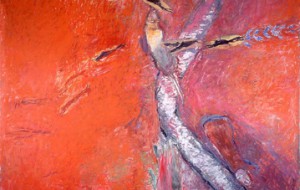
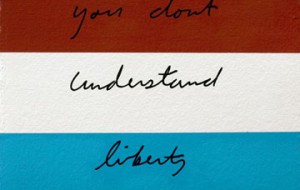
Left: Karin Bubas, Lauren Crying (2009). Pastel on paper, 9.5 x 12.5 in. Right: Karin Bubas, Heidi Pouting (2009). Pastel on paper, 9.5 x 12.5 in. Both images courtesy Charles H. Scott Gallery, Vancouver.
Some summertime offerings from the internets.
Pastels Not Dunzo: Joshua David Stein watches the cast of “The Hills” getting pastel’d.
“Chalk pastels are the soft focus of the art world — the Lifetime channel on paper — and for the characters of the notoriously high-definition, supersaturated “The Hills,” the medium is humanizing.”
Turn Your Back On Me: Jennifer Higgie turns her gaze on men who love women who turn away.
“She turns her back on you; this, it would seem, is her appeal. She’s been painted like this for centuries, and, more recently, photographed. Often she is naked, in a bathroom or bedroom, solitary, sleeping or day-dreaming….”
Pale Fire: Arthur Danto on Suzanne P. Hudson on Robert Ryman (Season 4) on everything.
“Suzanne P. Hudson’s Robert Ryman: Used Paint is the first book-length study of the artist’s achievement, and it comes with an interesting thesis, namely that his paintings exemplify what the author calls ‘embodied thinking,’ which I interpret to mean that his paintings are not the product of thought, but thought itself.”
Script Vicious: Lyra Kilston dissects Pablo Helguera’s panel freak-out.
“The play presents a public discussion between a cast of art world archetypes—curators, a collector, a thwarted artist and an arts administrator—as they meet to discuss the life and work of the artist Juvenal Merst, a character that Helguera named after the early second century Roman poet Juvenal, who is credited with developing the nascent genre of satire.”
Hey Papi: Ara Merjian takes to the work of Marco Papa.
“A hint of Joseph Beuys’s notion of ‘social sculpture’ perhaps echoes in Papa’s interdisciplinary, participatory affinities, as well as his investment in a kind of collective, symbolic catharsis around specific objects. But Papa steers clear of the specious naïveté that marked Beuys’s self-styled shamanism, with its quixotic faith in the autonomy of artworks.”
You Wish: Heike Munder assembles a list.
“‘Live in Your Head’ is a motto that could well serve to guide a revival of interest in processes, for the latter remain inconclusive, continually opening up new possibilities of interpretation. I should add the following keywords to my wish list: intellectually stimulating materials, forms and ideas.”
Soft Touch: Jorge Colombo’s iPhone finger painting archive. They’ve been the splash this summer, yes, but they’re just so nice.
Gastro-Vision: Aesthetics of Urban Farming, Part II

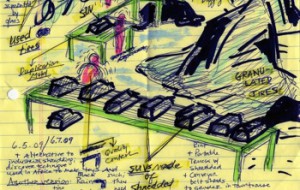
Atom Cianfarani, Sketch for "Welcomed Guests," 2009. Courtesy of the artist.
I closed Part 1 of this post with an e-mail from Truck Farmers Curt Ellis and Ian Cheney in which they encouraged others to reclaim unused open spaces in New York City.
Reclamation is central to the work of Brooklyn-based green artist/designer Atom Cianfarani who says, to paraphrase, that sustainable, recyclable designs can be beautiful, but few artists push it that far. (If you’re familiar with Brooklyn, Cianfarani helped to design the popular eco-eatery Habana Outpost in Fort Greene.) Later this week, DOT Urban Art Commission will host a ribbon-cutting ceremony for Cianfarani’s new public sculpture, Welcomed Guests, located across the street from Brooklyn’s Added Value/Red Hook Farm. (The 2.75 acre urban farm has provided space to stage and produce the sculpture). Sponsored by DOT and the Lower East Side Ecology Center, the piece consists of ten poles set in place by retired wine barrels from local vineyard & winery, Castello di Borghese. The poles will support functional bird homes made of salvaged materials; the roofs will be covered with patches of wild strawberries. These stylized habitats not only provide food to support birds, but also help native plants to flower and bees to pollinate. As illustrated in Cianfarani’s sketch, the space is also designed for humans to congregate, engage with urban wildlife, and, perhaps, have a snack of their own. Continue reading »
Letter from London: Hot Scots, Part Un

Jane and Louise Wilson, "Unfolding the Aryan Papers" (still), 2009
In a big, sprawling, multi-tentacular artsfest like the Edinburgh Festival, certain forms of art – like, say, one-woman mime interpretations of the career of Robin Williams, or freestyle macrame workshops – tend to get drowned out under the clamor of what has become an almost entirely comedy-centric festival, bankrolled by cigar-chomping commercial behemoths. “A sell-out” is standard festival-speak for “a success,” but it’s all too eloquent of what the festival appears to have become. The Edinburgh Art Festival runs concurrently with the comedy and theater festivals, and this year has chosen to withdraw into an erudite, multifarious and thoughtful analysis of the city’s intellectual past and present. And while its refusal to participate in the barking rhetoric of its (let’s face it) less economically stable artistic cousins looks passive-aggressive, even truculent, it’s resulted in one of the most engaging and coherent Art Festivals in years.
While no homogenous curatorial scheme unites the Edinburgh Art Festival, there is a loose theme of “Enlightenment” shared by large-scale theatrical and musical events in the International Festival. Spread out across a number of venues, The Enlightenments (curated by Australian Juliana Engberg) explores the legacy of the intellectual climate of 18th-century Scotland, immortalized in the thickets of classical columns and gridded streets throughout the city. In the Dean Gallery (perhaps best-known for its extraordinary collection of European Surrealism and British Pop), Engberg has installed a loose-synapsed roam through recent explorations of empiricism. Joshua Mosley’s dread, his short animated film of Pascal and Rousseau anachronistically bumping into each other in a forest, and Tacita Dean’s Presentation Sisters, her muzzy, autumnal film of Irish nuns pottering about in their convent, may only have passing relevance to Engberg’s theme (and each other), but as investigations of the nature of faith in a relentlessly empirical world, they strike a resonant blow for mystery. And underneath Eduardo Paolozzi’s massive steel Vulcan, four singers and a ukelele, as part of Gabrielle de Vietri’s performance Hark!, perform that day’s international news as a kind of tribute to pre-modern means of information. Their song about the (then impending) release of Abdelbaset Ali al-Megrahi provided one of those neck-hair-elevations you can forget are possible in contemporary art.
Meanwhile, in the Talbot Rice Gallery in the heart of the University’s Old College, Jane and Louise Wilson’s Unfolding The Aryan Papers is the sisters’ richest work to date. The film, shown on a huge screen between two mirrored panels, centers around Dutch actress Johanna ter Steege, the heroine of Stanley Kubrick’s cancelled project The Aryan Papers, his aborted attempt at tackling the Holocaust on film. The Wilsons intersperse, with hypnotic elegance and poise, the director’s own obsessive headshots of the actress (mouth open, mouth closed, in various dresses), the actress’s own recreations of the early stages of character development, and stills of Kubrick’s location shoots, his calibated yardstick (cast as bronze copies in another room) propped in each shot like a signature. On one level, the film is an examination of the notion of the female subject battling to be heard above the steamrolling male creative ego, but it slips its own polemic shackles by quietly asserting its own casual beauty, hovering on a small constellation of buttons on a sleeve with a kind of defiance.
Turner Prize nominee Lucy Skaer continues her collaboration with filmmaker Rosalind Nashashibi in their new film, Our Magnolia, at the marvelous doggerfisher gallery on the other side of the city. In a similar spirit to the Wilson sisters’ magpie bricolage, the artists have threaded found and original footage together in a sort of tribute to the double image. Bookended by unsteady shots of British Surrealist Paul Nash’s Flight of the Magnolia (1944), the film flits between images of the desecrated Museum of Baghdad, a rotting dog’s corpse on a beach, and headshots of Margaret Thatcher, sunblanched on an office table. In both films, beauty appears like a surprise, captured unaware. And while I spent most of the train journey back trying to remember the best jokes I’d heard (something about chimps, something about milk), what stayed were those still, intense, commanding images from Dean and the Wilsons’ films, which were great for this post, but not so good for my social life. But, you know…
Let Them Read Books/Play Records: Taschen, Plattfon, Stampa, Aniston

Spread from Helmut Newton's SUMO (1999). 464 pages. Courtesy Taschen, Cologne.
“This new edition is the fulfillment of an ambition conceived years ago. We jokingly referred to it as ‘Newton for the poor.’ ”
Oh, Benedikt Taschen, it’s quotes like these—and your line of über pricey, barge-like books like Helmut Newton’s SUMO, of which you speak—that always makes me wince at Taschen so. (Though, for us poor, there’s always been the oh-so-cheap stack of your invariably paper-thin monographs—Schiele or Klimt anybody?—in the remainder pile at bookstores everywhere.) Like some munchkin feather-weight wrestler, Newton’s original1999 monograph was two feet tall, with a weigh-in of 70 pounds. Mr. Taschen trumpets it as “The biggest and most expensive book production in the 20th century.” Today copies go for 10,000 euros. But in an ode to the book’s 10th anniversary, and with priceless recessionary timing, a smaller edition is about to be published for a mere $150, what Taschen reasons is “democratic dispersal.” Hmm.
If the publisher’s mania for printing books you can’t pick up and you certainly can’t afford (his editions for “the poor” notwithstanding) seems to auger well for the arrival of the recently released Kindle II (portable-to-the-extreme if not exactly cheap), I am not so convinced by his largess nor the technology that seeks to wipe it out. Nevertheless, with the constant heralding of the end of the publishing industry (despite Taschen, I don’t buy it) and the music industry (well, maybe) as we know them, I went to an opening last Friday night in Basel for a new record store cum art book shop cum gallery with the feeling that I might just be going back in time to a beautiful, beautiful place. Tonight there would be no Kindle, no online music downloading, just obscure CDs and LPs and posters and multiples and beautifully bound books with (printed!) text. Continue reading »
Weekly Round Up

John Grande, "My Cindy, Your Cindy" (installation view). Courtesy Sara Nightingale Gallery.
- On view through October 4th at the Katonah Museum is Dress Codes: Clothing As Metaphor. 36 artists tackle wide-ranging issues from feminism to globalism using clothing as the medium. The list includes Art21′s Louise Bourgeois, Oliver Herring, and Do-Ho Suh.
- Closing this week at the Berkeley Art Museum is Galaxy: A Hundred or So Stars Visible to the Naked Eye, curated by Lawrence Rinder. The museum’s director has selected a number of works that survey the evolution of the institution’s holdings, from Albert Bierstadt, to Hans Hofmann, to Barry McGee (Season 1). Through August 30.
- Extended Family is currently on extended view at the Brooklyn Museum. The exhibition looks at the loose establishment that has come to define “family values” and the art world, which reaches beyond geographical and blood lines. Extended Family is culled from the museum’s permanent collection and highlights a host of artists, including Ghada Amer, Nick Cave, Vera Lutter, Louise Bourgeois(Season 2), and Fred Wilson (Season 3).
- In its 40th year, the venerable Rencontres d’Arles photo festival is up for a few more weeks until September 13th. Known for championing the art form that is photography, this year’s edition features a special exhibition curated by Nan Goldin, as well as this solo exhibition by Roni Horn (Season 3).
- Have you ever wondered how the art world would shake up if Cindy Sherman (Season 5) were a male painter, making the same images except on large scale canvases using paint? Enter John Grande, whose solo show posits this exact scenario. My Cindy, Your Cindy is up through September 3 at Sara Nightingale Gallery in Shelter Island.
What’s Cookin at the Art21 Blog: A Weekly Index
It’s mealtime! Join Sonya for a fine helping of nutrients and adventure with this week’s Index:
Round ‘em up Nicole! Here’s what Art21 artists have been up to this past week.
The Pop-Up Book Academy: An Interview with Sam Gould of Red 76 by Daniel Fuller … a requiem for Maurizio Cattelan? Read more details about the latest show at Harlem’s Triple Candie. Also… a day at Art Disneyland! Jump in the car with Daniel and head to Mildred’s Lane.
Thank you to Daniel for so many of your fabulous posts! Hrag Vartanian introduces new Art21 Guest Blogger, (drum roll, please) …Quinn Latimer.
In the latest Letter From London, Ben Street writes to us with some thoughts pertaining to acts of vandalism on works of art.
Conserve contemporary art! Check out the Art21 Blog’s new column: No preservatives: Conversations about Conservation and read Richard McCoy’s interview with Hugh Shockey from the Lunder Conservation Center.
Mark your calendars … Performa is scheduled to open in NYC this November. In this week’s Flash Points: Nicole Caruth interviews participating artist Saya Woolfalk.
In this week’s addition to the column Teaching with Contemporary Art, Joe Fusaro highly recommends that we visit exhibition, Circles of Influence at the Clark Institute before it closes September 7th!
MoMA Trumpets Amsterdams’ Role as Hub of Conceptual Art by Hrag Vartanian.
Wesley Miller provides an introduction to Season 5 artist Paul McCarthy.
But what if those enemies, just outside the door, came armed with Bach and Mozart and Caravaggio and Goethe? What is the relationship between artistic greatness and democratic inclusiveness? Quinn Latimer asks that and other provocative questions in her response to a recent New York Times article by Michael Kimmelman.
Paul McCarthy is described as a pulsing ID. Read this interview with McCarthy by Benjamin Weisman in this weeks BOMB in the Building.
Check out the newest Art21 column dedicated to all things food! (I’m lovin it!) Gastro-Vision: Aesthetics in Urban Farming, Part I by Nicole Caruth.
And the latest Art21 Exclusive: Artist Joyce Pensato discusses her experiences appearing as a performer in Oliver Herring’s videos.
Oliver Herring | Participant Joyce Pensato
DOWNLOAD VIA ITUNES | SUBSCRIBE VIA RSS
EXCLUSIVE: Artist Joyce Pensato discusses her experiences appearing as a performer in Oliver Herring’s videos. The work, which also features participant Davis-Thompson Moss, is the first in a series of Oliver Herring videos that feature the pair of performers.
Among Oliver Herring’s earliest works were his woven sculptures and performance pieces in which he knitted Mylar, a transparent and reflective material, into human figures, clothing and furniture. Since 1998, Herring has created stop-motion videos, photo-collaged sculptures, and impromptu participatory performances with ‘off-the-street’ strangers, embracing chance and chance-encounters in his work.
Oliver Herring is featured in the Season 3 (2005) episode Play of the Art:21—Art in the Twenty-First Century television series on PBS.
VIDEO | Producer: Wesley Miller and Nick Ravich. Interview: Eve Moros Ortega. Camera & Sound: Joel Shapiro and Roger Phenix. Editor: Jenny Chiurco. Artwork Courtesy: Oliver Herring. Special Thanks: Joyce Pensato.
Gastro-Vision: Aesthetics of Urban Farming, Part I

Herbert Bayer, "Grow It Yourself: Plant a Farm Garden Now," ca. 1941-43, New York NY. Silkscreen on board, WPA War Services. Courtesy of Library of Congress, Prints and Photographs Division, WPA Poster Collection.
Gastro-Vision is a new monthly column dedicated to all things food.
It probably goes without saying that depictions of food in art are as old as art itself. Since the prehistoric cave paintings of bison, deer and other fodder, food has permeated all forms of cultural production and continues to be subject and/or material for countless artists and artisans today. Over the past year, a few of our guest bloggers have (unknowingly) given you a taste of what Gastro-Vision is about. Taking food and drink as a jumping off point, Sarah Silwa wrote about the Body Bakery of Thai artist Kittiwat Unarrom, and listed a few other artists known for their use of sugars and starch, such as Felix Gonzalez-Torres and Joseph Beuys; Paul Schmelzer profiled artist Chakkrit Chimnok in his post, “Banana-Leaf Utopia“; and, most recently, Tracy Candido outlined economic models for arts funding and fundraising, citing new ventures like her own bake sale artist residency, Sweet Tooth of the Tiger. Gastro-Vision seeks to continue and expand on such contributions while making connections to broader topics in contemporary visual art and culture.
Readers who follow my personal blog know that I have become increasingly interested in what goes into my food and where it comes from. (I probably owe this to food writer Michael Pollan, whose books The Omnivore’s Dilemma and In Defense of Food, and soothing voice in the “civilized horror movie” Food, Inc., have helped open America’s eyes to problems with our food system and subsequent eating habits). The more I learn, the more motivated I am to eat as close to the bottom of the food chain as possible (i.e. increasing my consumption of locally grown plants). But New York City certainly has its challenges when it comes to finding (and affording) good local food. Hence, the rise of urban farming. Three new visual and edible projects—Truck Farm, Welcomed Guests, and Window Farms—reflect this trend, presenting resourceful methods for growing your own food in the metropolis and, what’s more, sharing it with others. Continue reading »
Paul McCarthy interviewed by Benjamin Weissman
Welcome back to BOMB in the Building, where each week we’ll be featuring a vintage BOMB interview relating to a Season 5 artist. This week we present Paul McCarthy’s interview from BOMB Issue 84, Spring 2002, in which he discussed his career as a performer, filmmaker, and family man with his longtime friend and writer Benjamin Weisman. “Paul’s particular Grand Guignol came out of a true personal crisis that dealt with the ghoulish properties of culture, consciousness and family,†Weisman wrote in BOMB. “Paul has managed to remain a radical artist of true perversion, dedicated to fucking with viewer sensibility while at the same time achieving broad mainstream appeal. A rare accomplishment.†Read the full interview here.

Paul McCarthy, "The Saloon" (1995-96), mixed media, 139×191 x 110â€. Installation view showing Dance Hall Girl and Cowboy (Gunfighter). All photos courtesy of the artist and Luhring Augustine Gallery, New York.
Benjamin Weissman: The pulsing id. That’s what I think about when I think about your videos. Partly achieved through minimal dialogue. A generalized wound is articulated, or dug up: anxiety, sexual tension, humiliation, bodily fluids, consciousness. You get a lot of mileage out of wards via a spare, fragmented mumblelogue that’s more like chanting than dialogue, drilling wards into the ground rather than at other characters, and there’s something repetitious about this method, within a single work, then from piece to piece, year to year. Can Paul’s Anxiety Channel accommodate a fuller script, or would that throw your characters into the acting deep end and deflate the luscious fucked-up universe you invent?
Paul McCarthy: In high school I did a drawing of a man’s face looking out of the picture plane straight at the viewer. Behind him in the landscape I drew a square hole in the ground. I have always been interested in digging. I remember finding a rock in a vacant lot when I was five years old. I tried to break the rock. I pounded it with another rock. At one point I stopped pounding it and picked up the rock to carry it home. After a short distance, a head appeared from the rock. I think I was dressed in white. All the houses around me were white. It was a very bright day.
I’ve talked to myself in performances since the ‘60s. But this auto audio babble got louder in the ‘70s. At times I would talk from the moment it started until the moment it ended. A muttering faceted language serving a number of purposes, directed at me and for myself. It’s a multitude, a kind of runabout. A mother, father, brother, sister this and that. In Santa Chocolate Shop there were five performers including myself. In Saloon there were five performers. There was a script, but during the performance the scripts are improvised, repeated, and become language appropriation trying to be mediated into the other.
BW: When you say language serving a number of purposes—what purposes?
PM: A purpose, B purpose, C purpose and so on.
Kultur Klub

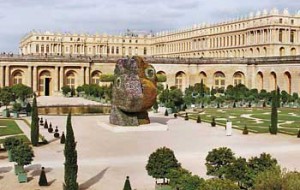
Frauenkirche (1726-1743, rebuilt 2005), Noitmarkt Square, Dresden, Germany.
For the past week, my mind has repeatedly strayed to an unsettling and provocative article that appeared in the New York Times on August 14. The article was one of Michael Kimmelman’s regular, and regularly insightful, culture-minded dispatches from Europe, where he—the Times’ chief art critic—has been living in Berlin for the past few years. The article’s dateline read “Dresden,” and it concerned the July courtroom murder of a pregnant Egyptian pharmacist who lived there. She was stabbed to death by a Russian-born German man who had previously called her an “Islamist, a terrorist and a slut.” After her murder, thousands of Muslim and Arab mourners marched in Egypt and Berlin—even the doubtful Iranian President Mahmoud Ahmadinejad denounced (ironically, all considered) Germany’s “brutality.”
If this horrific hate crime was obviously newsworthy, it struck me as a strange topic for Kimmelman to alight on, despite his admirable openness about his political concerns. As I was reading the piece I glanced up at the newspaper’s heading to confirm that I was indeed still in the Times’ Arts section. Then three paragraphs down, all came clear: “Dresden is one of the great cultural capitals of Europe,” Kimmelman intoned. And: “One wonders how to reconcile the heights of the city’s culture with the gutter of these events.” Wait, what?
Kimmelman evokes Dresden’s city center as a “marvel of civility, a restored Baroque fairyland surrounded by Socialist-era and post-Socialist-era sprawl. The rebuilt Frauenkirche, the great Baroque cathedral where Bach played, again marks the skyline with its bell-shaped dome, as it did for centuries.” And he seems aghast that in this bastion of “civility”—where Bach played even!—has come the steady rise of right-wing xenophobia and murders like the one he chronicles. But his umbrage seems, to me, incredibly strange. Take Paris and New York—two cultural capitals if ever there were ones—and cities where hates crimes, crime itself, happen with regularity. What if one were to say contrast the Metropolitan Museum’s pacifically high-minded Egyptian room and a murder that happened behind it in Central Park, and then pose the question: how could this crime happen in proximity to such artistic greatness? If I were to hazard a guess, the reaction would probably be: the twain don’t meet. Continue reading »