
Harrell Fletcher interviewed by Allan McCollum
Welcome back to BOMB in the Building, where each week we’re featuring a BOMB contributor relating to a Season 5 artist. This week, we’re switching it up again and featuring an interview by an Art21 artist instead. In BOMB Issue 95, Spring 2006, Allan McCollum spoke with Harrell Fletcher about his project at Domaine de Kerguéhennec Centre d’Art, Bignan, in France. The conversations fits neatly into the Systems theme for this week, as well as being one of our favorite recent interviews to appear in BOMB. We hope you like it as much as we do!

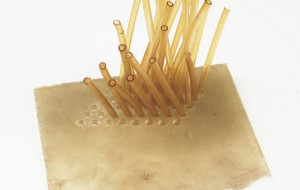
Harrell Fletcher, "The Report," 2003. Xeroxed publication. All images courtesy the artist, Christine Burgin Gallery, New York, and Jack Hanley Gallery, San Francisco.
Allan McCollum: I enjoy that the meaning of your work doesn’t reside in any one piece. In fact, looking at any one piece you might pass over it; they’re often so simple and easy to describe. But looking at project after project (the number seems to go into the hundreds), and then your Learning to Love You More website with a couple of thousand more projects, a certain set of values comes through. You’re not trying to produce singular masterpieces, and almost all your work is about people other than yourself. A lot of the things that we expect an artist to do, you do backward. It constantly takes me by surprise.
Harrell Fletcher: It’s about having a set of natural proclivities. I see the structure of how an artist is supposed to operate, but some of those things don’t feel comfortable to me. In graduate school, I started realizing that I did not have to follow the normal course.
AM: How did you perceive the “normal course” while you were in school?
HF: It’s so concentrated in graduate school; you see all of these people going into their studios, spending hours and hours making objects or paintings. And it’s supposed to be about isolating themselves. Maybe they have a wall of inspirational clippings from magazines, but that’s the extent of their interaction with the world. Continue reading »
Kickstarting Creative Projects: An Innovative Micro-Giving Site, Part 2 of 2
Following up on yesterday’s post, An continues her conversation with Yancey Strickler and sums up her experience of fundraising via Kickstarter.—Ed.
An Xiao: Tell me a little more about the financial side of things. If most artists are like me, they’re not the best with keeping records and managing payments.
Yancey Strickler: We like Amazon Payments because it’s what our entire system runs on. They’re the only ones that can handle our needs. PayPal currently cannot. Plus, we’re working with the most trusted e-commerce site ever. Most people already have an Amazon account, so backing a project is like buying a book. Super simple.
The only drawback is that Amazon Payments are only set up for US customers to receive money, though anyone from other countries can give money. They’re working on expanding their services to other countries, but I don’t know when that will be changed.

Kickstarter's super clear project dashboard, intuitive for even the most numbers-averse artist
AX: A few of my donors had issues with Amazon Payments initially, though these were quickly resolved and had nothing to do with Amazon or Kickstarter. However, one backer was never able to resolve the issue, so he opted to send me a check. How do you manage financial questions?
YS: I’m the one customer service person for Kickstarter. If anyone has any payment problems, I will end up talking to them. It’s fairly common, as you’re often putting down your credit card information three months before the card is actually charged and things happen. We work very closely with anyone who has any trouble, and there’s a full week to correct any payment problems. The number of declined or failed transactions on Kickstarter is very, very, very low.

The power of momentum: if a project reaches 25% of its funding goal, it has a 90% chance of eventual success.
AX: That’s great—so artists can really focus on on the fundraising rather than the details of actually collecting the pledges.
YS: Absolutely. For a creator, it’s their job to spread the word and let people know about the project. The financials and all of that will just flow through Amazon. And best of all: creators get an email with each new pledge. It becomes this incredibly gratifying feeling—especially when it’s complete strangers doing the backing.
Continue reading »
Kickstarting Creative Projects: An Innovative Micro-Giving Site, Part 1 of 2
July 7, 2009. It’s the middle of summer, and I’ve just heard from the folks at the DUMBO Arts Center that my installation proposal, Phone-Tastic View, has been approved for the 13th Annual DUMBO Art Under the Bridge Festival. I’m thrilled, of course, but now I’m up against a new problem: how on earth am I going to pay for this? The installation calls for a standard street sign to be installed on the waterfront. The sign would instruct viewers to send a text message to receive quirky information about the view of the skyline, so I also need to fund the text messaging service. After adding up the numbers, I’m realizing this will cost at least 500 dollars.
That’s when I learn about Kickstarter, a new site for artists to help them crowdsource fundraising, Obama-style, through small donations. What follows is an interview with Yancey Strickler, co-founder of Kickstarter, interweaved with the story of my own fundraising efforts for my first public art installation, along the Brooklyn waterfront.

An Xiao: Tell me a little about the origins of Kickstarter. What, if you will, kickstarted this idea?
Yancey Strickler: Our CEO/co-founder Perry Chen came up with idea when he was living in New Orleans a few years ago. He was trying to put on a concert for the New Orleans Jazz Festival, but in order to make it happen he needed to front a lot of money.
He thought that there’s clearly another way to do it without fronting the money out of pocket. If only he could know demand before he started. So he got the idea of a conditional transaction—you only start the project if you raise enough to fund it. He and I met about four years ago and we started working on applying this idea.
AX: So it started in classic Internet start-up style, with two people and an idea. But now you have a team of five.
YS: Yes, Perry and I were the first two. Then we met Charles Adler, a user experience designer. He designed the whole site. Lance Ivy, the technical founder of User Voice, developed it. Andy Baio joined us as chief technology officer after first serving as an adviser. He runs the very popular Waxy.org, and previously founded a company (Upcoming) that Yahoo eventually purchased. And our primary adviser is Sunny Bates, who just knows everyone and has just been incredible with us. She’s been very helpful in making the site successful.
We’re all spread around the country. Only once have we all been in the same room.
AX: Wow. Where was it?
YS: Shortly after the site launched, we flew everyone into New York. But even then we only had time for us all to sit down together once.
AX: Sounds like we need to get a Kickstarter page going for your reunion.
Continue reading »
Meet the Season 5 Artist: Allan McCollum
The above video is excerpted from the Season 5 episode Systems, premiering on Wednesday, October 28, 2009 at 10pm (ET) on PBS (check local listings). Systems features four artists — John Baldessari, Kimsooja, Allan McCollum, and Julie Mehretu — who invent new grammars and logics, finding comfort in some systems while rebelling against others in today’s supercharged, information-based society.
Who is Allan McCollum and what does he have to say about systems?
Allan McCollum was born in Los Angeles in 1944; he lives and works in New York. In his twenties, McCollum briefly considered a career in theater, then attended trade school to study restaurant management and industrial kitchen work. In the late 1960s, he began to educate himself as an artist. Applying strategies of mass production to hand-made objects, McCollum’s labor-intensive practice questions the intrinsic value of the unique work of art. McCollum’s installations—fields of vast numbers of small-scale works, systematically arranged—are the product of many tiny gestures, built up over time. Viewing his work often produces a sublime effect as one slowly realizes that the dizzying array of thousands of identical-looking shapes is, in fact, comprised of subtly different, distinct things. Engaging assistants, scientists, and local craftspeople in his process, McCollum embraces a collaborative and democratic form of creativity. His drawings and sculptures often serve a symbolic purpose—as surrogates, faithful copies, or stand-ins for people—and are presented theatrically, transforming the exhibition space into a laboratory where artifice and context are scrutinized. Economical in form, yet curious in function, his work and mechanical-looking processes are infused with humor and humility.
On the subject of systems in art, McCollum describes how he creates low-tech combinatorial systems to generate projects on a massive scale (in the forthcoming Season 5 book):
The Shapes Project (2005) is the first computer project that I’ve done. It’s all done with Adobe Illustrator, and I learned only the things I needed to know to do it. I don’t know how to program or create any kind of database that generates anything. What I do is very simple, like what I’ve been doing in combinatorial projects for twenty-five years or even longer. All my projects have had combinatorial elements where I’m taking a vocabulary of parts and putting them together to make something else, which is very computer-like, but there was never a computer involved before.
What I’m doing is incredibly simple. It’s childlike; anyone could do what I’m doing. The hard part is having the patience (and a boring, compulsive personality) that allows me to keep doing it over and over and over again. So from four shapes I can make around 200-or-so million unique shapes. But there’s another system where I use six shapes. Once you start using that, you can produce 60 billion shapes. This is consistent with wanting to make a shape for everybody on the planet. I had to come up with a system that not only created enough unique shapes for everyone on the planet, but I wanted there to be enough (even in fifty years when there are billions more people) to play with and experiment with. So I went way overboard.
What happens in Allan McCollum’s segment in Systems this October?
Allan McCollum’s segment begins with his uncle Jon Gnagy’s 1950s television program Learn to Draw. Crediting his uncle’s demonstrations as an early influence, McCollum says “whenever I design a project it’s in my head…that I would be able to show someone else how to do it.”
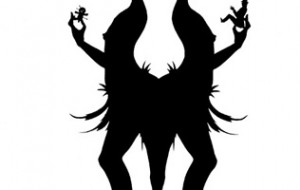
Describing his aesthetic motivation with the paradox of “wanting to try to work in quantities…and make things that are singular and unique at the same time,” the viewer travels with the artist and his team of studio assistants to the 28th São Paolo Bienal (2008) for the installation of Drawings (1988)—1,800 hand-stenciled, graphite pencil works. McCollum describes devising “a system that would produce a shape for everybody on the planet.” To make The Shapes Project (2005), the artist developed a set of unique forms that, when fully combined, results in 60 billion individual shapes. McCollum later collaborated with four remote home businesses in Maine, whom he only talked to via email and phone, to produce collections of silhouettes, rubber stamps, wood ornaments, and copper cookie cutters. The resulting Shapes from Maine (2009) at Friedrich Petzel Gallery in New York consists of over 2,200 individual hand-crafted objects, each its own one-of-a-kind shape.

Allan McCollum. "Shapes from Maine: Shapes Copper Cookie Cutters," 2005/2008. Polished copper, 5 1/2 x 3 2/3 x 1 inches each, each unique, formed in copper by hand. Produced in collaboration with Holly and Larry Little, founders of Aunt Holly's Copper Cookie Cutters, Trescott, Maine. Photo by Lamay Photo, © Allan McCollum, courtesy Friedrich Petzel Gallery, New York.
What else has McCollum done?
Allan McCollum has had more than 100 solo exhibitions in Europe and the United States, where his work has appeared in major exhibitions at the Metropolitan Museum of Art, New York (2009); Museum of Modern Art, New York (most recently in 2007); and the Guggenheim Museum, New York (2004), among others. He has also participated in many international exhibitions, most recently at the Bienal de São Paulo (2008). Recent solo exhibitions include Friedrich Petzel Gallery, New York (2009); Barbara Krakow Gallery, Boston (2008); and Musée d’art moderne et contemporain, Geneva (2006), among others. Allan McCollum lives and works in New York.
Where can I see more of McCollum’s work between now and the Art21 premiere this October?
Allan McCollum is represented by Friedrich Petzel Gallery in New York. The artist also maintains an extensive website of his own works.
What’s your take on McCollum’s inclusion in Season 5?
Tell us what you think by leaving a comment below!
Word Games

Judy Pfaff- production still
Friends like to pass along quotes because they know I love them. I hang them on my office door, take them to the studio, use them as bookmarks, and read them when I’m taking a break from painting. I even torture my family with them.
Here’s one I received that was given to me at the beginning of the school year (which, by the way, feels like a long time ago already):
All the really good ideas I ever had came to me while I was milking a cow. – Grant Wood
Now don’t think I’m completely nuts- there’s a connection here. As we round out the first month or so of a new school year, a quote like Wood’s reminds us all to reach back and get some quiet from time to time in order to pull from the stillness new ideas, patience, a new perspective, or even a chance to soothe some of the daily stress that goes with teaching. Similar to what Wood describes, I find that taking a walk during a lunch break or finding some real quiet during all of the noise and general insanity can do wonders for my teaching, planning, and even my time at home after the day is done. It may not be as effective as milking a cow, but the calm of a slow walk on campus or simply tuning in to the hum of lights in the library can recenter us when we need it. And believe me, we all need it.
Gastro-Vision: Art of the Pub

Yara El-Sherbini, "A Pub Quiz," 2009. Live art, duration: 60 minutes. Performance at Fiddlesticks Pub, NY. Courtesy the Artist and Lombard-Freid Projects
Gastro-Vision is a new monthly column dedicated to all things food in contemporary art and visual culture.
Yara El-Sherbini has used pubs as a site for her work for the past three years. In the U.K., where the artist is based, pub quizzes, or trivia nights are enormously popular. (According to Wikipedia, it has been estimated that more than 22,000 regular quizzes take place across the country every week.) In short, the game requires groups of roughly six to ten people to form teams. The evening quizmaster poses a series of questions, which are broken into rounds, and teams respond using a provided answer sheet. The results are scored, and the team with the highest count is usually awarded a prize. El-Sherbini has adopted this interactive entertainment format for her performance, A Pub Quiz, which she staged in the United States for the first time earlier this month.
Finger food spread at Fiddlesticks Pub, NY. Photo: N. Caruth
Roxy on the Roof

Roxy Paine, "Maelstrom" (2009) on the roof of the Metropolitan Museum of Art
I could imagine no better setting for Roxy Paine’s most recent sculpture, titled Maelstrom, than the rooftop of the Metropolitan Museum of Art and its backdrop of Central Park and the skyline of the city that envelops it. Maelstrom—a vast web of stainless steel tree trunks and limbs weighing over seven tons and measuring 130 feet long and almost 50 feet wide—is the latest in a series of site-specific sculptures by the New York-based artist that have appeared around the city over the past several years (one of Paine’s signature steel trees was installed in Central Park during the 2002 Whitney Biennial and, more recently, three trees occupied Madison Square Park in 2007).
Maelstrom is a beautiful and enchanting sculpture, one that effects a dynamic experience for the spectator as he or she navigates around and through the thicket of shimmering tree limbs. Situated atop the Met, Maelstrom also invites comparisons between itself and its surroundings, in this case with Central Park and the city that circumscribes it. In so doing, Maelstrom quickly sets in motion a dialectical discussion on the tension between nature and culture, a dialectic that foregrounds how our surroundings reflect the ways in which we contain nature and come to terms with our place in it. Indeed, Paine’s arboreal sculpture—a fusion of artificial materials and natural, arabesque forms—resonates with Central Park’s own internal tensions as an expanse carefully designed and calibrated to juxtapose untamed nature with more formal environs.
There is another, more subtle way in which Maelstrom functions as a meditation on the tensions between natural and civilizing forces, a central concern of Paine’s art. I’m referring to certain peculiar sections of Maelstrom’s thicket, where its tendrils appear to be in the process of infiltrating the integrity of the museum building itself, spots where its branches seemingly adhere to and envelop the openings of various standpipes and fixtures jutting out of the rooftop’s walls. Easily overlooked amid the sculpture’s soaring boughs, and serving as neither load-bearing supports nor as structural anchors, these curious grafts are not the result of engineering considerations. Their significance appears to lie elsewhere.
Weekly Roundup

Sally Mann, "Hephaestus" (2008), Gelatin silver print. Courtesy Gagosian Gallery.
- Proud Flesh is up through October 31 at Gagosian Gallery. Sally Mann‘s (Season 1) new body of work focuses on a photographic study of her husband, taken over a period of six years. Proud Flesh “suggests a profoundly trusting relationship between woman and man, artist and model that has produced a full range of impressions – erotic, brutally frank, disarmingly tender, and more.”
- Sally Mann is also in the group exhibition Hide & Seek: Picturing Childhood at the Nelson-Atkins Museum of Art, which opens this Saturday. The show focuses on photographs of children “as collective memories of childhood itself—a phase of life to which we can never return.” This long history represented in Hide & Seek also includes images by Lewis Carroll, Gertrude Käsebier, Lewis Hine, Helen Levitt, Ralph Eugene Meatyard, Emmet Gowin, Wendy Ewald, Sage Sohier, Julie Blackmon and Gloria Baker Feinstein. Through Feb. 21, 2010.
- The 10th Biennale of Lyon opened last week and includes projects by over 50 artists, including Art21′s Oliver Herring (Season 3) and Barry McGee (Season 1). Themed The Spectacle of the Everyday, this year’s situationist version is curated by Hou Hanru. Through January 3, 2010.
- James Turrell‘s solo show Large Holograms is up now through October 17 at Pace Wildenstein Gallery. Fifteen unique large-scale works by the Season 1 artist explore the phenomenon of light itself, letting it become the object while capturing it’s normally fleeting qualities.
- The Guardian UK website has a great section called the Guide to Drawing in its Art and Design pages. Here’s a nice little slideshow of graphite portrait drawings by Shahzia Sikander (Season 1), and a few notes on how Jeff Koons (Season 5) articulates his ideas through draughtsmanship.
- The big 20th anniversary exhibition of the beloved Armory Center for the Arts opened this past weekend with Inside/Out. The venerable teaching institution in Pasadena has been around since 1947, but has been programming dynamic exhibitions only in the last twenty years since moving to its current location in an old National Guard building. The anniversary show’s lineup includes artists such as Ed Ruscha, Bruce Nauman (Season 1), Daniel Buren, Betye Saar, and Barry McGee. Through December 31.
- This Saturday, September 26 at 3pm, Stanford-based ecologist Gretchen Daily and artist Iñigo Manglano-Ovalle (Season 4) will share their ideas about value, ownership, biodiversity, the art world, and political economies of participation in the Conversation series at the Berkley Museum of Art. The talk is part of the Human/Nature: Artists Respond to a Changing Planet exhibition currently up at the museum. Artists in Human/Nature visited remote, fragile places in the world and present their responses. Other participants include Mark Dion (Season 4), Diana Thater, Xu Bing, Dario Robleto, and Ann Hamilton (Season 1). The show ends this Saturday, September 26.
What’s Cookin at the Art21 Blog: A Weekly Index
Here’s some more arty food for you, some in places that you may find unexpected…
- Letter from London – Beck to the Future! (Art History on Fox News!?!)
- Thank you to Dehlia Hannah for her series of posts exploring the intersection of art and science: Unnatural Histories, Hybrids, and Fabricating the DNA Fingerprint. This week we welcomed our newest guest blogger, Max Weintraub.
- Josiah McElheny’s work is on view at the Andrea Rosen Gallery now… for more updates from on the whereabouts of Art21 artists, check out Nicole’s latest Round-Up!
- Imaging Conservation at the Guggenheim — Discussion with Carol Stingari
- HOT OFF THE PRESS: Season 5 Book– I dare you to try to dunk that one in a glass of milk!
- Talking about the Pictures Generation
- Why didn’t this work? Joe Fusaro shares a story about (teaching) units that didn’t go well and the things that happened as a result in Part II of … and the Not So Powerful
- Meet the Season 5 artist, Kimsooja
- Lily Simonson and Catherine Wagley look at Los Angeles in their new bi-weekly dispatch about art in the city they love, starting with The Last Days of Pompeii in LA
- Dali Down Under
- Video Exclusive — Laylah Ali | Meaning
- It’s the BOMB: Krzysztof Wodiczko is interviewed by Guiliana Bruno
Krzysztof Wodiczko interviewed by Giuliana Bruno
Welcome back to BOMB in the Building, where each week we’re featuring a BOMB contributor relating to a Season 5 artist. This week, inspired by Kimsooja’s videos and installations, we’re revisiting the work of Polish artist Krzysztof Wodiczko. Instead of an interview this time, we’re giving you a short video clip of a BOMBLive! conversation that took place before an audience of 75 people at SculptureCenter in Long Island City, NY, on October 27, 2007. In addition to being a great event, it was significant as it marked the launched of BOMB’s “In the Open: Art in Public Spaces” series and also the occasion of our first-ever collaboration with Art21, who screened their Season 3 segment on Wodiczko as a prelude to the conversation.
In this short excerpt from the longer video, author and theorist Giuliana Bruno and the artist discuss his video installations at Hiroshima and elsewhere. You can watch the full 15-minute BOMBLive! video here.