Letter from London: Remember, remember…

November 23rd, 2009
wegman-photo-006

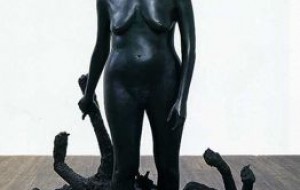
William Wegman,"Stepmother," 1992. Color Polaroid, 24 x 20 inches. © 2005 William Wegman, courtesy the Artist.

In a recent interview in the New Yorker, artist-of-the-moment Urs Fischer said something about how art and memory work together. I can’t remember the exact quote. It was something about the experience of art not being confined to the present-tense experience of being in a gallery, looking at a thing. Part of art’s test is in its retention in the mind, how it returns and why: The Physical Possibility of Art in the Mind of Someone Living, maybe. Since reading that, I have been attempting to reconstitute recently-seen works of art in my head (try it! it’s fun) and found that I can only properly recall – as in, can mentally reconstruct pretty accurately, could maybe draw — five works at most from the John Baldessari show at Tate Modern (all of those in the first three rooms), ten at the most from the Ed Ruscha show at the Hayward (all of those in the last two rooms), and one from the Damien Hirst show at the Wallace Collection (just before I considered hurling myself down their marble staircase).

Looking even further back this year, the things that have stubbornly refused to shift are a bit of a mixed bag: Roni Horn’s gold sheets for Felix Gonzales-Torres at Tate Modern (the sun in a certain place, so a honeyish glow lit up the floorboards), a Fred Sandback rope piece at the Hayward, stanchioned off with more rope (which I did an “art laugh” at: “pfffnf”), Charles Ray’s boy with frog in Venice, and his (Charles Ray’s) wobbling wire at Frieze. It’s a similar activity to trying to remember parts of a novel you read, even after you’ve just read it: I can’t remember most of Anna Karenina, for example, except for a line about fish (which is my favorite part of any novel, but it’s still a throwaway line in a 600-page behemoth).

Leo Tolstoy (fish not pictured)

Leo Tolstoy (fish not pictured)

Why these things have stuck and others haven’t is really down to the quality of experience, which is made up of a myriad of infinitesimal contributing factors, congruence of mood and temperature and well-being, and abeyance of hunger or tiredness or boredom, who you’re with and whether they owe you money or vice-versa. What these questions probably lead to, apart from several psychology dissertations, is one of the significant questions for educators working with art (especially with contemporary art) – well, for anyone, really: what’s the quality of our experiences with art, and how can these be improved, given so many of them slip out of mind?

The question at the heart of this is maybe: do we need to see original art to have a chance of getting it? Not always. In personal experience, I’ve taught distance learning classes to students via video link-up using color reproductions of works of art that have been as successful (in terms of quality of conversation and active participation of students) as anything done in front of original works of art. It’s preferable that students access original works of art directly, of course, especially when dealing with pre-twentieth century works, where the notion of reproduction (excluding prints and drawings) isn’t implied or understood in the work itself. Although, again, the quality of the experience is the main thing and can often be had via a reproduction, too.

Continue reading »

New guest blogger: Nicole Sansone

November 23rd, 2009

Sansone Bio Pic

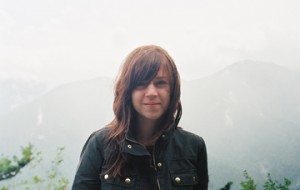
Thanks to Maria Stenina for her fabulous posts. Up next is Nicole Sansone, an arts writer and yoga instructor based outside of New York City. She is a contributor for “The Norwalk Beat,” “Visual Overture Magazine,” and the blog BrooklynIsWatching.com, a hybrid real life/Second Life art project which exhibited this past August at Jack the Pelican Presents gallery in Brooklyn. She is currently pursuing a Ph.D. in contemporary art with a focus on Cuban new media artists. Nicole’s other interests include design, comedic writing, and vegan cooking. Coming in at just over five feet, she is the size of most fifth graders.

Join Nicole during her time as Art21′s blogger in residence as she takes to the web in search of an answer to the question, “What is the difference between systems and networks?”

What’s Cookin at the Art21 Blog: A Weekly Index

November 21st, 2009
flock of Seagulls

"Flock of Seagulls." Source: Getty Images

Paul McCarthy | “Piccadilly Circus”

November 20th, 2009

DOWNLOAD VIA ITUNES | SUBSCRIBE VIA RSS

Artist Paul McCarthy describes the improvisational process and performances behind the video work Piccadilly Circus (2003). Filmed at an unoccupied London bank before being renovated by Hauser & Wirth gallery in 2002, and shot several months before the start of the Iraq War, the work features costumed players in the roles of President George W. Bush, Osama Bin Laden, and the Queen Mum (in three versions).

Paul McCarthy’s video-taped performances and provocative multimedia installations lampoon polite society, ridicule authority, and bombard the viewer with a sensory overload of often sexually-tinged, violent imagery. With irreverent wit, McCarthy often takes aim at cherished American myths and icons—Walt Disney, the Western, and even the Modern Artist—adding a touch of malice to subjects that have been traditionally revered for their innocence or purity. Whether conflating real-world political figures with fantastical characters such as Santa Claus, or treating erotic and abject content with frivolity and charm, McCarthy’s work confuses codes, mixes high and low culture, and provokes an analysis of fundamental beliefs.

McCarthy’s current exhibition of drawings WHITE SNOW is on view at Hauser & Wirth in New York through December 24th, 2009. Works in the exhibition draw upon the 19th century German folk tale ‘Snow White’ (‘Schneewittchen’) as well as its modern interpretation by Walt Disney.

Paul McCarthy is featured in the Season 5 (2009) episode Transformation of the Art:21—Art in the Twenty-First Century television series on PBS.

VIDEO | Producer: Wesley Miller & Nick Ravich. Interview: Susan Sollins. Camera: Bob Elfstrom. Sound: Doug Dunderdale. Editor: Lizzie Donahue & Paulo Padilha. Artwork Courtesy: Paul McCarthy.

Sweet Tactility…

November 20th, 2009

You need to a flashplayer enabled browser to view this YouTube video

In my last post as your guest blogger, I want to indulge a bit and quickly acknowledge my un-quenchable lust for the artist’s book. No, I don’t mean the artist’s book that is widely published and circulated amongst coffee tables of the world in its glossy radiance and clever contemporary design. I cannot get enough of handmade or editioned artist’s books and zines in all of their intaglio, found material, random texture, sincere approach, unconventionally bound, dorky, blind-stamped, and subtle glory…. And yes, I am a stalker of Printed Matter, self-published gems at Blurb, college presses, and dusty shelves of alternative bookstores.

May I recommend that we all tune in for PBS’s upcoming expose on paper folding entitled Between the Folds? And who else’s imagination goes on a strange journey when they see these new possibilities of the pop-up book, courtesy of MIT above? As much as new media threatens to destroy the book arts and put paper way behind us, this artist/writer/blogger/researcher/designer thinks paper is not that easy to overpower when it comes to the viewer’s experience. Cheers to the book!

The Real Story: Laurie Simmons Interviews Art21 Executive Director Susan Sollins

November 19th, 2009

susan-and-laurie-31

Season 4 artist Laurie Simmons recently sat down with Art21′s Executive Director Susan Sollins to uncover the story of how Art21 began and the experience of filming 86 of today’s most thought-provoking artists.

LAURIE SIMMONS: I am Laurie Simmons with Founder and Executive Director of Art21, Susan Sollins. It is Summer 2009.

SUSAN SOLLINS: You are such a pro.

LS: Well, you trained me, right?

After 20 years of working with art and artists, what made you think artists themselves would make for interesting TV?

SS: In general, when artists are interviewed in public settings or on film, I would find the result stiff, academic, or too theoretical. Sometimes these situations are more about the interviewer than the artist. I always had all sorts of questions that were never asked—or answered—unless I happened to be talking with an artist directly—like with you, Laurie, right now. This is a moment when things can be revealed. Most people don’t get a chance to talk with artists. You might see the work, but you’re remote from the person. I wanted to bring these experiences together. I thought it could be possible to make something for television that would provide people with a more complete understanding of artists’ methods and thinking.

LS: Well, toss me a question, one of those burning questions you wanted to ask with this idea of revealing something.

SS: Well, something simple—are you interested in beauty? Is beauty important to you? Do you ever think about or play with beauty? Is it a factor in what you do? For years beauty is a topic that has not been talked about. What is beauty for you—if it interests you at all? And what is beauty today?

LS: And yet that’s just a fraction of the way that you divided up the segments of Art21 series and the subjects that you’ve touched on. Beauty is…

SS: Well, it’s a subtext.

LS: A subtext, one of the many.

SS: I’m interested in the real voice of the artist. I want the artists to tell their stories.

LS: So you’re looking for the real story?

SS: I am looking for the real story.

LS: Walk me through the steps toward the creation of Art21.

Continue reading »

Teaching Ecoartivism

November 19th, 2009
Goldberg, Carla. “It’s All About the River” Installation & “Goddess Of The Devil Heads” Copyright 2009

Carla Goldberg, “It’s All About the River,” 2009

“ecoartivism”; Pronunciation: ēko’ar –ti,- vi-zəm; Function: noun
The practice of using art as a tool for the advocacy of the preservation, restoration, or improvement of the natural environment; especially: the movement to control pollution.

“eco·art·iv·ist”; noun or adjective

While all artists are meaning-makers of the world in which we live, those that I refer to as “ecoartivists” use their artistic expression to connect the rest of us to the environment, which we all too often take for granted. In addition to the need for self-expression, these artists find they have a calling to protect and care for the physical world we inhabit.

During college in 1992, while living for a semester in London, I was inspired by an ecoartivist. On the way back to my flat, I walked by an outdoor exhibit at the Natural History Museum of large-scale photographic prints by Yann Arthus-Bertrand, which were mounted on twelve-foot high posts. Next to each gorgeous landscape image was a poster of equal size, with a fact in bold type about the negative effect humans are having on the part of the world that was pictured. As a photographer, I found the work to be breathtaking; as a human, I found the facts about how we are damaging the earth to be enraging.

Carla Goldberg is a local ecoartivist. This past week, she came into my classroom and spoke about her mixed media paintings, which combine acrylic and oil paint with objects in layers of resin. She described her current installation, It’s All About the River, which highlights fish that are in danger of becoming extinct in the Hudson River. Carla’s work is both evocative and powerful. Through this installation, she is raising awareness of the pollution that exists in the river. Carla inspired me to research and share with my students information about power plants that use outdated cooling systems, which pollute the river daily. My students, in turn, were inspired to create their own art about these fish and will be mailing these works to the governor of New York state, hoping to encourage him to act.

Continue reading »

International Design Conservation: A Discussion with Tim Bechthold

November 18th, 2009

Are the “Design Arts” the same as “Contemporary Art?” Is Jasper Morrison a contemporary artist?  Or is Jeff Koons a designer?  Art objects serve different functions than design objects, don’t they?

As an art conservator, my initial focus in any project starts with from what and how art is made. To this end, there really isn’t a big difference between, say, a toaster and a gigantic puppy made of flowers. But I must consider the intent or purpose—or maybe function—of an object when creating a conservation plan.

Untitled

I had these questions and thoughts in mind last month when I departed from my fair Hoosier State to Munich, Germany, to attend a conference organized by conservators Tim Bechthold and Susanne Graner and hosted by Die Neue Sammlung, The International Design Museum Munich. The conference was called “FUTURE TALKS 009: The Conservation of Modern Materials in Applied Arts and Design,” and I wouldn’t have thought of making this trip three years ago, because back then the Indianapolis Museum of Art only had a few design objects in its collection. But now, all of a sudden, we’ve acquired hundreds of objects, recently co-organized and hosted the exhibition European Design Since 1985 (which will be traveling to multiple venues in the near future), and just this year we acquired the Miller House, one of the country’s most highly regarded examples of mid-century Modernist residences. It was designed by Eero Saarinen, with interiors by Alexander Girard and landscape design by Daniel Urban Kiley. Of course, this home is filled with design objects.

But I digress. The conference in Munich was excellent, and Die Neue Sammlung is a fantastic museum. To talk more about the conference and caring for design objects, I’ve invited Tim Bechthold, the Head of the Conservation Department Die Neue Sammlung, here for a conversation. Thankfully, Mr. Bechthold is not only good at organizing conferences and working as a conservator, but is also fluent in both German and English.

Continue reading »

Photo? Art? History?

November 18th, 2009
Alen MacWeeney, Bernie, Cherry Orchard, gelatin silver print, dimensions variable, circa 1976, Courtesy of www.alenmacweeney.com

Alen MacWeeney, "Bernie, Cherry Orchard," circa 1976. Gelatin silver print, dimensions variable. Courtesy www.alenmacweeney.com.

It hardly seems fair that in today’s world of the point-and-shoot dominated landscape, where a common tourist can not only take a professional photograph but adequately circulate it via the internet too, that we are seeing an influx of historic photography in the art market. Yes, the images are certainly of interest, but haven’t we redefined our relationship with the image in a daily existence of friends tagging us in Facebook shots? What in history is so contemporary? How are New York and California art dealers and auction houses, such as Phillips de Pury, working up the nerve to charge thousands of dollars for a vintage photograph unearthed from the dusty photography studio? And speaking of the studio, where does the photographer as the artist fit in all of this? Where does craft and precision? I don’t know that I have all the answers, but I do know that documentary photography looks darn good on contemporary white walls. It seems this may be the new place for it, for better or for worse, as bulky photography books make their comeback in all their design glory and new standards for print quality.

Alen MacWeeney, Willie Donoghue and Children, gelatin silver print, dimensions variable, circa 1976, Courtesy of www.alenmacweeney.com

Alen MacWeeney, "Willie Donoghue and Children," circa 1976. Gelatin silver print, dimensions variable. Courtesy www.alenmacweeney.com.

Not too long ago, it seems, I was Assistant Director of the Steven Kasher Gallery in Chelsea and had received a crash course on the true marketability and value of the photographs many a contemporary collector may take for impostors in the art world. And, I have to say, much like the art world in general, value is a questionable entity, as it is assigned by a handful of pioneers willing to be the first to put historical documentation up on white walls and call it art. Oh, and of course attach the appropriate price tag. What else could explain the booming sales of mugshots from the 40s and 50s? Yes, they are available on eBay for fraction of the gallery cost, but the juicy ones with notes on crimes such as “loitering” and “looking suspicious” and the ones with the wildest hairdos will cost you. Take a look at more here. And should we speak of the collectors of photography as art, who seem to feed their collections with images of high value and fetishized subject matters? It would be easy to pick out, for instance, Diane Arbus as being on the other side of this deal (the photographer living as artist and not thinking much of it). Arbus, whose photography and ephemera has been widely exhibited in the art world and sold (see, again, Phillips de Pury last year) for incredible prices.

Continue reading »

The Same, But Different

November 18th, 2009

Artist at work: Cai Guo-Qiang. Production still. 2005

Artist at work: Cai Guo-Qiang. Art21 production still. 2005

About a year ago at this time I was getting ready for Art21 to come in and film me teaching about the theme of power with my freshman Studio in Art class. I was a bit nervous, but when it was all said and done, I was happy with what we had filmed and the story that got told about how students tackled the idea of visually depicting power in a variety of ways through painting. The number of hours that went into that 5 minutes of film (fame?) still blows me away.

It’s that time of year again. And while I’ve decided that I will return to the theme of power with my new students, the beginning has already been different. Rather than start with a customary skill-building approach similar to our recent drawing unit, which is the way we began in 2008, I decided after looking at some reflections in my notebook that maybe I wanted to begin with specific challenges students already have when it comes to painting. It seemed a lot easier than assuming what they did or didn’t know.

Borrowing an idea I learned while mentoring teachers in New York City, I set up a “parking lot” (aka a large chart for students to place written responses to a specific question) this past Monday and gave each student four Post-It notes in the ugliest color I could find. I asked each of them this time around to identify four specific challenges they have experienced working with paint in the past (a quick survey told me that over 90% of the class had some experience with painting pictures). After they finished, students placed their answers in the parking lot I had set up near the door.

Later that afternoon, I looked over the chart and realized that the beginning of this unit would be a little different than last year. Based on the answers I received, students wanted the most help with blending, color mixing, and coming up with good ideas (“Not making a mess” was a close runner-up, by the way). So this time around, we will be trying some specific experiments around mixing and blending before re-emphasizing, as was the case last year, a variety of ways artists get good ideas and put them in motion.

In my work as a teacher and an artist, I am constantly reminded that just because something went well once doesn’t necessarily mean it can’t be better the next time around. Starting the Power unit in a slightly different way allows me to show students I am taking their feedback seriously and that I’m ready to help with what they need as we move into something new.