
Some Alternatives to Institutional Critique

April 30th, 2010

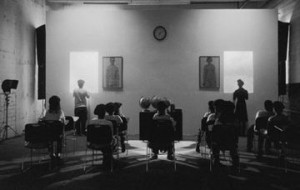
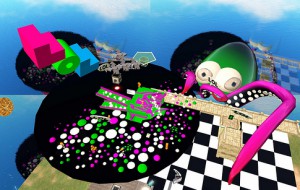
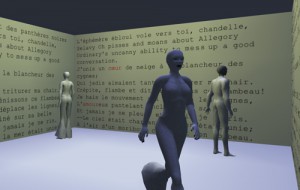
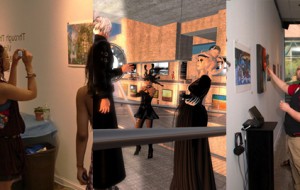
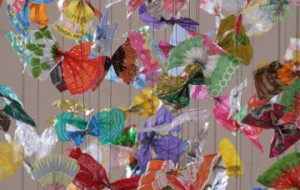
Carey Young, "Speech Acts," 2009. Installation view at Contemporary Art Museum St Louis. Photo: David Ulmer.

In 1974, Hans Haacke mounted an index of the museum’s corporate sponsors and board of trustees along the Guggenheim’s walls. The work, simply titled, Solomon R. Guggenheim Museum Board of Trustees, bared the political and economic affiliations behind the exhibition’s proverbial curtain. For Haacke, the work’s site (the museum) became the “institutional membrane” linking artistic avant-garde practice to global corporate and political networks — as it was for many of his earlier air flows and condensation cubes — by way of the cultural negotiations between exhibition sponsorship and museum board membership. And, as Benjamin Buchloh of October wrote, such work “turned [the self-reflexivity of conceptual practice] back onto the ideological apparatus itself, using it to analyze and expose social institutions from which the laws of positivist instrumentality and the logic of administration emanate in the first place.”  For Haacke, as for other conceptual practitioners such as Marcel Broodthaers, the late sixties and seventies were a critical period for revealing the entangled relationships between cultural production and the corporate institution — be it the Guggenheim Museum or Philip Morris, official sponsor of the seminal 1969 exhibition, When Attitudes Become Form. Yet, as much of this work was situated within the museum itself, these radical conceptual strategies were quickly subsumed under their own “institutionalization.” Today, this kind of Marxist materialist analysis that compelled Haacke to disturb the commodity system of art production seems to have been extinguished.

There was a moment when institutional critique held some currency as a proposition for (and often against) the ethical standards of arts institutions. But is this brand of critique a viable, or even a compelling, possibility for art practice today? It’s nothing new to say this genre of conceptual art—in its dematerialized, utopian resistance to market forces and the corporate institution—had long ago foreclosed on its own radical potential. As Ian Burn, for one, recalled in hindsight, “Such intellectual Luddism was unashamedly idealistic… perhaps the most significant thing that can be said to the credit of conceptual art is that it failed.” Despite intention for revolution, as Burn suggests, the contentious history of institutional critique was troubled early on by the avant garde’s inevitable, and ineluctable, affiliation with economy. Its pursuit of criticality, in other words, was largely quashed by its failure to produce more than merely revelatory gestures.

And, until recently, largely neglected in scholarship was the fact that conceptual art was marketed as commodity from the moment of inception. In 1967, Seth Siegelaub—an art dealer famous for branding and first promoting the neo-avant garde in New York—drafted a brochure to prospective corporate collectors. In it, he advertised the “marketability”—the use-value—of the corporate world’s partnership with culture. Siegelaub’s advertising prospectus would hardly be shocking today. Indeed, corporate sponsorship has become de rigueur in the new millennium, and increasingly, images of radicality and revolution—now often perceived as impotent gestures—are marshaled by global brands and marketed back to us as exchangeable commodities. All told, the great weakness of institutional critique (as shaped by Haacke, Fraser, Wilson, Asher, and others) as an alternative model for production was its failure to move beyond the exposure of unethical (or questionable) institutional practices in favor of effecting real change. Artist-activists certainly took up this mantle a decade later, as did a generation of artists who began to move beyond the museum frame to explore other sites of information.

Continue reading »

Inside the Artist’s Studio: Jason Bailer Losh

April 30th, 2010

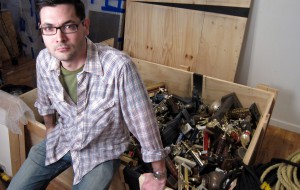
Jason Bailer Losh at his studio in Brooklyn

Jason Bailer Losh is an American artist based in Brooklyn, New York. He grew up in the midwestern town of Denison, IA. Denison is also the birthplace of actress Donna Reed, whose Hollywood fame distinguishes the creative identity of the town to this day. Following in her footsteps, Jason initially enrolled in the Iowa State University to study art and theater but soon his focus entirely shifted to the fine arts while at the Central Academy of Fine Arts in Beijing, China. In 2007, Jason received an MFA from the School of Visual Arts in New York and that degree sealed his career path as a visual artist.

Jason Bailer Losh, "Model Town Series (Donna Reed)," 2009. Model town, photograph, 24" x 36".

By borrowing the aesthetic vernacular of Americana, his art evokes complex personal responses to his viewers. The focus of his work is the preservation of family traditions and heritage and how specific memories and objects are passed down through generations.  Its intention is to find the disconnect between generations and salvage what has been lost. Invested in his culture, Jason celebrates isolated moments that have captured his imagination.  Read on and discover an era and parts of America that are almost forgotten.

Jason Bailer Losh, "Grotto of the Redemption" (detail), 2010. Graphite on clay board, porcelain place.

Georgia Kotretsos: First things first: is there an art discipline that guides your creative thinking?  I suspect there is, but I’d prefer to hear it straight from you.

Jason Bailer Losh: My first introduction into making art was as a child with my father teaching me woodcarving.  He’s a carpenter, mechanic, and natural inventor, so growing up, I was fortunate enough to learn the art of carpentry and welding, among other hands-on practices.  When I started studying art, I focused on painting and drawing, specifically portraiture, and I referenced artists like Eakins, Sergeant, and Henri.  It wasn’t until I came to New York City to pursue my MFA at SVA that I started to work with my hands again.  It was through the tutelage of artists such as Julianne Swartz that I became more intimate with my own work and went back to the roots of my art and sculpture.  On an aesthetic level, I still look at my sculptures as I would a painting.  I build layer by layer until the piece starts to work.  On a conceptual level, I start with an idea and I let the process of creating define and develop the work.  I rarely sketch or create drafts before I start; it just doesn’t feel natural.

GK: By looking into your past, do you move forward?  How do you pick and choose which elements to draw from when converting your stored visuals into artworks?

JBL: I grew up with storytellers in my family and I hadn’t realized the power a good story could hold if told to the right individual or at the right moment until I started to reference that history in my work.  Ultimately, I choose which memories to develop in my work based on what stories I feel need to be preserved.  I’m processing my own history and passing it on so it won’t be forgotten.  In that process, you can’t underestimate your audience; the viewer has an understanding of when you’re being honest with them and sharing something personal. That moment allows viewers to find their own reference points.

Continue reading »

Mike Kelley: “Day Is Done”

April 30th, 2010

DOWNLOAD VIA ITUNES | SUBSCRIBE VIA RSS
Donate Today!

SUPPORT ART21: The countdown continues…there are 78 days left to join the 100 x 100 Exclusive campaign. In 22 days we’ve received 18 donations. For as little as $1, you can stand up and be counted as part of Art21′s fan base. Your participation helps underwrite the next 100 videos and your name will be listed on our website as a 100 x 100 Exclusive member. And now without further ado, today’s video:

Episode #104: Mike Kelley reveals how photographs from yearbooks and newspapers in Detroit served as the inspiration behind the performative project Day Is Done, shown installed at Gagosian Gallery.

Mike Kelley’s work ranges from highly symbolic and ritualistic performance pieces, to arrangements of stuffed-animal sculptures, to wall-sized drawings, to multi-room installations that restage institutional environments (schools, offices, zoos), to extended collaborations with artists such as Paul McCarthy, Tony Oursler, and the band Sonic Youth. His work questions the legitimacy of ‘normative’ values and systems of authority, and attacks the sanctity of cultural attitudes toward family, religion, sexuality, art history, and education. He also comments on and undermines the legitimacy of the concept of victim or trauma culture, which posits that almost all behavior results from some form of repressed abuse. Kelley’s aesthetic mines the rich and often overlooked history of vernacular art in America, and his practice borrows heavily from the confrontational, politically conscious “by all means necessary” attitude of punk music.

Mike Kelley is featured in the Season 3 (2005) episode Memory of the Art:21—Art in the Twenty-First Century television series on PBS. Watch the video online via Hulu.

VIDEO | Producer: Wesley Miller & Nick Ravich. Interview: Susan Sollins. Camera: Nancy Schreiber & Joel Shapiro. Sound: Tom Bergin & Stacy Hruby. Editor: Paulo Padilha. Artwork Courtesy: Mike Kelley. Special Thanks: Gagosian Gallery, New York.

Jung’s Red Book Begins a New Chapter at UCLA’s Hammer Museum

April 29th, 2010
Carl Gustav Jung, The Red Book.  Courtesy The New York Times, 2009.

Reprinted from "The Red Book" by C. G. Jung. (c) Foundation of the Works of C. G. Jung. Courtesy The New York Times, 2009.

In his memoir, Memories, Dreams, Reflections, Carl Gustav Jung recalls a hallucination that would spark a monumental shift in his approach to the human psyche:

In October [1913], while I was alone on a journey, I was suddenly seized by an overpowering vision: I saw a monstrous flood covering all the northern and low-lying lands between the North Sea and the Alps… I realized that a frightful catastrophe was in progress.  I saw the mighty yellow waves, the floating rubble of civilization, and the drowned bodies of uncounted thousands.  Then the whole sea turned to blood…On 1st August the world war broke out.  Now my task was clear: I had to try to understand what had happened and to what extent my own experience coincided with that of mankind in general.  Therefore my first obligation was to probe the depths of my own psyche.

Thus began Jung’s 16-year inner odyssey, during which he actively induced waking visions and documented dreams, to explore what he initially feared to be a psychotic break, and later believed to be a path that wove his inner world with powerful forces of both the living universe and the dead.  He transcribed his spiritual travels in over 1,000 pages of drawings and words, which he subsequently condensed and revised into 200 calligraphy-adorned leaves of parchment.  The Red Book — initially titled Liber Novus – is a modern illuminated manuscript, containing 60-odd psychedelic paintings of Jung’s visions of demons, mysterious figures, and strange landscapes.

Reprinted from The Red Book by C. G. Jung (c) Foundation of the Works of C. G. Jung. Courtesy W.W. Norton & Company, Inc. 2009.

Reprinted from "The Red Book" by C. G. Jung. (c) Foundation of the Works of C. G. Jung. Courtesy W.W. Norton & Company, Inc., 2009.

While the work itself involves no analysis, Jung has stated that all of his ideas, concepts, and methods were simply elaborations on that period of internal exploration, between 1914 and 1930. Still, Jung never published the work or left any instructions for what to do with the manuscript, which he kept unceremoniously in a cupboard of the family’s home.  For decades following his death, Jung’s descendants were unsure what do and eventually stashed the book where anyone would stash something they wish to hide from the world—in a Swiss bank.  The red leather-bound book remained in the Zurich safe for twenty-five years, until Jungian scholar Sonu Shamdasani convinced Jung’s grandchildren to release the work to the public.

The exhibition at the Hammer Museum in L.A. marks The Red Book’s second stop in the manuscript’s three-city U.S. tour, which began at New York’s Rubin Museum–an institution devoted to Himalayan art–and will end at the Library of Congress in Washington, D.C. before returning to Switzerland.  In addition to serving as the sole West Coast site for the book, the Hammer Museum is the only venue that displays The Red Book within the context of contemporary art.

Continue reading »

The Power of Saying Yes

April 28th, 2010

Carrie Mae Weems, "A Class Ponders the Future", 2008 Courtesy Jack Shainman Gallery

Below is a continuation from last week’s column, “Nourishment”, where I began to share excerpts from Carrie Mae Weems’ dialogue with five Baltimore high school students at the most recent National Art Education Association annual conference. The students included Alex Marion, Mihija Cox, Laila Phillips, Thomas Jones and Ken Greller, who created questions for Carrie Mae after watching her Art21 segment and getting together with us for a little conference call discussion prior to the big event. The students were especially interested in Carrie Mae’s appropriated images from Harvard as well as her series, “Constructing History”. Enjoy!

Laila Phillips: Could you tell us more about how you pair quotes with the images for the Harvard photos? Specifically, where do you get them from and what do they mean to you?

Carrie Mae Weems: When I was a younger artist, I started as a documentary photographer… I think of myself now as a hybrid between many things, but primarily a conceptualist. When I started I didn’t use text at all.  I remember one of my professors… he wanted me to use text. He kept asking me, “What do these photos mean?” And he thought that using text would be an important addition to my work. At that moment I disagreed and said that photographs are important in and of themselves, and that a photograph expresses a thousand words. He said, “That’s absolutely true. But which thousand are you talking about, specifically?” It was a real battle…

Then at a certain point I started using text because I wanted to know something about voice. I wanted to know something about my own voice. I wanted to know something about the way I use words. Like you, Thomas, you’re a spoken word person. How do you use words? You use words and you bend them differently than others. So what is this relationship between my voice and my opinion, my critical take, and this image? How do I layer them and slice them in such a way that something happens? Even though I use words there is something very open about the possibilities. You became a scientific profile. Hmm. What does that mean?…

The text comes from my own writing. I write lots and lots and lots. I don’t think of myself as a writer, I’m not a very good writer. But the writing has a relationship to my work. For me it adds a level of nuance, a level of sounding that is both specific and broad. It allows for another level of imagination and play when you engage with the work.

LP: When Alex asked about how the pieces work you said that you like to think of them all together. Do you think of the words in that way, too? Do you think of it as sort of a monologue?

CMW: Yes, yes, yes! I do, I do.

Thomas Jones: Why did you choose such devastating events for people to portray in your photos?

CMW: You’re talking about, specifically, Constructing History?

TJ: Yes.

CMW: That’s such a great question… Primarily… the history of the world is the history of struggle. That’s the history of the world. There’s not a single group that you can point to, whether you point to them a thousand years ago or you point to them this morning at ten, who are not struggling for their humanity. There’s something about that struggle for humanity that I am interested in. It’s the only thing I’m interested in…

Charles Moore was the photographer who photographed all that stuff in Birmingham. Right? All that. The dogs biting and snarling. The beating of the kids. The hosing down.  All that stuff. That moment in history was incredible. All of that, of course, led to the assassination of Martin Luther King. And so this incredible moment, this incredible movement of people, you know, of young people, basically your age, said, This shit has got to change. We don’t like this. And we’re willing to throw down ourselves…

That history of forty years ago, which consisted of a series of brutal assassinations, made it possible for all of us to be sitting at this table talking like this. It would have been disallowed forty years ago. Disallowed. Maybe you wouldn’t be onstage at all. I certainly wouldn’t be. As a person, I knew I had to deal with the history of assassination, primarily in American politics, in order for me to move on in my own life and think about other aspects of my own humanity.

Continue reading »

The Exhibition in Art & Business

April 28th, 2010

Exhibition work attracts people from a range of backgrounds, but it now has its own institutionalized forms of training. As graduate schools increasingly offer specialized degrees in curatorial work, museum studies, and arts administration, we might ask what sort of knowledge goes into the creation of an exhibition. What skills are specific to gallery or museum jobs and what overlaps with other disciplines?  This week, Open Enrollment looks at the subject of “the exhibition” from two adjacent fields: art history and business. Oliver Wunsch considers the role of exhibition work in an art historical education by looking at MASS MoCA’s current show InVisible, curated by one of his classmates. Mike Brenner discusses different cost structures of grassroots art exhibitions, and how changing economic times force artists to adapt to find space and funds.

PHENOMENOWHAT?

by Oliver Wunsch

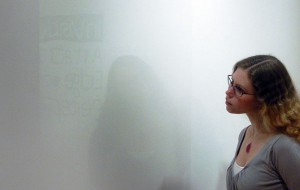
Katia Zavistovski examines Karin Sander's "Wallpiece"

In my first few visits to MASS MoCA‘s current exhibition InVisible: Art at the Edge of Perception, I missed the first work of art. Katia Zavistovski, the exhibition’s curator, eventually corrected my obtuseness. She directed my attention back towards Karin Sander‘s Wallpiece (2010), a 60 x 36 inch section of polished paint on the far wall.

Katia is my classmate in Williams College’s History of Art graduate program and it is easy to put our academic minds to work as we stand in front of Sander’s piece. I began to pontificate. Does the subtle reflective quality of Sander’s square insist on the phenomenological nature of viewing? Or is it a semiotic critique of the codes and conventions that normally separate art from its context?

This language may sound more appropriate for an academic paper than a blog post and I promise to keep it under control. The bigger question I wanted to address with Katia was whether this type of discussion belongs in museums.

Graduate students at Williams have plenty of opportunities to get out of the library and go to work on exhibitions. The program itself is based in the Clark Art Institute, which combines a museum and research center in the same building. Students can also take work-study jobs at the Williams College Museum of Art and MASS MoCA, both of which provide the chance to curate shows.

The Two Art Histories

The Two Art Histories, a book based on the 1999 Clark conference examining the "tense relationship" between museum and university-based art historians.

Like Katia, I work at MASS MoCA and will organize an exhibition there next year. My time at the museum gives me a welcome break and sense of distance from my academic work. Still, this same feeling of separation makes me wonder how curatorial work fits into a graduate education in the history of art, if at all.

I never noticed much of a divide between these two worlds until coming to graduate school. Since then, I have heard a lot about the “two art histories,” one that exists in museums and the other in colleges and universities. In the most extreme version of this rift, academics see the museum as tainted by financial interests and associations with mass entertainment, while curators view the academy as blind to actual works of art.

This division creates some problems for a young student of art history. For instance, my classmates who hope to eventually work in a museum find that they need to carefully frame their professional ambitions when applying to PhD programs. Even those who hope to become professors have to figure out how to discuss previous curatorial work when crafting their intellectual biographies. If the boundary between the museum and the university is so professionally entrenched, then can a student productively move between them?

Continue reading »

Exhibiting the Intangible

April 27th, 2010

"Raymond Pettibon" 1999-2000. Installation view at the Museum of Contemporary Art, Los Angeles. Photo by Joshua White. Courtesy Regen Projects, Los Angeles.

Recently, Bad at Sports was invited to exhibit at apexart, an alternative gallery space in New York known for presenting innovative thematic exhibitions and public programs. In order to take advantage of this opportunity, we as a group had to confront a few logistical as well as conceptual hurdles. First and foremost was the question of how to transfer the “Bad at Sports experience,” as it were, to a gallery setting.

Bad at Sports exists as a series of conversations and interviews that sometimes take place as live in-person events but are usually pre-recorded and streamed online or downloaded from our website. We also have a blog that focuses mostly on news, reviews, Chicago art commentary, and other fun and irreverent stuff. So the question for us was, how do we “exhibit” the work of the group, when what that work consists of is, ultimately, a dynamic, intangible and all-too human set of social relationships? Another way of putting it, offered by B@S co-founder Richard Holland: “we are a podcast and work in intangible audio, we don’t maintain offices, we go to the person we are recording, the entire show’s artifactual footprint would fit into a grocery bag and looks like a Radio Shack threw up.”

Because our exhibition would be taking place in New York, live events and interviews could not occur with the frequency that might be possible in Chicago. Thus the gallery would need to be filled with something other than conversation. As a group, we hashed over a number of possibilities. Should we hire a shrink to psychoanalyze exhibition visitors? Should we platform the space and offer it to other groups for short periods of time? Or – this one was Richard’s suggestion– should we duct tape B@S co-founder Duncan MacKenzie to the wall naked and have that be the exhibition?

The questions that Bad at Sports faced about how to convey what we do within a one or two-room gallery space are increasingly common ones. Practices that take social rather than objective material forms are not always ready-made for the white cube and yet they represent some of the most important developments in contemporary artistic practice over the past 15 years.

I wanted to learn a bit more about how other artists and art professionals have approached these issues, starting with Lorelei Stewart and Anthony Elms, two Chicago-area curators who have extensive experience presenting socially-oriented art in a gallery setting. Stewart and Elms are the director and assistant director, respectively, of Gallery 400 at the University of Illinois at Chicago, a highly regarded university art gallery. Gallery 400 is one of many nonprofit art spaces in Chicago that regularly present social practice and “event-based” art (spoke, threewalls and Hyde Park Art Center are just three of countless other examples I could offer).

Continue reading »

What’s In a Code of Ethics?

April 27th, 2010

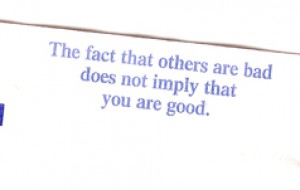
Message found in a fortune cookie. Photo by Holly Witchey.

I am not a professor of ethics.  I have been a curator and a director of new media at a major art museum, but I am first and foremost an art historian. You will therefore permit me to repeat, emphatically, that I am not a professor of ethics.  So reader, if you are one, or if you have a B.A., M.A., or a Ph.D. in philosophy, you may be profoundly disappointed and/or annoyed by this post.

Here is how it all began.  In 2004/05, after some fifteen years in the wonderful world of art museums, I began to think about how the ubiquity of technologies in service at museums might be impacting professional behaviors—not new technologies like cloud-computing, or mobile technologies, or even augmented realities and gaming, but habits associated with the use of familiar technologies like telephones, the color copier, and the Internet.

Ultimately I was offered the opportunity to produce a brief article on the subject entitled “New Technologies, Old Dilemmas: Ethics and the Museum Professional,” in the American Association of Museum’s 2007 publication The Digital Museum: A Think Guide. And recently, for my sins, I’ve been able to enlarge the scope of the project and teach in ethics for museum professionals as part of the Johns Hopkins M.A. in Museum Studies.

In the class we cover a wide range of topics, which might better be described as good business practices rather than ethics.   Below is a representative example of weekly topics:

  • Museums, Mission Statements, and Ethics Statements & Policies
  • Ethics and Information Systems
  • Ethics and Copyright
  • Ethics and Engaging Audiences: Gaming and Social Media
  • Ethics and Collection Care and Research
  • Ethics and Fiduciary Responsibility

The first thing we discuss is “Big Ethics,” which are the issues that students and museum professionals (except for those involved) typically want to discuss. These are the kinds of ethical issues that make headlines and are emotional touchstones for museums, such as stolen artifacts, repatriation, executive abuse of resources or privilege, treasure-hunting, etc. These students are smart and opinionated and they want to talk about big issues—not the use of color copiers by museum employees.

Continue reading »

Soldier On. Culture Wars Returns this Wednesday!

April 26th, 2010

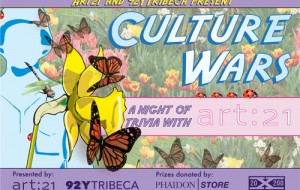
After March’s event —with over 120 participants spread across 26 teams— Jonathan Munar, Art21′s Web Manager and I are returning to host the next Culture Wars: A Night of Trivia with Art21, in collaboration with the 92YTribeca this Wednesday, April 28, 2010.

If you are curious about contemporary art and culture-inspired trivia and are close to NYC, come by and form a team of colleagues, friends, and frenemies–or just come solo and join a team on the spot to meet other art appreciators/lovers/aficionados.

While some teams, such as those representing institutions like the Guggenheim Museum, the Queens Museum of Art, and the Studio Museum in Harlem, might be competing for cultural greatness, we know it is all about fun, friends, cocktails, and perhaps the hosts’ snazzy outfits. But the prizes generously provided by 20×200 and the Phaidon Store in SoHo are pretty great.

The bar opens at 6:00 p.m. and the game begins at 6:30 p.m. sharp.

For those unable to attend, follow the chatter from before, during, and after the event on Twitter (#culturewars).

Teams may consist of 2 to 5 people. This is not a ticketed event; however, there will be a cost of $5 per team, payable at the bar, to participate.

Weekly Roundup

April 26th, 2010

Cao Fei, "Whose Utopia", 2006. Color video, with sound, 22 min. Courtesy Solomon R. Guggenheim Museum, New York, Purchased with funds contributed by the International Director’s Council and Executive Committee Members, and Sustaining Members, 2007.130.

In today’s roundup, you’ll read about rabbits and cracked eggs, love in the Ole South, community art making in the Twin Cities, an amusement park in Paris, a family of photogenic dogs, artists in avian form, a sliced car on the move, and a few big awards, among other things:

  • The short list for the 2010 Hugo Boss Prize has been announced and Season 5 artist Cao Fei is one of this year’s finalists. In a new video about the award, Nancy Spector, Deputy Director and Chief Curator of Solomon R. Guggenheim Foundation and chair of the jury, explains that the prize was created in 1996 to “honor innovation in contemporary art, and to single out artists who were creating truly inventive works of art.” The biennial award is administered by the Guggenheim Foundation and juried by an international panel of museum directors, curators, and critics. The prize sets no restrictions in terms of age, gender, race, nationality, or medium, and the nominations may include established individuals as well as emerging artists. The 2010 prize carries with it an award of $100,000. The prizewinner will be selected and announced in November 2010, and the artist’s work will be presented in a solo exhibition at the Guggenheim Museum, New York in 2011. Previous winners include Art21′s Matthew Barney (Season 2), and Pierre Huyghe (Season 4).
  • South African Projections, an exhibition of four short animated films by Season 5 artist William Kentridge, opens at The Jewish Museum, New York on May 2. The films — Johannesburg—2nd Greatest City after Paris; Mine; Monument; and Sobriety, Obesity and Growing Old — all revolve around two fictional Jewish characters, the bloated industrialist Soho Eckstein, and the vulnerable artist Felix Teitelbaum. They begin as alter egos of each other and exchange attributes as the sequence progresses. “The characters,” according to the museum, “metaphorically play out the social, political, and moral legacy of apartheid as they go about their lives.” The films are hand drawn using a process that Kentridge calls “Stone Age.” He creates large-scale charcoal drawings which he then erases and redraws, filming them in the process of transformation. South African Projections will be on view through September 19. (Kentridge’s solo exhibition at the Museum of Modern Art, New York closes May 17.)
  • Slow Fade to Black, a solo exhibition of works by Season 5 artist Carrie Mae Weems is up at Jack Shainman Gallery in New York through May 22. Through paintings, videos, and photographs, Weems presents the “burning saga of Mandingo, love, longing and the relations of power, miscegenation, and masochism simmering in the Ole South.” In this tongue-in-cheek historical drama, Weems aims to open and close the door on the past while imagining the future.
  • Sexuality and Transcendence — a major group exhibition featuring works by Jeff Koons, Paul McCarthy, Cindy Sherman (all Season 5), Jenny Holzer (Season 4), Hiroshi Sugimoto (Season 3), Louise Bourgeois, and Matthew Barney (both Season 1), among others — is on display at the PinchukArtCentrethe in Kiev, Ukraine. The show addresses artistic approaches to and the tension between “raw sexuality and sublime transformation into transcendence.” A total of 150 individual works, many of them never shown publicly until now, are spread across twenty rooms and four floors. A large group of works by Koons form the backbone of the exhibition. Highlights include Koons’ early icon Rabbit (1986); the sculptures Cracked Egg (1994-2006), and Blue Diamond (1994-2005) from the “Celebration” series; and the unveiling of his new sculpture Balloon Rabbit. According to the press materials, “Koons’ contribution acts like a mini-retrospective on the theme that forms the core of his whole oeuvre, namely, the ambivalent relationship between sexuality and transcendence.” The exhibition continues through September 19. Peruse the online photo gallery here.
  • Photographs and videos by Season 1 artist William Wegman are on view at the newly refurbished City Art Centre in Edinburgh. This show is part of the Edinburgh Art Festival, Scotland’s largest annual festival of visual art. William Wegman: Family Combinations focuses on the artist’s famous family of Weimaraners. Featuring more than 60 works, the exhibition illustrates the family tree of Wegman’s muse Fay and her offspring. The show consists of Polaroids, chromogenic, silver gelatin and digital prints, as well as a selection of video clips from Sesame Street. This is Wegman’s first comprehensive solo show in Scotland.
  • On May 1, Season 4 artist Pierre Huyghe will present his performance piece A Live Situation (2009-10) at Le Jardin d’Acclimatation, a children’s amusement park in Paris. At the far end of the park  stands an empty building that was once a folk museum. An “identity crisis” led to its closing. Huyghe’s live experiment occupies this building and involves about thirty players. Some take the part of personnel: director, guard, archivist, receptionist, etc. Others, the “interpreters,” play out situations and stories of historical significance or from recent pop culture. Also involved are “authors of culture” and specialists from different fields; they perform in the roles of, for example, actor, model, singer, comedian, magician, mentalist, hypnotist, jurist, or lawyer. This project has unfolded over the course of one year and changes with every presentation. This will be the third and final episode.
  • Season 2 artist Kiki Smith is featured in the new documentary film The Red Birds, in which director Brigitte Cornand imagines fourteen of her female artist friends in avian form. Reviewer Jeanette Catsoulis wrote this in the New York Times: “Matching voices to species — like the whiskey tones of Louise Bourgeois to the distinctive cardinal — [Cornand] layers interview fragments over rustic images of flocking and flying. Casting a playful eye on a serious topic — the relative invisibility of female artists in our culture — Ms. Cornand cannily keeps her subjects off camera and her lens on their feathered representatives. As each woman relives obstacles on her road to success, birds waddle, perch, peck and paddle, their serenity a balm to memories of conflict and self-doubt.” The Red Birds is only showing at Anthology Film Archives in Manhattan.
  • Barbara Kruger (Season 1) has a new self-titled monograph published by Rizzoli USA. This is the most comprehensive volume on Kruger’s work to date. The book explores the past thirty years of her practice, and includes contributions by Miwon Kwon, Martha Gever, Carol Squiers, and Hal Foster. Designed to embody a manifesto-like aesthetic, the book presents “bold spreads” of the artist’s large-scale works and public projects, and many previously unpublished works.

  • The Solomon R. Guggenheim Foundation has received a major grant from The Andrew W. Mellon Foundation to commence work on the Panza Collection Conservation Initiative. The first phase of the Initiative is a three-year project to evaluate Minimalist, Post-Minimalist, and Conceptual works in the collection, focusing on four key American artists: Bruce Nauman (Season 1), Dan Flavin, Donald Judd, and Lawrence Weiner. You can view the Panza Collection here. Count Giuseppe Panza di Biumo, the man for whom the collection is named, passed away over the weekend. Read about his life and legacy in the Los Angeles Times.