


Summer Reading

June 30th, 2010

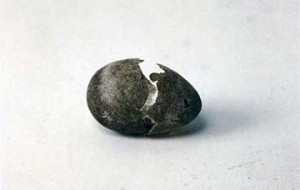
Tim Hawkinson, "Egg", 1997 Ground fingernails and hair, superglue Courtesy Ace Gallery, Los Angeles

Friends close to me know two things- I have a coffee problem and I have a book-buying problem. If I have money in my pocket and am anywhere close to books on sale, especially books about art and artists, I am sure to spend every last cent. And no, I am not into the Kindle thing. Frankly I can’t stand reading for long periods of time from a computer screen, but I love spending summer days drinking coffee that ranges from extremely hot to ice cold and catching up on books that I’ve been wanting to get to, or get back to.

Here are some of the titles I’ll be packing as I move from home to the Art21 Educators summer institute and then onto vacation this summer….

Philip Gefter’s collection of essays, Photography After Frank (2009)

Beryl Graham and Sarah Cook’s Rethinking Curating (2010)

Phaidon’s Press Play: Contemporary Artists in Conversation (2005)

Jennifer New’s Drawing from Life: The Journal as Art (2005)

Richard Brereton’s Sketchbooks: The Hidden Art of Designers, Illustrators and Creatives (2009)

Danny Gregory’s An Illustrated Life (2008)

The last three listed above are all about sketchbooks and approach the topic very similarly by highlighting a range of artists that are quite serious about the work they do- whether preparing for finished works or allowing themselves to work through ideas on the way to something even bigger. All three are worth a look, especially if you are like myself and want good examples of sketchbook possibilities to share with your students this September.

While I wanted to include Terry Smith’s What is Contemporary Art? on my summer reading list, I can’t in good conscience recommend it at this time. Has anyone been able to get past the first 40-50 pages?? The verbal gymnastics make me tired. But maybe I just need another cup of coffee.

New Internet Meme: Cheers!

June 30th, 2010

With my summer break between the first and second year of my graduate studies at San Francisco Art Institute in full force, I’ve taken a few weeks to visit some buddies in New York City and Los Angeles. Regardless of where I am or the break I may be on, my strongest identity marker right now is that “I am a Graduate Student.” It reminds me of that time I came out a few years ago and the only thing I could think of when I went to the grocery store, applied for jobs, or played my XBox was that “I Am Gay.” A week ago at a friend’s apartment in LA, I sat down to write this post. My mind wandered between thoughts about that strange solo show by Trisha Donnelly (former SFAI visiting faculty) I had just seen at Casey Kaplan Gallery in NYC and comparisons between Bravo’s Work of Art and my MFA program. Then I got completely sidetracked and produced the effect below.

Jeffrey Augustine Songco, "Cheers! from me to Chris." Courtesy the Artist.

When I was wrapping up my BFA program six years ago at Carnegie Mellon University, this new Internet thing called “The Facebook” came out. Cut to today and I, unlike most users nowadays, still associate Facebook (sans “The”) with a collegiate experience—friend-requesting the TA of my Social Psychology class, browsing blurry fraternity party pics to jog back the memory, and stalking random students (which, really, hasn’t changed). For now, Facebook is heavily marked as a “School” thing, so I find it very appropriate to now share a brand new meme sweeping Facebook profiles across the country that takes advantage of the co-authorship process I’ve been blogging about in my past posts. Let me introduce you to Cheers!

Jeffrey Augustine Songco, "Cheers! from Freddy to me." Courtesy the Artist.

Cheers! is an Internet meme where one individual photographs himself toasting an alcoholic beverage to the camera. That picture is then uploaded to an online social network like Facebook, where the toaster selects another individual to be the recipient of the toast (in Facebook’s case, by tagging the recipient in the photo). Cheers! The recipient then uploads two of his own pictures, one returning the toast and the other passing the toast onward to another individual. Cheers! Cheers! If at anytime other folks join in on the toast (by commenting on or, in Facebook’s case, “liking” the photo), the original toaster must toast to the new arrivals. Cheers!

Continue reading »

It lives in public

June 30th, 2010

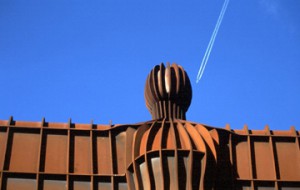
Antony Gormley, "Angel of the North," 1998. Steel and concrete. Copyright John Clive Nicholson and licensed for reuse under this Creative Commons License.

It is base-level arts conversation but it is the very one that I have had most in my life.  Like the best conversations, everybody has an opinion, whether you are an arts life-termer or just your everyman on the street.  Also like the best conversations, it allows you to get passionate, show prejudices, be able to make a few jokes and, easiest of all, compare and contrast.  It is a conversation that I have had with ex-girlfriends in the kitchen over the Sunday papers, with gallerists in Amsterdam, in the pub with my friends, with television presenters on location, in the back of a New York taxi with film school kids and many more times besides.  It is the conversation that begins: “Who do you prefer, Antony Gormley or Anish Kapoor?”

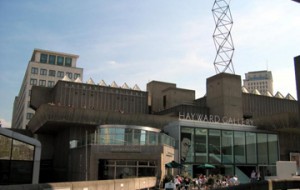
For the record, I am a staunch Gormley-ite [though it does help his cause that one my favorite all-time works is Still IV (1994), his lead casting of his daughter Paloma as a newborn, at just six days old].  Regardless, Gormley has developed a stunningly simple method of having people engage in the art of viewing.  The body as a token of empathy.  Event Horizon, Gormley’s placing of twenty-seven life-size figures across a cityscape originally erected in London in conjunction with the artist’s Blind Light exhibition at the Hayward Gallery in 2007, and currently on view across New York City until August 15, remains an extraordinary explication of urban alienation and how one views one’s place in the world.

With the exception of perhaps Svayambh, his forty-ton block of red wax that has showed at heavyweight venues including Haus der Kunst, Munich; Musée des Beaux-Arts de Nantes and London’s Royal Academy, Anish Kapoor’s work leaves me cold. I get very little impression that Kapoor cares about anything other than his own cerebral rationale behind his work and anyone who disagrees is quite obviously a philistine.  Indeed, Svayambh appears to be the physical manifestation of the disdain that he holds for the foundations that allow his work to be created and exhibited at the highest level.  “I have a great problem with public sculpture.” says Kapoor, “Public sculpture is something that doesn’t easily work.  It doesn’t easily work in my opinion because, in a sense, the philosophical reasons for it being out in the public are eroded” Replies Gormley, “art doesn’t have to, as it were, have the special conditions of the gallery, the private collections or the museum to give itself a context in which it can work.”*  I find Gormley more attendant to the public-at-large, quite aware that, like any artist, he would not exist were it not for his viewers.  Perhaps I am mistaken?  A small story reported in Monday’s papers does make me wonder.

Continue reading »

Weekly Roundup

June 29th, 2010

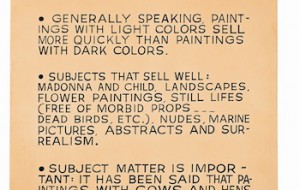
John Baldessari, "Tips for Artists to Sell", 1966-68. Acrylic on canvas, 68 x 56 1/2 in. The Broad Foundation, Santa Monica. © 2009 John Baldessari. Photo courtesy of The Broad Art Foundation, Santa Monica.

In this week’s roundup you’ll read about a retrospective in the Golden State, a pack of wolves in Singapore, a dreamy gift in Berlin, de-monumentalisation in Italy, Oprah culture the world over, some fresh high-tops at Bloomingdale’s, and much more:

  • The traveling retrospective exhibition, John Baldessari: Pure Beauty, has opened at the Los Angeles County Museum of Art (LACMA). This is the only West Coast showing and features the greatest number of works (more than 150) of any venue on the show’s tour. “Pure Beauty,” says Leslie Jones, LACMA associate curator of prints and drawings, “explores Baldessari’s lifelong interest in language and mass media culture, which seems increasingly relevant — even imperative — in an era of information and image proliferation.” Beginning with his little-known paintings from the early 1960s, the exhibition features the landmark photo and text works from 1966-68, photo-compositions derived from films stills of the 1980s, irregularly shaped and over-painted works of the 1990s, as well as video and artist books. The show concludes with recent works by Baldessari (Season 5), including a special multimedia installation conceived for the retrospective. Pure Beauty closes September 12 at LACMA, and will then travel to The Metropolitan Museum of Art.
  • On the occasion of Pure Beauty, Baldessari (working with the art media company ForYourArt) has created an iPad application that lets users rearrange a 17th-century Dutch still-life painting by Abraham van Beyeren. The painting, titled Banquet Still Life, is held in LACMA’s collection. According to the LA Times, Baldessari did another version of the project nine years ago. Learn more about the application at Artinfo.com.
  • Stylus, a new project by Ann Hamilton (Season 1), opens at the Pulitzer Foundation for the Arts on July 9. Hamilton’s installation was conceived as both “a sanctuary for listening and a laboratory for experiments in collective vocal exercises.” The installation asks the following questions: How do we communicate? What external forces act upon or inhibit our collective need for social contact and response? How are relationships enacted (or not enacted) by the architectural spaces we inhabit? Go behind the scenes of the installation by visiting the Pulitzer’s blog.
  • Head On — a massive installation of 99 life-sized wolves — was created by Cai Guo-Qiang (Season 3) for his solo exhibition at the Deutsche Guggenheim Berlin in 2006. It is now on view at the National Museum of Singapore. Via the museum: “Seen from afar, the leaping wolf pack forms an arc full of force and power, their fierce courage and spirit of warrior camaraderie seemingly serving as a reminder to people: humanity is easily blinded by a kind of collective mentality and action, and is destined to repeat such error to an almost unbelievable degree. The crux of this installation lies just before the glass wall, as the artist reminds people: invisible walls are the hardest to dismantle.” The second and third parts of this installation, Illusion II and Vortex, are also on view. Closes August 31.
  • Text/Weave/Line—Video, 1977-2010, an exhibition of works by Beryl Korot (Season 1), has opened at The Aldrich Contemporary Art Museum. This marks the artist’s most extensive museum project by  to date, featuring six never-before-seen works. Her new pieces reflect an ongoing interest in how our communication tools mirror the way we present and receive information. Among the works on view are Korot’s multi-channel video work, Text and Commentary, which premiered at Leo Castelli Gallery in 1977. Curator Harry Philbrick points out, “Korot was the co-founder and co-editor of the ground-breaking 1970s publication Radical Software, the first magazine to explore the notion of alternative communication systems and formats for conveying information. Today, when new media is an imperative in our connected world, she continues to create fresh work that illuminates the structure of communication.” Continues through January 2, 2011.
  • Dream Passage is the first major retrospective exhibition of works by Season 1 artist Bruce Nauman to be staged in Berlin. Presented by the Hamburger Bahnhof Museum für Gegenwart, the exhibition celebrates a new gift to the museum from collector Friedrich Christian Flick: Nauman’s Room with My Soul Left Out, Room That Does Not Care (1984). This “architectural sculpture” has been installed in collaboration with the artist and will now be on permanent display. Other examples of Nauman’s “experience architecture,” also on view, include Corridor Installation (Nick Wilder Installation) (1970), where visitors are recorded by a video camera and then confronted with their own image; and Kassel Corridor: Elliptical Space (1972), created for Documenta 5. Dream Passage closes October 10.

100 x 100 Exclusive: Donate Today!

June 29th, 2010

Video above: Jeff Koons: Money & Value

Donate Today!
The 100 x 100 Exclusive campaign has only 18 days left! Since last week we’ve added five new donors, leaving us 36 spaces to fill on our 100-name donor list. You can help us out by adding your name to those below:

100 x 100 Exclusive contributors (as of Friday, June 25, 2010): Continue reading »

Ze Germans

June 28th, 2010

Wolfgang Tillmans, "still life, New York," 1995. Courtesy the artist and Galerie Daniel Buchholz, Köln/Berlin.

So there we have it.  I suppose, at least, it means that we will all have the large part of our summer back.  The glee that I took from the USA’s second round loss to Ghana was very much out of proportion compared to how little it mattered to me that either team went through to the quarter-finals.  Antagonism between the USA’s football team and the European footballing nations is not based on the amount of talent in any side; the USA national football team is built with a fine regiment of athletes.  I do believe that the problem is one to do with language.  It seems alien for most football viewers to hear the USA’s national football team coach Bob Bradley to tell the post-match analysts that he and his squad had practiced certain plays, that it was physically draining on his players to have to go into overtime and that by the end of the first period the team had made too many mistakes on the field.

Yes, we lost yesterday.  Worse still, we lost in a terrible manner.  We showed little heart, little flair and little ambition.  Not acceptable on the biggest stage.  So now what to do?  I suppose I should get to see some exhibitions.  What do I want from a summer exhibition?  I want something loud, I want something fun, and I want something ambitious.  Ernesto Neto at the Hayward I’ve done.  Howard Hodgkin in Oxford?  Perhaps the Whitstable Biennial?  We could stay the night and have a weekend by the sea.  Douglas Gordon at Lisson Gallery?  Too small.  Picasso at Tate Liverpool!  Hmm, they’re all a little bit out of the way.  Oh wait, did you say fun, loud, ambitious, and a little bit silly?  Right-O.  I’ve got just the man.  Really?  Fantastic.  Who is it?  I just need to do anything to get the Germans out of my head.  Ah, right, I see…

Continue reading »

Carrie Mae Weems & David Alan Grier: In Conversation

June 25th, 2010

SUBSCRIBE TO VIDEOS: RSS | ITUNES | YOUTUBE | ARTBABBLE

Carrie Mae Weems and David Alan Grier have an intimate discussion on a range of topics including childhood idols, the definition of blackness, race and politics during Obama’s presidency, and a desire to make work that addresses not only personal identity but also the broader human condition.

With the pitch and timbre of an accomplished storyteller, Carrie Mae Weems uses colloquial forms-jokes, songs, rebukes-in photographic series that scrutinize subjectivity and expose pernicious stereotypes. Weems’s vibrant explorations of photography, video, and verse breathe new life into traditional narrative forms-social documentary, tableaux, self-portrait, and oral history. Eliciting epic contexts from individually framed moments, Weems debunks racist and sexist labels, examines the relationship between power and aesthetics, and uses personal biography to articulate broader truths. Whether adapting or appropriating archival images, restaging famous news photographs, or creating altogether new scenes, she traces an indirect history of the depiction of African Americans for more than a century. Carrie Mae Weems is featured in the Season 5 (2009) episode Compassion of the Art in the Twenty-First Century television series on PBS. Download-to-own the full episode from iTunes.

David Alan Grier started his career in New York, on Broadway in the production of “The First” playing the role of Jackie Robinson for which he was nominated for a Tony Award. Grier has appeared in many productions on the New York stage, including “Soldiers Play”, and Shakespeare In The Park. On Broadway he has been seen in “Dream Girls”, “A Funny Thing Happened On The Way To The Forum”, and starred in “Race”, written and directed by David Mamet, for which he received a Tony nomination. Grier has appeared in over 30 films, most recently “Dance Flick”, “The Woodsman”, “Bewitched”, and “The Poker House”. Grier won the Golden Lion award for best actor for the film “Streamers” directed by Robert Altman at the Venice film festival. On television he has appeared in “The Chocolate News” and for four seasons in the Emmy award winning series “In Living Color”. Grier is the author of the book “Barack Like Me: The Chocolate Covered Truth”. Grier has been an avid collector of art, and has collaborated on a performance piece “The Alchemy Of Comedy, Stupid” with the artist Edgar Arceneaux which was included in the 2008 Whitney Biennial.

VIDEO | Producer: Ian Forster, Wesley Miller & Nick Ravich. Camera & Sound: Ian Forster & Nick Ravich. Additional Camera: Erica Matson. Editor: Ian Forster & Joaquin Perez. Artwork Courtesy: Carrie Mae Weems. Photos Courtesy: Roberts J. Saferstein & Comedy Central. Thanks: CORE:club, Pablo de Ritis & Jason Smith.

All things to all men

June 25th, 2010

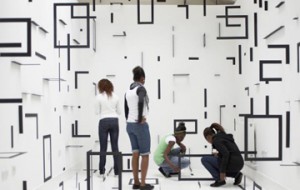
Esther Stocker, "Untitled," 2009. Courtesy South London Gallery

Over the past ten years, an interesting and forward-looking trend among contemporary art galleries in the United Kingdom  has been the aim to secure a legacy beyond the general functions that a gallery has. Historically, building and maintaining a roster of interesting artists befitting the remit of the gallery itself, as well as being able to exhibit innovative and groundbreaking work, would be the first port of call to generate sales and traveling exhibitions – the bread and butter required to shore up sustainability. We here in the UK are lucky, insofar as we have a cultural sector that has strong funding support, channeled via the appropriate organizations, from central government. Public galleries at least are beginning to bear the fruit of long-term planning instigated to explore what it means to be a gallery in the 21st century.

Since the final years of the 20th century, the scale of capital built across the UK’s contemporary art galleries has escalated with large-scale, concept-specific projects constructed across the country. InIVA, the Institute for International Visual Arts, opened in London in 1994 with a remit for the development, exhibition, and conservation to address the imbalance in the representation of culturally diverse artists, writers, and curators. A member of the Liverpool Arts Regeneration Consortium, FACT (Foundation for Art and Creative Technology) is one of the UK’s leading film, video, and new media exhibition, education, and research projects. Also on this list are the expanded Whitechapel Gallery; The Public, in Walsall; Nottingham Contemporary; Newlyn Art Gallery & The Exchange and, opening this Friday June 25, the newly expanded and refurbished South London Gallery.

One of the leading lights in the small-scale contemporary art gallery scene in London (a not-insignificant sector that includes Matt’s Gallery, Chisenhale Gallery, The Showroom Gallery, and Camden Arts Centre), South London Gallery has undergone a £2 million extension by the young architectural firm 6a Architects in order to cement the gallery’s position as one of the few of its kind to combine a consistently high-quality exhibition program with strong management and able direction.

Continue reading »

Bikes, Bodies, and Blastulas: Tim Hawkinson Talks About His New Work

June 24th, 2010
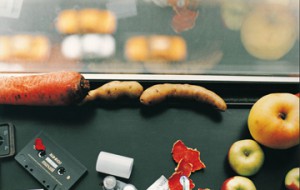
Tim Hawkinson Apples and Bananas, 2010 Apple cores, banana peels, grape skin, twist ties, bread tabs, orange peel and bronze 9 1/2 x 4 x 3 1/2 inches.  Courtesy Blum & Poe.

Tim Hawkinson, Apples and Bananas, 2010 Apple cores, banana peels, grape skin, twist ties, bread tabs, orange peel and bronze, 9 1/2 x 4 x 3 1/2 inches. Courtesy Blum & Poe.

From intimate sculptures to mammoth collages, Tim Hawkinson (Season 2) gracefully creates tension between the playful and the profound.  His current exhibition at Blum & Poe continues longstanding threads while embarking on new investigations, exploring the human body, time, death, spirituality, and the cyclical nature of existence. He recently walked me through his exhibition, shedding light on the process for each new piece.

Lily Simonson: How does place influence your work?  Los Angeles?

Tim Hawkinson: It’s not so much Los Angeles as more specifically our home and our living circumstances.  Having banana peels lying around – Patty [Wickman, spouse] is into composting.  I think it could really be anywhere.  Any place would have a definite impact on my work, it’s just not quite as broad as Los Angeles.

LS: Did your work change when you moved from downtown Los Angeles to Altadena?

TH: Superficially, just in terms of what materials were available, what presented itself out in the alley. [Using found materials] is just one of the things that goes into the mix.  So just staying open to these things that present themselves.  They can be found objects or found ideas, or found images.

LS: With Apples and Bananas the materials become the title, too. Is it important that the viewer knows the materials used?

TH: Well for something like this, which at first seems so horrific, to know that it’s really just made of apples and bananas kind of softens the morbidity, for me anyway.  So maybe I took that into consideration when I was titling it…. For certain pieces, I have a title in mind earlier on.  But for something like this it just suggested itself. There’s also a song that my daughter Clare learned early on.  “I like to eat apples and bananas” and you change vowel sounds each time you sing it.

Continue reading »

Dinosaurs and Mummies: Augmenting the Art Experience at Onishi Gallery, Chelsea

June 24th, 2010

This story starts with a dinosaur.

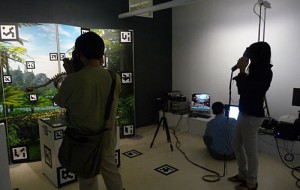
It’s a bipedal one, sort of like a mini Tyrannosaurus, running around by my feet.  My friend laughs as he sees it scurry beneath me.  It’s somewhat different from what I’d imagined, though.  I press a button, and it changes skin tone.  I try to touch it, and my hand passes straight through.  But as I crouch down, it looks me straight in the eye.  Then it waves and vanishes into a wall.  It’s gone.

The dinosaur before me is a stunning example of mixed reality, the subject of a recent show at Onishi Gallery in Chelsea sponsored by Canon and KBK Ltd.  Mixed reality places virtual world objects onto the real world, allowing anything from dinosaurs to interior design concepts come to life.  Unlike screen-based augmented reality and 3D projections, these headsets create a fundamentally different experience by capturing your entire periphery. The two worlds of computers and physical objects truly mesh.

Both wearing headsets, a visitor and I are able to share in the same experience of the dinosaur.

Both wearing headsets, a visitor and I are able to share in the same experience of the dinosaur.

“People would be surprised when they entered the gallery,” said gallery director Nana Onishi over sips of green tea. ”‘It’s not art,’ they would tell me. ‘It’s technology.’”  Her eponymous gallery focuses on traditional Japanese art in contemporary contexts, such as metal leaf work and scrolls inspired by the Tale of Genji.  This was her first technology show.

“I was like them,” she said of her first encounter with Canon’s headsets.  Shortly thereafter, however, she decided to host them at her gallery, where they showed the technology to the general public for the first time.   “Since I’ve come to know the project, I have had so many ideas and images for projects.”

Continue reading »