Students, Faculty, and Community Members Fight for Fine Art as University Administrators Question its Value

October 29th, 2010
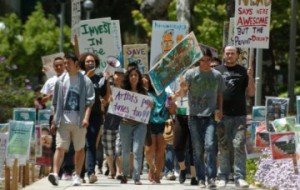
Cal Poly Pomona students and staff march to the CLA building as they respond in an uproar to last weeks recommendations to cut the fine arts program at the school May 4, 2010. Image Via The Inland Valley Daily Bulletin.

Cal Poly Pomona students and staff march to the CLA building as they respond in an uproar to last week's recommendations to cut the fine arts program at the school. May 4, 2010. Image via The Inland Valley Daily Bulletin.

Art’s place in government-funded institutions in our country has always been precarious.  And with the Golden State sinking ever-deeper into the red, California-sponsored art programs are fighting for survival.  But how can art demonstrate its value? Sure, we can cite ways in which arts education raises test scores for young students, but what happens after the SATs are over? Defending art in higher education–programs that aim to teach students how to become artists–is as slippery as defending art itself.

Last spring, my Looking at Los Angeles co-columnist Catherine Wagley and guest blogger Marc Herbst chronicled protest actions staged in response to California’s unprecedented cuts to state-funded higher education, and the concurrent — and also unprecedented–fee increases.  This year, the state government has scaled back its cuts to higher education and even given universities hundreds of millions in restoration funds from the state, as well as federal stimulus funds.  But Fine Art students at Cal Poly Pomona, one of 23 California State University campuses, are still feeling the squeeze.  The Provost, Marten denBoer, has recommended the total elimination of the Fine Art major.  In two weeks, the art department will have the opportunity to formally respond before a final decision is made.

As an adjunct lecturer in Cal Poly Pomona’s Art Department in Fall of 2009, I was profoundly impressed with the students’ commitment to not only to their work, but the department itself.  This week, I spoke with Babette Mayor, chair of the Art Department, about the program’s struggle for survival, the community response, and what you — yes, you!– can do to help.

Lily Simonson: What is the history of the Art Department at CSU Pomona?

Babette Mayor: The B.A. in Art was created in 1974 as part of a university-wide initiative to bring arts and humanities education to a polytechnical school…In the late 80s, [there was a] growing interest in Graphic Design and the development of computers. Now the department has two degrees: a BA in Art with options in Fine arts and Art History, and a BFA in Graphic Design.

LS: How have California’s longstanding budget problems affected the art department over the long term?

BM: When I first [joined the faculty] in 1990, we had 9 faculty [members].  And it hasn’t changed very much.  We have now 10 faculty.  But the number of majors has dramatically increased.  We’ve had a number of hires in graphic design because that particular area was growing.  But the University has not replaced any of the Fine Art faculty that have retired.

Continue reading »

William Kentridge: Studio Manager Anne McIlleron

October 29th, 2010

SUBSCRIBE TO EXCLUSIVE: RSS | ITUNES | YOUTUBE | ARTBABBLE

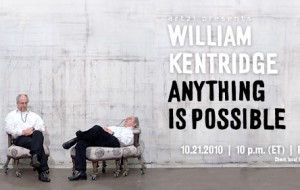
In celebration of Art21′s new feature film William Kentridge: Anything Is Possible — which premiered nationally on October 21, 2010 and will continue to air on PBS (check local listings) — the Exclusive series is devoting the month of October to telling stories about Kentridge’s numerous artistic collaborators whom we’ve had the distinct privilege of meeting these past few years. This is the fifth of six episodes.

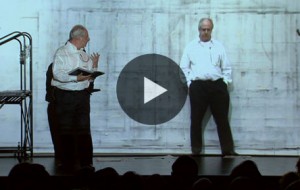
Episode #126: Anne McIlleron, William Kentridge’s studio manager, discusses the artist’s working method and penchant for collaboration. Featuring behind-the-scenes moments from the artist’s studio in Johannesburg, South Africa; a performance of I am not me, the horse is not mine (2008) at the 16th Biennale of Sydney, Australia; and rehearsals for Kentridge’s production of The Nose (2010) at The Metropolitan Opera, New York.

Having witnessed first-hand one of the twentieth century’s most contentious struggles—the dissolution of apartheid—William Kentridge brings the ambiguity and subtlety of personal experience to public subjects most often framed in narrowly defined terms. Using film, drawing, sculpture, animation, and performance, he transmutes sobering political events into powerful poetic allegories. Aware of myriad ways in which we construct the world by looking, Kentridge often uses optical illusions to extend his drawings-in-time into three dimensions.

William Kentridge is featured in the Season 5 (2009) episode Compassion of the Art in the Twenty-First Century television series and the Art21 special, William Kentridge: Anything Is Possible (2010), both on PBS. Watch full episodes online for free via PBS Video or Hulu, as a paid download via iTunes (link opens application), or as part of a Netflix streaming subscription.

VIDEO | Producer: Wesley Miller & Nick Ravich. Interview: Susan Sollins. Camera: Philipe Charlut, Robert Elfstrom & Joel Shapiro. Sound: Ray Day, Patrick Mullins & Roger Phenix. Editor: Mary Ann Toman. Artwork Courtesy: William Kentridge. Special Thanks: Anne McIlleron, The Biennale of Sydney & The Metropolitan Opera, New York. © 2010 Art21, Inc.

This program is supported, in part, by public funds from the New York City Department of Cultural Affairs in partnership with the City Council.

Inside the Artist’s Studio: Pesce Khete

October 29th, 2010

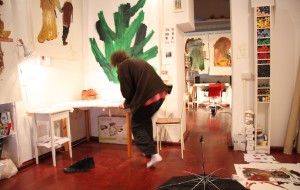
Pesce Khete at his studio, San Lorenzo, Rome, Italy.

Pesce Khete is an Italian painter based primarily in Rome, Italy.  He has studied at the Classical Studies Department at the Liceo Ginnasio Torquato Tasso, later on at the Istituto Europeo di Design, and finally at the Accademia delle Arti in Rome.  His studio is located in the San Lorenzo district, the area to be in the evening.  Pesce’s studio smells like freshly used oil sticks, and the speakers are prominently placed in his space, where he enjoys whistling and singing along to his favorite tunes. For the past three years, Pesce has occupied a two-room studio space right across from a historic pasta factory built in 1905. It was later abandoned in the 60s, until it became the home of the Nuova Suola Romana a decade later by artists Nunzio, Pizzi Cannella, Gallo, Ceccobelli, Dessi, and Tirelli.  A new generation of artists has moved in since then and Fondazione del Pastificio Cerere remains a vibrant artistic hub to this day.

Funny enough, I came across Pesce’s work at the Art Athina fair in May 2010 in Athens. This year in particular, the fair was highly conservative. Unfortunately it had an “art bazaar” feel to it that made me very uncomfortable at times.   Nonetheless, two booths down from the gallery I was showing with, Pesce’s work caught my eye at The Flat–Massimo Carasi gallery booth. I spent three days at the fair walking around looking for something I’d feel excited about.  I totally surprised myself that figurative painting excited me the most and I went back to Pesce’s work again and again and again. His work is raw but highly controlled, very seductive, visually rich, innocently destructive, and kind of sexy. Bodies are captured in private moments whether they are clothed or not and bodily fluids are exposed. At times, his palette becomes dirty and his drawings messy but it is successful because this scatological delight works.

I’ll say no more but keep an eye on Pesce. I have a feeling we’ll be seeing more of him and his work.

Pesce Khete, "Untitled," 2010. 134 x 76.5 cm, oil stick and masking tape on cotton paper.

Georgia Kotretsos: Tell me a little bit about contemporary painting. What are your thoughts on the discipline and where do you place yourself in relation to your peers?

Pesce Khete, work in progress at his studio, 2010

Pesce Khete: Well, I think that you are aware that your question has vast implications. To even touch on the theme of painting and its role in world of contemporary art could lead to an infinite number of discussions! In fact, as a result of an invitation to participate in the museum exhibition titled Impresa Pittura, organized here in Rome with the scope of capturing the essence of painting as it has evolved in Italy during the last 20 years, I have recently had many opportunities to discuss this subject. The debate is open, even if in reality it has never been closed, and the question is more or less the same: does the art of painting still hold any significance? The reply to this question, one that has been asked repeatedly for more than a century, goes without saying: yes.

Continue reading »

Flash Points Wrap-Up: When Art Becomes Your Life

October 28th, 2010

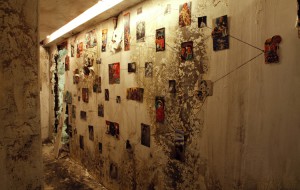
Jonah Freeman and Justin Lowe, "Bright White Underground," Installation view, 2010. Courtesy Country Club Projects.

A few weeks ago, when a friend was planning a visit to New York City, he asked me which art to see. I found myself prefacing less-emphatic recommendations with, “it might not change your life.”  That’s just something people say, of course, but I was serious. I really wanted my suggestions to have life-changing potential and if it that potential was low, I felt I owed him fair warning.

When I first considered the question that started this series–”How do we experience art?“–I found its openness overwhelming. But what I actually want from the experience of art is just as open. It’s also tenuous and, paradoxically, demanding: I want my life to change.

A recent installation by Jonah Freeman and Justin Lowe seemed like an enmeshment of everything I want art to grapple with: drama, quietness, self-awareness, believability, irreverence, smartness, artifice,  density. The two artists subverted an icon of mid-century modernist architecture, turning Rudolph Schindler’s Buck House into a cave-like relic of a counter-culture moment. They invented an obsessively detailed narrative that they almost seem to believe, reenacting and documenting specific events that could have happened but never did. And yet the narrative is secondary to the confusing reinterpretation of the Buck House that acknowledges and totally obscures the austere clarity of Schindler’s original design. This conversation with Freeman and Lowe, which explores the experience of viewing, making, inventing, and living with the world you’ve created, seemed a suitable close to the Art and Experience Flash Points series.

Catherine Wagley: So my first experience of the space came from reading the press release—which was beautifully written, by the way. You two did that?

Jonah Freeman: Yes.

CW: I enjoyed the dot connecting approach to history it took. It presented a fictional history, but invited potential visitors to suspend disbelief and peel the space’s history away. But then I read the T-Magazine piece, which was so bombastic—and “drug addled.” You two become characters, described in specific physical detail, even. The press release and T-Mag article seemed to collide the night of the opening. People tended to react to the space as an extreme, irreverent project but it also felt quiet and careful at times. How do you reconcile those aspects?

Justin Lowe: I guess it does appear as though there’s some carefully constructed casualness. I mean, the mess is rather specifically accumulated and controlled, wouldn’t you say? This stuff back here is all from labs and there are gently generated newspapers that have helped us tell some of the story. There’s lots of coded language utilized within the piece. You’re supposed to experience something that’s polysemic, open, and expansive.

Continue reading »

What is Research and Creation?

October 27th, 2010

My eyes are droopy and I’m over-caffeinated. This writing marathon is killing me and wrangling my brain.  To make matters worse, I haven’t left my house in a few days, pacing around aimlessly in my bathrobe, haplessly eating all the food in my fridge.  I’m almost certain that my behavior is not abnormal, considering I call this time of the year “Grantwriting Season,” where there is a deadline for a funding opportunity at every corner, namely that big SSHRC (Social Sciences and Humanities Research Council) one that was due a few days ago.

Currently, I am writing letter of intent/proposal for a fellowship.  When you start to look at these applications, be it for graduate school or a fellowship grant, they all resemble each other, many asking for jpegs of work, along with a statement.  Let it be known that I am no grantwriting expert, just a keen observer.  I continuously notice the same words keep coming up again and again: “research and creation.” What is research and creation in the domain of fine arts?  How is the research in fine arts different from that of science?  Or has the phrase “interdisciplinary” cast its web so wide that science and art have merged into one?  If scientific research is based on trials and experimentation, then what is the research of art?  Is it possible to conduct innovative research when we live in a post-post-modern world?

Continue reading »

Skills Worth Teaching

October 27th, 2010

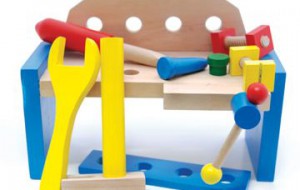
Image: toysonline.com.au

This past April at the National Art Education Association’s annual conference in Baltimore, Craig Roland hosted and participated in a panel presentation called “What’s Worth Teaching in Art?” But before the panel even began, which was running in a Pecha Kucha format, the title of the workshop itself begged another question: What’s worth learning in art?

And this gets me to thinking about skills.

Recently, I was having a conversation with a colleague (and then myself) about the kinds of skills worth teaching in K-12 visual arts classrooms today. In the past, so much time has been spent teaching very specific techniques and approaches, that alternative ways of thinking about and making art have been largely ignored. In many, many schools even today, students spend countless hours of class time mimicking artist styles instead of thinking broadly and figuring out how to best represent the things they’re thinking and dreaming about.

Today I’d like to start a running list of some important skills we may want to begin considering seriously in contemporary art education, if we aren’t already. Perhaps this is the start of the book I keep forgetting to write? I don’t know.

When I think about the skills I want students to possess after taking a course with me, I think about teaching things like:

  • Sketching
  • Brainstorming- creating multiple solutions to visual problems
  • Embracing ambiguity
  • Working with and without a plan
  • Exploring the tactile qualities of materials and finding qualities that best serve big ideas
  • Experimenting with a material before committing to a certain form or way of using it
  • Using traditional and non-traditional materials to make art, including various forms of technology
  • Collaborating with others to make art
  • Juxtaposing art and artists to learn through association
  • Giving and receiving feedback in order to improve ideas and works of art

In the interest of teaching kids things they can use beyond the classroom, I feel that the list above can initially be part of a new set of skills rather than focusing on teaching my high school students to crank out projects about pointillism, cubism, or any other ism for that matter. If the ism fits, let’s learn from it. If not, let’s think a little more broadly and find skills that better suit our students today.

Your thoughts?

Call for Writers: Next Flash Points

October 27th, 2010

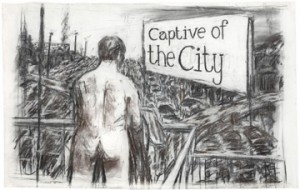
William Kentridge. Drawing for the film "Johannesburg, 2nd Greatest City after Paris," 1989. Charcoal on paper; 37 4/5 x 59 2/5 in. Copyright and courtesy of William Kentridge.

Our new Flash Points topic, Influence, will be launching soon and we’re inviting you to participate!

An artist’s work can be influenced by a myriad of sources — family history, cultural background, social relationships, world events, education…the list is practically endless.  As William Kentridge stated, “We approach the outside world very much in terms of what is happening inside us.”  His work draws greatly from his own experiences, from his South African culture and family environment, to the theatrical lessons he took early in his career in Paris.  To coincide with Art21′s new film, William Kentridge: Anything is Possible, we’ll explore the many types of influence in art.

A few of the questions we’ll focus on include:

  • What is the impact of outside influences on an artist’s work?
  • How does an artist’s background inform his/her work, and how does our status as a viewer inform our understanding of it?
  • What kind of impact do art education programs or mentorships have on an artist?
  • How are artists influenced by each other or by other forms of art?
  • How do institutions play a role in an artist’s development?

We are eager to hear from a range of perspectives, including those of you who work as artists, arts professionals, students, art educators, funders, organizers, and academics. Propose a Flash Points blog post related to the above topic and have a chance to be featured on this site. Email ideas and pitches to blog [at] art21 [dot] org.

Update from Zurich! In Correspondence with Silvia Popp

October 27th, 2010

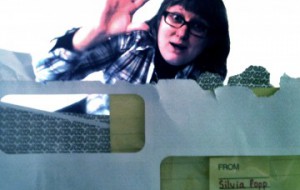
Mail from Silvia Popp

Silvia Popp is a video/action artist based in Zurich, Switzerland. Some of her recent projects include STUDIO ACTION, Pamela’s Boutique, Leerstand (Vacancy), and Liberation Station.

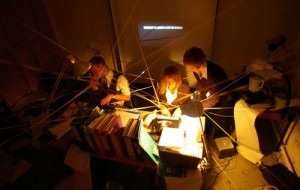
STUDIO ACTION is collaborative initiative co-created by Zurich artists  Popp and Anja Moers. The group runs with the motto “Think. Talk, Act.”

Lily Rossebo: “Action Art” is not a term frequently used in the United States. How would you describe this method of working? What interests you about the concept of action?

Silvia Popp: For my work and also for STUDIO ACTION, site-specific work is quite essential (as we were talking about Action Art, I will focus on STUDIO ACTION for the moment). A place has a history, a past, a present, and a future. A place is where actions are taken part – so place is the starting point. We are a collaborative work group and are quite interested in work models, work processes and codes.

What is the modern definition of work? Art work? (To address these questions) we adopt business strategies, play with business language and do experiments in and with our office/studio. At the moment we are working on a stranded cubicle – the cubicle as the so-called ideal work place in the 60’s, stranded on island, destroyed and almost forgotten.

Continue reading »

Center Field: Art in the Middle with Bad at Sports | Interview with Derek Chan

October 26th, 2010

Derek Chan, "Eclipse," 2008. Oil on canvas. 50 x 60 inches. Courtesy the artist.

Derek Chan and I have been friends for a little over four years. We both moved from Los Angeles to Chicago in the Fall of 2005. We had several mutual friends and emailed back and forth a few times but never met up. I spent that summer in Los Angeles and unknowingly started talking to Derek at a party. Inevitably, our conversation turned to Chicago and I laughed when I realized that this was the guy I’d had so much trouble making time for. Since then we’ve stayed close, meeting often to check in with each other, share food, and hang out.

One of Derek’s large abstract landscapes, Eclipse, was stored at my house for a year. I was happy to look at it every day. While works like Eclipse captured autobiographical moments with grand gestures, Derek has since focused his attention on the quotidian. During his residency at Theaster Gates’ Dorchester Project in South Chicago, Derek began making daily ink drawings to document his thoughts and share them with his fellow residents. All 260 images are available for download on Derek’s website. As part of the Whitney Biennial, Derek presented Being/Becoming, a durational performance that included ink drawings and temporary interventions to the Whitney’s courtyard. Derek developed a system of marks, influenced by Tibetan rituals, to record the passage of time and his interactions with museum visitors.

Derek Chan, "Being/Becoming" at the Whitney Biennial, 2010. Courtesy the artist.

Cries and Whispers from the Salt Song Trail is a continuation of this practice. This forthcoming book chronicles his recent journey to the Four Corners region of Arizona through drawings and writings about the sacred places he visited. Golden Age, the project space I run in Chicago, is publishing Cries and Whispers in conjunction with Derek’s upcoming exhibition Derek Chan: A Way of Life at the Museum of Contemporary Art Chicago (November 6 – 28, 2010).

Continue reading »

Watch “William Kentridge: Anything Is Possible” Online and Download the Educators’ Guide

October 26th, 2010

We have a special treat for anyone that was unable to catch last week’s broadcast of William Kentridge: Anything Is Possible. The full program is now available for immediate online viewing by way of the PBS Video portal. Whether you’re watching it for the first time, watching it again at your convenience, or using it in a classroom setting, we are pleased to make the entire program available for all viewers.

Watch the full, hour-long program on the film site or over at PBS Video.

Educators’ Guide and Screening Companion

On the subject of “classroom settings,” we are also very excited to announce the release of the film’s educators’ guide and screening companion, available for download immediately in PDF format. This 22-page guide offers suggestions for facilitating discussions and activities, as well as screening the film with classroom and community audiences.

The film and guide explore topics relevant to studio art, art history, and the humanities, as well as themes central to his artistic practice, including: the role of the artist in society; narrative and storytelling; personal and social histories; process and play; and collaboration. We encourage educators and event organizers to learn more about these topics and to connect them with related discussion questions, activities, and screening ideas.