(Looking at Los Angeles) Top 10 of 2010: Entertainers Who Moonlight as Artists

Tony Bennett, whose nom de brush is Anthony Benedetto, has painted throughout his life. Courtesy benedettoarts.com
Since last year’s Top 10 list was posted, we have seen the passing of two individuals who have greatly impacted both the art world as well and entertainment world. Dennis Hopper died just before his retrospective, Double Standard, opened at MOCA this summer. And last week, rocker Captain Beefheart, known in the gallery scene as Don Von Vliet, passed away at age 69. Without further ado, I present ten Hollywood stars who, throughout 2010, continued to carry the torch of this (often dubious) intersection.

Lindsay Lohan shops for art supplies in West Hollywood, CA on July 8, 2010. Courtesy Daily Mail Online.
10. Paparazzi cameras caught Lindsay Lohan shopping for painting supplies at Dick Blick Art Materials in July. Sources reported that Hollywood’s favorite hot mess has been creating a series of self-portraits. According to friends, Lohan was especially focused on mixing the perfect flesh tone to immortalize her tan–perhaps anticipating that her golden complexion could fade during her subsequent summer stay in the big house.
9. Antonio Banderas made his art world debut in 2010, exhibiting a series of photographs, titled Secrets of Black, at Instituto Cervantes in New York. It may seem like a departure for the actor made famous by Almodovar, but fans need not worry. Banderas is staying true to his roots — as a Spaniard and sex symbol. The photographs depict iconic elements of Spanish culture, and the series centers on “women’s powers of seduction.”
Teaching with David Wojnarowicz (and Not Teaching with the Smithsonian)
In light of the recent debacle at the Smithsonian involving the removal of David Wojnarowicz’s A Fire in My Belly, I thought it might make sense to suggest some ways educators can get involved and make a stand in the midst of the controversy. While many may not have the opportunity to teach with the film itself or even work with films like it in the classroom, there’s no one saying we can’t teach with the events that have unfolded like laundry left sitting in the washing machine for a few days.
First of all, if you want a blow by blow account of the whole scenario, I would definitely check out Tyler Green’s Modern Art Notes, which has been on top of the situation from minute one. After you’ve done that, you may want to cancel any future school trips, personal visits, or financial contributions to the museum until G. Wayne Clough decides it’s finally time to speak in public about this, take some questions, and put the Wojnarowicz work back in the show. If the Mapplethorpe and Warhol Foundations are cutting funding, perhaps we should, too.
The next step may involve developing some questions you’d like to discuss with students. Questions such as:
- Does a museum have the right to remove work previously approved for an exhibition?
- Is censorship ever a good thing? If so, who has the right to decide what is “acceptable” when it comes to art?
- How does this series of events compare to previous attempts (both failed and successful) at censorship? What are the similarities and differences?
- How does censoring this work affect how it is viewed? For example, did Bill Donohue’s detestable statement and the events that have taken place as a result actually promote the work he finds an example of “hate speech”?
Finally, asking students to look into the symbols and metaphors Wojnarowicz used to speak with his art can allow for a gradual understanding of the work vs. a quick peek followed by harsh judgement. Let’s face it, that particular approach didn’t work for Rudy Giuliani at the Brooklyn Museum years ago and there’s no reason it should happen here, either. Getting past uncomfortable images, symbols and metaphors, in order to uncover the reasons particular images are used to make specific statements seems like a pretty worthwhile goal, especially in this case.
Calling From Canada: Virtual Reality Bites
“Maybe the Internet is for me what Paris in the 20s was for Joyce, Hemingway, and Gertrude Stein or New York in 50s was for Jasper Johns and Rauschenberg.” — Jon Rafman
Canadian new media artist Jon Rafman may be best known for his Google Street View project and his clever and poignant web art series Brand New Paint Job, in which recognizable 3D objects (and entire rooms and scenes more recently) appear to be wrapped in famous paintings as though the paintings themselves were wrapping paper. Because of the easy, crude techniques used to produce some web art, along with its reproducibility and disregard for the original copy (but we’ll leave that Pandora’s box for another post!), web or net art is still finding its sea legs in the fine art world. However, as a conversation with Rafman maintains, and as his live virtual tour project Kool-Aid Man in Second Life (see promo video here) in particular reveals, these conceptual works are as relevant as art gets today: they arise from our decentralized Internet age and draw attention to how contemporary subject formation is increasingly co-constitutive of the virtual, the actual, and the real.
I caught Rafman’s presentation of a live virtual tour of Second Life as it was delivered to an audience at Montreal performance venue, Il Motore. The presentation, which has happened in numerous cities now (and received much press), entails Rafman’s live navigation of Second Life with his avatar, Kool-Aid Man, as in The Kool-Aid Man — that exaggeratedly large jug of toxic-colored “drink” whose weird deep-voiced proclamations of oh yeah! and penchant for jumping through brick walls you may remember from marking commercial breaks on Saturday morning cartoons in the eighties. According to Rafman, Kool-Aid Man is identified with a specific demographic, one which grew up before the Internet age. Kool-Aid Man also represents an empty signifier from the decade that defined excess: “you can inscribe whatever you want onto Kool-Aid Man.” Much like Second Life itself, the reappropriation of Kool-Aid Man here, is both a source of ironic humor and a place for self-conscious critique: what is he and what does he represent, if anything?
Weekly Roundup
Just in time for the holiday season, this week’s roundup brings to you plenty of news, including last-minute gift ideas such as President Obama’s children’s book homage to Maya Lin, John Baldessari’s Christmas vision-aire, Paul McCarthy’s tide box, Jeff Koons’s body butter and more!
- President Barack Obama’s picture book, Of Thee I Sing, pays homage to Maya Lin and other Americans who have shaped civic, social, artistic and political foundations of U.S. society. Obama asks very young readers: “Have I told you that they are all a part of you … Have I told you that you are one of them and that you are the future?”
- John Baldessari contributed to Visionaire 59 FAIRYTALE, a mini-library of children’s books by contemporary artists and photographers in collaboration with writers. The series, one of the most highly sought-after fashion and art publications in the world, includes a Christmas-themed print by the artist.
- Paul McCarthy gives us Low Life Slow Life: Tidebox Tidebook, the publication for the two-part exhibition at the CCA Wattis Institute for Contemporary Arts in San Francisco in 2008 and 2009. Packaged as an instantly recognizable re-creation of a vintage Tide detergent box circa 1973, the book documents the show and is also presented as an artwork.
Letter from London: Hell Is Other People

The Heads of the Kings of Judah and Rudolph Stingel's "Untitled" at the Palais de Tokyo, Paris
It is a truth universally acknowledged that artists make the best curators. Mark Wallinger’s exhibition, The Russian Linesman at the Hayward Gallery last March, was a proposal about what creative curatorship might actually mean – a bringing together of historically or aesthetically disparate objects which generate unexpected “sparks of poetry” (pace Max Ernst). Adam McEwen’s show, Fresh Hell at the Palais de Tokyo in Paris, is a continuation in the same spirit. Drawing on the intellectual dilettantism of the way we collate and digest information these days, and the increasing anachronism of academic specialization, McEwen’s show is a wildly disparate generator of transhistorical energy, epitomized in its display of Walter de Maria’s 1967 High Energy Bar. Set into the wall in a brightly-lit vitrine, the work – a footlong steel bar, glowering with condensed power – is the fulcrum of the whole exhibition, an object whose aesthetic and actual density lodges it in place against the onrushing stream of history.
McEwen’s theme is the weight of things, the way that art objects of particular power resist dispersal and dissolution. Like Wallinger, McEwen hops between historical periods with fluency, drawing out resonances without hammering a thesis home (as he himself says, “it’s the artworks that are in control, not the curator”). The opening room, for instance, pits a wall of silver industrial insulation panels by Rudolf Stingel (on which visitors are invited to stick notes or photos, or gouge their name in) with three huge hunks of medieval stonework: the heads of the Kings of Judah, lopped off the west façade of Notre Dame by anti-monarchists in 1793 and discovered, buried, in the 1970s. The juxtaposition invites certain readings: iconoclasms old and new, the palimpsest of history, Paris itself as a site of perennial protest. And yet the heads (which, sorry, are by far the most fascinating and beautiful works in the show) remain, despite their vandalism and interment, fully alive, blazing with authority embodied in their muscular carving and physical presence. That weight allows them to stand outside history, an idea echoed in a note pinned to the Stingel behind: “Time doesn’t exist. Clocks exist.”
Gastro-Vision: The Best in Food-Art 2010

Martin Parr, "Untitled," from the "British Food" series, 1995. © Martin Parr/Magnum Photos. Courtesy Getty Center.
From cotton candy rooms to painterly cakes, meaty dresses to pork rind sculpture, pickle portraiture to animated toast, this year was chock-full of good “food-art” — food inspired by art and art inspired by or involving food. So much so, that it would have been gluttonous to write this year-in-review by myself. For this post I enlisted the help of two art writers who share my passion for all things food: Andrew Russeth of the blog 16 Miles of String, and Megan Fizell of the blog Feasting on Art. Together, we’ve come up with a list of the year’s best. You might want to grab a bib in case you start to drool.
Best Food-Art Exhibition (Non-Edible): In Focus: Tasteful Pictures, Getty Center *
From 19th-century daguerreotypes to contemporary still life photography, In Focus: Tasteful Pictures contextualized the mechanical image within the genre. Paired with the recent Getty publication, Still Life in Photography, the exhibition provided a historic focus to the way art depicts our increasingly complicated relationship to food within a globalized world. With photographs by Henri-Victor Regnault, Walker Evans, Edward Weston, Martin Parr, William Eggleston, Bill Owens, and Taryn Simon, few museums could draw such a feast from their collection. (MF, NC)

Paul Shore and Nicole Root, "L-Wafers (After Robert Morris)," 2010. Sugar Wafers and gum. Courtesy the artists.
Best Food-Art Exhibition (Edible): Licked Sucked Stacked Stuck, Brattelboro Museum & Art Center *
Art historian Nicole Root and artist Paul Shore create sweets that are modeled on iconic contemporary artworks. They baked a brownie to reconstruct, at a miniature scale, Walter De Maria’s New York Earth Room, and broke Necco wafers to form a Richard Long stone floor sculpture. Other times they opt for assisted readymades, as when they built Robert Morris’s classic mid-1960s block sculptures from sugar wafers and gum. The meticulous care that Root and Shore bring to their work suggest that they are loving tribute artists, but there is also a hint of subversion in many of the more than 70 works they have completed, which are often the “opposite of [the] serious, large-scale, large-budget works,” as Root once put it, describing a plan she and Shore hatched for a Richard Serra made of taffy. Grand and grandiose hallmarks of postwar art are shrunken down and rendered out of everyday materials, and the mystery and majesty of their source works is at least somewhat diminished. Of course, the pair’s work is no more open to the touch (or ready for the eating) than the art they transfigure. (AR)
Paul McCarthy: Art & Entertainment
SUBSCRIBE TO EXCLUSIVE: RSS | ITUNES | YOUTUBE | ARTBABBLE
Episode #132: Filmed in his Los Angeles studio alongside his son and frequent collaborator Damon McCarthy, artist Paul McCarthy reflects on the documentary process and on being interviewed about his work, drawing conclusions about how it’s the nature of television “to simplify existence” and the “difference between making art and making entertainment.”
Paul McCarthy’s video-taped performances and provocative multimedia installations lampoon polite society, ridicule authority, and bombard the viewer with a sensory overload of often sexually-tinged, violent imagery. With irreverent wit, McCarthy often takes aim at cherished American myths and icons—Walt Disney, the Western, and even the Modern Artist—adding a touch of malice to subjects that have been traditionally revered for their innocence or purity. Whether conflating real-world political figures with fantastical characters such as Santa Claus, or treating erotic and abject content with frivolity and charm, McCarthy’s work confuses codes, mixes high and low culture, and provokes an analysis of fundamental beliefs.
Paul McCarthy is featured in the Season 5 (2009) episode Transformation of the Art in the Twenty-First Century television series on PBS. Watch full episodes online for free via PBS Video or Hulu, as a paid download via iTunes (link opens application), or as part of a Netflix streaming subscription.
VIDEO | Producer: Wesley Miller & Nick Ravich. Interview: Susan Sollins. Camera: Bob Elfstrom. Sound: Doug Dunderdale. Editor: Joaquin Perez. Artwork Courtesy: Paul McCarthy. Special Thanks: Damon McCarthy.
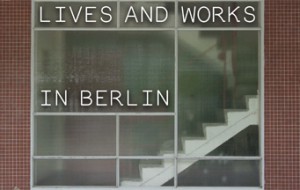
Lives and Works in Berlin | Stage your Melodrama: An Elmgreen and a Dragset
When the art historians start treading through Berlin’s turn-of-the-millennium years to chart artists’ march to Neukölln, Michael Elmgreen and Ingar Dragset‘s studio will be a main stop for tea and insight into the city’s physical transformations, and Berlin’s metamorphosis into a home for globetrotting artoholics. And it’s not just because the former couple who brought us Prada Marfa, The Welfare Show, Drama Queens, and The Collectors, 2009′s 2 for 1 Nordic Pavilion, were featured in the New York Times‘ Home & Garden section. The Scandinavian duo moved to Berlin in 1997 from Copenhagen, the year that scores of galleries cruised into Mitte and Hamburger Bahnhof celebrated its first birthday. Five years later, they were awarded the Preis der Nationalgalerie für Junge Kunst by the then-six-year-old institution for their spatial tours of sex, power, and white cubes in Powerless Structures. But before I get all monumental and start speculating about these artists’ design savvy, humor-heavy installations, and Berlin’s contemporaneous remodeling of empty lots into hot spots, here’s a fireside chat with Ingar Dragset.
Elmgreen & Dragset, "Sculptures Speak No Evil," performance, 2010. Courtesy of Pablo Leon de la Barra.
Alex Freedman: Before we get into talking about boys, tell me about your leading ladies: Irina, Rosa, Tala. Since 2006, at least one of them is always jet-setting to a new E&D location, and yet I’ve seen little written about this trio of gilded maids. Do tell, what’s the story?
Ingar Dragset: The golden maids are all named after the cast’s original model, who come from different corners of the world. Most of them have been maids at some point in real life. Silently they stand and watch you, the viewer – almost ghost-like – but in spite of their stoic posture, their face expressions hint at their personal stories.
Connecting – Part 6: Postscript and Postmortem

Pamela Johnson, "Ice Cream I," 2009. Oil on canvas, 54 x 34 in. Courtesy the artist.
After exhibiting at The Artist Project in 2008, Pamela Johnson’s American Still Life series began getting attention. Pepperdine University’s Weisman Museum of Art, Adler & Co. Gallery, and the San Francisco Fine Art Fair, all in Johnson’s native California, exhibited the junk food paintings, as well as Manifest Gallery in Cincinnati, the Susquehanna Art Museum in Harrisburg, PA, All Rise Gallery and the Union League Club in Chicago, among others.
Magazines including Juxtapoz, Creative Quarterly, Poets and Artists, and Chicago Home & Garden ran stories, interviews, and images. In November of 2009, Johnson was the recipient of the Alice & Arthur Baer Award as part of the 33rd Annual Beverly Art Competition in Chicago. Her art was being acquired by institutions and traveling the country, and a second wave of the American Still Life series was unveiled which used the same gorgeous technique and compositional strength to focus on the aftermath of consumption as set out in series one. First what we eat, then the garbage amassed when we’re momentarily satiated. Discarded M&M wrappers and crushed Coke cans, Starbucks cups and twisted packaging, half empty bottles of syrup and jars of strawberry jelly, crumpled bags of Doritos and boxes of Frosted Flakes; “empty wrappers forgotten and abandoned in a world of nothingness question the sustainability of our excesses,” in Johnson’s words.

Pamela Johnson, "Coke," 2009. Oil on canvas, 15 x 15 in. Courtesy the artist.

Pamela Johnson, "Cool Ranch," 2009. Oil on canvas, 20 x 20 in. Courtesy the artist.
Disposable plastic and paper that will linger on sidewalks, in gutters and landfills, and swirl in oceans for longer than anyone can guess. Though series two is less confrontational than the big in-your-face junk food canvasses, their poetic quiet sharpens itself against our habits more subtly than the larger pieces; Johnson gets you from both directions. The trash we create and ignore is yet another kind of evidence in the broader argument against mindless indulgence.
I found it somewhat ironic when considering art as evidentiary information against our less noble attributes that, in June of this year, I got an email from Johnson regarding Lyon and Lyon Fine Art, a New Orleans gallery she had sent several paintings to in 2008.
5 Questions (for Contemporary Practice) with Nato Thompson
I am a bit late coming to the curatorial work of Nato Thompson, which first became recognizable to me at this past October’s second annual Creative Time Summit, a gathering devoted to “revolutions in public practice.” During the proceedings (which I write about here for Art21), Thompson was consistently whip-smart in his responses both to the participants and the audience. If ever things started to derail or simply drag, Thompson was on it, cutting through any pretenses or posturing which might cloud one’s sense that a truly dynamic and important public conversation about art’s place in public discourse was enfolding before them.
Thompson’s intelligence as a curator and his commitments to revolutions in public practice (if not revolution in general) is apparent immediately in the artists, curators, and culture workers whom he has invited to participate in the summits. They include some of the most significant individuals and groups currently working for social change and justice in (and through) the visual arts. That Creative Time has opted to archive the entire proceedings of the one and two days summits on its website is a gesture of dialogue and openness very much in keeping with the spirit of the annual gathering.
Another project that, I only realized retrospectively, was curated by Thompson is Paul Chan’s Waiting for Godot in New Orleans. It was supported economically, collaboratively, and morally by Creative Time. Of the “Shadow Fund” that grew from Chan’s and Creative Time’s work in New Orleans—a nest egg that might continue to support the needs of the African-American working-class community inhabiting New Orleans’s Lower 9th Ward, where one of the two performances of Waiting for Godot took place (the other was staged in the predominately white middle-class neighborhood of Gentilly, also in New Orleans)—Thompson writes:
After nearly twenty meetings, the three of us [Paul Chan, Thompson, and Creative Time Director, Anne Pasternak] were exhausted and excited: our minds reverberated from the many heart-breaking stories we had heard. Paul was evidently concerned about the gravity of what he wanted to accomplish. “We have to leave something,” he said. Out of this sense that a rise in media visibility would not be enough, he concocted the idea of the Shadow Fund. We would raise money for local groups that would put much-needed materials into their hands. If Common Ground needed sheet rock, for example, the Shadow Fund would supply it. If an educational effort needed textbooks, the Shadow Fund would supply them. We would attempt to match the production budget, dollar for dollar. Anne agreed this was a moral imperative. “In order to do this project right,” Paul said, “we need to do the dime and spend the time.”
–from Waiting for Godot in New Orleans: A Field Guide, edited by Paul Chan
This past month, Thompson was generous enough to meet with me to discuss his curatorial practice, as well as a wide-range of other subjects. Talking with Thompson, something that struck me (which is also evident in his responses to my questions below), is his thoughtfulness in thinking about the place of the curator in relation to social practice and cultural production. He will address this intersection in two forthcoming books, specifically with regard to political struggles post-Karl Rove & co. I hope you will check out these books when they come out, which will no doubt offer much to a discourse about the place of art within our current economic and political climates.
1. What is the history of your curation practice and how is it reflected by your current work with Creative Time?
I have two prominent influences in the ways that I organize exhibitions and think through projects. The first comes out of my time living in Berkeley, California, where I worked with numerous anarcho-left artists, activists, and malcontents. The activist organizing at the time of the early ’90s was producing a language around neoliberal capitalism and that type of analysis (and means-ends effectiveness) certainly inspires much of the way I think today.