Inside the Artist’s Studio: Siemon Allen
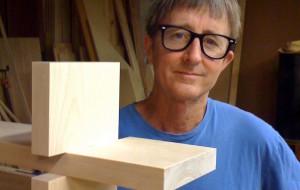
Siemon Allen is a South African artist who currently lives and works in the United States. He received his MFA from Natal Technikon (now Durban Institute of Technology) and was a founding member of FLAT gallery, an artist’s initiative in Durban, South Africa. In 2010, he was invited by the gordonschachatcollection as the featured artist at the Johannesburg Art Fair. That same year, he presented Imaging South Africa, a survey of work from the last ten years at the Anderson Gallery in Richmond, Virginia. Allen’s concurrent solo exhibitions took place at The Durban Art Gallery and Bank Gallery in 2009. His work has also been shown at Artists Space, The Whitney Museum, and Momenta in New York City, The Contemporary Art Museum in St. Louis, The Renaissance Society in Chicago, and the Johannesburg Art Gallery. His work was included in the 2nd Johannesburg Biennale at the South African National Gallery in Cape Town. Allen is a visiting artist and adjunct professor in the Department of Sculpture and Extended Media at Virginia Commonwealth University in Richmond. His most recent project is an ongoing web-based visual archive of South African audio.
For the past ten years, Siemon Allen has been exploring the image of South Africa through a series of collection projects.
In his own words he tells me:
Ironically, most of my work is the result of my being in the United States, where I find myself looking at the image of South Africa as I might reconstruct it—through historical artifacts (stamps), through current media (newspapers) or through received audio (sampled sound works). To some extent, it speaks to what I feel is a kind of separation from the source, and leads me to consider how much of this work is, at its core, an investigation into notions of branding and identity through displacement.
He is currently showing two works at the South African Pavilion at the 54th Venice Biennial.
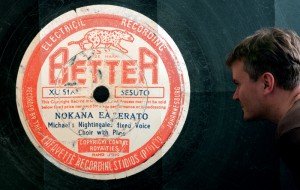
The most current collection, an archive of South African audio, is made up of over 2500 items, including 650 rare shellac discs. Records is a series of twelve large format prints (78” x 78” x 3”) on Hahnemühle Museum etching paper selected and scanned from the larger audio collection. Allen is presenting five prints from the series for the South African pavilion at the 54th Venice Biennale—these include Better, His Master’s Voice, Rave, Tempo, and Zonophone. The scans of the records produce remarkable detail capturing not only the grooves but also the accumulated historic traces of scratches and damage that speak to the memory of the object. It is significant that though these prints are considered by Allen to be part of his audio collection and speak to the primacy of music in South African cultural history, they are silent.

"Chain Letter" installation view at Shoshana Wayne Gallery, July 2011. Courtesy Shoshana Wayne Gallery.
Did you receive any unusual email forwards this month? Unrelated to funny cats? Initially sent out by Christian Cummings and Doug Harvey, a chain letter has been circulating among artists and art enthusiasts, inviting recipients to participate in an exhibition. In addition, each recipient was to invite 10 artists who they admired, to participate in the same exhibition. The resulting shows are popping up all over the world this month—in Zürich, Berlin, Boston, London, San Francisco, Philadelphia, Johannesburg, Seoul, Paris, and last but not least, here in Los Angeles. The latter Chain Letter manifestation was the largest of them all, which just opened at Shoshana Wayne Gallery at Bergamot Station, and features close to 1,600 artists.
Harvey and Cummings facilitated a Chain Letter show four summers ago at a smaller gallery, High Energy Constructs in Chinatown, with a similar curatorial principle. That chain letter invite circulated for only 10 days, and resulted in an exhibition of 300 art works. This time, Cummings and Harvey sent the letter more than one month in advance, allowing the tree of curators to fork ever more broadly. Having thoroughly enjoyed participating in the 2006 version, I was eager to fuel the wildfire of this year’s incarnation. But for reasons too boring to blog, I ended up missing the drop-off day—and apparently also missing a raucous block party. The line of artists delivering work snaked around multiple buildings at bergamot, through the parking lot, and out the gate with some artists waiting up to three hours to install their pieces. But by all accounts the mood was jovial and cooperative—how could it be otherwise? Each artist in line knew that he or she bore some responsibility for the chaos–tenfold. By midday, Shoshana Wayne’s vast rooms were already chock full, and the organizers opened two vacant gallery spaces to accommodate the extensive overflow.
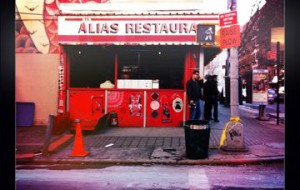
Outside Alias
On July 13th, after a full week of the Art21 Educators summer institute, I took the opportunity to interview teachers about their experiences attending workshops, meeting Art21 artists, and beginning their year-long professional development with us. Our conversations focused on highlights from the week and what they expected to happen vs. what actually happened. Below are some quotes from “Conversations Outside Alias” on the lower east side.
Expectations vs. Reality…
It was such an intense week… It was kind of like boot camp in a way. – Todd Elkin
I was ready to be seated in the back doing my own thing while things just proceeded around me. But you had to throw yourself “all in” to this process. I think that’s going to be the case metaphorically and physically through the rest of the year.- James Rees
I’m so used to standard professional development-type things but this was so unique in a way that I can’t even begin to describe the dynamic that went on this week. The staff was amazing. Someone earlier in the week called you guys a brain trust. The tone you set from the start created the dynamic week we had. My brain is buzzing. – Mary Curry
I thought we’d be sitting around listening to lectures. There was a lot more active involvement where we were forced to really dive into this thing.- Jethro Gillespie
I didn’t realize how deep we were going to get into the content. You know, working with contemporary art in the classroom, using videos in a strategic way, actually going to an artist’s studio. To meet Oliver and learn about how an artist actually works and being in the space that he works was amazing. I didn’t realize how intense this was going to be. It was probably one of the most intense weeks I’ve ever had…. I have a lot to think about on the plane. – Jack Watson
Highlights and Other Thoughts…
I really enjoyed the community and being able to play off one another. I didn’t really think about that coming in. The greatest thing about this is bringing a lot of talented people together and being able to pick their brains. People were just forced to perspire ideas.– Chris Tourre
I feel like I have this burden, in a good way, for being a resource. – Maureen Hergott
This is a think-tank for depth… I’m so tired of teaching “surface”. – Kim Timmons
There are moments when you’re sitting with your colleagues talking about curriculum or thinking about what it means- why you do what you do and how to make it better- and I just thought after a dozen years teaching, how many more opportunities will there be besides, you know, the humdrum conference? This is really neat because it’s become a vehicle for the kinds of stuff I’ve always wanted to do and the kind of intellectual rigor that I have desired. – Karen Melvin
As art teachers we have the potential to engage our students with something bigger than just creating artifacts. – James Rees
Being creative is something that’s near and dear to me but in this past year of teaching I just didn’t hit it in a way that I wanted to. Now, after seeing so many artists speak about their work, being in the studio with Oliver Herring, and after talking with so many passionate educators I see there is a framework for setting that up. – Derek De Haan
When we took a couple of hours to share our big questions and the activities we planned, everyone got to respond and had something to offer in terms of ideas. As someone who doesn’t have the art background that others do, it was really powerful because I made connections that I wouldn’t have been able to make on my own, even through research. So that experience for me was really helpful in shaping my unit. – Sue Carris
When I thought about it I realized that I was just skimming the surface. I’m so excited about this new way of approaching problems- the ideas- about what art is. – Samantha Melvin
We feel like we’re going to look at art differently with our students. It’s a whole different conversation that we’re going to have. – Maureen Hergott and Julia CopperSmith
Visiting Oliver Herring’s studio was a highlight. There’s something about that guy that’s just special. He just radiates some kind of superhuman compassion. It was really inspiring. – Jethro Gillespie
The artists that we met (Oliver Herring and Shahzia Sikander) really surpassed anything I could have hoped for. – Todd Elkin
Speaking to Oliver… it was really a treat. To listen to someone who is so earnest and so forthcoming about his work, I don’t know of anyone who can come in contact with a human being like that and not be touched, moved, and inspired not only to create, but also to just live. – Derek De Haan
I feel like I am part of something really big. This is something that’s really important and big. – Jeannine Bardo
Jessica Hamlin, Marc Mayer, Flossie Chua and myself are eager to continue our work with the sixteen educators that joined us for the institute from July 6-13. Next month, we begin our monthly online conversations with the entire group as each teacher continues shaping a unit of study inspired by our week together. Can’t wait. Truly.
Open Enrollment | South African Photography and the Lingering Political Anxieties of Identity
Last month, I had the privilege and pleasure of attending a symposium that served roughly as a capstone to one of my graduate courses. The symposium was coordinated in conjunction with the Victoria and Albert Museum’s just recently closed Figures & Fictions show, an exhibition of a range of South African photographic practices. The second term of my course focused on many of the photographers featured in the show, touching on issues of photographic ethics, gender and sexual identity, and the legacies of Apartheid in South Africa, among others. I can hardly count the exhibition and symposium’s timing as an unexpected coincidence – the curator of the exhibition, Tamar Garb, also happens to be the professor of the course I was in.
It’s interesting to see how an art historian’s current research interests shape and are shaped by the courses she teaches; even more so to see those interests presented for a larger public audience. Throughout our course, my classmates and I saw resonances of the post-colonial theory around Orientalist depictions of race and gender we had studied in the first term regarding late 19th-/early 20th-century French portraiture. The juxtaposition of contemporary South African artists, mostly photographers, and western European painters of a century earlier may seem unexpected, but when viewed through a social history-informed lens, certain parallels regarding the power and expectations of truth in representations continue across period and location.
And those questions around the political nature of the assumed truth-value of photographic representation served as the crux of the Figures & Fictions show, as subtly indicated by its alliterative title. The exhibition consisted of the work of seventeen South African photographers from the well established to the emerging. While the photographers’ practices vary greatly in content and intent, the common thread of work included was the depiction of human beings, human bodies as subjects. Some such as David Goldblatt’s Ex-Offenders photos may be commonly identified as documentary practice, and others, like Kudzanai Chiurai’s satirical portraits of fictional African leaders, offer more explicitly constructed or imaginative projects. Others still remain in a grey area between the two, perhaps constructing a dialogue between photographer and photographed. To collect such broad range of representations in one space is to raise questions and challenge the alleged objectivity and presumed narratives of any and all the photographs. Or so I have no choice but to believe, having raised such questions all term long in class with Professor Garb.
One recurring conversation in art school is the difference between art and design. Nowadays technology has also been thrown into the fray. Artist and educator Kate Hartman has the pleasure of having to tread between the three. Her body of work explores human communication by creating hilarious and absurd wearable technologies such as muttering hats or wearable walls. She is part of the team that developed Botanicalls, a device that allows neglected plants to call and send Twitter messages for assistance. Additionally, Hartman has a knack for breaking down and explaining rather difficult concepts, so it was quite natural for her to start teaching right after graduate school.

Kate Hartman, "Discommunicator," 2008. Courtesy the artist.
Recently, the OCAD University Digital Futures Initiative targeted wearable technology as an interest of students but did not have the capability to run a full curriculum. They hired Hartman as one of five faculty to help develop the digital futures program and thanks to their contribution the graduate program is about to launch in the fall and the undergraduate program will fully launch in 2012. Furthermore, after revising a course on wearable technology she was able to develop it as an undergraduate minor. Its first batch of students will graduate within the next few years.

Kate Hartman, "Glacier-Embracing Suit," 2010. Courtesy the artist.
Hartman is also an adjunct professor and alum of the Interactive Telecommunications Program (ITP) at NYU Tisch and I sometimes catch her wandering the halls. I had some wearable tech questions of my own and Hartman told me she was available to talk. I took her up on the offer and managed to snag a short interview as well. At one point in our discussion, writer and new media maven Clay Shirky interrupted and asked, “Are you doing independent design work?” “Sure,” Kate replied confidently. Continue reading »
Of Monuments and Memorials: St. Louis Modernism and Juan William Chávez’s Pruitt-Igoe Bee Sanctuary

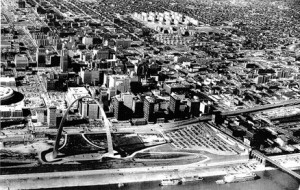
Saint Louis skyline with Eero Saarinen's Gateway Arch in the foreground and Minoru Yamasaki's Pruitt-Igoe housing development in the back right. Image from "The Pruitt-Igoe Myth" documentary.
Notable attention has turned to what many consider the golden age of modern St. Louis—the 1950s—when the city reached its highest population and garnered international attention for its architectural contributions. However, within this renewed interest in mid-century St. Louis is also an attempt to detach the persisting nostalgia for the past from the actual social, economic, and political circumstances that were at play.
At its best, mid-century St. Louis produced celebrated icons—Minoru Yamasaki’s 1956 Lambert air terminal and Eero Saarinen’s 1965 Gateway Arch. During its less proud moments, modern architecture failed to adapt to the unique demands of our city, exposing the shortcomings of its “universal” ideals. In St. Louis and beyond, discussions on the failures of modern architecture often center on Yamasaki’s Pruitt-Igoe housing development. Completed in 1956, the monumental public housing project was razed only twenty years later. Its demolition was felt around the world, and in 1977, historian Charles Jencks famously claimed that the destruction of Pruitt-Igoe marked “the day Modern architecture died.”
When constructed in the mid-1950s, Pruitt-Igoe represented the hopeful vision that the city of St. Louis would maintain its steady population growth. As government officials and other stakeholders saw it, increased populations meant increased real-estate values. As a result, low-income housing was tasked with cleaning up the sprawling slums through systematically concentrating people in modern high-rise structures. At its peak, Pruitt-Igoe housed roughly 15,000 people in thirty-three eleven-story buildings. However, the rapid onset of white-flight and suburbanization revealed the many flaws in this plan. Pruitt-Igoe failed for a number of reasons, including Yamasaki’s architectural design, inadequate maintenance of the building, and decreasing tax dollars for public housing. Released in February of this year, a new documentary titled The Pruitt-Igoe Myth paints a much more complicated picture of Pruitt-Igoe than has been told in the past, sharing first-hand accounts of former tenants that help to humanize the housing development.
Pushing the narrative beyond the trials of modernism, artist Juan William Chávez explores creative possibilities for the still unoccupied land where Pruitt-Igoe once stood. As I introduced in my first post, Chávez is a pivotal force in the St. Louis art scene, founding Boots Contemporary Art Space on Cherokee Street in 2006 and winning the Great Rivers Biennial at the Contemporary Art Museum St. Louis in 2008. Just last year, Chávez closed Boots, moving beyond the gallery walls to focus his practice on community engagement. In 2010, Chávez curated Urban Expression: Theaster Gates for the Pulitzer Foundation for the Arts. His cultural activism has recently earned a great deal of attention and this year Chávez was awarded the Missouri Arts Award for Individual Artist and received the prestigious Art Matters Grant.
“WE MAY AGREE on the premise that each work of art is at least in part perfect, while each critic is at least in part imperfect. We may then look to each work of art not for its faults and shortcomings, but for its moments of exhilaration, in an effort to bring our own imperfections into sympathetic vibration with these moments, and thus effect a creative change in ourselves” (Goulish, “Thoughts on Criticism,” 39 Microlectures, Routledge, 2000).
This June, I saw a performance by Every house has a door, a collaborative group founded by Lin Hixson and Matthew Goulish in 2008 to “create project-specific collaborative performances with invited guests.” Having seen the piece in its intended context I want to ask questions outside its bounds. I appear like a kind of critic—a person asking the artist for something outside the presentation of a complete work. They’re Mending the Great Forest Highway is a dance for three men (Matthew Goulish, Jeff Harms, John Rich), with a DJ (Charissa Tolentino) and a narrator (Hannah Geil-Neufeld). It took place in the second floor gymnasium at Holstein Park in Chicago. Participants enacted a score of movement and sound presenting thematic elements from Hungarian folksongs, the tritone, and Benny Goodman. I wanted to ask about crisis, the framework of the theater, and the vocabulary of gestures—oblique responses to dance. Perhaps by asking them, perhaps through Goulish’s response, you might catch a ghost of the dance, left behind and buzzing in those summer-hot gymnasium walls.
Caroline Picard: How do you conceptualize the context for performance—do you frame it within traditional theater? How does time function within that context?
Matthew Goulish: Yes, theater as the container – less a set of conventions than of structures. Into it we place, let’s say, dance, writing, and music. We keep those elements distinct for clarity. Theater allows their coherent composition in time, the way the parts fit together. What happens first, second, last? What happens where? What echoes, and when? We have a sense of the parts in themselves (dance, music, writing), and another sense of the parts in relation as a cumulative experience (theater).
Can we call any room a theater if it contains theatrical events? What if we set up chairs in the afternoon at one end of a gymnasium that has windows and skylights? A little room noise might help the performance in unexpected ways. If we begin a 60-minute performance on June 18th at 2:00 PM, where will the sun be in the skylight when we end?
Each month, Inspired Reading features an interview with an artist or cultural producer about their current project(s), focusing on what texts have informed them along the way. Each column includes a reading list with links to texts cited. Inspired Reading offers insight into the conceptualization of a body of work, exhibition, or other art project, while also giving readers a chance to build a reading list of their own. In the tradition of Frieze magazine’s “An Ideal Syllabus” series, which asks artists, curators, and writers to share their thoughts on the books that have influenced them, this column carries forward that curiosity about literary influences and focuses it on current projects. Inspired Reading lets readers in as ideas are developing—offering a uniquely angled sneak peek into upcoming projects. This column publishes the fourth Monday of each month.
Each column will also feature photographs by Juliette Tang, a San Francisco-based photographer whose “Still Life With Book” series has been recognized on NPR, Flickr, and by many others. A former English major at Dartmouth, Juliette finds inspiration through reading and sharing her photographic interpretations with others. Literature is her life, and she brings life to literature through her photographs.
In this inaugural post, I am happy to feature Jens Hoffmann’s reading list for the upcoming Istanbul Biennial, Untitled (12th Istanbul Biennial), which opens on September 17, 2011. Jens is co-curating the exhibition with the São Paulo-based curator and writer, Adriano Pedrosa. Together, the curators drew inspiration from many sources, but most prominently from the artist Felix Gonzalez-Torres, whose art was often political yet personal. In that same vein, the selection of books that Jens provided reflects an interest in how politics shape art and explores how personal identity is formed and defined.
The following is Jens Hoffmann’s reading list, along with my commentary, for Untitled (12th Istanbul Biennial).
Weekly Roundup
In this week’s roundup, Charles Atlas gets close-up on Merce Cunningham’s joints, Hiroshi Sugimoto’s photography is explored, Shana Moulton creates on-site art in China, and more.
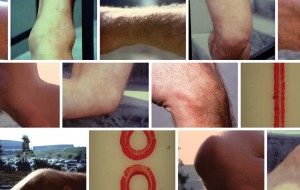
- Charles Atlas‘s Joints Array is on view in the ground-floor gallery at the New Museum (NYC). This multimedia installation features excerpts of Atlas’s first Super-8 color films of Merce Cunningham: close-up shots of a wrist, elbow, ankle, and knee capture the dancer’s unique style of movement and function as a fractured portrait of motion and form. Atlas’s films, videos, installations, performances, set, and lighting designs have involved several collaborations with artists, including Mika Tajima. This show closes August 28.
- Hiroshi Sugimoto‘s year-long project, Origins of Art is a four-part exhibition that began at the Marugame Genichiro-Inokuma Museum of Contemporary Art (Japan) last year and explores the inspirations behind the artist’s photography. The third exhibition, entitled History, includes prints from negatives created by the inventor of negative-positive photography William Henry Fox Talbot, stylized sculpture images of the changing forms of twentieth century fashion in context, and other works of historical inquiry. The current exhibition is on view until August 21.
- Jessica Stockholder is part of the group exhibition, Not About Paint, at Steven Zevitas Gallery (Boston). In this show, Stockholder’s featured work investigates the ordinary as art object and the artist lists as its components: “carpet, framed leather, yarn, plastic parts, place mat, shelving unit part …’’ The show closes August 20.
- Shana Moulton is part of Shift, an exhibition on young American and Chinese artists creating on-site artwork at the Guangdong Times Museum in China The show features various works that use materials found in major wholesale markets in Guangzhou and local manpower. Additionally, five Chinese artists from around the country will interact with the Americans at the Museum. Each evening seminar invites one Chinese artist and one American artist to present their works, followed by discussions and idea exchanges with the other artists on issues that concern them. This exhibition is on view until August 28.
5 Questions for Contemporary Practice with Sanford Biggers

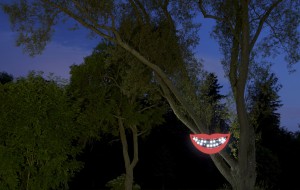
Sanford Biggers, "Cheshire," 2008. In situ, aluminum, plexiglass, LEDs, timer, 67" x 33" x 10". Courtesy the artist and Michael Klein Arts, New York, NY.
Images from popular culture abound in Sanford Biggers’s work, and particularly from hip-hop, East Asian Buddhism, and the Antebellum and Afro-Futurist African-American. Two images that have become particularly emblematic for me among his works are the post-Pop Art-ish, cherry red lips of his signage-sculpture, Cheshire, in reference to the grinning cat made famous by Lewis Carroll’s Alice in Wonderland. It is also the Buddhist Mandala, the patterns of which cover the floor-tiling of the artist’s Mandala of the B-Bodhisattva II, upon which break-dancers pop, lock, and spin invoking the cosmic intuitions of the hip-hop dance form.
The images are telling of Biggers’s dual commitments. On the one hand, to a world of appearances, of masks that represent cultural and personal survival, the need to change one’s appearance in order to persist. If you recall, the Cheshire cat lost his body becoming only his grin in order to avoid decapitation by the Queens of Hearts in Carroll’s tale. On the other, there is an aspect of all of Biggers’s work that reaches towards the vertical, divine, and cosmic through the quotidian and culturally synthetic. A pair of nunchucks, one of the martial arts weapon revered by hip-hop and soul music in the 70s, is encased within a glass display (Nunchucks). In the installation, The Afronomical Ways, one enters a room with a mirrored floor. Upon the ceiling is a DayGlo Zodiac chart in which the signs of the Zodiac have been replaced by men and women making love in a variety of positions—a different position for each sign. In another piece, Hip Hop Ni Sasagu (In Fond Memory of Hip-Hop), Biggers has melted down hip-hop ‘bling’ (jewelry) into a set of bells that will eventually be played by an ensemble in Japan at a Zen Temple. Whereas one associates hip-hop jewelry with a very American form of materialism, one typified in many rap songs, melting them into bells transmutes them into forms both ephemeral and eternal, transitory yet specific. While, as Biggers notes in an interview, the bells will probably long outlast him, their tones linger and mix in the air only for a moment, struck among other bells—both ancient and newly cast—in the improvisatory performance of Hip Hop Ni Sasagu.

Sanford Biggers, "The Somethin' Suite," 2007. Multimedia performance commissioned by Performa 07, New York, NY. Courtesy the artist.
Biggers makes me think again and again of the culturally hybrid and plastic. While I don’t think his relationship to Buddhism/East Asian forms is at all insincere or put on, it also seems to me that almost anything could find a place in his inclusive cosmology—a cosmology that becomes commonplace in its ability to translate and transform disparate, if not at times antagonistic, cultural materials. The plastic qualities of Biggers’s work also reach backwards into time, exploring the future as a condition of the past, and vice versa. Some of this exploration involves an investigation of museum archives and curatorial regimes, such as in Nunchucks, but also in various works such as Olmec Afropick where Biggers has placed a wooden hair-pick depicting a clenched fist raised in the air, the image of Black Power, next to a sculpture of African origin depicting a similarly clenched and raised fist. In another work, Janus, one sees encased the head of Vanilla Ice opposite MC Hammer, repurposed from rap action figures of the two. Within the museum it is as though mythological time compresses and blends, conflating chronologies and heterogeneous cultural durations. Resemblances are struck, but they also clash and ricochet. As Biggers discusses below, works like his Jocko, which references the ubiquitous jockey lantern of many an American lawn, send one back to original cultural referents, referents that may have meant something radically different in their original contexts than they do today. So with time certain mytho-historical images crystallize, while others split apart, fragment, and obscure, following their divergent arrows of time.