Bongoût!

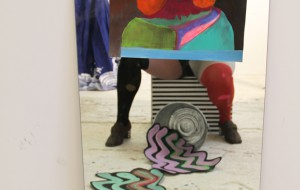
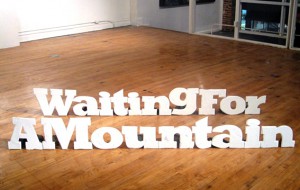
Bongoût interior 2010, courtesy Jitter Magazin and Bongoût
Thinking about my no. 2 resolution in learning to love art more, this week I turned to spaces that are not exclusively about “art,” but rather about the fused, sometimes unseemly joints on art’s larger, slightly diabetic body.
My first example, Bongoût, is a seductively fun multi-disciplinary space helmed by the collaborative super duo Christian Gfeller and Anna Hellsgård. Gfeller began Bongoût in 1995 in Strasbourg and has since moved the space and its ambitions through several different incarnations. The Mitte storefront opened in 2008 and now functions as a showroom, a bookstore, a silkscreen studio and printing press, a concert venue, and most recently, a tattoo parlor.
*Bongoût just started a tattoo artists’ residency in an adjoining space, wherein an international tattoo artist is invited to work and live for a couple of months. So if you’re looking to get that Rammstein fan art inked before you ship out, then by all means…
Despite impressive scope and production not unlike a 17th century workshop, Bongoût isn’t an assembly-line art machine…**
**in thinking about art machines, I couldn’t help but imagine the “Deitch-Star” as a stealthy black monster hurtling through space. A little campy, I know. Eh.
Unlike some larger galleries more beholden to sales, Bongoût is distinctly artist-run, and singularly focused on the dissemination of visual cultures. Their motto is “We are Building Bridges,” after all. While the books, posters, and silkscreens often share an interest in the graphic, the overarching “Bongoût” mentality is one of insistent dialogue between design and contemporary art. Bongoût’s founders list Swiss typography, outsider art and Polish propaganda posters among their influences. Their relationship to street art and its practitioners seems more complicated, with the results being more poetic and less prosaic. Bongout isn’t Juxtapoz or Fecal Face, and I like it that way.
Weekly Roundup

Jessica Stockholder, "Hollow Places Court in Ash-Tree Wood" installation at The Aldrich Contemporary Art Museum, 2011. Courtesy the artist and Mitchell-Innes & Nash, New York.
In this week’s roundup, Jessica Stockholder and James Turrell explore hollow places, Matthew Barney departs to the traditional, Lari Pittman reflects on musicality, and more.
- Jessica Stockholder collaborated with a cabinet maker and a screenprinter to utilize wood from an ailing 100 year-old tree that was cut down to create a new project that is on view in two galleries at The Aldrich Contemporary Art Museum (Ridgefield, CT). Hollow Places Court in Ash-Tree Wood connects Stockholder’s continuing interest in ephemeral abstraction with the solidity, continuity of place, and sense of time that trees represent. This installation is on view through December 31.
- Trenton Doyle Hancock has work on view at the Sheldon Museum of Art (Lincoln, Nebraska). Hancock’s Fix portfolio expands the artist’s imaginative world through figures that allegorize the contemporary art market. As the Fix series progresses, viewers witness an initial exhilaration induced by a drug, as well as the subsequent alienation and chaos. This work is on view through October 23.
- Matthew Barney is set to debut a new body of sculpture at Gladstone Gallery (NYC). DJED will offer Barney’s first major works produced from traditional sculptural and industrial metals. This work relates to the artist’s Ancient Evenings, an ongoing, multipart opera based on a Norman Mailer novel of the same name about Egyptian mythology. The show will run September 17 – October 22.
- Lari Pittman will exhibit his latest work at Gladstone Gallery (NYC) soon after the Matthew Barney opening. Pittman will present both large and small-scale works that reflect upon themes of musicality and time, intimately linking each within an engrossing tableaux of Dutch still-lifes, images of guitars, portraiture and words connoting musical styles. This show will be on view September 23 – October 22.
- James Turrell designed an oval-shaped crater installation which is the focal point of the Irish Sky Garden at Liss Ard estate in Skibbereen (Ireland). A series of strategic lights placed at points along a tunnel entrance to the crater and within the cavity will be lit for the public for the first time in 10 years. This work will be on view to a private audience next week.
Inspired Reading | Geof Oppenheimer
This month, I had the pleasure of speaking to Geof Oppenheimer, a Chicago- and San Francisco-based artist, about his upcoming exhibition, Inside every man, part of him wants to burn down his own house. The exhibition will open October 28 and run through December 11, 2011 at Ratio 3 in San Francisco. Oppenheimer’s most recent body of work includes a sculptural suite entitled The Modern Ensemble and a series of photographs that feature text from key interviews with political leaders. I asked him to describe the sculptures included in his upcoming exhibition:
It is three bulletproof plexi cubes that rest on aluminum bases. Inside each of the three are a series of detonations that have been set off that leave a kind of residue of the event within the cube. The cubes hold an aesthetic of violence within them—a violent history. At the same time, in my opinion, they are deeply sexy. They were designed to be seductively beautiful. I worked with a very traditional ideology of beauty for them because a lot of the conceptual intent is to make something very desirable that is at the same time violent or dangerous.
Below is a list of key texts that influenced the making of his new body of work:
Vanguard / Avant-garde (2006) by Susan Buck-Morss
The Liberty of the Ancients Compared with that of the Moderns (1819) by Benjamin Constant
Mao II: A Novel (1991) by Don DeLillo
Hitler’s Architect, Albert Speer; (June 1971) Playboy Magazine by David Irving
Sex Appeal of the Inorganic: Philosophies of Desire in the Modern World (2004) by Mario Perniola
Rising Up and Rising Down: Some Thoughts on Violence, Freedom and Urgent Means ( 2003) by William T. Vollmann
Oppenheimer and I spoke in person on August 16, 2011 to discuss his reading list and upcoming exhibition.
Kelly Huang: How did Mario Perniola’s Sex Appeal of the Inorganic influence your approach to the artwork, especially in regards to his thoughts on Descartes’ philosophies of the body and objects? I had the pleasure of seeing some of your sculptures in advance and to me, I can see the influence pretty directly.
Geof Oppenheimer: I mean, art is sexy. The stuff of sculpture, especially, is super sexy, and I would be lying if I said there wasn’t that aspect to it. You are dealing with the control of materials, the sort of desire you are working to create both within yourself and within another through an inorganic object. There is a sort of fusing of an organic sexual regime onto an inorganic object to make that connection. In my own work, I hope to make the objects, not figures in the figurative sense, but autonomous characters that have aspects of desire to them.
Getting Around
Contemporary art education often asks teachers to be in many places and stages at once. This is just part of the deal if you’re going to teach with and about contemporary art. In one corner there may be students working on a series of paintings while in another students are working with mixed-media to create a three-dimensional sculpture…. all within the same assignment. If the teacher isn’t careful it can be easy to spend most of the time with those constantly asking for help, or worse, with a small few doing anything they can to avoid working altogether.
Over the past few years I have begun to establish a rhythm for circulating throughout my classroom in order to level the playing field a bit when it comes to one-on-one time with students. Rather than race all over the room, I give students an idea of the direction I’ll be circulating each day and unless there is some kind of an emergency they are reminded to wait until I arrive at their table for feedback and discussion. Each day I start at a different table and each day I try to come up with a different direction of travel around the room. Most of the time I’ll start with the group I feel needs help right out of the gate and then begin visiting tables one at a time in an effort to talk with all groups during class. While there are plenty of instances where I may have to break stride and visit a student or group ahead of time (or a second time), it’s become extremely helpful for students to know at the start of class when I will be visiting with them and what I expect each student to accomplish as class progresses.
Getting ready for the start of the school year, I’m anxious to try new ideas and incorporate improvements to different units and lessons. Keeping things straight when it comes to getting around my own classroom helps remind me to keep working with all students and not be too distracted by my most vocal artists.
Open Enrollment | My Dissertation as Document of a Moment
Nearly eleven months in my year-long masters program, I am now in crunch time. The first two-thirds of the program was spent in three taught courses, and from May on, we’ve been working on our 10 to 12 thousand words-length dissertations, which will be due in mid-September. Don’t ask me how far along I am yet.
The process for writing a MA dissertation (what would be called a thesis in the States) has been not without anguish. There are a number of trepidations that plague one’s mind while working (or not working, as the case may be):
- Have I read enough?
- Have I read too much?
- Will I have too much to say and exceed the upper limits?
- What if I don’t actually have enough to say?
- Has someone already said what I’m trying to say?
- And, if I try to argue something similar to what’s already been said, will I come off as having missed something glaringly important?
- What if it all comes off as pointless filler?
- Isn’t it all pointless filler?
- Will my advisor like this or be terribly embarrassed?
- Who would want to publish this?
- How much is everyone else working?
- Won’t it suck when I completely bomb this and fail to get my Master’s and thereby waste a year in school and loans, not to mention trash my potential job prospects?
- Why am I doing this again?
How Not to Be an Art Hater

Image Photoshopped by the author
As my Piscean nature and sluggish thyroid would suggest, I am fairly susceptible to bouts of ennui. This summer (if summer began in March), I’ve struggled with attendance and indifference, often preferring leisurely activities of the paddleboating/drinking variety to the stale cool of galleries.
I complained recently to a friend, saying “ugggh, I just can’t get into art right now, you know?”
She diagnosed me succinctly as having “first world problems.”
I stomped away indignantly as my loafer footprints slowly filled with discarded organic melon soda. She tried to catch me on her 10 kg Danish bike, but I ducked into a queer café and read reviews of the film Meek’s Cutoff until my sinuses began to ache and I went home to nap.*
*Meek’s Cutoff is really beautiful.
Life in Berlin, while still Triple-A, isn’t always easy. But I think of it as a rational city, with people and transit being equally punctual. In it, discussions of nuclear power are encouraged and Ms. Bachmann is just an old lady living in Britz with winking garden gnomes in case anyone questions her whimsy. Mr. Boehner is the curmudgeonly mailman who wears green vests and yells at me on my bike.
Berlin is both an escape from American crazy and an island of art production (as opposed to art sales), hosting over 400 galleries and 20,000 artists.**
**Although I suspect the second figure might be a bit low (not every artist heralds their arrival to the German authorities).
But with so much art (first world problem alert), how does one maintain the magic? I’ve tried bath salts, brisk walks and smiling at museum attendants, but nothing is really doing “it.” I’ve always admired Jerry Saltz because in his columns he seems genuinely interested and surprised by the art he encounters/chooses to write about. But how does he do it? Saltz sees, like, 30 to 40 shows a week, which seems really crazy to me. Even crazier is that he is on the Piscean cusp, obviously deriving his energy non-astrologically.
In a feeble homage to Mr. Saltz, I have devised 6 rules for myself that I feel will increase my viewing enjoyment; rules I hope to put into effect during my blog tenure here.
Problematic | The Artist As Entrepreneur

Most artists assume the role of an artist, perhaps by going to school, perhaps by having a studio, or not. Bruce Nauman made it simple by deciding that anything he did in his studio was art. With that out of the way, artists assume all kinds of other roles. Artist and filmmaker, artist and professor, artist and writer, artist and curator are some of the more popular ones. (Note the and, which spans, while it also emphasizes, a gap between two distinct nodes.) An institutionalized art context encourages categorization and, in turn, the harboring of split personalities. Some artists go so far as to christen their various professional identities with individual names. However, identity can be as slippery as a new hardwood floor and we don’t necessarily accessorize like the President does, one hat for each job title. Sometimes we take on two or more roles at once – the Artist as (Fill in the blank) – and the oft-overlooked role of Entrepreneur is particularly relevant in today’s frenetic roller coaster economy.

Erik van Lieshout's Online Shop, www.erikvanlieshout.com.
Artists like to get paid as much as the next guy, but particularly for us, there is no singular path to get that paper. Warhol, the perennial entrepreneur, had a factory among many other things. Paul McCarthy did too – a temporary, yet fully functional chocolate factory housed in 6,000 square-foot space of Maccarone Gallery in New York. Actually, a lot of artists maintain studio-factories nowadays. Murakami built a creepy-cute empire of branding and merchandising. Damien Hirst clearly knows how to make money, but he also owns a classy-casual harborside restaurant just for kicks. Maybe this makes him an Artist and Entrepreneur, although his record-breaking sales record might suggest more of an Entrepreneur as Artist. Phil Collins has a bar. Spencer Sweeney has a club. Carol Goodden and Gordon Matta-Clark opened Food to explore the performative aspects of cooking and eating food, while presumably making a little cash on the side. Andrea Zittel’s Smockshop is a somewhat more socialist twist on a production model of outsourcing. Erik van Lieshout camps out in a mall saying, “Real luxury is buying nothing,” while turning an empty store space into a working studio and mall-goers into active participants. Andrea Fraser simply says, “If I’m going to have to sell it, I might as well sell it.”
This is the picture of the Artist as Entrepreneur: one who may emulate and enact business practices for the sake of art and/or money.It is with this in mind that I profile several artist-initiated, entrepreneurial-minded projects that ride the murky line between art and money, business and pleasure.
Join Art21′s “New York Close Up” Film Fund
Over the past two months, Art21 has received a wave of critical and popular response to Art21’s newest online series, New York Close Up. Below are three quotes we’d like to share.
“An unmistakable focus on the flurry of opportunities and experiences granted to artists in the early stages of their career and a marked attention to the emerging cultural environs of New York City is what makes the new Web series different from prior Art21 film projects.” – New American Paintings
“This show… focuses on young professionals at the cusp of their creative lives as they navigate the multilayered reality of life in the big city…. Definitely a series worth keeping your eye on as it develops and more film/artist collaborations are added.” – Curbs and Stoops
“I love this artist, but I’ve never seen her out of character and heard her talk. Thanks for making this video.” – YouTube comment, “Shana Moulton’s Portable Performance”
The New York Close Up Film Fund brings together a network of fans and friends who, like the enthusiasts above, publicly support New York Close Up artists, films, and programs. Membership begins at $50, and will directly support the next year of the series. Visit the New York Close Up Film Fund page for full information about membership levels and benefits.
Within the last two months, members have helped over 33,000 viewers from Brazil to Germany to South Africa gain a multifaceted view of the life and work of contemporary artists in NYC today. For many viewers, these films are a first insight into the variety of choices and activities available within the initial stages of a professional artistic career. Audiences worldwide get to explore:
- How do artists navigate the lines between artistry and a career?
- How do artists engage their community?
- How does ownership of art shift when a work is put on display?
- How do artists contribute their own personal stories in the face of prevailing historical narratives?
Help us continue to share this kind of information—so often left out of the public conversation—join the New York Close Up Film Fund today!
Learn more about making a donation to Art21.
New guest blogger: Ali Fitzgerald
Thanks to Thea Liberty Nichols for her terrific interviews with Chicago-based artists and practitioners.
Up next is Ali Fitzgerald. A regular writer for our Lives and Works in Berlin column, Ali is an artist/writer/comic artist living in Berlin. She has contributed comics to the Huffington Post and this site, and she recently wrote a review of the Richard Hawkins show at Galerie Daniel Buchholz for New York Arts Magazine. For the past year and a half, she has been working on a graphic novel, tentatively titled The Cool-Dead, about her exploits in Berlin. For her guest blogging stint, Ali will offer up a series of essays/reviews/comics about apathy in contemporary art, like how not to be a “hater” and rediscover the joy of looking/talking about stuff.
Weekly Roundup
In this week’s roundup, Do-Ho Suh explores the memory of spaces, Carrie Mae Weems poses African American beauty, Louise Bourgeois’s spider tours Europe, a James Turrell retrospective in Russia, and more.
- Do-Ho Suh will present a series of works that reflect the artist’s ongoing exploration of cultural displacement and the co-existence of cultural identities, as well as the perception of our surroundings and how one constructs a memory of a space. Home Within Home at Lehmann Maupin Gallery (NYC) presents ongoing projects that Suh began including replicas of his childhood home in Korea. The exhibition will be on view on view September 8 – October 22.
- Carrie Mae Weems will have work on view in Posing Beauty in African American Culture an exhibition to explore the contested ways in which African and African American beauty have been represented in historical and contemporary contexts through a diverse range of media including photography, film, video, fashion, advertising, and other forms of popular culture such as music and the Internet. This show will take place at the USC Fischer Museum of Art (Los Angeles) from September 7 – December 3.
- James Turrell has a retrospective on view at The Garage Center for Contemporary Culture (Moscow). It is Turrell’s first solo exhibition in Russia and features fifteen works completed throughout his forty-year career. Turrell’s works challenge not only visual perception, but also the other senses, as visitors are required to interact with the installations and sculptures. This show is on view until August 21.