Darwin & Art in Edinburgh

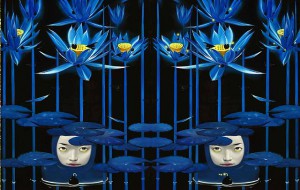
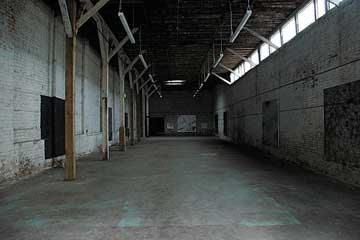
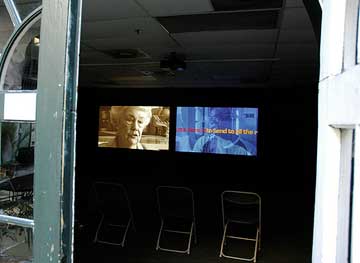
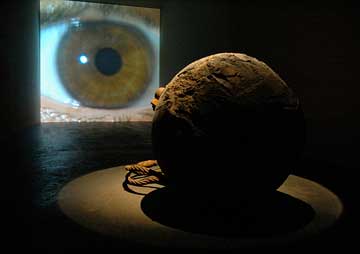
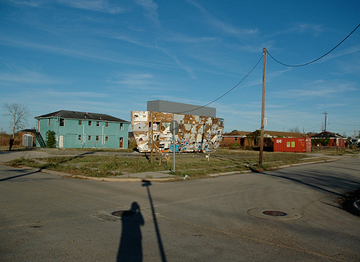
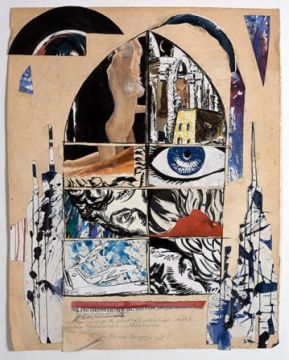
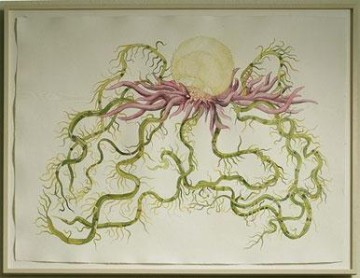
Ellen Gallagher, Watery Ecstatic (2005). Courtesy The Species of Origin
The intersection of art and science isn’t commonly discussed in the art world. But one British art school, the Edinburgh College of Art, has been developing an intriguing project (The Species of Origin) that looks at new artistic and cultural understandings of the work of scientist Charles Darwin and his seminal book Origin of Species.
Next year marks Darwin’s bicentennial and for over a year the Scottish art school has been re-examining ideas about the development of life (i.e. evolution) that have revolutionized the world.
According to the website:
This project asserts the potential for contemporary art practice to re-imagine Darwin’s work within a current context, to draw out, in particular, some of the most significant ideas embedded in his thought and of others.
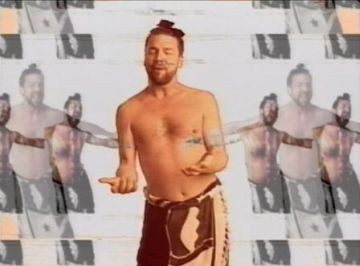
Some of the participating artists in this investigation that straddles the cultural and scientific worlds are Catherine Chalmers, Marcus Coates, Mark Dion (Season 4), Ellen Gallagher (Season 3), Andrea Roe and Alexis Rockman.
Roanoke’s Taubman Museum of Art Opens This Weekend

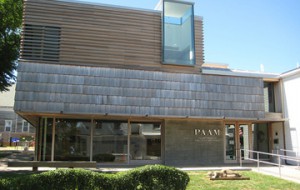
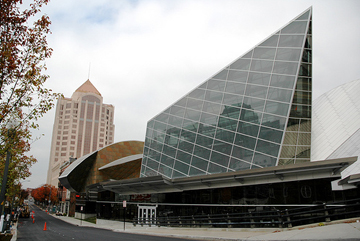
I had the good fortune of being in Roanoke, Virginia and seeing the impressive new Taubman Museum of Art (formerly the Art Museum of Western Virginia).
A welcome addition to the skyline of this friendly Virginian city, the Taubman is known for its collections of 18th- to 20th-century American art, which features fine works by John Singer Sargent, Thomas Eakins, Winslow Homer, Robert Henri, Childe Hassam, Petah Coyne , Robert Motherwell, Thomas Hart Benton, Sally Mann (Season 1), as well as folk art objects.
If you have the privilege of traveling to Roanoke, be sure to check out one of the exhibitions that will open the museum entitled Rethinking Landscape: Contemporary Photography from the Allen G. Thomas, Jr. Collection. The show opens tomorrow (and runs until March 1, 2009) and will features works by Taj Forer, Andreas Gefeller, Anthony Goicolea, Bill Hensen, Sarah Ann Johnson, Chris Jordon, Jeff Chien-Hsing Liao, Sze Tsung Leong, Sally Mann, Andrew Moore, Zwelethu Mthethwa, Martina Mullaney, Robert and Shana ParkeHarrison, Sarah Pickering, Kahn and Selesnick, Kerry Skarbakka and Hiroshi Sugimoto (Season 3).
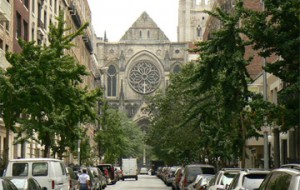
Below are some street views of the structure designed by Randall Stout Architects.


For the Matthew Barney Fan Who Has Everything

Fansites may be more common for music fans or even authors but artists don’t seem to inspire the same level of adoration (or is it obsession?) that other creative professionals do. Well, then there’s Matthew Barney (Season 1).
The boyfriend of Björk and an art world superstar, Barney has a very dedicated fansite named CremasterFanatic.com.
The site features a list of Barney exhibitions, Barney-related eBay items, fan art, fan music, fan videos, fan poetry, Barney wallpapers and an active blog that posts regularly about Barney-related news and photos, including a pig roast/black metal concert at his Long Island City studio last August.
All in all, it’s a site that could probably teach Barney himself a thing or two that he didn’t know…well, not consciously anyway. And warning, a few of the fan images may be NSFW.
Coincidentally, the blog has a poll as to which Cremaster is the popular favorite and right now it appears that Cremaster 3 has a very clear lead.
Looking at “Art in Odd Places”

Since the days of 19th-century French poet and critic Charles Baudelaire, the flâneur has played a prominent role in our evolving notion of modern art. The flâneur, according to Baudelaire, is a person who casts a cool and curious eye on the city and its phenomena, particularly the arts.During our own age, many artists have excelled at examining the city and through it our culture’s sense of meaning. Artists like Gabriel Orozco (Season 2) actively distort conventional-seeming scenes or objects to provide us with jarring new perspectives. On the other hand, Krzysztof Wodiczko (Season 3) is an artist who works in unconventional spaces and often uses the city as a canvas on which to project his political and social commentary.This month, the fourth annual Art in Odd Places festival invited 15 visual and 21 performance artists to create artworks on New York City’s 14th Street exploring “connections between public spaces, pedestrian traffic, and ephemeral transient disruptions. Like a scavenger hunt, New Yorkers will use a map to discover art in unexpected places along this amazing street.”
Remembering an early episode of Art:21 which focused on artists and their sense of place, I ventured out to 14th Street to see how some contemporary artists were interpreting the great American metropolis in new and interesting ways.
Below are the captioned photos of what I spotted.

Aakash Nihalani’s Landscrapers installation

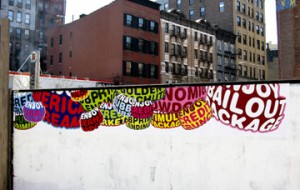
Edith Raw’s White Trash
Art Fag in the City, IMing with Paddy Johnson

It’s been fun blogging for two weeks on Art21 and I thought it was only appropriate to end with an interview with art blog legend Paddy Johnson. She’s the mastermind behind the fabulously named Art Fag City.
Last week, I caught up with her online.

[According to Paddy, the soundtrack for this chat is: Fleet Foxes’ “White Winter Hymnal” (video)]
Hrag Vartanian: So I saw your tweet today: “Embracing my Maximum Sorrow. I am mediocre. Mediocrity is in me.” I figured you were writing….do you feel mediocre whenever you write even if it’s not true?
Paddy Johnson: To make a short story long, my desk is a TOTAL DISASTER so I was looking at these flyers from Kevin Bewerdorf’s show I saw close to three weeks ago now and the pamphlets, which have this kind of weird corporate/web look to them, ask you to embrace your mediocrity. So I was doing that by twittering mediocrity (Paddy’s recent review of the show is here).
HV: So was that why you were feeling mediocre? They suggested you feel mediocre or you interpreted them that way?
PJ: Well the mantra the PDF asks you to repeat is “I am mediocre, mediocrity is in me…so I did it.”
HV: Wow…that’s kind of deep, or wait…maybe it’s shallow.
PJ: But to answer your question, I think there are times when we all feel mediocre for some reason or another…so I struggle with that sometimes.
HV: Do you ever feel that about art blogging?
PJ: Sometimes, but usually I cure myself of that by rereading posts I’ve forgotten about.
HV: I know you write about new media a lot. Do you consider your blog a form of new media?
PJ: Only in the sense that the Internet is still relatively new and evolving. People are already getting fairly used to using the Internet—it feels increasingly inaccurate to describe publishing that way. To be honest, I think comment moderation (as aspect of blogging that can reasonably be described as new media) is trickier than blogging itself, should a blogger really invest in that aspect of it.

When Art Breaks…Or Was That Part of the Work?
While I was in DUMBO for the art festival last Saturday, I witnessed someone accidentally knocking over a sculpture. It was the work of Minji Kim, a participant in the 2008 Triangle Arts Workshop.
Before the accident, I spoke to Kim and she told me that the piece was about her difficult relationship with her father. She explained it was one that needed lots of attention. To prove her point, she pointed to one column that was covered with Popsicle sticks inscribed with the words of Sylvia Plath.
During the whole time I talked to her she was looking around nervously.
“How did you adhere the 2×4s to the ground?” I asked.
“I didn’t,” she said. At that point I knew why she was on edge—any small movement could destroy the delicate equilibrium.


And then it happened. As I walked away some older woman knocked it down as she appeared to be putting on her jacket.

There was some confusion and people couldn’t figure out what was going on. Kim rushed over and herded some friends to put Humpty Dumpty back together again.


All I could do was wonder if Minji’s relationship with her father was equally catastrophe prone.
Faster Pussycat, Link, Link

While the financial sector may be ailing, the wealth of links in the blogosphere suggests the Dow Jones of online life continues to climb.
>> Art Fag City has been leading the coverage of the big “Aesthetic of Terror” controversy that surfaced at the Chelsea Art Museum last week when curator Manon Slome quit—the question is why?…it gets a little complicated, so check out all the info on AFC here, here and here;
>> Art News Blog posts about 10 things they hate about art blogging…some of them I can relate to but I’ve never had an artist ask me to sell their work;
>> Ed Winkleman asks if street art is the new barometer of the art market;
>> C-Monster takes a gander at the Outsiders NY extravaganza which includes works by Faile, Bast, Invader, Blu & others;
>> a piece by Banksy surfaces in Soho, but the blogosphere later discovers that it was executed by an ad company with the Brit’s ok…Public Ad Campaign writes: “To say that a collaboration like this between Street Art and the public advertising world ‘takes the air out of this works impact’ is an understatement.”
….um, does someone smell a sellout?; and
>> Joanne McNeil at Tomorrow Museum juxtaposes some radiant paintings by Dan Witz of women and their portable electronic devices with an intriguing exploration of the question we’ve all been dying to have answered (oh wait, maybe that’s just me), “New Media in Fiction: Will There Ever Be an ‘iPhone Novel?‘”
*************
Image caption: A view of an anonymous performance during this past weekend’s Art Under the Bridge Festival in DUMBO.
Tomorrow: When Art Breaks
DUMBO Art Tour: Art Under the Bridge & the 2008 Triangle Workshop
It was a rainy Saturday and it was the kind of day that amplified the bizarrely romantic quality of Brooklyn’s DUMBO neighborhood. During the popular Art Under the Bridge festival the city comes to this compact post-industrial neighborhood to see what’s new and happening.
Unlike the northern Brooklyn art enclaves of Williamsburg or Bushwick which are composed of sprawling webs of studio and gallery spaces, DUMBO is dense and manageable. Officially there were 123 open studios (and approximately 175 artists on display) during the three-day event.
One of the curious realities of festival events is that street artists are increasingly making their presence known whether through specially prepared work for the weekend or their growing presence on the streetscape. This year chalk aficionado Ellis G. decked out Front Street with a multi-colored drawing and French stencil-master C215 was unavoidable (he’s been in town from France for about a month I hear). There was another box-y talent which may be Aakash Nihalani but something tells me it isn’t.


While the street art may be part of the attraction it is the commissioned and studio visits that undeniably bring in the art fans. It’s always a pleasure to wander around private studios and catch a glimpse of trends (if any) emerging. All artists are usually polite and welcoming though some became instantly paranoid whenever I present my camera for a photo, often insisting I don’t snap a pic. “Fine, I won’t blog about it,” I retort. They always seemed disappointed when I say that and often offer up a website with images which I never accept as a compromise–the reason why is a whole different post. Continue reading »
The Kalm Report: Art Vlogging as Performance & Critique

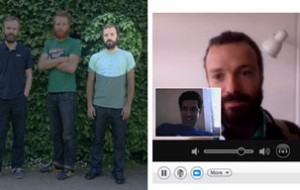
While I promised a view of DUMBO’s Art Under the Bridge festival today, I will have to leave that for tomorrow. But I did want to post this interview with one of the most colorful characters in New York’s online arts community, the vlogger known as James Kalm.
Loren Munk is an artist, a writer, a husband, and a father. He paints thickly covered canvases that play with text, maps, diagrams and illustration as a form of critique and illumination. His two-dimensional work looks heavy and resembles the impasto of Californian artist Jess (Collins).
Then there’s James Kalm, his alterego. James makes The Kalm Report, a serialized online video program that has toured the studios of many New York artists (Chris Martin, Phong Bui, Cris Dam, William Powhida), run into people at exhibitions (including Jonas Mekas), and offered online viewers free tours of shows and events they probably wouldn’t or couldn’t see otherwise (like this panel discussion on The Legacy of Abstract Painting, 1960s-1970s). All in all, his perspective is both entertaining and insightful.
Kalm is an eye into the city’s constantly evolving arts scene. To date, The Kalm Report has posted 231 videos since November 2006. A few have been viewed over 7,500 times (which is remarkable for videos that are usually 10 minutes long) and many have dozens of comments–the video on Cy Twombly’s Blooming exhibit at Chelsea’s Gagosian Gallery last November clocked in 128 comments.
James agreed to talk to me about his online video performances that inevitably begins with a view of his bike and ends with his Edward R. Murrow-esque “goodnight Kate.”

THE INTERVIEW
Hrag Vartanian: First off, how do you want to be identified?
James Kalm: You can identify me as James Kalm, which is a pseudonym I’ve been using for my writing and video work for over ten years now. Because of my instinctive distrust of art criticism (having been an artist for over thirty-five years) I wanted to make a distinction between my work as a painter named Loren Munk and the critic/writer.
I tend to think of [The Kalm Report] more as art-recon, an urban commando collecting data that will help document the community and actions making up the New York art scene circa 2008.
Hopefully I’m helping to blur these lines. Much of my recent painting deals with the concepts of representing the principles of art criticism, aesthetics, history, and influence graphically with paint. Although I hate “art theories” I’ve got one I’m working on called The Physics of Aesthetics. Basically a more “scientific” view of the elements that make up the idea of “taste.”
HV: How did the The Kalm Report come into being?
JK: About three years ago I started watching video clips on YouTube. I read some articles about YouTube stars who’d made reputations, gotten gobs of attention, been discovered by Hollywood and gotten hundreds of thousands of hits. I had no expertise in video at all, no idea how to edit, shoot it or post it. In fact, I generally avoided video when I came in contact with it in gallery situations. As stated above, I’d been documenting the scene photographically for years (I have tens of thousands of photos) but had recently gone digital. One day while shooting pictures with my little Canon Elf, I flipped the mode switch too far and started shooting video. I got home, downloaded the day’s pics, and watched the video snippets. They were funny and interesting. I laughed, but I had no idea what to do with them.
About the same time Irving Sandler (the Dean of American Art History and Criticism), published an open letter to art critics in the Brooklyn Rail titled “The Crisis in Criticism.” One of his complaints was that no one was paying attention to art critics anymore. They were academic and boring, money and the market had taken over, and hence, art was suffering from over-priced mediocrity.
Being a practical joker and trickster, always looking for ways to extend the reach of my high-jinx, I envisioned using YouTube as a means to reach a new audience that was unserved by the likes of ARTFORUM, Art in America and the other tony New York art publications.
I went to the Fountain Art Fair, turned on the camera, and started talking and shooting. Fortunately I have some very computer savvy kids and they helped me learn how to upload and edit the work. The rest has been an embarrassing case of learning how to make videos in public, and mostly I’ve enjoyed every second of it.
Ephemeral or Permanent: Should Art Last? (A Panel Discussion)

Every two years, the Triangle Arts Association organizes a workshop that welcomes dozens of artists from around the world for the Triangle Workshop. Participating artists are offered free room and board while they work in a communal studio space, usually a subdivided floor of a large industrial or commercial building, which allows them to work freely and collaborate. This year’s workshop kicked off on September 14.
Begun in 1982 by British sculptor Anthony Caro and London-based collector and businessman Robert Loder, the Workshop culminates in a dynamic Open Studios event that this year falls on Saturday, September 27. I should mention that I am honored to have been asked to join the board of Triangle this year.
One of the workshop events that people often look forward to during Triangle is the panel discussion. This year’s panelists were: Thomas Butter, sculptor and painter who teaches at Parsons and Brooklyn College; Nora Herting, an artist who works with photography, alumna of 2006 Triangle Workshop, and recent recipient of a grant from the Brooklyn Historical Society for a project that will involve portraits of people of Brooklyn; Ethan Kruszka, artist from St Paul, MN, member of the Fluff Artists’ Collective participant in Triangle 2008; Andrea Liu, art critic who writes for Art US, fellow at the New Museum Night School (I think that’s what she said, but you better check); and Karen Wilkin (moderator), critic/curator and board member of Triangle Arts Association. The topic of the panel was “Eternity?: Do you imagine your art as lasting into perpetuity or do you make it to exist only for its time?“ I’ll try to give you a sense of what the panel was about.

I attempted a novel way of following the event, namely Twittering (or tweeting) the panel to allow my first reactions to be broadcast unfiltered by reflection (which I hope I don’t regret). It worked fine but I felt very anti-social as I continuously typed into a three inch screen–eventually I gave up.
The discussion started when the artists on the panel were asked whether they think about the longevity of their work as they create. Nora Herting explained that as a photographer she is more aware of time because of her medium (which Wilkin rightfully pointed out “stops time”) but she doesn’t feel self-conscious about longevity. Butter, who is known to use unorthodox materials in his art, had an insightful anecdote about Michaelanglo’s David (1501-4) which he said was iconographically rooted in the politics of its time but today continues to inspire us today because of its emotional impact and the clarity of its language.
Critic Andrea Liu wondered if the notion of longevity wasn’t a white male issue [though I’d argue the ancient Egyptians and their pyramids disproves the notion that longevity is a white issue]. She clarified that there hasn’t been a line of art produced by women to suggest that longevity is of interest to female artists. She also discussed the impact of the 1980s art boom and how many of these people have not lasted in terms of their reputation or market (Julian Schnabel being the most obvious example).
Artist Ethan Kruszka argued that growing up in the 1980s generation the idea of permanence seemed anathema during that materialistic age that was dominated by junk bonds and consumerism. Everything feels disposable, he said and he even wondered if any artist created work that is meant to last anymore–Herting quickly pointed out that Jeff Koons is an example of a contemporary artist “practically making pyramids” in our own age.
The dialogue was dominated by discussions of modernism and postmodernism, suggesting that there was a divide in perspective that revolved around people’s notions about the role of art.
After the panel I asked the moderator, Karen Wilkin, to explain what she thought was the takeaway from the evening’s discussion: “For me, the panel underscored the apparently unbridgeable gulf between those who believe that the physical, formal, and material qualities of works of art are essential components in conveying emotion and meaning and those whose fundamental assumption is, as Ethan Kruszka said, that ‘Ideas last. Objects are expendable.’”
Monday: Touring Triangle Open Studios & the DUMBO “Art Under the Bridge” Festival