Praxis Makes Perfect | Trial & Error: On Teaching with Beverly Fishman

February 9th, 2012

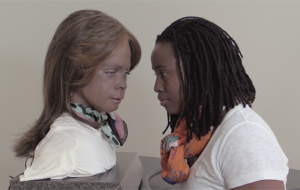
A person’s hair sometimes illustrates the inner workings of the head to which it is attached. Beverly Fishman, my mentor in grad school, has curly hair – not gentle ringlets, but fierce, uncompromising curls. And Beverly Fishman is nothing if not fierce.

Image courtesy of the artist and Galerie Richard, New York, NY.

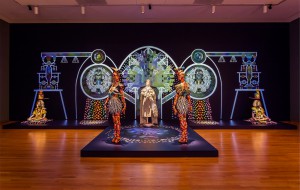
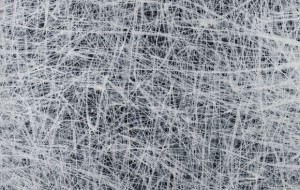
I’ve talked to Bev often since my graduation from Cranbrook a year and a half ago. From the window of Galerie Richard at the opening for her self-titled show last December, I noticed Bev’s hair first; her spiky silhouette was set against the delicate layers of EKG and EEG patterns in her paintings. Inside the gallery, I was surrounded by a swirl of psychedelia; I felt both dazed and dazzled.

Image courtesy of the artist and Galerie Richard, New York, NY.

Having a great teacher is a mind-altering experience. Great teachers may shock, jolt and intoxicate you. Not unlike the pharmaceutical references in Bev’s work, the effects of a great teacher may last longer than you expect.

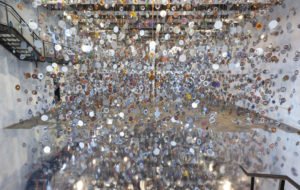
A few weeks later I visited the gallery and Bev again. We stood in front of one of her recent works, an array of candy-colored glass capsules called Pill Spill, 2011, as she stated with her encapsulating intensity that two things were certain: she always knew that she wanted to be an artist and she always knew that she wanted to be a teacher.

Continue reading »

Praxis Makes Perfect | Draw the Devil from this Boy

January 12th, 2012

I wrote about the application process for artist grants in my last post by way of interview with the artist Beverly Fre$h and author Gigi Rosenberg. In this post I will focus on the grant experience.

I’ll start by briefly sharing my own story. In April 2010 I received a Fulbright grant to study textile design in Finland. Upon arriving in Helsinki four months later, my careful designs for the next year almost immediately disintegrated. Trained as a painter, I erroneously assumed that embarking on a new career could be as easy as boarding a plane in New York as a fine artist and landing in Finland as a designer. Working for a client presented more of a conflict to me than I had anticipated. In hindsight my desire to dabble in design feels disrespectful; I now feel content to covet the textiles that I could never make.

To say that nothing worked according to plan is an understatement. And so I had to make new plans. After this shock and forced reconsideration, things worked out for me, especially after I realized that most of my fellow grantees, maybe all of us, had significantly rejiggered our initial proposals.

Near the end the grant period, all of the grantees were gathered in a room where we were asked to write thoughtful advice for future grant recipients. At the time all I could muster was: “Expect the unexpected.” When I recall the person who wrote a grant proposal almost two years ago — the graduate student who believed her experiences would magically crystallize into lasting career stability — I smirk. By the time I returned to America, the traces of that naiveté had been erased.

I felt like a different person as I repatriated. Yet this pales in comparison to David MacLean’s experiences. MacLean is a writer and like me he got a Fulbright. He traveled to India in 2002. Then, mysteriously, he woke up — as if he had been asleep – with no recollection of who or where he was.

MacLean’s story is exceptional; nonetheless, however trite the advice, grantees really should expect the unexpected.

The following is an excerpt of David MacLean’s story, which will be published in full by Houghton Mifflin Harcourt in his forthcoming memoir, The Answer to the Riddle is Me.

 “Draw the Devil from this Boy”

Written by David MacLean

Illustrations by Wook Jin Clark

Image: Wook Jin Clark.

On October 13th, 2002, I woke up in a train station in Secunderabad, India with no passport and no idea who I was. I was standing on the train platform, staring at a monitor. People were pushing past me. Train announcements in another language were coming out of static-filled speakers. Men in red shirts carried massive loads of luggage. There were crowds of women in burkas standing near a stall where a man was making omelets. Massive trains would sound their massive horns before they trundled out of the station. And I suddenly was in the midst of all of this.

Continue reading »

Top 10 Memes of Occupy Wall Street

December 29th, 2011

Image: from Adbusters.com

Protesters in Zuccotti Park, October 2011, Image: J. Gleisner

The nature of people demands that most of them be engaged in the most frivolous possible activities—like making money.”

“News, far more than art, is artifact.”

– Marshall McLuhan

Somewhere in the ether Marshall McLuhan is smiling. The oft-quoted maxim of the Canadian futurist — “The medium is the message” — has been reified by the Occupy Wall Street movement. Protest is the medium; moreover, protest is the message.

To the annoyance of its detractors, Occupy Wall Street has avoided articulating its own agenda. The singular, most resounding demand of the protesters is the simplest: to be heard.

Protesters, 2011 was your year. Still many ask, what exactly have you accomplished?

In brief, you reinvigorated America’s roots as a protest nation, you extended the Occupy movement beyond New York’s Zuccotti Park to 900 cities worldwide, you cajoled celebrities (Susan Sarandon, Michael Moore, Russell Simmons) into action and you moved musicians (Lupe Fiasco, Kayne West, Jeff Magnum, Tom Morello) in Liberty Plaza. Most importantly, you have made the phrase “income inequality” a political hot-button for the upcoming election year.

As this year crawls to its end, media coverage of Occupy Wall Street has slowed to a near halt. This movement began online and it could have easily ended there. It didn’t.

However, the new year must bring with it a new phase of the movement. At present let’s look back at Occupy Wall Street — not its message per se (or lack thereof), but at its media; not at its dreams, but at its memes.

The Top 10 *Memes of Occupy Wall Street

*I am liberally defining “meme” to include all the viral internet media — posters, catch-phrases, photos, images, street art and videos — that have defined the Occupy Wall Street movement.

1. America’s “Tahrir Moment”

July 13, 2011 – The Canadian anti-consumerism magazine Adbusters proposed the following:

“On September 17, we want to see 20,000 people flood into lower Manhattan, set up tents, kitchens, peaceful barricades and occupy Wall Street for a few months. Once there, we shall incessantly repeat one simple demand in a plurality of voices.”

- From “A Shift in Revolutionary Tactics,” Adbusters, July 13, 2011.

[/caption]

Buttressed by social media sites like Twitter and Facebook, talk of the “Tahrir moment” went viral within two weeks. Two months later Wall Street was occupied.

2. “The Ballerina and the Bull”

September 17, 2011 – Protesters were entreated, they tweeted and they accreted. On Saturday, September 17, The New York Times announced the beginning of the movement. Protesters arrived, singing “The Star-Spangled Banner” and dancing around the movement’s unofficial mascot, Arturo di Modica‘s 7,100 pound bronze sculpture Charging Bull on Broadway.

This bull is featured prominently in another widely-circulated poster from Adbusters (below).

Image: from Adbusters.com

As if to prove that anything really is possible, a ballerina danced atop this sculpture in early December as the poster illustrates.

3. “We Are the 99%”

August 23, 2011 – An anonymous post on Tumblr by a 28-year old New York activist named “Chris” (last name, unknown) voiced the collective frustrations from underpaid and overworked Americans. The post, like the media generated by Adbusters above, rippled through cyber space. The poignant expression from the We are the 99 percent tumblr became the movement’s slogan.

Image: wearethe99percent.tumblr.com

Also, I would be remiss if I didn’t mention We Are the 99 Purrcent.

Continue reading »

Praxis Makes Perfect | F for Fre$h: Beverly Fre$h on Artist Grants

December 8th, 2011


F stands for Fre$h.
Beverly Fre$h, that is. Artist, performer, rap star, and former corporate graphic designer, Mr. Fre$h found his first flicker of fame when he was included in the 2009 Book of Guinness World Records. History was forged before my eyes at the Cranbrook Art Museum degree show in May of 2009 when Fre$h set three world records. A frenzied crowd focused on Fre$h’s face flecked with yellow yoke as he smashed forty-one eggs on his head in under a minute. He broke further records for the most chocolate candy Whoppers caught in his mouth from a distance of 6’6” (also in under a minute) and for the tallest stack of cassette tapes.

Image courtesy the artist.

F for Fortune.
Fortune favored Fre$h in the months following his record-breaking feats when Fre$h went to Berlin–for free! Fre$h won a grant, namely, the Daimler AG Emerging Artist Grant. The award annually funds a one-month stay in Berlin for one Cranbrook graduate student who “exemplifies the spirit of DaimlerChrysler Services’ core values: integrity, openness and respect; social responsibility; inspiration and empowerment; and commitment to excellence.” A rapper might seem a far cry from the car company’s core values, but Fre$h attested his affinity for effectuating excellence as well. There is money—free money—that can and will befall even the most far-fetched of fantasists.

From the flip book, !BEVERLY EATS CAKE! Image courtesy the artist.

F for Fervor.
F is for fervor; F is not for fake. However tempted one may feel to feign enthusiasm when writing a grant proposal or pitching your part before a selection committee, most people can, in fact, spot a fake. Before a board of company officials, Fre$h delivered a fierce PowerPoint, outlining his development, influences and conceptual framework as an artist. He finished his presentation with a mouth-foaming performance of “O When the Dogs Bark.” The foundation for fruition, as Fre$h affirmed, is frankly, that you cannot fake the fervor.

Continue reading »

Praxis Makes Perfect | Hustling with Jennifer Catron and Paul Outlaw

November 10th, 2011

“All paid jobs absorb and degrade the mind.” -Aristotle

“Most artists work all the time, they do actually, especially good artists, they work all the time, what else is there to do? I mean you do.”  -David Hockney

Artists Jennifer Catron and Paul Outlaw in their studio. Image: J. Gleisner.

There is a scene in Woody Allen’s classic movie Annie Hall in which children announce to the viewer not what they aspire to become when they grow up, but what they actually become in their adult lives. One boy is the proud president of the Pinkus Plumbing Company. Another sells tallises. The third boy says, “I used to be a heroin addict.  Now I’m a methadone addict.” From the mouth of babes Allen voices the truism that sometimes there’s a gap between what we want to do and what we end up doing.

Many of us, this writer included, have confronted this gap. Not once as a child did I dreamily gaze into the future and say, “When I grow up, I want to be an administrative assistant.” Actually I knew from a very young age that I wanted to become an artist. I am. But I also have a full-time job.

Between my full-time job and full-time studio practice, I work hard—very hard. I’m not alone. Indeed, the will to work must mutate from an academic obligation into herculean determination in young artists out on their own. Without a maniacal, insistent drive to create you will surely drown in the sea of other aspiring artists around you. Feeling adrift after a full day of filing and faxing at my day job, I headed to Greenpoint a few weeks ago for a rousing evening with two of the most ambitious young artists I know: Jennifer Catron and Paul Outlaw.

Chances are you have met Jen and Paul. If you haven’t, you will. They will make sure of this. I was first introduced to Jen and Paul at Cranbrook Academy of Art, where they began in the sculpture department and left together as a performance artist ensemble. Since they graduated from Cranbrook in 2010, Jen and Paul have been busy. In slightly less than two years, they have operated their own Fish Fry truck, been featured at Scope New York, hosted a series of apocalypse-themed dinner parties/performances at the Lower East Side Gallery, Allegra LaViola, and performed at Mass MoCA.  Later this month, the pair will participate in the show “No Object is an Island” at the re-opening of the Cranbrook Museum of Art.

Paul's Rattail. Image: J. Gleisner.

A curious (but by no means unexpected) development since Cranbrook is the appearance of Paul’s rattail, which commenced, fittingly, at our graduate commencement. Symbolically, Paul’s hair tassel tracks his growth since grad school. Inside their basement studio the rat tail is at home with its feral surroundings; the tanned hide of a cow carcass is folded in a corner next to a stack of oversized gambling chips. Remarkably, Outlaw is Paul’s real last name; he looks and acts the part.

Likewise Jen is a maverick in her own right. Whereas Paul prefers sleeveless undershirts, Miss Catron has branded her own combination of quirk and elegance. On the evening we met, Jen was stylishly dressed in the color of the season, camel. Her get-up—part cowgirl, part seventies power suit— was evidently hand-made, as are all her clothes. The charming concoction was offset by her vibrant red hair. With her brilliant mane, her theatrical outfits, her alien energy—Jen could generally be described as high-octane.

Jen and Paul are distinct in my circle of friends not only in appearance but because they are making waves in the larger pool of talented emerging artists in New York. A worthy goal for recent grads is to find a way to fund your artistic production. The more taxing challenge is to get paid for your artistic production. Admirably, how Jen and Paul make money and how they make art are not always unrelated. Like me, they also have day jobs.

Jen and Paul's Fish Fry Truck. Image courtesy the artists.

Continue reading »

Praxis Makes Perfect | End-troducing

October 13th, 2011

“What we call the beginning is often the end. And to make an end is to make a beginning. The end is where we start from.” - T. S. Eliot

“We must walk consciously only part way toward our goal, and then leap in the dark to our success.” - Henry David Thoreau

Satoru Nihei. "The Biggest Surrender," 2011. 30x40 inch poster.

Last January, when I interviewed the Finnish artist Miina Äkkijyrkkä, I asked if she had advice for young artists. She laughed. In fact she may have even scoffed. To quote Äkkijyrkkä, “There is no recipe for being an artist.” It’s true: there is no recipe for being an artist—there are recipes.

How emerging artists concoct their own recipes for success is the subject of this new column, Praxis Makes Perfect. It will be written by artists, for artists, especially those who have recently graduated from a master’s program (or other equivalent programs in academic settings). Shedding the skin of academia is a taxing and humbling process. It can even be painful. I know.

Once upon a time, I painted all day and all night for two years. Then I graduated. After Cranbrook, I went to Finland on a Fulbright grant. I returned to the humidity of the American southeast this past June where I spent the summer months dithering over my “Future.” By September, having thawed from my time in the Nordic corner of the world, I found myself in New York City with a full time administrative assistant job at a law firm and a studio. I have only begun to cut and paste small pieces into the fluid collage of my new life as a professional artist.

If I stop to think about it, how anyone composes a life as an artist baffles me. Often I give little import to the specifics of how it will work, it just will. It must. Thus the end of my career as a student is the unspooling of a new yarn and a new column for this site. This column will show how we, as artists, uncover the unclear image of our futures, beginning with the works and words of other artists. The following quotes are from a baker’s dozen of recent MFA graduates from around the country, reflecting on the period of transition from academia to professionalism—the perfection of praxis.

Without further ado…

Amanda Long, Dharma Talks, 2009, two channel video sculpture.

“Being a young artist in NYC is a bit like being a snowball rolling down a hill–you start small and you very quickly get bigger and faster. My advice to anyone transitioning from school to the city is to surround yourself with other artists. Apply to as many things as possible. Stay active in showing work and do it yourself if no gallery or museum is interested yet. Any show is better than none. Presently I live and work in Exile (an artist in residence “AIR” building) in Long Island City. My plans for the future are to keep applying for larger opportunities, to keep making new work, and to find a decent job.” – Amanda Long, MFA, Carnegie Mellon University (2010)

Continue reading »

Open Enrollment | “Feet on the Ground, Head in the Clouds”

May 18th, 2011

Open Enrollment

Katja Tukiainen, "Hi, my name is Peter. Do you want to find out why?," 70 x 70 cm, 2010. Courtesy the artist.

In the Deer Forest

“Hi, my name is Peter. Do you want to find out why?” With these words, I became acquainted with Katja Tukiainen. In the back room at a friend’s holiday party last December, I was shown a square bubble gum pink painting above the bed depicting two school girls in identical uniforms: one was pinning the other down, merrily holding a candy cane. Along the bottom edge of the canvas, the caption was painted in cursive handwriting, curving up the right corner of the painting.

Later I met the artist at her opening, Deer Forest, at Hasan & Partners in February. Under a glow from the soft pink lights in the installation, I was introduced to Katja Tukiainen as the girl who loves unicorns. This fact was relevant in Katja’s installation, densely populated with deer, fairies, and an army of adolescent girls. Katja herself appeared to have stepped out of one of her own paintings: she was wearing a vintage bisque-colored dress on which she had inked her dainty deer and fanciful female characters. Encircling Katja was an impenetrably rosy air.

Katja Tukiainen, "Paradis e (Extension of my personality)," from the series of painting installations "Katja Tukiainen: Paradis a-z," Finnish Institute in Estonia, Tallinn, Estonia, 2010. Courtesy the artist.

Nordic Shangri-La

Much like Katja’s installation, I have been living in a dream world in Helsinki, my Nordic Shangri-La. The stipend from my grant releases me from the burdens that my colleagues, recent graduates from Cranbrook Academy of Art, have been facing: finding jobs, apartments, support, etc. From afar, I have been observing their struggles as they embark on the epic quest to find the magic elixir of living and creating as a professional artist. My Fulbright grant to Finland is a year-long placebo, a temporary lapse before this inevitable hardship. Now, as my stay abroad nears its end, the vastness of my future, no longer neatly spliced into more manageable chunks of time, is starting to weigh on me.

Continue reading »

Open Enrollment | In Poor Taste,* Lunch with Jani Leinonen

April 20th, 2011

Jani Leinonen

I was waiting in line to buy a movie ticket when I heard the news: Jani Leinonen had been incarcerated. Conversations with my Finnish friends in the previous weeks had been gripped with anxiety over the fate of a kidnapped Ronald McDonald figurine from a McDonald’s restaurant in Helsinki. A series of YouTube videos chronicled the antics of the activist group, the Food Liberation Army: beginning with the abduction of a Ronald McDonald statue on January 31, the delivery of eight demands to the McDonald’s corporation to divulge unsavory secrets of their food production processes (see video below), an invitation proffered to McDonald’s employees to speak out, and lastly the grim execution of Ronald McDonald on Friday, February 11, 2011.

You need to a flashplayer enabled browser to view this YouTube video

Nearly two weeks following Ronald’s guillotine-style beheading, Leinonen agreed to recount his recent stay in the big house with me. I had imagined that the artist Jani Leinonen would match the bombastic hype of the events reported in the recent media flurry. Parallels were drawn–I hoped with hyperbole–between the Food Liberation Army and terrorist groups such as al-Qaeda. I prepared myself to face a brash and dangerous character. Truthfully, I was afraid—I don’t make it a habit of lunching with potential terrorists.

My fears were allayed within minutes. It was immediately apparent that the artist and the affable person across the table in a red woven hat with white snowflakes overlap in name only. As we talked, Leinonen picked at a smudge of white paint on his right hand, a gesture that removed the last vestiges of the artist from the conversation. Though the artist might dabble in petty theft and vandalism, Jani, the ordinary person, enjoys snowboarding and strawberry milkshakes. My erroneous preconceptions of Leinonen disintegrated as he explained a belief in the artist’s responsibility to mediate social and civil injustices.

A contemporary artist such as Leinonen is a cultivated spokesperson; the artist is merely a mouthpiece for the cause or agenda that fuels the work. In graduate school in the United States, it cynically occurred to me that self-promotion can sometimes be an indispensable stratagem for success; cleverly, it can be dissolved into the conceptual thrust of one’s artistic output. In Finland, however, those who willingly bask in the limelight are often reproached for immodesty. Far from an exception to the rule, international coverage of Leinonen’s mock terrorism landed him in jail.

Continue reading »

Open Enrollment: An Ordinary Day

March 2nd, 2011

At 7:30 am, the alarm clock on my Nokia cell phone rouses me from sleep. In preparation of the minus double-digit weather, I layer like a Renaissance oil painting —two pairs of tights, two pairs of socks, long underwear, black legwarmers over my jeans, one turtleneck and one wool sweater. My eyes and feet are glued to the ground lest I should tumble on the ice. The sun rises from a pink horizon as I walk to school.

The corner of Kunnalliskodintie and Koskelantie at 8:30 am

My woodblock printing course officially begins at nine but students drift in around half-past. Today we will start to carve our blocks. Choosing a worthy subject for my woodblock has been agonizing. The process of preparing multiple blocks for color printing is time-consuming; I want to ensure I am adequately attached to the image that will surely take hours to whittle and chisel to life. Moreover, traveling has a tendency to afflict me with the artist’s equivalent of writer’s block. I have difficulty absorbing and producing simultaneously. Though I’ve tried, I cannot keep my eyes open when I sneeze.

Eventually, I decide on a photo I took of a house from the 1930s. The house is on Intiankatu, part of my daily walk to and from school. I get distracted at the library’s copy machine, flipping through the pages of a book on Matisse before heading back to class. Last month I saw Matisse’s Paysage marocain (Acanthes) (1912) at the Moderna Museet in Stockholm, Sweden. The soft lavender atmosphere and lush neon vegetation in Matisse’s painting are alien to the piercing white snow and deep indigo sky from my photograph. The drama of Finland’s climate and the exaggerated angles of the raking sunlight rework the natural world in a bewildering way. As a result, the majority of my recent sketches are brooding landscapes. I assumed that Helsinki’s distinct post-war architecture would be most captivating, but I have been oddly more enthralled with spruce and birch trees.

Continue reading »

Open Enrollment: An Afternoon with Miina Äkkijyrkkä

February 23rd, 2011

Lasipalatsi Plaza

As if I am perched above on a watchtower, I am peering out the window of Café Java in the Lasipalatsi plaza with my friend and Finnish translator, Marjukka. The second story window affords a panoramic view of pedestrians on the street below. Ironically, I am skipping my Finnish language course today to spend the afternoon interviewing the inimitable artist, Miina Äkkijyrkkä .

When she arrives, Miina Äkkijyrkkä is dressed head to toe in animal fur. She is wearing a dark brown floor-length fur coat and a bright red fur hat. Bypassing introductions, Miina tells Marjukka in Finnish that the café is too loud. Within seconds we are whisked away, down the street to Kosmos, an elegant restaurant designed by the architect Alvar Aalto in 1924. The restaurant, formerly a popular haunt among artists and writers, today proudly showcases an Äkkijyrkkä sculpture called Bisse Baby, 2002 in the front window.

Ravintola Kosmos

As we talked in a quiet corner booth, Miina gesticulated grandly. She pulled at our tablecloth and circled her hands in the air, making amusing sound effects such as a flushing toilet. Her face was expressive, her voice, distinct—low and gravelly. One time, she whispered to us and once, she nearly cried. With one watch on each hand and her wild white hair, I began to understand her reputation as one of Finland’s most colorful personalities in the art world.

There are many reasons why I wanted to meet with Miina Äkkijyrkkä (b. 1949, néé Riitta Loiva, though she has also used the alias Liina Lång). For nearly four decades, Miina has made a career almost exclusively based on the image of the cow. Her love for the cows is the foundation for her work as a sculptor and a cattle-raiser. Her steadfast commitment to Finnish cattle at once evinces her sincerity, validates her work,—and frequently, spins a web of controversy around her.

Continue reading »