
Articles by Joe Fusaro
Teaching with Contemporary Art
Fueled by the Classroom: Being an Artist and Educator
Teaching with Contemporary Art
Fueled by the Classroom: Being an Artist and Educator
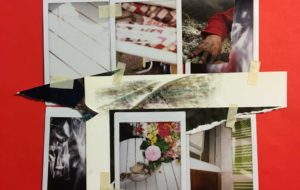
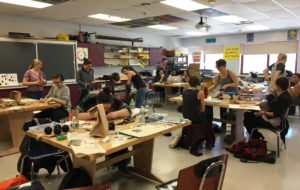
Art21’s senior education advisor, Joe Fusaro, shares how he makes meaningful connections between his art practice and being an arts educator.
Teaching with Contemporary Art
Making Important Choices
Teaching with Contemporary Art
Making Important Choices
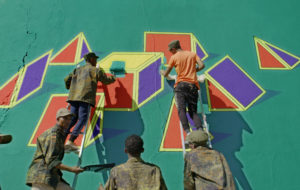
Educator Joe Fusaro illustrates how contemporary art and artists can have a local and global effect through the lens of works by Creative Growth Art Center, Olafur Elliason and Robin Rhode.
Teaching with Contemporary Art
Rust, Decay and Decomposition: Four Artists to Teach With
Teaching with Contemporary Art
Rust, Decay and Decomposition: Four Artists to Teach With
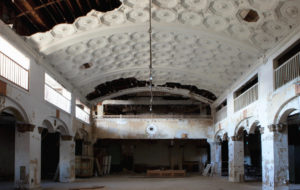
Art21 Senior Education Advisor Joe Fusaro shares four artists who use rust and decay to tell stories, illuminate histories, and prompt us to think about beauty in new ways.

Teaching with Contemporary Art
Teaching with Nick Cave’s Until, Until Conversations Emerge
Teaching with Contemporary Art
Teaching with Nick Cave’s Until, Until Conversations Emerge
Art21 Senior Education Advisor Joe Fusaro discusses how Nick Cave’s immersive installation “Until” can serve as a conversation starter for difficult subjects like racism and violence.
Teaching with Contemporary Art
Reflecting on the National Art Education Association’s Annual Conference
Teaching with Contemporary Art
Reflecting on the National Art Education Association’s Annual Conference
Art21 Senior Education Advisor and columnist Joe Fusaro summarizes the 2014 NAEA conference.
Teaching with Contemporary Art
What It Takes
Teaching with Contemporary Art
What It Takes
What does it take to become an artist? K-12 students respond.
Teaching with Contemporary Art
An Expanding Network
Teaching with Contemporary Art
An Expanding Network
Perhaps one of the most exciting things about our network of Art21 Educators so far has to do with those teachers who are building momentum and reaching out to other cohorts in order to collaborate. Over time, I can see this network of teachers not only influencing each others practice but also contributing to new national arts standards, helping others to understand the importance of contemporary art in the curriculum, and continuing to facilitate workshops at national and statewide conferences in order to spread the love.
Teaching with Contemporary Art
You Say You Want Evolution: Looking Backward and Forward with Portfolios
Teaching with Contemporary Art
You Say You Want Evolution: Looking Backward and Forward with Portfolios
Similar to in-progress critiques, portfolio reflections and evaluations do not have to arrive at the end of things. Utilized during the course, it allows for both looking back and looking forward.

Teaching with Contemporary Art
The Changing Shape of Teamwork
Teaching with Contemporary Art
The Changing Shape of Teamwork
Back in October, 2009 I wrote a post called Teamwork which focused on the fact that, as educators, we often have to work creatively with others in order to construct meaningful, age-appropriate and fun lessons. The best lessons and units of study are often the product of people working together, including educators, community members, parents, and of course students. When I look back just four years ago I realize that my experience with collaboration has changed and evolved into other forms.
Teaching with Contemporary Art
Well Beyond Everyday
Teaching with Contemporary Art
Well Beyond Everyday
If you are interested in how everyday materials can become bizarre and (sometimes) brilliant sculpture, there are three shows ready and waiting for you in Chelsea: Nayland Blake’s What Wont Wrong at Matthew Marks; B. Wurtz’s Recent Works at Metro Pictures; and Mark Dion’s two-floor delight titled Drawings, Prints, Multiples and Sculptures at Tanya Bonakdar.

Teaching with Contemporary Art
Art21 New York Close Up
Teaching with New York Close Up | Liz Magic Laser and David Brooks
Teaching with Contemporary Art
Art21 New York Close Up
Teaching with New York Close Up | Liz Magic Laser and David Brooks
Two recent New York Close Up films featuring artists Liz Magic Laser and David Brooks exemplify how the film series “can make strong interdisciplinary connections.”
Teaching with Contemporary Art
Teaching with El Anatsui
Teaching with Contemporary Art
Teaching with El Anatsui
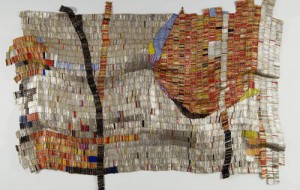
El Anastui, one of my favorite artists from season 6, is in some ways an educator’s dream. His sculptures and installations reference history, culture and memory while simultaneously exploring the possibilities of found materials and different processes for making art. And while Anatsui is best known for his stunning, draped metal sculptures, there is more to the work with than meets the eye… and that’s quite a bit to begin with.
Teaching with Contemporary Art
Art21 Educators: Success Stories
Teaching with Contemporary Art
Art21 Educators: Success Stories
Over the past four years there have been many success stories from a what-still-feels-like-new Art21 Educators program. And while the experiences within and beyond Art21 Educators vary wildly from teacher to teacher, some of the educators we have worked with- in a range of disciplines and not just art- have provided us with specific comments and reflective narratives that often make smiles touch the back of our heads.
Teaching with Contemporary Art
Messing with the Stuff
Teaching with Contemporary Art
Messing with the Stuff
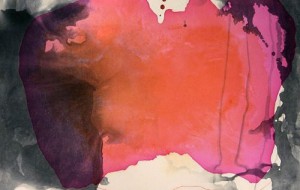
In order for students to feel comfortable expressing themselves with a particular medium, they often have to spend plenty of time messing with the stuff they are interested in shaping- be it car parts, plastics, plaster or paint- before they may be ready to create high quality works. A few artists I find myself recommending to students when it comes to specifically “messing” with paint and thinking like an abstract painter include Hans Hoffman, Helen Frankenthaler, Howard Hodgkin and Jessica Stockholder.

Teaching with Contemporary Art
Join Us for Year Five of Art21 Educators
Teaching with Contemporary Art
Join Us for Year Five of Art21 Educators
Are you a teacher interested in learning more about utilizing contemporary art in your classroom? Does spending a week in New York City this summer collaborating with other educators and …

Teaching with Contemporary Art
Creative Killing?
Teaching with Contemporary Art
Creative Killing?
While the NRA is quick to blame video games for violent behavior because they would much rather talk about something else besides banning assault weapons and ammunition (thank you, Governor Cuomo), I think that organizations like the International Game Developers Association could have a dramatic impact on the future of video games worldwide if the “creative” end of gaming wasn’t so consistently connected to killing people on a video screen.
Teaching with Contemporary Art
When Works of Literature Make The Leap
Teaching with Contemporary Art
When Works of Literature Make The Leap
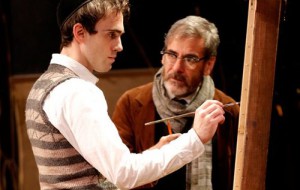
Contemporary artists and performers offer pathways into literature for the hard-to-inspire. Artists such as Glenn Ligon, Jenny Holzer, and even performances like the off-Broadway production of My Name is Asher Lev offer students ways to get inspired and involved with literature from different starting points.

Teaching with Contemporary Art
Fueled by the Classroom: Being an Artist and Educator
Teaching with Contemporary Art
Fueled by the Classroom: Being an Artist and Educator
Art21’s senior education advisor, Joe Fusaro, shares how he makes meaningful connections between his art practice and being an arts educator.
Teaching with Contemporary Art
Making Important Choices
Teaching with Contemporary Art
Making Important Choices
Educator Joe Fusaro illustrates how contemporary art and artists can have a local and global effect through the lens of works by Creative Growth Art Center, Olafur Elliason and Robin Rhode.
Teaching with Contemporary Art
Rust, Decay and Decomposition: Four Artists to Teach With
Teaching with Contemporary Art
Rust, Decay and Decomposition: Four Artists to Teach With
Art21 Senior Education Advisor Joe Fusaro shares four artists who use rust and decay to tell stories, illuminate histories, and prompt us to think about beauty in new ways.
Teaching with Contemporary Art
Teaching with Nick Cave’s Until, Until Conversations Emerge
Teaching with Contemporary Art
Teaching with Nick Cave’s Until, Until Conversations Emerge
Art21 Senior Education Advisor Joe Fusaro discusses how Nick Cave’s immersive installation “Until” can serve as a conversation starter for difficult subjects like racism and violence.
Teaching with Contemporary Art
Reflecting on the National Art Education Association’s Annual Conference
Teaching with Contemporary Art
Reflecting on the National Art Education Association’s Annual Conference
Art21 Senior Education Advisor and columnist Joe Fusaro summarizes the 2014 NAEA conference.
Teaching with Contemporary Art
What It Takes
Teaching with Contemporary Art
What It Takes
What does it take to become an artist? K-12 students respond.

Teaching with Contemporary Art
An Expanding Network
Teaching with Contemporary Art
An Expanding Network
Perhaps one of the most exciting things about our network of Art21 Educators so far has to do with those teachers who are building momentum and reaching out to other cohorts in order to collaborate. Over time, I can see this network of teachers not only influencing each others practice but also contributing to new national arts standards, helping others to understand the importance of contemporary art in the curriculum, and continuing to facilitate workshops at national and statewide conferences in order to spread the love.
Teaching with Contemporary Art
You Say You Want Evolution: Looking Backward and Forward with Portfolios
Teaching with Contemporary Art
You Say You Want Evolution: Looking Backward and Forward with Portfolios
Similar to in-progress critiques, portfolio reflections and evaluations do not have to arrive at the end of things. Utilized during the course, it allows for both looking back and looking forward.

Teaching with Contemporary Art
The Changing Shape of Teamwork
Teaching with Contemporary Art
The Changing Shape of Teamwork
Back in October, 2009 I wrote a post called Teamwork which focused on the fact that, as educators, we often have to work creatively with others in order to construct meaningful, age-appropriate and fun lessons. The best lessons and units of study are often the product of people working together, including educators, community members, parents, and of course students. When I look back just four years ago I realize that my experience with collaboration has changed and evolved into other forms.



Teaching with Contemporary Art
Well Beyond Everyday
Teaching with Contemporary Art
Well Beyond Everyday
If you are interested in how everyday materials can become bizarre and (sometimes) brilliant sculpture, there are three shows ready and waiting for you in Chelsea: Nayland Blake’s What Wont Wrong at Matthew Marks; B. Wurtz’s Recent Works at Metro Pictures; and Mark Dion’s two-floor delight titled Drawings, Prints, Multiples and Sculptures at Tanya Bonakdar.
Teaching with Contemporary Art
Art21 New York Close Up
Teaching with New York Close Up | Liz Magic Laser and David Brooks
Teaching with Contemporary Art
Art21 New York Close Up
Teaching with New York Close Up | Liz Magic Laser and David Brooks
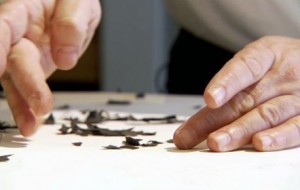
Two recent New York Close Up films featuring artists Liz Magic Laser and David Brooks exemplify how the film series “can make strong interdisciplinary connections.”

Teaching with Contemporary Art
Teaching with El Anatsui
Teaching with Contemporary Art
Teaching with El Anatsui
El Anastui, one of my favorite artists from season 6, is in some ways an educator’s dream. His sculptures and installations reference history, culture and memory while simultaneously exploring the possibilities of found materials and different processes for making art. And while Anatsui is best known for his stunning, draped metal sculptures, there is more to the work with than meets the eye… and that’s quite a bit to begin with.
Teaching with Contemporary Art
Art21 Educators: Success Stories
Teaching with Contemporary Art
Art21 Educators: Success Stories
Over the past four years there have been many success stories from a what-still-feels-like-new Art21 Educators program. And while the experiences within and beyond Art21 Educators vary wildly from teacher to teacher, some of the educators we have worked with- in a range of disciplines and not just art- have provided us with specific comments and reflective narratives that often make smiles touch the back of our heads.
Teaching with Contemporary Art
Messing with the Stuff
Teaching with Contemporary Art
Messing with the Stuff
In order for students to feel comfortable expressing themselves with a particular medium, they often have to spend plenty of time messing with the stuff they are interested in shaping- be it car parts, plastics, plaster or paint- before they may be ready to create high quality works. A few artists I find myself recommending to students when it comes to specifically “messing” with paint and thinking like an abstract painter include Hans Hoffman, Helen Frankenthaler, Howard Hodgkin and Jessica Stockholder.
Teaching with Contemporary Art
Join Us for Year Five of Art21 Educators
Teaching with Contemporary Art
Join Us for Year Five of Art21 Educators
Are you a teacher interested in learning more about utilizing contemporary art in your classroom? Does spending a week in New York City this summer collaborating with other educators and …
Teaching with Contemporary Art
Creative Killing?
Teaching with Contemporary Art
Creative Killing?
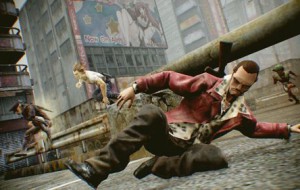
While the NRA is quick to blame video games for violent behavior because they would much rather talk about something else besides banning assault weapons and ammunition (thank you, Governor Cuomo), I think that organizations like the International Game Developers Association could have a dramatic impact on the future of video games worldwide if the “creative” end of gaming wasn’t so consistently connected to killing people on a video screen.
Teaching with Contemporary Art
When Works of Literature Make The Leap
Teaching with Contemporary Art
When Works of Literature Make The Leap
Contemporary artists and performers offer pathways into literature for the hard-to-inspire. Artists such as Glenn Ligon, Jenny Holzer, and even performances like the off-Broadway production of My Name is Asher Lev offer students ways to get inspired and involved with literature from different starting points.
 Older
Older