Interview: Dan Cameron on Prospect.2 New Orleans

July 16th, 2009

Before I say that Prospect.1 New Orleans was the most exciting art event to take place in the U.S. in the last decade, I should probably provide the disclaimer that I was responsible for its docent training (on a volunteer basis) as well for its archival photography (on a not-so-volunteer basis). But you don’t have to take my word for it: my Art21 blogging colleague Hrag Vartanian did a great job of chronicling the biennial on these very pages. It was truly a landmark event, and it’s a safe bet to say that there are still a lot of us here in New Orleans who are still catching our breath from the whole magnificently chaotic experience.

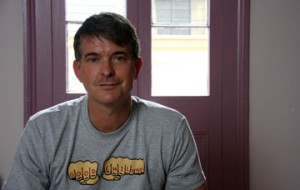
Prospect New Orleans curator Dan Cameron, however, doesn’t have the luxury of catching his breath like the rest of us. It’s the nature of biennials that plans for the next one begin the moment the previous one is finished, and Cameron is already immersed in preparations for the opening of Prospect.2 in the fall of 2010. I sat down with him this week at his home in the Tremé neighborhood of New Orleans to find out what’s in store.

dan_cameron_interview

John d’Addario: Let’s start by talking about some the lessons you learned from Prospect.1 that will change the way you’ll be doing things for Prospect.2.

Dan Cameron: Well, it’s not so much a case of what lessons were learned as it will be tweaking the model a little bit and improving on things that did work.

One of the top things I want to see happen is having the biennial more neighborhood-identified within the greater context of New Orleans. Over the course of Prospect.1, I noticed that some people found the whole thing very daunting given the scale of what we were doing, especially people from out of town who maybe were just encountering New Orleans for the first time, or who didn’t know that there’s a lot more to the city than the French Quarter. And a lot of those people might not have been familiar with what the different neighborhoods in New Orleans were all about.

This city is made up of incredibly diverse, vibrant neighborhoods and I want Prospect.2 to become more closely associated with places like Mid-City, Tremé, the Warehouse District … the list goes on. So we’re hoping that by branding the different neighborhoods as exhibition venues, it will make the whole experience more manageable for the people who come to see it.

Another thing is that Prospect.2 is going to be more focused on music than Prospect.1 was. On one level, the Prospect biennial is an art festival, and I always wanted to differentiate it from other festival-type events like Jazz Fest. But instead of using the festival concept as a restraining idiom, I want to focus on the concept of an art festival as grab bag: the biennial as centerpiece of a wider festival of the arts, which will include music as well.

So we’re planning to have some kind of music event somewhere in the city every night of the exhibition—we’ve already been discussing programming in terms of “65 Nights,” which is how long the biennial will run. It will be similar to the type of programming that goes on during an event like a World’s Fair, or a Documenta, except that our focus would be mostly on music. We’re thinking about a possible collaboration with the Louisiana Philharmonic Orchestra, and about inaugurating a visual and performing arts community space in the Lower Ninth Ward.

You need to a flashplayer enabled browser to view this YouTube video

Of course we had a strong performing arts presence in Prospect.1 too … there was Kalup Linzy’s “Members Only” cabaret at Sweet Lorraine’s, and Navin Rawanchaikul and Tyler Russell’s jazz funeral for Narvin Kimball. But there are so many amazing performance spaces here in New Orleans that I’d like to utilize over the course of the exhibition, like the mortuary on North Rampart Street that the New Orleans Jazz & Heritage Foundation has taken over and Le Chat Noir, a cabaret on St. Charles Avenue. So there won’t be a problem finding enough material to have every night covered. It’s hard to predict how it’s exactly going to pan out at this point, but that’s what I want to see happen.

Jd’A: So what other changes can we expect to see in Prospect.2?

DC: There’s a somewhat higher number of New Orleans and Louisiana-based artists proportionately, though there’s also fewer artists overall: about 60 this time around, compared to over 80 last time.

We’re also going to charge this time, which hopefully won’t surprise too many people. Right now we’re discussing how best to do that, though it will probably involve a tiered system of day passes, weekend passes, and exhibition-long season passes. We’re fortunate that pretty much every institution that was involved in Prospect.1 wants to be on board for Prospect.2 as well, so that will give us the opportunity to do more clustering of venues throughout the city as we add new locations to make it easier for visitors to see everything.

A big challenge is how to expand the biennial’s presence in the French Quarter, which is of course the part of town that most visitors are familiar with – although we want to convey the idea that it’s a genuine neighborhood, not just a strip of bars on Bourbon Street. A lot of people told me how much they liked the “treasure hunt” aspect of Prospect.1, going all over the city to seek out some of the more out-of-the-way venues. That would work really well in a neighborhood like the French Quarter, and would give us the opportunity to draw attention to some great cultural landmarks a lot of people don’t get to see.

Seeing people in the New Orleans art community take advantage of the occasion to mount related exhibitions was one of the most exciting things about Prospect.1, and I want to see those satellite programs become even larger than the biennial itself. I want everyone – visitors and residents alike – to be able to see art all over the place, all the time.

I also expect to see at least twice as many visitors as we did for Prospect.1. We had 89,000 visitors last time, so I don’t think it’s unreasonable to see that figure double next year.

Continue reading »

The Studio at Colton: A Look Back and Ahead

July 14th, 2009

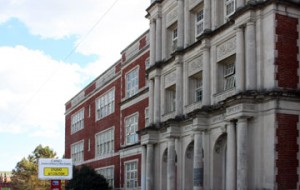
coltonschool_ext1

If you had to point to one institution that best illustrated the progress of the arts community in post-Katrina New Orleans—not to mention the progress of the city in general—you wouldn’t have to look any further than the Colton Middle School on St. Claude Avenue.

Named for an evidently well-regarded member of the New Orleans Board of Education in the early years of the 20th century, the Charles J. Colton School opened in 1929 and operated for more than seventy-five years as a middle school serving a community which included the Bywater, Faubourg Marigny, Tremé, and Lower Ninth Ward neighborhoods. Although the school was one of a handful to reopen shortly after Hurricane Katrina in 2005, a dispersed population and resulting drop in attendance led to its closing after the 2007-08 school year.

Shortly after its closing as a middle school, the city’s Recovery School District leased the building to the Creative Alliance of New Orleans (CANO), a non-profit arts-focused economic development organization spearheaded by “cultural entrepreneurs” Jeanne Nathan and Robert Tannen. The couple organized the Studio at Colton partly as a response to concerns voiced by artist Paul Chan, who noted while visiting New Orleans for his landmark production of Waiting for Godot during Fall 2007 that there was not enough affordable studio space in the city.

colton_map

In short order, and with a shoestring budget supplemented by donated janitorial services and volunteer work, CANO transformed the vacant 100,000 square foot building into exhibition, rehearsal, and studio space for more than 100 artists and arts organizations including painters, photographers, theater and dance companies, costume designers, sculptors, landscape architects and video production outfits. In return for use of the facilities, many resident artists and groups at Colton conducted free or low-cost classes and workshops for New Orleans student groups and adults. (More than 60 such classes and workshops were offered during the spring of this year.)

p1_cai_guo_qiang_0108_hi

Rechristened the Studio at Colton, the building received a high profile boost when it was selected as one of the venues in last year’s Prospect.1 biennial exhibition. Art:21 Season 3 artist Cai Guo-Qiang’s Black Fireworks piece (above) was installed to magnificent effect in the Colton’s main auditorium, and Prospect.1 artists José Damasceno (below, left) and Tatsuo Miyajima (below, right) created room-scale installations in former classrooms elsewhere in the building.

jose_damascenotatsuo_miyajima

Continue reading »

Banksy New Orleans: Then and Now

July 13th, 2009

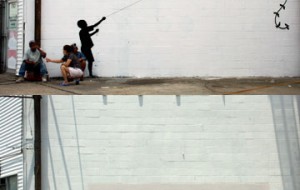
banksy_kite_thennow

It’s been nearly a year since the U.K.-based street artist and provocateur known as Banksy completed over a dozen public art pieces in various locations around New Orleans, including the Faubourg Marigny, Mid-City, Tremé, and the Lower 9th Ward.

banksy_soldiers_thennow

The appearance of the pieces coincided with the third anniversary of Hurricane Katrina, and many of the images commented directly or obliquely on issues like government (non-)reponse to the crisis, racial and class divisions in the city of New Orleans, and the persistent efforts of local anti-graffiti vigilante Fred Radtke, aka the “Grey Ghost.”

banksy_bush_thennow

While the approach of Hurricane Gustav over Labor Day weekend and subsequent evacuation of the city prolonged the lifespan of several of these works for a few extra days, by the middle of September 2008, most of them had been painted over by parties not sympathetic to Banksy’s singular worldview. In one case, a Banksy image was physically sawed off the front of the shotgun house upon which it was painted. (Banksy’s pieces sometimes fetch considerable sums on the secondary market, although the artist has stated that any piece thus removed from its original context and sold without his consent is no longer “an original Banksy.”)

Continue reading »