The director of the Knight Foundation’s Technology Innovation program, Chris Barr, shares the details of a new collaborative initiative between its arts and technology teams.
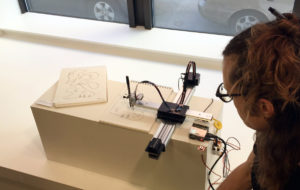
Artist Shantell Martin and PhD Candidate Sarah Schwettmann built an algorithm that could complete Martin’s drawings, addressing the space between an artist’s truth and a machine’s simulation.
Nettrice Gaskins examines the ongoing crisis of representation in cultural institutions, ultimately arriving at what she sees as a “polyculturalist” future for art, in which it moves away from dialectical identity politics to a sphere of fluid identities.
Scholar Nettrice Gaskins explores the Black Speculative Arts Movement where artists use futurism and science fiction to “re-see” mythologies and histories.
New and recent goings-on featuring Mark Bradford, Paul Pfeiffer, Mary Reid Kelley, Trenton Doyle Hancock, Ann Hamilton, and other ART21-featured artists, all in this week’s roundup.
ART21-related goings on featuring Janine Antoni, Mary Reid Kelley, Jessica Stockholder, Cao Fei, and others as they present work in exhibitions around the world.
New and recent work on view by Cai Guo-Qiang, Kara Walker, Kerry James Marshall, and Jacolby Satterwhite, as well as news featuring other ART21-featured artists, all in this week’s roundup.
New and recent work on view by Mel Chin, John Baldessari, and Ai Weiwei, as well as news featuring Pierre Huyghe, Carrie Mae Weems, and other ART21-featured artists, all in this week’s roundup.
New and recent work on view by Mark Bradford, Mariah Robertson, Alfredo Jaar, and other ART21-featured artists, featured in this week’s roundup.
New and recent work on view by David Altmejd, Maya Lin, Judy Pfaff, and additional ART21-featured artists, included in this week’s roundup.
Lynda Benglis in the UK, Gabriel Orozco in Tokyo, Trenton Doyle Hancock in Indianapolis, and more work by ART21-featured artists on view throughout the world in this week’s roundup.
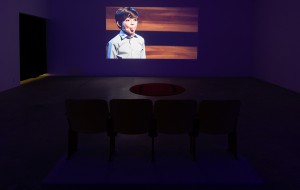
The U.S. State Department’s Art in Embassies program selects a new class of Medal of Arts recipients, Liz Magic Laser creates a fictional TED talk, and work by ART21-featured artists included in exhibitions throughout the world in this week’s roundup.
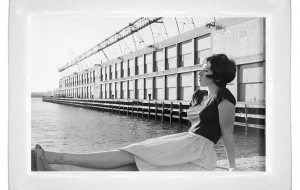
Cindy Sherman has contributed a photograph from her Untitled Film Stills series to adorn a limited-edition porcelain tray designed exclusively for the Sundance Film Festival. Despite the fame of Sherman’s Untitled Film Stills, this …
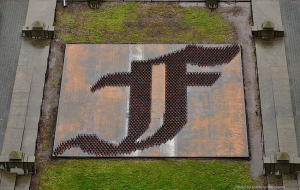
Ai Weiwei’s commissioned project for the Vancouver Biennale (British Columbia) was recently unveiled in Harbour Green Park. F Grass is composed of 1,328 tufts of iron that form the letter F, which can only …
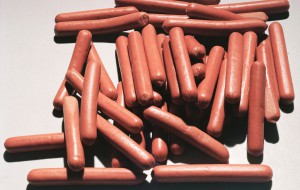
Lucas Blalock photographs hot dogs, Jenny Holzer exhibits her Chinese-language LEDs, and more in this roundup of ART21-featured artists.
Barry McGee lends his work to Beats by Dre, Marina Abramovic shoots a new film, Shazhia Sikander contributes to The New York Times, and more in this week’s roundup of ART21-featured artists.
New aerial and landscape photographs by Florian Maier-Aichen are on view in his fifth solo exhibition at Blum & Poe (Los Angeles, CA). “Maier-Aichen returns to some of the locations he visited upon …
Daniel Gordon exhibits new still lifes, Kara Walker deconstructs her sugar sphinx, and more in this week’s roundup.
Jacolby Satterwhite dances in the cosmos, Carrie Mae Weems goes solo in the UK, Paul McCarthy brings chocolate to France, and more in this week’s roundup.
Trevor Paglen uncovers government code names, El Anatsui manipulates newspaper printing plates, David Altmejd has a retrospective in France, and more in this week’s roundup.
Judy Pfaff has three shows in New York, LaToya Ruby Frazier talks about her new book, Carrie Mae Weems heads to Carnegie Hall, and more in this week’s roundup of ART21-featured artists.
Abraham Cruzvillegas discusses architectural influences, David Brooks and Mark Dion argue species virtuosity, and more in this week’s roundup.
Matthew Ritchie investigates cinematic landscapes, Richard Tuttle exhibits textiles in London, Marina Abramović returns to New York, and more in this week’s roundup.
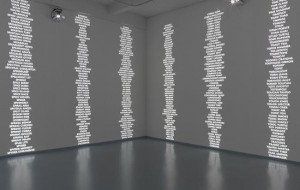
Trevor Paglen and Jenny Holzer investigate government operations, Kimsooja installs a needle upstate, Thomas Hirschhorn responds to the question “Does it function?,” and more in this week’s roundup.
Do Ho Suh installs a fishing net in Austin, Raymond Pettibon leaves his mark on New York City streetwear, An-My Lê exhibits a magnum opus in the UK, and more in this roundup of ART21-featured artists.
Cao Fei finds inspiration in film noir, Mary Reid Kelley continues to explore the Minotaur, Do-Ho Suh to sign books in Austin, and more in this week’s roundup of ART21-featured artists.
Hiroshi Sugimoto’s iconic seascapes hang in Southampton, Matthew Ritchie shows new paintings in New York, a Joan Jonas video goes to Singapore, and more.
Mel Chin questions the integrity of information, Liz Magic Laser collaborates with her mother, Marina Abramovic stages a collective performance, and more in this week’s roundup of ART21-featured artists.
Carrie Mae Weems joins ART21 at the Brooklyn Academy of Music, Jeff Koons drops by The New School, Allan McCollum prepares for a solo show, and more in this week’s roundup.
Cai Guo-Qiang mounts iPads on the backs of tortoises, Allora & Calzadilla mix music with natural history, Kiki Smith exhibits a new bronze fountain, and more.
Cai Guo-Qiang sends art up the river in Shanghai, Doris Salcedo, Janine Antoni, and Cindy Sherman receive awards, and more in this week’s roundup.
Tabaimo unveils new work in Australia, Jeff Koons takes over H&M in New York, Diana Al-Hadid is coming to Ohio, and more in this week’s roundup.
Marina Abramović makes a film with Adidas, Rashid Johnson is magical in Greece, Allora & Calzadilla collect sandpaper in Detroit, and more.
Paul Pfeiffer remixes World Cup footage, Jenny Holzer projects Aboriginal poetry, Ai Weiwei collaborates with a Navajo artist, and more.
Lucas Blalock explores contemporary culture, Louise Bourgeois has a show in the UK, Mark Bradford talks about Caillebotte, and more in this week’s roundup.
Contemporary black artists often refute conventional notions or images of blackness and replace them with altered realities.







 Older
Older