Week in Review | 02.09.13

February 9th, 2013

Here’s what you may have missed this week:

Screen shot 2013-02-08 at 7.00.46 PMScreen shot 2013-02-08 at 7.09.41 PMScreen shot 2013-02-08 at 7.03.58 PM
Weekly Roundup

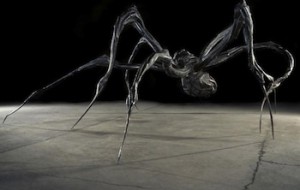
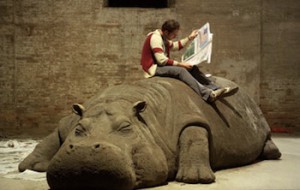
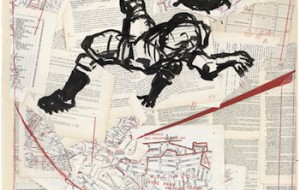
As usual, Nettrice Gaskins started our week with Art21 artist news, including Diana Al-Hadid’s upcoming exhibition in North Carolina; Cai Guo-Qiang’s traveling solo in Brazil; and a new film starring Marina Abramović.

Blogger-in-Residence | Traveling with Peregrine Honig’s American-Argentinian Twin Boys
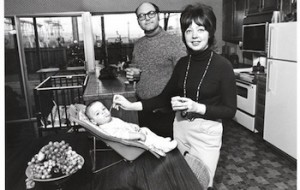
For Alicia Eler’s series on artist residencies, she profiled Peregrine Honig who participated in the Proyecto Áce Residency in Buenos Aires. Eler connects Honig’s images of blonde-haired, blue-eyed boys to post-war Nazis in Argentina and celebrity youth in the United States.

Transmission | An Interview with Lori Felker: amplified sprocket holes, light passing through celluloid, bumping into dirt and tape and emulsion
Amelia Ishmael interviewed Chicago–based filmmaker Lori Felker after her performance Light Makes Music. “I’ve seen the performance three times since,” writes Ishmael. “Each time it is different. Each time it is amazing.”

Art 2.1 | New Frontier at Sundance 2013: The Pixelated Pavilion
Back from the Sundance Film Festival, Nettrice Gaskins began a four-part blog series about a new “social and creative space” at the Festival that showcased, among other things, multimedia performances and transmedia experiences.

Teaching with Contemporary Art | Lingering
Joe Fusaro wrote about the value of print when he wants his students to spend more time investigating works of art. ”Teaching with contemporary art,” he says, “involves realizing that not everything worth teaching with is available through Google.”

Art 2.1 | New Frontier at Sundance 2013: 4D Art and Augmented Real
For her second post about New Frontier, Nettrice Gaskins spoke with the ”datamoshing, glitch-creating, meta-rapping” artist Yung Jake whose “mobile augmented reality rap music video” is designed to “pop out of posters and magazines.”

On View Now | Cyprien Gaillard: Video in an Age of Doubt
Max Weintraub favorably reviewed Cyprien Gaillard’s solo show at MoMA PS1. “As this exhibition makes clear,” writes Weintraub, “[Gaillard] does not harbor wistful longings for some lost authentic experience but rather an intense recognition of the complex bonds and muted legacy of our cultural inheritance.”

Blogger-in-Residence | Christopher Meerdo Experiences the Icelandic Landscape Through the Body of a Decomposing Sperm Whale
Alicia Eler delivered another post, this time profiling Chicago–based artist Christopher Meerdo, who spent three months at a residency in Iceland. “Going abroad after completing my MFA was a really good move,” he says. “Like hitting some kind of reset button on my thought processes and creative outlook.”

Exclusive | El Anatsui: “Broken Bridge II”
We posted our newest Exclusive, featuring El Anatsui and his installation on the High Line in New York City. In an accompanying blog post, Art21′s Associate Producer, Ian Forster, explains how cameras are “an integral part” of Anatsui’s creative process.

Next Week on the Art21 Blog
Jacquelyn Gleisner interviews Angela Dufresne; Danielle McCullough looks at what’s happening in Los Angeles; Alicia Eler continues her series on artist residencies; and we release the latest New York Close Up episode.

Week in Review | 02.02.13

February 2nd, 2013

It was another week of awesomeness on the Art21 Blog:

Screen shot

Weekly Roundup
Nettrice Gaskins rounded up the latest in Art21 artist news. Jump over to her post to read about Rashid Johnson in Berlin, Robert Adams in Madrid, William Kentridge in Mumbai, Hiroshi Sugimoto in Munich, Alfredo Jaar in Toronto, and much more.

Flash Points | Careful Not to Touch
“If you could touch one artwork, in any museum, which would it be? And what would you be seeking?” Tim Svenonius, Producer of Interpretive Media at SFMOMA, closed our Flash Points series on storytelling with anecdotes about one’s desire to touch certain objects.

Inside the Artist’s Studio | Adelheid Mers, Part 1 and Part 2
Georgia Kotretsos shared a two-part interview with Chicago–based artist Adelheid Mers, who “creates maps and diagrams as poetic and analytic records of art institutions, exhibitions, public lectures, studio visits, and texts.”

Eleanor Antin Takes Over @Art21 (Again!) | #AntinCWS
As part of our 100 Artists celebration, Eleanor Antin took over our Twitter account for the second time, “reading” an excerpt from her new book, Conversations with Stalin. The Art21 office cats took a liking to Antin and joined the event–check out the pics on Instagram.

Blogger-in-Residence | Brain on the Beach: Seven Essential Sources for Art and Cognitive Science
Signing off on his January blogging residency, Michael Neault provided a list of his favorite articles, books, and podcasts on the subject of art and cognitive science.

Teaching with Contemporary Art | Join Us for Year Five of Art21 Educators
Joe Fusaro invited teachers to apply for the fifth installment of our popular Art21 Educators program. “Art21 Educators is definitely for you if you are interested in making sense of the fascinating, mesmerizing, and sometimes bizarre world of contemporary art with your students.”

Looking at Los Angeles | What Have Bangs Got to Do with It?
All the talk about Michelle Obama’s new haircut prompted Catherine Wagley to take stock of bangs in art while walking through Art Los Angeles Contemporary. Wagley quotes Noreen Malone of the New Republic: “Women are always either cutting their bangs or growing them out and it really does have something to do with identity.”

Ink | A Community of Printmakers at Manhattan Graphics Center
Guest writer Nicole Simpson applauded Manhattan Graphics Center, an artist-run space established in 1986: “The artists who gather here to learn and practice printmaking come from diverse backgrounds and have distinct voices, and together they embody the vitality of the city that this printshop calls home.”

Blogger-in-Residence | How Residencies Change an Artist’s Practice
Our February blogger-in-residence, Alicia Eler, began her series on how residencies change and artist’s practice. “Few artists make a living off of their work alone, and even so it’s difficult to constantly feel inspired and motivated to make work in your hometown and studio,” she writes. Learn more about Alicia in our welcome post.

NYCU | Mika Rottenberg and the Amazing Invention Factory
In our latest New York Close Up film, artist Mika Rottenberg discusses her videos in which women work in factory-like settings to create handmade objects. “I wanted to work with people who already advertise themselves and rent out their bodies,” she says. “They’re their own managers. They own the means of production.”

Next Week on the Art21 Blog
Alicia Eler profiles two artists, focusing on their residencies abroad; Amelia Ishmael interviews filmmaker and performer Lori Felker; Nettrice Gaskins reports on the Sundance Film Festival; and on the occasion of El Anatsui’s new exhibition at the Brooklyn Museum, we release an Exclusive video featuring his High Line installation.

New Blogger-in-Residence | Alicia Eler, Art Critic and Curator, Chicago, IL

January 31st, 2013
Alicia Eler.

Alicia Eler.

Many thanks to our January blogger-in-residence, Michael Neault, who helped us kick off the new year with fresh perspectives on art and its relationship to cognitive science. In his final post, Neault provides an index of his series and a list of other articles, books, websites, and podcasts on the topic.

February is upon us and we’re delighted to have Alicia Eler as our next blogger-in-residence. For the next 21 days, Alicia will profile artists from across the United States and Canada. She takes as her focus one excellent question: How does a residency change an artist’s creative practice? Check back tomorrow for her first post.

Alicia is an art critic and curator whose projects focus on American pop and consumer culture, social networked identities, and the history of queer aesthetics. Her recent reviews examine our modern perception of the natural world. She is currently the Chicago Correspondent for Hyperallergic and Artforum.com; Writer/Editor for the OtherPeoplesPixels Blog; Curator for ACRE Projects; and Visual Arts Researcher for the Chicago Artists’ Resource. Her writing has published in Art Papers, RAW Vision Magazine, Chicago Tribune, Chicago Sun-Times, Flavorpill, ReadWriteWeb, and Time Out Chicago.

You can browse Alicia’s portfolio on her website, www.aliciaeler.com. While you’re over there, notice her swanky logo in which an owl perches on the coiled tail of her first initial. “My family informed me that my first word was owl,” Alicia explains. “The word suits me. Owls are watchers, guardians and quiet flyers. We perch on branches and pay attention to the goings on of the forest. We are heavy hunters who consume quickly and digest later.” That reminds me—follow her on Twitter @aliciaeler.

Welcome, Alicia!

Week in Review | 01.26.13

January 26th, 2013

Catch up on the Art21 Blog before a new week begins. Here’s what you may have missed:

Screen Shot 2013-01-25 at 11.09.41 AM

Weekly Roundup
Nettrice Gaskins brought us up to speed on Art21-featured artists, including Ai Weiwei, Trenton Doyle Hancock, Shana Moulton, Barry McGee, and Robert Ryman. Follow the link to get the deets on these artists and others.

Word is a Virus | Artists’ Zines: Darin Klein and Friends’ Box of Books
Resident book lover Carol Cheh leafed through Darin Klein and Friends’ Box of Books project–”a simple idea that produces extraordinary results.” Klein’s Box of Books Vol. VI will be released next week at Printed Matter’s first ever Los Angeles Art Book Fair.

Center Field, Art in the Middle | Mashed Up and Shredded into Space: An Interview with Candida Alvarez
Caroline Picard posed four questions to Chicago–based artist Candida Alvarez whose “world of vibrant color and lush paint” is now on view at Hyde Park Art Center. Their conversation is all kinds of good.

Open Enrollment | Life Lessons from a Soon-to-Be Lifelong Arts Manager
With commencement on the horizon, Sarah Merianos shared the most salient points of her master’s program, ranging from the necessity of basic accounting skills to the benefits of mindfulness meditation.

The Art21 Translation Project: Bringing the Words of Contemporary Artists to Global Audiences
Art21′s Director of Digital Media and Strategy, Jonathan Munar, introduced our exciting translation project and invited “all members of the Art21 Blog community to join the Art21 Translation team.” El Anatsui in Spanish, Indonesian, Italian, Portuguese, Turkish, Romanian, Hebrew, Greek, and then some? Yes, please.

Teaching with Contemporary Art | Questions, Questions, Questions
Teachers, are you trying to develop something new and interesting for students? Joe Fusaro says, “If you are seeking a mountain of good questions and ideas to give you a boost in the classroom, Art21 educator guides are a great place to start.”

Blogger-in-Residence | Aslant a Brook
Our most popular and debated blog post this week was written by current blogger-in-residence Michael Neault. He addressed a recent study by UK–based scientists who wanted to understand the difference between viewing works of art in person vs. digitally.

Praxis Makes Perfect | The World is Not Flat
Taking Aki Sasamoto’s performance art as a starting point, Erin Sweeny wrote eloquently about the constant state of flux for young artists and the “emotional gravity wrapped up in movement.”

Access 100 Artists | Get Involved!
Art21′s Director of Education, Rosanna Flouty, encouraged readers to throw an Art21 screening party. You could receive all of our films totally free of charge!

Exclusive | Shahzia Sikander: “The Last Post”
Art21′s Associate Producer, Ian Forster, shed some light on our latest Exclusive video in which Shahzia Sikander talks about her animation “The Last Post” and the process of setting her paintings into motion.

Next Week on the Art21 Blog
Print specialist Nicole Simpson joins us as a guest blogger for Ink; Ali Fitzgerald reports from Berlin; Michael Neault wraps up his blogging residency; and Eleanor Antin takes over our Twitter account for the second time.

Week in Review | 01.19.13

January 19th, 2013

Wondering what you missed on the Art21 Blog this week? Here’s the rundown:

2Screen Shot 2013-01-18 at 3.44.45 PM

Weekly Roundup
Nettrice Gaskins listed the latest goings-on with Art21 artists, including a mobile piece by John Baldessari in Los Angeles; works by Yinka Shonibare MBE and Carrie Mae Weems in West Palm Beach; and, in Canada, a sculpture by David Altmejd that is, according to him, “too structurally and spatially complex to be grasped all at once.”

New Kids on the Block | Nyssa Frank of The Living Gallery
Jacquelyn Gleisner Google chatted with Nyssa Frank, founder of an alternative art space and community outreach venue in Brooklyn. Frank explains her motivation: “I had wanted to open more of an art collective, a community center, where artists don’t compete but support and celebrate each other.”

Alchemy of Inspiration | Looking Ahead to 1993…
Jessica Lott whet the art lover’s appetite with a sampling of upcoming exhibitions in New York City. Included is the Brooklyn Museum’s presentation of works by New York Close Up artist LaToya Ruby Frazier. For Lott, “Frazier’s direct and arresting portraits have a way of lodging themselves in the consciousness.”

No Preservatives | Happy (Belated) Birthday, Tony Smith!
Richard McCoy encouraged readers to get involved with an ambitious initiative to document, by way of Wikipedia, every outdoor sculpture by Tony Smith. Your reward for helping out? A smokin’ hot Tony Smith t-shirt!

Open Enrollment | The Artist’s Voice
Jenn Pascoe pondered the process of writing about one’s own work: “The artist’s statement is a tricky thing to write. In fact, it is almost as tricky to write as it is to define.”

Teaching with Contemporary Art | Creative Killing?
In response to video games that simulate the act of shooting people, Art21′s Joe Fusaro asked, “what exactly is creative about killing?”

Revolution 2.1 | The Year of Accountability: 2012 in 10 Music Videos
Safa Samiezade’-Yazd looked at a year of revolution through the lens of music videos. If these ten picks are any indication, she writes, “the spirit of the Arab uprisings is loud and clear in its quest to reclaim political and national identity…”

Blogger-in-Residence | The Teetering of the Diagonal Line
Michael Neault shared the third post in his art and brain series, this time drawing comparisons between Nobel Peace Prize winners Hubel & Wiesel and Russian painter and theoretician Kazimir Malevich.

New York Close Up | Tommy Hartung Is Off and Running
“In modern society, running is kinda like art. There’s not an immediate, practical function to it. What am I chasing?” Artist Tommy Hartung gets his fitness on in our latest New York Close Up video. Go, Tommy! Go!

Next week on the Art21 Blog
On Monday, we’re taking the day off in honor of Dr. Martin Luther King, Jr. When we come back, Michael Neault continues his neuroaesthetics series; Art21′s Director of Education, Rosanna Flouty, shares the history of our Access program; Catherine Wagley tells us what’s happening in Los Angeles; and Georgia Kotretsos reports from an artist’s studio.

Week in Review | 01.12.13

January 12th, 2013

Here’s a recap of blog posts you may have missed this week:

Screen Shot 2013-01-11 at 5.51.25 PM

Screen Shot 2013-01-11 at 5.51.25 PM copy

Weekly Roundup
Nettrice Gaskins told us where to check out Art21 artists Gabriel Orozco (Season 2), Fred Wilson (Season 3), Alfredo Jaar (Season 4), and Jeff Koons (Season 5).

Blogger-in-Residence | Tracking the Gaze
Continuing his fascinating series on neuroaesthetics, blogger-in-residence Michael Neault wrote about the phenomenon of eye movement; and the Russian psychologist Alfred Yarbus who invented an apparatus to map human vision. Neault summarizes Yarbus’s findings: “Eye tracking revealed that the eyes are rarely stationary–they jump around from point to point, like a water strider on the surface of a pond.”

Open Enrollment | Resolution Time…Once Again
MFA student Katherine Pulido shared her three resolutions for 2013, and managed to slip in a recipe for Butterfinger candy bars. In thinking back on the time she spent making these crispy, chocolate-covered sweets, Pulido was moved to make her first pledge of the new year: stop procrastinating and get back in the studio.

Teaching with Contemporary Art | When Works of Literature Make The Leap
Art21′s Joe Fusaro explained how contemporary artists like Jenny Holzer (Season 4) and Glenn Ligon (Season 6) and “even performances like the off-Broadway production of My Name is Asher Lev” can inspire students to get involved with literature.

Praxis Makes Perfect | No Rest for the Teaching Artist
Antonius Wiriadjaja wrote about his experience assisting two teaching artists–Marina Zurkow and Claude Wampler–during the academic winter break. Both artists are showing work in New York’s Chelsea gallery district.

Looking at Los Angeles | Heather Rasmussen: Cataclysmic Collections
Reporting from the City of Angels, columnist Danielle McCullough considered catastrophe in the work of sculptor and photographer Heather Rasmussen. That this Los Angeles–born artist is obsessed with portrayals of disaster on film, McCullough finds fitting given that in movies “the unwieldy region” of the artist’s birth “has blown up, slid into the ocean, [and] had its freeways rumpled by earthquakes…”

Gimme Shelter | Toward a Possible Body: An Interview with Emily Roysdon
Marissa Perel chatted with interdisciplinary artist Emily Roydson about her recent performance at the Tate Modern, and her participation in the Museum of Modern Art’s first Annual Performance Symposium. Roysdon says of her broadcasted Tate performance, “When the livestream opened I wanted the room to be full, for the viewers online to be looking at something that appeared as much as an audience as a performing body.”

Exclusive | Richard Serra: Tools and Strategies
Art21′s Jonathan Munar released a new video for your viewing pleasure. Filmed in 2000, it features artist Richard Serra (Season 1) in his Manhattan studio as he describes “the various tools and conceptual strategies he has used throughout his career when working with lead and steel.”

Next week on the Art21 Blog
Michael Neault (whose blogging residency has been extended through January 30) continues his series with a piece on two Nobel Prize winners and their feline test subject; conservationist Richard McCoy asks for your help in writing the history of art; and columnist Jessica Lott recommends some inspired exhibitions to see in New York City.

Gastro-Vision | The Best in Food-Art 2012

December 21st, 2012

Two years ago, writers Megan Fizell of Feasting on Art and Andrew Russeth of the New York Observer helped me compile the first year-end roundup of food-art. That is, food inspired by art and art inspired by or involving food. They’ve kindly returned to the blog to do it again. Together, we’ve come up with a list of some of this year’s best, from museum feasts and baking performances to mobile farm stands and guacamole sculpture. Bon appétit.

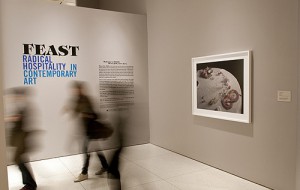
“Feast: Radical Hospitality in Contemporary Art.” On view February 16–June 10, 2012 at the Smart Museum, Chicago.

Best Non-Edible Exhibition: Feast: Radical Hospitality in Contemporary Art

Considering the ritualized act of eating, the exhibition Feast: Radical Hospitality in Contemporary Art at the Smart Museum in Chicago presents “the work of more than thirty artists…who have transformed the shared meal into a compelling artistic medium.”  FEAST brings together artists concerned with the act of consumption with performance pieces by Lee Mingwei, who shared a one-on-one meal with a guest selected by lottery, and Mella Jaarsma’s I Eat You Eat Me, where participants feed one another over a table supported on their lap. Alongside the exhibition, performances and political food truck, the Smart Museum hosted symposiums and children’s programming to further encourage conversation and sharing–both components necessary for a successful feast. —M.F.

Continue reading »

Gastro-Vision | Anti-Cancer Cooking in a Post-Hurricane Sandy World

November 16th, 2012


Beatriz da Costa with Juan Recaman (camera), “Dying for the Other” (video still), 2011.

In 2011, Beatriz da Costa underwent brain surgery to remove a cancerous tumor. Her video triptych Dying for the Other gives us glimpses into her life in the three months following the procedure. The artist is shown at different times moving about with the support of a walker, exercising her motor skills, stretching her limbs, sorting her daily medications, and chopping kale. The moment when da Costa is asked to spell words like truck and picture is telling: she’s unsuccessful and seems completely unaware. Footage from a New York City lab for breast cancer research is juxtaposed with these difficult moments in da Costa’s life. Bald female mice aged four to six-weeks old are being weighed, prodded, injected and dissected. Rarely do I feel sorry for the city’s vermin but this is awful to watch. It’s hard to distinguish the live mice from the dead ones. You have to wonder if there’s not a better way. Then again, does it matter if it saves human lives? In the years since her surgery, da Costa has explored this question about the price of sustaining life. Her projects in the series The Cost of Life have taken a variety of forms, from this video triptych to a demonstration garden and most recently a cooking class.

Dying for the Other is on view at the Sheila C. Johnson Design Center at Parsons, where it is included in the exhibition Art, Environment, Action! The theme of the environment has become a fall tradition at the Center. They’ve paid particularly close attention to the role of art and design in food systems, urban agriculture, and climate change. With this show, curator Radhika Subramaniam wanted to present an exhibition that went beyond art that’s explicitly about nature. She says of da Costa’s video, “It’s not just about illness of the planet but asks what is the relationship of our body to the world outside?” Oftentimes when people talk about the environment it sounds abstract, like something we exist at the side of, instead the force on which our lives depend—and to which art almost always, in some way, responds. Da Costa’s work brings the conversation, says  Subramaniam, “back to the body.”

Continue reading »

Gastro-Vision | Lucy + Jorge Orta: Food-Water-Life

October 19th, 2012


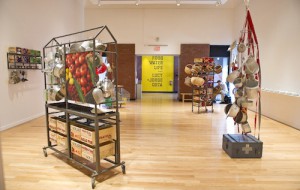
Lucy + Jorge Orta’s Food-Water-Life installation at Tufts University Art Gallery, 2012. Left: “Mexican Kitchen,” 2002-2008. Right, rear: “HortiRecycling Enterprise, act II–Conservation Unit,” 1997-2005. Photo: Alonso Nichols, Tufts University Photography.

For more than two decades, wife-husband team Lucy + Jorge Orta have contemplated global problems in food, water, shelter and land. Before meeting in early 1990s Paris, Lucy studied fashion-textile design in England while Jorge studied fine art and architecture in Argentina. Their individual practices were socially engaged and participatory. When they began to collaborate, the artists merged and expanded their methods of involving publics, art folks and non-art folks alike, in the process of making. Their activities range from hosting community banquets and recycling food waste to purifying water and issuing limited-edition passports. All of this is manifest in Food-Water-Life, the Ortas’ first major traveling exhibition in the United States, now up at Tufts University Art Gallery in Boston.

The Ortas founded their design studio five years before Nicolas Bourriaud coined the term “relational aesthetics” and their collaborative processes continue to be associated with this rubric. That seems an old-fashioned way of talking about their work today. The art world has since moved on to “social practice.” Although this field is nebulous and, apparently, suffering from identity crisis, one thing about social practice art is clear to me: food is a favorite ingredient. Being the great connector of people, it makes perfect sense as medium, as catalyzer. Food is also inseparable from issues of climate change, land and sustainability with which so many social practitioners are concerned. Food-Water-Life is an excellent instance of this or the artist as activist-slash-humanitarian. The Ortas’ large-scale sculptures and contraptions symbolize the potential of art to effect change in global conditions that go unnoticed, unchecked, unresolved. The artists raise awareness about, for instance, the growing scarcity of drinkable water, and the 13.6 percent of the estimated world population that suffers from hunger. To this, the Ortas manage to bring optimism, whimsy and lots of color.

Continue reading »

Gastro-Vision | Supersonic (After Cage)

September 21st, 2012


Lisa Meyers and Autumn Chacon. “Noise Cooking” at Art Gallery of Ontario, 2012.

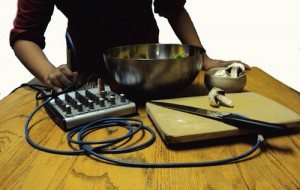
Toronto resident Lisa Myers is like many cultural workers in that she wears a few different creative hats: artist, curator, writer, and musician. What is maybe atypical is that she’s also a chef. At first, Myers cooked to make a living while she sang and played guitar in bands and also studied new media. She eventually decided to obtain, in addition to other college credentials, a diploma in culinary arts. Myers had kept her various jobs and interests “kind of separate.” Then, a few years ago, all of her pursuits began to merge. The following video, Jimmie Durham’s Quick Biscuits, is a perfect example.

Quick Biscuits is a collaboration between Myers and New Mexico-based writer and performance artist Autumn Chacon. The women met earlier this year while in residence at Canada’s distinguished Banff Centre. Chacon, who conceived of the piece, directed and recorded Myers as she “performed” the biscuit recipe. Chacon gives us an intimate view into the bowl, but the emphasis here is not so much on the look of the ingredients as the sound of them. Contact microphones attached to Myers’ cooking utensils amplify every pour, stir, scrape and pummel of flour, baking soda, salt, and yogurt. For Myers, Quick Biscuits is like a concert: “The recipe is the score. The cook is the musician. The foods are the instruments. And then the implements—the knives, the bowls, the whisks, the peelers—act as microphones.” For me, Quick Biscuits is worse than a Skrillex track. Of course, I have taste for certain sounds like I have tastes for certain foods.

Continue reading »