Jessica Rankin: Mind & Language
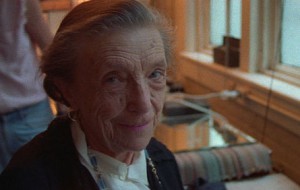
“My work’s always had a lot to do with language and the landscape of the mind,” says artist Jessica Rankin, referencing her intricately embroidered pieces. Filmed in 2008 in a Berlin studio adjoining that of her partner, artist Julie Mehretu, Rankin discusses how learning a foreign language as well as reading literature are influential to her working method.
For videos of Art21 artist Julie Mehretu in the same Berlin studio, check out Workday and Studio Assistants.
VIDEO | Producer: Wesley Miller & Nick Ravich. Interview: Susan Sollins. Camera: Ian Serfontein. Sound: Paul Stadden. Editor: Lizzie Donahue & Joaquin Perez. Artwork Courtesy: Julie Mehretu & Jessica Rankin. Special Thanks: Julie Mehretu. @ 2010 Art21, Inc.
William Kentridge: Collaboration
SUBSCRIBE TO EXCLUSIVE: RSS | ITUNES | YOUTUBE | ARTBABBLE
In celebration of Art21′s new feature film William Kentridge: Anything Is Possible — which premiered nationally on October 21, 2010 and will continue to air on PBS (check local listings) — the Exclusive series devoted the past six weeks to telling stories about Kentridge’s numerous artistic collaborators. This is the final episode of six. Be sure to catch the full mini-series featuring: Peter Gelb at the Metropolitan Opera, Composer Philip Miller, Weaver Marguerite Stephens, Studio Manager Anne McIlleron, and Sabine Theunissen & John Pitts on the opera curtain for The Nose.
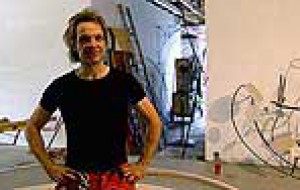
Episode #127: Three of William Kentridge’s long-time collaborators — Sabine Theunissen (Set Design), Catherine Meyburgh (Video Composite & Editing), and Kim Gunning (Video Control & Projection) — recount the creative process of mounting a production of The Nose (2010) at The Metropolitan Opera, New York.
Having witnessed first-hand one of the twentieth century’s most contentious struggles—the dissolution of apartheid—William Kentridge brings the ambiguity and subtlety of personal experience to public subjects most often framed in narrowly defined terms. Using film, drawing, sculpture, animation, and performance, he transmutes sobering political events into powerful poetic allegories. Aware of myriad ways in which we construct the world by looking, Kentridge often uses optical illusions to extend his drawings-in-time into three dimensions.
William Kentridge is featured in the Season 5 (2009) episode Compassion of the Art in the Twenty-First Century television series and the Art21 special, William Kentridge: Anything Is Possible (2010), both on PBS. Watch full episodes online for free via PBS Video or Hulu, as a paid download via iTunes (link opens application), or as part of a Netflix streaming subscription.
VIDEO | Producer: Wesley Miller & Nick Ravich. Interview: Eve Moros Ortega & Susan Sollins. Camera: Robert Elfstrom & Joel Shapiro. Sound: Ray Day, Roger Phenix & Mark Roy. Editor: Mary Ann Toman. Artwork Courtesy: William Kentridge. Special Thanks: Kim Gunning, Catherine Meyburgh, Sabine Theunissen, & The Metropolitan Opera, New York. © 2010 Art21, Inc.
This program is supported, in part, by public funds from the New York City Department of Cultural Affairs in partnership with the City Council.
William Kentridge: “The Nose” Opera Curtain
SUBSCRIBE TO EXCLUSIVE: RSS | ITUNES | YOUTUBE | ARTBABBLE
IT’S OPENING NIGHT! In celebration of Art21′s forthcoming feature film William Kentridge: Anything is Possible — premiering tonight, October 21, 2010 at 10:00 p.m. ET on PBS (check local listings) — the Exclusive series is devoting the month of October to telling stories about Kentridge’s numerous artistic collaborators whom we’ve had the distinct privilege of meeting these past few years. This is the fourth of six episodes.
Episode #125: Set designer Sabine Theunissen and scenic artist John Pitts share how the opera curtain for William Kentridge’s production of The Nose (2010) was enlarged, by hand, from a humble collage. Filmed on location at Kentridge’s studio in Johannesburg, South Africa, and at The Metropolitan Opera’s workshop in The Bronx, New York.
Having witnessed first-hand one of the twentieth century’s most contentious struggles—the dissolution of apartheid—William Kentridge brings the ambiguity and subtlety of personal experience to public subjects most often framed in narrowly defined terms. Using film, drawing, sculpture, animation, and performance, he transmutes sobering political events into powerful poetic allegories. Aware of myriad ways in which we construct the world by looking, Kentridge often uses optical illusions to extend his drawings-in-time into three dimensions.
William Kentridge is featured in the Season 5 (2009) episode Compassion of the Art in the Twenty-First Century television series on PBS. Watch full episodes online via PBS Video, Hulu, or iTunes (link opens application).
VIDEO | Producer: Wesley Miller & Nick Ravich. Interview: Eve Moros Ortega & Susan Sollins. Camera: Robert Elfstrom & Joel Shapiro. Sound: Tom Bergin & Ray Day. Editor: Mary Ann Toman. Artwork Courtesy: William Kentridge. Special Thanks: The Metropolitan Opera, New York; John Pitts & Sabine Theunissen. © 2010 Art21, Inc.
This program is supported, in part, by public funds from the New York City Department of Cultural Affairs in partnership with the City Council.
William Kentridge: Weaver Marguerite Stephens
SUBSCRIBE TO EXCLUSIVE: RSS | ITUNES | YOUTUBE | ARTBABBLE
In celebration of Art21′s forthcoming feature film William Kentridge: Anything Is Possible — premiering October 21, 2010 at 10:00 p.m. ET on PBS (check local listings) — the Exclusive series is devoting the month of October to telling stories about Kentridge’s numerous artistic collaborators whom we’ve had the distinct privilege of meeting these past few years. This is the third of six episodes.
Episode #124: Weaver Marguerite Stephens discusses translating the artist William Kentridge’s original concepts into intricate, large-scale tapestries. Located in Diepsloot (a suburb of Johannesburg, South Africa), the Stephens Tapestry Studio employs a team of local weavers, spinners, and dyers who work on vertical looms using mohair spun in Swaziland.
Having witnessed first-hand one of the twentieth century’s most contentious struggles—the dissolution of apartheid—William Kentridge brings the ambiguity and subtlety of personal experience to public subjects most often framed in narrowly defined terms. Using film, drawing, sculpture, animation, and performance, he transmutes sobering political events into powerful poetic allegories. Aware of myriad ways in which we construct the world by looking, Kentridge often uses optical illusions to extend his drawings-in-time into three dimensions.
William Kentridge is featured in the Season 5 (2009) episode Compassion of the Art in the Twenty-First Century television series on PBS. Watch full episodes online via PBS Video, Hulu, or iTunes (link opens application).
VIDEO | Producer: Wesley Miller & Nick Ravich. Interview: Susan Sollins. Camera: Bob Elfstrom. Sound: Ray Day. Editor: Mary Ann Toman. Artwork Courtesy: William Kentridge. Special Thanks: Marguerite Stephens & Stephens Tapestry Studio. © 2010 Art21, Inc.
William Kentridge: Composer Philip Miller
SUBSCRIBE TO EXCLUSIVE: RSS | ITUNES | YOUTUBE | ARTBABBLE
In celebration of Art21′s forthcoming feature film William Kentridge: Anything Is Possible — premiering October 21, 2010 at 10:00 p.m. ET on PBS (check local listings) — the Exclusive series is devoting the month of October to telling stories about Kentridge’s numerous artistic collaborators whom we’ve had the distinct privilege of meeting these past few years. This is the second of six episodes.
Episode #123: Composer Philip Miller talks about his long-time collaboration with William Kentridge, scoring and performing original music for the artist’s animated films such as Felix in Exile (1994) and the multi-channel video installation I am not me, the horse is not mine (2009). Miller’s compositions synthesize and draw inspiration from various musical traditions, from the romantic classicism of Antonín Dvořák, to the modern atonality of Dmitri Shostakovich, to the folk instrumentation and harmonies of contemporary South African choral music.
Having witnessed first-hand one of the twentieth century’s most contentious struggles—the dissolution of apartheid—William Kentridge brings the ambiguity and subtlety of personal experience to public subjects most often framed in narrowly defined terms. Using film, drawing, sculpture, animation, and performance, he transmutes sobering political events into powerful poetic allegories. Aware of myriad ways in which we construct the world by looking, Kentridge often uses optical illusions to extend his drawings-in-time into three dimensions.
William Kentridge is featured in the Season 5 (2009) episode Compassion of the Art in the Twenty-First Century television series on PBS. Watch full episodes online via PBS Video, Hulu, or iTunes (link opens application).
VIDEO | Producer: Wesley Miller & Nick Ravich. Interview: Susan Sollins. Camera: Jarred Alterman & Bob Elfstrom. Sound: Ray Day. Editor: Mary Ann Toman. Artwork Courtesy: William Kentridge. Special Thanks: Philip Miller & The Museum of Modern Art, New York. © 2010 Art21, Inc.
William Kentridge: Peter Gelb, The Metropolitan Opera
SUBSCRIBE TO EXCLUSIVE: RSS | ITUNES | YOUTUBE | ARTBABBLE
In celebration of Art21′s forthcoming feature film William Kentridge: Anything is Possible — premiering October 21, 2010 at 10:00 p.m. ET on PBS (check local listings) — the Exclusive series is devoting the month of October to telling stories about Kentridge’s numerous artistic collaborators whom we’ve had the distinct privilege of meeting these past few years. This is the first of six episodes.
Episode #122: Peter Gelb, General Manager of the Metropolitan Opera in New York, discusses the historical context and artistic sensibility of William Kentridge’s 2010 production of Dmitri Shostakovich’s The Nose (1928), based on the short story by Nikolai Gogol (1836). Featuring behind-the-scenes technical and dress rehearsals, as well as performances from the production’s opening night.
Having witnessed first-hand one of the twentieth century’s most contentious struggles—the dissolution of apartheid—William Kentridge brings the ambiguity and subtlety of personal experience to public subjects most often framed in narrowly defined terms. Using film, drawing, sculpture, animation, and performance, he transmutes sobering political events into powerful poetic allegories. Aware of myriad ways in which we construct the world by looking, Kentridge often uses optical illusions to extend his drawings-in-time into three dimensions.
William Kentridge is featured in the Season 5 (2009) episode Compassion of the Art in the Twenty-First Century television series on PBS. Watch full episodes online via PBS Video, Hulu, or iTunes (link opens application).
VIDEO | Producer: Wesley Miller & Nick Ravich. Interview: Susan Sollins. Camera: Joel Shapiro. Sound: Tom Bergin. Editor: Mary Ann Toman. Artwork Courtesy: William Kentridge. Special Thanks: Peter Gelb & The Metropolitan Opera, New York. © 2010 Art21, Inc.
This program is supported, in part, by public funds from the New York City Department of Cultural Affairs in partnership with the City Council.
Krzysztof Wodiczko: Peace
SUBSCRIBE TO EXCLUSIVE: RSS | ITUNES | YOUTUBE | ARTBABBLE
Episode #121: “You cannot work towards peace being peaceful” says artist Krzysztof Wodiczko, who explains this paradoxical position in terms of his personal experiences growing up in Poland under communist rule. Filmed at the Center for Advanced Visual Studies at MIT in Cambridge, Massachusetts, Wodiczko’s interview is punctuated by the sound of sirens from outside, the city in a state of “full alert.”
By appropriating public buildings and monuments as backdrops for projections, Krzysztof Wodiczko focuses attention on ways in which architecture and monuments reflect collective memory and history. Projecting images of community members’ hands, faces, or entire bodies onto architectural façades, and combining those images with voiced testimonies, Wodiczko disrupts our traditional understanding of the functions of public space and architecture. He challenges the silent, stark monumentality of buildings, activating them in an examination of notions of human rights, democracy, and truths about the violence, alienation, and inhumanity that underlie countless aspects of social interaction in present-day society.
Krzysztof Wodiczko is featured in the Season 3 (2005) episode Power of the Art in the Twenty-First Century television series on PBS. Watch full episodes online via PBS Video, Hulu, or iTunes (link opens application).
VIDEO | Producer: Wesley Miller & Nick Ravich. Interview: Susan Sollins. Camera: Gary Henoch. Sound: Steve Bores. Editor: Joaquin Perez . Special Thanks : Catherine Tatge, the Center for Advanced Visual Studies, and the Massachusetts Institute of Technology (MIT).
Allan McCollum: “Plaster Surrogates” & “Surrogate Paintings”
Episode #120: Filmed in his Brooklyn studio, Allan McCollum discusses his Surrogate Paintings (begun in 1978) and Plaster Surrogates (begun in 1982). Wanting to “construct an emblem” for what an artist does and demystify what it means to be an artist, McCollum’s symbolic works reveal the social game of looking at, selling, and making art through theatrical installations of mass-produced objects. McCollum’s Surrogates are on view in two exhibitions in New York City: the exhibition The Space Between Reference and Regret at Friedrich Petzel Gallery (through October 23rd), and the exhibition Seriality at Armand Bartos Fine Art (September 22nd through October 22nd).
Applying strategies of mass production to hand-made objects, Allan McCollum’s labor-intensive practice questions the intrinsic value of the unique work of art. McCollum’s installations—fields of vast numbers of small-scale works, systematically arranged—are the product of many tiny gestures, built up over time. Viewing his work often produces a sublime effect as one slowly realizes that the dizzying array of thousands of identical-looking shapes is, in fact, comprised of subtly different, distinct things. Engaging assistants, scientists, and local craftspeople in his process, McCollum embraces a collaborative and democratic form of creativity.
Allan McCollum is featured in the Season 5 (2009) episode Systems of the Art in the Twenty-First Century television series on PBS. Watch full episodes online via PBS Video or download to own via iTunes (link opens application).
VIDEO | Producer: Wesley Miller & Nick Ravich. Interview: Wesley Miller & Susan Sollins. Camera: Joel Shapiro. Sound: Tom Bergin. Editor: Lizzie Donahue & Joaquin Perez. Artwork Courtesy: Allan McCollum & Friedrich Petzel Gallery. Special Thanks: Celina Paiz, Marcie Paper & Adele Röder.
This program is supported, in part, by public funds from the New York City Department of Cultural Affairs in partnership with the City Council.
Carrie Mae Weems: “Roaming”
SUBSCRIBE TO EXCLUSIVE: RSS | ITUNES | YOUTUBE | ARTBABBLE
Episode #119: Carrie Mae Weems describes the impetus for her series Roaming (2006). An investigation into “the edifice of power,” Weems performed a series of photographic actions throughout Rome, Italy, contrasting her body with grand architectural structures and monumental surroundings.
Weems’s vibrant explorations of photography, video, and verse breathe new life into traditional narrative forms—social documentary, tableaux, self-portrait, and oral history. Eliciting epic contexts from individually framed moments, Weems debunks racist and sexist labels, examines the relationship between power and aesthetics, and uses personal biography to articulate broader truths. Whether adapting or appropriating archival images, restaging famous news photographs, or creating altogether new scenes, she traces an indirect history of the depiction of African Americans for more than a century.
Carrie Mae Weems is featured in the Season 5 (2005) episode Compassion of the Art in the Twenty-First Century television series on PBS. Watch full episodes online via PBS Video or download to own via iTunes (link opens application).
VIDEO | Producer: Wesley Miller & Nick Ravich. Interview: Catherine Tatge. Camera: Joel Shapiro. Sound: Roger Phenix. Editor: Joaquin Perez. Artwork Courtesy: Jack Shainman Gallery & Carrie Mae Weems. © 2010 Art21, Inc.
Laylah Ali: Choreographer Dean Moss
SUBSCRIBE TO EXCLUSIVE: RSS | ITUNES | YOUTUBE | ARTBABBLE
Episode #118: Dancer/choreographer Dean Moss discusses his collaboration with visual artist Laylah Ali, entitled figures on a field (2005). This behind-the-scenes look features preliminary rehearsals at MASS MoCA in North Adams, Massachusetts, as well as a preview performance at The Kitchen in New York City.
An artist working in both dance and video, Dean Moss’s recent projects use the irrational logic of the body to articulate personal, cultural, and socioeconomic forces that impact a perception of self and environment. Nameless forest, Moss’s newest work (developed in collaboration with artist Sungmyung Chun), premieres at The Kitchen in May 2011 with previews at the Arts Presenters and Producers Conference (APAP) and Yale University.
Artist Laylah Ali creates gouache-on-paper paintings that take her many months to complete. Ali meticulously plots out in advance every aspect of her work, from subject matter to choice of color, achieving a high level of emotional tension in her paintings as a result of juxtaposing brightly colored scenes with dark, often violent subject matter. In style, her paintings resemble comic-book serials, but they also contain stylistic references to hieroglyphics and American folk-art traditions.
Laylah Ali is featured in the Season 3 (2005) episode Power of the Art in the Twenty-First Century television series on PBS. Watch full episodes online via PBS Video, Hulu, or iTunes (link opens application).
VIDEO | Producer: Wesley Miller & Nick Ravich. Interview: Susan Sollins. Camera: Tom Hurwtiz & Joel Shapiro. Sound: Tom Bergin & Roger Phenix. Editor: Joaquin Perez. Artwork Courtesy: Laylah Ali & Dean Moss. Special Thanks: MASS MoCA & The Kitchen. © 2010 Art21, Inc.
This program is supported, in part, by public funds from the New York City Department of Cultural Affairs in partnership with the City Council.