Feeding Our Own Fire
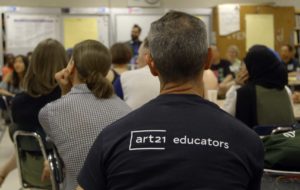
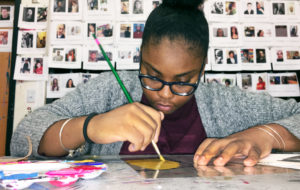
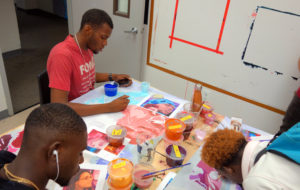
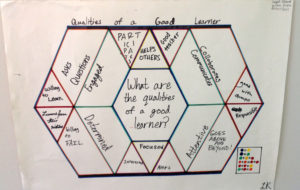
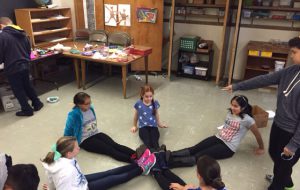
I was recently blown away after seeing a few of our Art21 Educators in action and thought it would be a good time to talk about the best kept (or ignored) secret in education: visiting our colleagues to learn new strategies, get new ideas, and gain perspective on what’s working when we teach. You see, 95% of the time, maybe more, teachers are busy teaching, preparing to teach, or performing a variety of tasks related to just being an educator in general. Visiting our colleagues in their classrooms is often not very high on the priority list. Having reflective conversations about these visits can be as rare as a lunar eclipse. But some of our best professional development is taking place in the classrooms right next door to us! Sharing best practices is something that takes organization, time, and effort, but over the past nine years I have learned repeatedly that this is time well spent and absolutely worth the extra effort. It’s worth taking the risk to ask that veteran teacher if we can come in to check out the project everyone is talking about. It’s worth opening ourselves up to feedback when we ask a colleague to visit our classroom. Some of the most meaningful learning experiences in my career have occurred in the classrooms of colleagues, or over coffee and conversation after being mesmerized by a lesson I just saw, especially when it comes to teaching about contemporary art. Let’s face it, reading about good teaching, or just daydreaming about it, is one thing. Seeing good teaching in action is quite another. Sort of like feeding our own fire.
Test-Driving the New Season 5 Educators’ Guide: John Baldessari and Juxtaposition

John Baldessari, "Beach Scene/Nuns/Nurse (with Choices)", 1991 courtesy Marian Goodman Gallery, New York
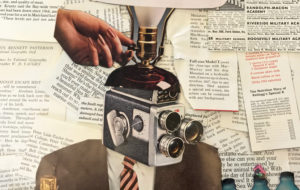
Within the first few pages of the season 5 Educators’ Guide, readers are asked to think about the power and influence of juxtaposing images in order to give the viewer very different experiences. Working with artists like John Baldessari, a few of my classes recently began a unit to explore how juxtaposition has the power to send visual messages, tell stories, and even share qualities about ourselves.
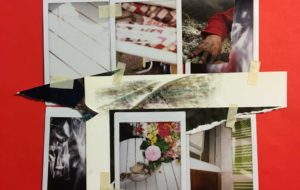
Over the course of a few days, I asked students to bring in and collect a variety of images they would like to combine in a single artwork. After assembling the images and cropping them a bit, I asked them about the images they selected and what these images said about their interests, their habits and even their passions. One student remarked that the images he selected basically described his obsession with money. Another described her images as being primarily connected to food, which is something finds comfort in. Still another described his images revolving around his work related to environmental projects.
As students assemble their works this week, we will also begin moving into some small-group research exploring how juxtaposition can be used to send messages simply by placing certain images side-by side.

Nancy Spero "Masha Bruskina / Gestapo Victim" 1994, courtesy the artist and Galerie Lelong, New York
Students will be asked to work with partners to research and collect images (fine art reproductions, advertisements, posters, etc.) that send specific messages through juxtaposition. Along with viewing works by John Baldessari, we will be also be looking into artists such as Yinka Shonibare MBE, Nancy Spero, Kerry James Marshall, and Eleanor Antin.
Creating high quality works of art that are technically proficient is always very satisfying for both teachers and students, but when we have the opportunity to make students more aware of the images they see, and how they relate to larger themes and broader issues, we are teaching students not only how to create works of art but also how to interpret them.
Talking with Esopus Editor, Tod Lippy, Part Two
This is part two of my interview with Esopus editor, Tod Lippy (click here for part one). In addition to the interview, readers may also want to check out “The Assembled Picture Library of NYC”, a collaborative exhibition and workspace environment organized by artists Robin Cameron and Jason Polan. The exhibition will provide free and open access to hundreds of images from the collections of Cameron and Polan. Visitors are invited to come in during gallery hours (Mon/Tue/Thu from 12-5pm) and use these images—which include manuscripts, advertisements, prints, original drawings, and more—as raw material for their own artworks, which will be displayed on the walls of Esopus Space for the length of the exhibition. Polan and Cameron will also create a book featuring visitors’ artworks, The Assembled Picture Library of New York Book, that will be available at the closing reception on March 18th.
Joe Fusaro: Esopus is a tremendous resource on many levels. Can you talk about the magazine’s relationship with educators? Have you had experience with teachers using the magazine in their classrooms, and if so, how?
Tod Lippy: I know that Esopus has been used as an educational tool by a number of our subscribers who happen to be teachers. One issue in particular has been especially popular in that regard: Esopus 6: Process, which featured evidence of the working methods of a number of different creative people — work journals from the late Christopher Isherwood relating to the writing of A Single Man; a photographic documentation of the making of a dry-point etching by the artist Sylvia Plimack Mangold, the comic Demetri Martin’s joke diaries, and even a paper model (which our readers could build from pre-cut forms included in the magazine) of a dodecahedron offered by the mathematician John Conway, who always employs model-building when working on a new theorem. But every issue of the magazine features content — such as our “Modern Artifacts” series produced in conjunction with the Museum of Modern Art Archives — that offers learning experiences for readers of all ages.
Since the editorial tone of the magazine is deliberately neutral — we try to avoid critical jargon that might be off-putting to more general readers — and since the artists’ projects in the magazine rarely have any introductions or explanations preceding them, I guess one could argue that the magazine is actually neglecting the opportunity to teach its readers about the meaning of contemporary art (much of which, of course, can feel oblique to people lacking art degrees). But to tell you the truth I think the experience readers have with the work in the magazine, which they are forced to approach on their — and its — own terms, may end up being a deeper one in many cases.
Incidentally, I think that perhaps one of the best things Esopus has to offer younger readers, particularly in this era of publishing, is an essentially commercial-free environment. I’ve spoken at a number of high schools and colleges about the magazine, and when I deliver lectures I bring along a Powerpoint presentation during which I ask for a show of hands from the audience as I project photos of spreads from current magazines. I ask them to raise their right hands when they recognize an ad, and their left hands when they see editorial content. I start with obvious choices — a Nike advertisement, a page from The Talk of the Town in The New Yorker — but it’s amazing how quickly confusion sets in when I show them an “advertorial,” or a paid-for “special supplement” that apes the look and feel of the particular magazine. Advertising is so pervasive in every nook and cranny of our culture that it really isn’t noticed anymore, and I think that’s problematic, especially for young people who should know when they are being sold something.
Talking with Esopus Editor, Tod Lippy, Part One
Back in 2004, I was lucky enough to be introduced to Esopus magazine at a silent auction being held during a Mass MoCA fundraiser. Don’t ask me how, but my wife and I were able to bid on (and somehow afford when we won) a package that included a signed copy by every single artist and author in the very first issue of Esopus. At the time, I wasn’t as familiar with Beth Campbell or Christopher Durang, but I immediately loved their contributions. I was intrigued by the Richard Tuttle piece and had no idea what to make of Alex Shear’s work. And these were just four of the contributors!
Since then, I have managed to devour every issue at a leisurely pace (Esopus is published twice a year), been introduced to many new artists, and reintroduced to artists and writers I thought I knew. I have found ways to utilize Esopus as a teaching resource in the classroom and have shared it with many colleagues who have been impressed with the way the magazine simultaneously feels like a periodical and a group exhibit you hold in your hands.
This week, Teaching with Contemporary Art is pleased to present part one of an interview with Esopus editor, Tod Lippy, conducted via e-mail over the past month:
Joe Fusaro: What’s the story behind Esopus magazine? It’s certainly not a “regular” art magazine. As a matter of fact it’s more like a work of art that operates in a magazine-format and schedule. How did you get started?
Tod Lippy: I founded Esopus in 2003. I started it mainly because I had had a fair amount of experience in editing special-interest magazines and I wanted to take a different approach in order to create a magazine that would reach a wider audience. The idea was to come up with something that was very multidisciplinary in form and content. We have contributions from contemporary artists and filmmakers, writers, poets, musicians – a CD is included in every issue – and the idea was to avoid the kind of ghettoization that often comes with specialization in creative disciplines. If you go to a Barnes and Noble newsstand, you’ll find an Art section, and a Literature section, and a Film section, and a Design section—the idea was to somehow incorporate all of these in one magazine in order to attract a broader readership. There were several other ideas behind the founding of the magazine, but probably the most important one was that I didn’t want to include any advertising. I feel like I’m constantly fighting with advertisers when I’m going through my favorite magazines—particularly these days, when editorial and advertising are so hard to distinguish from one another—and it seemed like it was worth a shot to try to do a magazine that literally had nothing in it that was for sale. So, in order to do that, I created a non-profit entity, the Esopus Foundation Ltd. We’re a 501(c)(3) and we depend on contributions from foundations and individuals to make up for the money we lose from not being able to count on advertising revenue which, as you probably know, is very important in the magazine publishing world.
JF: Did you also set out to create a magazine which functions as a work of art in itself? Because of the interdisciplinary nature of Esopus it also feels like purchasing a piece of art. There are things to unfold, pull out, and listen to.
TL: I can’t say that I explicitly set out to make something that functioned like a work of art. I think that was probably a natural offshoot of my wanting to stay as invisible as possible as a designer. Most magazines have a very rigorous grid structure — an extreme example of this would be, say The New Yorker — where every article fits into a very recognizable format: Columns are generally the same width, headline and body typefaces are consistent, and artwork tends to be “framed” in relation to the composition of the page. I actually love The New Yorker and its look but that’s not what I was going for with Esopus. I wanted everything that appeared in the magazine to work visually on its own particular terms rather than conforming to a “house style” — that way, I hoped, each article or project would feel less mediated, and this would provide a more authentic experience for our readers. The idea was to give them the sense that they were flipping through a box of artifacts, each slightly different from the one before it. This approach, I think, encourages that interaction you mentioned, which is so important to me and to the mission of the magazine. The less passive our audience feels, the better (for them and us)!
Break in the Action

Margaret Kilgallen, Installation view at UCLA / Armand Hammer Museum, Los Angeles 2000, Courtesy Deitch Projects, New York
Teaching with Contemporary Art is taking a break this week in order to complete special two-part interview with Esopus editor, Tod Lippy, which will be published here on the Art21 blog starting next Wednesday. Stay tuned for this unique look into a very, very distinct art magazine that has wonderful potential for art educators.
Also…. If you are a K-5 art educator and are interested in sharing how you work with contemporary art in your classroom, please e-mail me at: joe@art21.org so we can talk! I will be putting together a column in April focusing on the variety of ways elementary teachers approach working with contemporary art in their classrooms.
A Little Heads-Up

John Baldessari, Two-Person Fight (One Orange): With Spectator, 2004 Courtesy Marian Goodman Gallery, New York
Art classrooms are often noisy places. In college they sometimes make a u-turn and become silent morgues where students wait patiently in cold studios for individual crits, but in general, art classrooms are full of activity. Because our classes have such a infectious energy many teachers are often in the position of riding a “wave” of work but putting real conversation and meaning-making on the back burner. Teachers can get caught making excuses about why their students “can’t have a conversation” or “won’t be quiet”, and consequently plan lessons that require extremely quick instructions that follow with a period of “work”- there’s no reflection, no connections, do not pass Go, do not collect $200.
This is a recipe for disaster.
The most effective classrooms I have had the pleasure to visit, teach in, or simply learn about have common elements that include, but aren’t limited to:
- Varieties of teaching strategies that consider multiple learning styles
- Changes in rhythm and tempo of lessons
- Big questions and/or ideas that students are working with
- Effective and simple classroom management techniques- nothing fancy
Part of what makes students ready to discuss works of art, participate in partner work, or break their routine in any way involves something that all of us appreciate- a little heads-up.
For example, when students know in advance that the next session will involve art making AND a partnered conversation and sharing, they are more prepared to do so next time vs. being surprised and complaining. We can avoid a few of the “Why do we have to read?” comments if we prep students for when and why we’re reading in advance. Being up front about our planning and next steps is in itself a classroom management technique and a way to more effectively facilitate students talking with one another about questions and ideas that surface in contemporary art. A little heads-up can go a long way.
In the Middle: Art21 Educators
About six months ago, Art21 ventured into the land of summer teacher institutes. We invited 15 teachers from across the country to come to New York City and spend a week with us learning about ways to bring contemporary art and artists into the classroom using Art21 resources. It was a ton of work and an equal amount of fun. Since then, these teachers have had the opportunity to plan curriculum, try new teaching strategies, develop units and lessons that are driven by big ideas, and even work with some Art21 artists in the process.
We have now hit the mid-point of our first year working with these 15 teachers, and over the past few weeks I’ve had the chance to reach out to many of them and discuss their experiences so far- from the summer institute this past July to their current plans for this spring. It’s been extremely interesting to find out that many teachers now find themselves working with IDEAS as opposed to materials-based strategies or teaching particular styles. It’s has been tremendously gratifying to hear that experiences with artists and art works- firsthand- became a springboard for learning about other artists, art, and approaches to creating. The group has also shared hundreds of photos (literally) and dozens of classroom videos through our interactive Ning website devoted exclusively to this cohort of teachers.
As we move into the second half of our year together we look forward to visiting teachers in their classrooms, learning more about the successes and challenges they face, and even making time to talk with students about how learning with contemporary art has made a difference for them.
Year 2 of the Art21 Educators summer institute will run from July 7-14, 2010 and is now accepting applications from pairs of teachers. Click here for more information and to download an application!
Transcendent: Vija Celmins and Kimsooja

Vija Celmins, "Untitled (Big Sea #1)," 1969. Graphite on acrylic ground on paper, 34 1/8 x 45 1/4 inches. Private collection. Courtesy McKee Gallery, New York.
Recently I was engaged in a little debate about whether contemporary art can truly be transcendent — taking us beyond the range of normal perception to some place else, some place free from the constraints of the material world. While I immediately thought of Season 5 artist, Kimsooja, and her ability to highlight the artistic context in everyday activities (sewing, cleaning, decorating, etc.), I also thought about the repetitive nature of her work and how repetition is one path to transcendence that many other artists most certainly incorporate. One of these artists, Vija Celmins, is featured in Season 2 and utilizes repetition in her seascapes and night skies. They are meticulously drawn and painted to the point that the viewer isn’t looking at a picture as much as they are looking into one. And when you look close enough, similar to the experience thousands of students have when really seeing a painting by George Seurat or Chuck Close, you go someplace else; you see beyond what the picture is.
I try to make a piece that’s strong and thorough and doesn’t jump off the paper. It’s neither ocean nor a piece of paper. It becomes a third thing.
— Vija Celmins
Any teacher that has experienced the hum of fluorescent lights and a roomful of students engaged to the point that you can actually hear ideas being scratched into paper or canvas has experienced another kind of transcendent moment. These are the times we feel that “buzz” of work and the rhythm of not necessarily moving through the room, but of the room moving through us, through our own energy and the work we’re facilitating. It’s our job to create spaces for these kinds of moments where students become immersed in the ideas they are shaping and shaping them slowly, without rushing, but with a sense of urgency.
Wonder-Igniters: An Interview with Abbe Futterman
A few weeks ago I had the pleasure of visiting The Earth School in New York’s East Village and at one point noticed a science classroom through a small window that immediately struck me- there were plants, bones, drawing materials, cabinets, books, field guides, lots of sunlight and carefully arranged tables and workstations. The room itself was like a beautiful business card for the teacher, Abbe Futterman, whom I’d never met. Anyone could tell this place meant business. There wasn’t a child in the classroom but you could clearly see that the students and their teacher took pride in the work that was accomplished here. After asking a few questions I was quickly introduced to Abbe and pleasantly surprised to find out that she is a Pratt Institute graduate who often teaches science through the arts. Below is a conversation we had following that visit.
JF: You work as a science teacher that graduated Pratt Institute. That alone is interesting. Tell me about that transition.
AF: It was more of the shift from art to the art of teaching because I began as a 3rd and 4th grade teacher. Only later did I become a science teacher. When I discovered how much creativity there is in teaching, it became my first love. I especially enjoy teaching science because it captures the imagination and wonder of the students and myself. Description and documentation are also very important to me and, I believe, for learning science. The processes of Audubon, Darwin, and McClintock have influenced how I view science. Teaching young people life drawing techniques gets them to slow down, observe, and notice the structure of things. Equally important to me is that my students experience what Eleanor Duckworth calls “the having of wonderful ideas,” which I interpret as the imaginative act of discovery and synthesis and which is very akin to a powerful aesthetic experience. I think these acts of the imagination empower and enlighten children and adults similarly.
JF: Can you describe some of the situations or lessons where you use drawing in your classroom? Are there particular artists that have made their way into your curriculum?
AF: I use drawing or scientific illustration in various ways with my students. For example, if they are studying biology using snails, or mealworms, or plants, or pillbugs, I have them do large detailed studies. I teach this technique starting in Kindergarten right through fifth grade- explicit life drawing techniques that I call “Looking and Drawing.” I model first using pencil and an art eraser. I implore them to look a LOT and draw a LITTLE; look a LOT and draw a little more; to erase as needed; and redraw. I emphasize the looking: “Is this plant the exact green that’s in the paint set?” “Is the entire plant the same green?” Then I show them some basic mixing and blending techniques. Students often draw and then label the parts. They get to draw microscopes, flowers, fruit, etc.
JF: You mentioned enjoying teaching science because it captures the wonder and imagination of both the students and yourself. I teach visual art for the same reason. Do you feel that teachers need to have a sense of wonder in order to teach effectively? If so, how do you keep that sense, that spark, alive in your own work?
AF: Children are by nature “wonder-igniters” since they live in the world of imagination and discovery. The hard part is listening well and not getting carried off completely by the day-to-day logistics of classroom life. I think teachers need to stay open to their students and to know each one well enough to be awed by him/her and his/her work. The opposite of that– not seeing/knowing the person, the individual– is what drains our positive energy from teaching.
Anything Can Happen
Outside of Tyler Green (Modern Art Notes), I am not sure how many contemporary art-lover hockey fans are out there. There may be more, but down deep I think we’re two of just a few.
As I was watching the Devils-Rangers game last night and lamenting over the fact that my interview with Abbe Futterman wasn’t ready to post yet (Abbe gave me so many great photos that I’m still choosing and editing them), it suddenly dawned on me: being a Ranger fan is a lot like teaching with contemporary art. For example….
- Anything can happen, and it will.
- Being prepared is half the battle.
- You’re often anxious.
- People make fun of you, but once in a while you get to laugh back.
- Practically every game (class) is exciting, no matter how much the last one sucked.
- You’re always looking to try something a little different, a little better.
- Carefully timed risks make all the difference.
Maybe being a Ranger fan is a lot like teaching in general?
Tune in next week for my interview with Abbe Futterman, an inspiring teacher at The Earth School in New York who creatively combines the teaching of science and art in her elementary classroom.