

Conversations | Judy Pfaff with Betsy Sussler part 3

May 21st, 2008
by Kelly Shindler

pfaff-17-40105_032.jpg

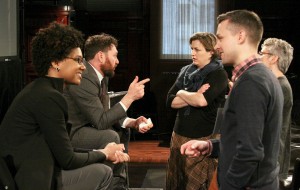
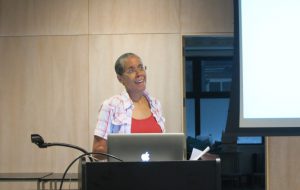
Following is the conclusion of the conversation between Judy Pfaff and BOMB Magazine’s Betsy Sussler that took place on March 3, 2008 at the Mid-Manhattan Library.

BS: I’m going to ask you two more questions, and one of them actually comes from Patricia Spears Jones, who’s a poet. I don’t know if you’ve met her, but she’s a contributing editor to BOMB. A.M. Homes, the writer, has this really great trick when she interviews people. She calls up all of her friends in a panic and says, “I don’t know what I’m going to say. What would you ask if you were interviewing this person?” and then she comes with a list of their questions combined with her questions. So I did that too. I thought, this will be fun. So, Patricia Spears Jones asks this: “I have been fascinated by the colors in your work? What do they mean and are there ones that you have never used and why?”

JP: I’m very involved with color. Initially, I was involved with Goethe’s idea of color, then Madame Blavatsky, and I worked for [Josef] Albers, believe it or not. So each piece actually is very coded. I don’t usually talk about that, but what I mean is that even just black and white mean this or that. When I sampled things in earlier pieces, they were always specifically about color and emotional and even visual sensations. But no, color is a huge deal to me.

BS: The earlier ones especially were so exuberant. It was never just instinctive? You really always had an idea of what the color….

JP: Yeah. The first show in New York that someone might have seen was called Deep Water. I had just come from a trip to the Yucatan as a response to doing a failed show about subatomic physics, and I thought, painters don’t use color? There was this equivocation that thinking is sort of gray and black and brown and sober and in Merida, which is this perfect colonial town in the Yucatan, and is also my favorite town of all time, there were just beautiful flowers. The sea is turquoise, and I just thought this really has the color of life. The way things look when they’re alive, like flowers and birds and fish and this and that. Also, I was probably at war with—do I say it again?—Richard Serra, who is about weight and mass, and I thought, throw it away. Get the air in there and make it circulate. You don’t own it. You don’t dominate anything. Don’t have the language that painting could have. That was a very south of the border show.

The next one I did at Albright-Knox, the whole palette was for all of the people. There was the Clyfford Still motif, there was the Jackson Pollock; it was the moment. So there was a kind of homage. It’s like, if I go to Japan, I think it’s totally Japanese, but they don’t think it’s Japanese at all. I think there is a difference between references to things and paying homage to things.

BS: That actually might answer my last question, which is, do all the installations have a back-story?

JP: Yes.

BS: They do. So can you tell us one, a really personal one that perhaps nobody knows yet?

JP: Yeah, one was called War In Italy. My grandmother worked for the RAF, the Women’s Royal Air Force, as a seamstress. And she sewed all these…she says she saved London. She said that she made all of these sorts of balloons. And it was the day that we arrived in Venice, and there were a couple of wars going on. And the whole thing, I thought, referenced this because we were also in Italy, and so I thought it would be about the Futurists, and I really realized that the Futurists were about noises. My grandmother used to say, “what was the most frightening thing? The noises above your head and the sound of things exploding.” So the whole piece, I thought, had this very Italian aspect to it as well as this back-story about my grandmother and what she thought was frightening. But all of them have that. I don’t usually tell anybody, but I’ll tell you now that it’s twenty years later.

BS: Oh, I should have gone through [every installation] one at a time. How did she think she saved London? What was she selling?

JP: Because these balloons were inflated and the German planes couldn’t tell the difference between the sky and the balloons. They were all around London. London was full of balloons, big balloons. These balloons, what are they called?

BS: Balloons… I don’t know.

JP: Blimps. And they were silver, which is a good look because it reflected the sky. So the planes, the Messerschmitt, is that right? The planes couldn’t locate them so instead of bombing them they just flew into this invisible protection. I hope I’m remembering this correctly.

BS: Even if you’re not, it’s really fabulous. I’m going to read how you answered Mimi’s question, which is actually exactly what you said ten years ago. Mimi asked how your installations are “psychologically dangerous,” and you said…“for me, because nothing is preset, I feel that it reveals a lot about what I’m going through at the moment.”

JP: I said exactly the same…

BS: You said exactly the same thing. If things are theoretically well thought-out then you’re in fairly safe territory. It’s like ,“I know my parameters and what the thing is going to look like.” So yeah, ten years doesn’t make any difference.

JP: She lies consistently…

BS: And with that….

JP: By the way, I don’t drink beer. I don’t know why I said that because I never ever drink beer.

BS: I was going to say, you don’t look like you drink beer.

JP: No, I never drink it. I think there are three lies in that thing, the first one, and then the cock crows, but no, the first one is that I don’t drink beer.

BS: But it was funny.

JP: It was funny. It was a joke, yeah.

END

Conversations | Judy Pfaff with Betsy Sussler part 2

May 20th, 2008
by Kelly Shindler

pfaff12.jpg

The following is the second part of the conversation between Judy Pfaff and BOMB Magazine’s Betsy Sussler that took place on March 3, 2008 at the Mid-Manhattan Library.

BS: I wanted to ask you about the burning kits and drawing with fire. Given that fire is an all-consuming element that has connotations about being a life force and also leaving darkness in its wake while calling up images of hell, what is it like to draw with fire?

JP: It is the very coolest thing I’ve ever done, but I’ve always thought that artists are pyromaniacs and believed that they are orphans. I don’t know any artists who think of themselves as being the product of a mother and father. Fire is always major. I think the funniest thing about fire, and there’s a mischief in this, is that a gallery on 57th street—which is about as clean as you can get—the gallery owners just decided to leave until I was finished installing because they were having heart attacks because of the soot everywhere. They’ve got Hans Hoffmans in the back room and the soot was going through the ventilation system and it was fabulous because it’s carbon! Acetylene is very dirty stuff, but it’s the purest sort of soot. You know how Sumi ink is made by capturing the soot from candles? Well, like Sumi, acetylene has a velvety quality to it and if you touch it, it just falls.

BS: It’s like paint and graphite.

JP: Yeah, it’s like shadows. It’s beautiful, beautiful stuff. You can’t focus on it so you sink into it, like a lovely spacelessness or something. It’s nice.

Continue reading »

Conversations | Judy Pfaff with Betsy Sussler part 1

May 19th, 2008
by Kelly Shindler

pfaff07.jpg

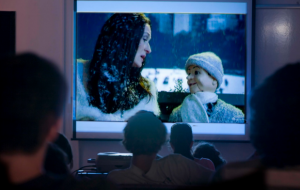
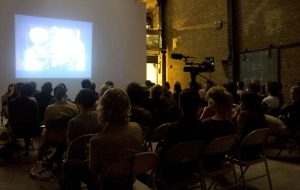
The following interview took place at the Mid-Manhattan branch of the New York Public Library on March 3, 2008, following a screening of the Art:21 episode Romance. Featured artist Judy Pfaff spoke with Betsy Sussler, Editor-in-Chief of BOMB magazine.

BETSY SUSSLER: Hi everyone, I’m really pleased to be here, not only with Judy, but also with Art21. Both Art21 and BOMB magazine are about presenting the artist’s voice and developing ideas through conversation. And at BOMB, we do in-depth interviews between artists about the creative process. BOMB interviewed Judy almost ten years ago in 1999, and actually the woman who interviewed her, Mimi Thompson, is here tonight. I thought I would start my series of questions by reading one of the questions that Mimi posed to Judy ten years ago and take it from there. It’s still certainly apropos…

JUDY PFAFF: Are you going to read the answer?

BS: I thought I would let you answer it and then at the end of our talk I would read the answer that you gave ten years ago. And really, you are not required to give the same answer. So in your interview with Mimi you described your installation work as “psychologically dangerous,” which is a very interesting question given the piece that we just saw. And what Mimi wanted to know then, I also want to know now, which is, what did you mean by “psychologically dangerous”?

JP: I’m trying to put myself back there. I have a feeling that what was happening then is that the works were so spontaneous and so of-the-moment because there was not a lot of censoring going on, and because I listened to everybody and saw how much self-awareness they have and how brilliant they are. I don’t have that going for me. It’s sort of like the clock is ticking and it’s really ticking the moment the work is being done. I can read the work sometimes, especially later, and think, oh my god, I was a mess or that this particular thing was happening or that the exhaustion is in the work. There’s stuff in the installation that I don’t really want to put in there, but I think it gets in there. Maybe I was speaking about that. Continue reading »

Trenton Doyle Hancock at the Institute of Contemporary Art | University of Pennsylvania

May 12th, 2008
by Nicole Caruth

Trenton Doyle Hancock, “Flower Bed II: A Prelude to Damnation (detail)”, 2008, 9 color screen-printed wallpaper with fluorescent inks. Published in collaboration with Graphic studio University of South Florida, Tampa, FL; Image courtesy of the artist and James Cohan Gallery, New York.

Art21 artist Trenton Doyle Hancock (Season 2) will lecture at the University of Pennsylvania’s Institute of Contemporary Art this Wednesday, May 14 (7pm). The lecture is held in conjunction with Hancock’s site-specific installation Wow That’s Mean and Other Vegan Cuisine. This year marks the 10th anniversary of the Vegans, characters that Hancock first created while a graduate student at Philadelphia’s Tyler School of Art. The installation at ICA honors the occasion by exploring their formation in detail. Read more about the Vegans here.

Other public programs include a selection of horror films hand-picked by Hancock that screen at the ICA through June. Lucio Fulci’s 1983 film, The Beyond, screens this Wednesday at dusk. Watch a trailer for the horror cult classic on YouTube.

Tonight! An-My Lê with Michael Almereyda at NY Public Library

May 5th, 2008
by Kelly Shindler

le-blog-nypl-080505.jpg

Art21, BOMB, & the Mid-Manhattan Library
present

a film screening and conversation

Art:21—Art in the Twenty-First Century Season 4 episode Protest
After the screening Michael Almereyda, filmmaker and writer, will join artist An-My Lê for a conversation and Q&A session.

Tonight, May 5, 2008 at 6:30pm

Mid-Manhattan Library
The New York Public Library
40th Street and 5th Avenue, 6th floor
New York, NY 10016
212-340-0871

Elevators to access the 6th floor.
All events are FREE and open to the public.

Save the date: An-My Lê with Michael Almereyda at NY Public Library May 5

April 29th, 2008
by Kelly Shindler

le-blog-nypl-080505.jpg

Art21, BOMB, & the Mid-Manhattan Library
present

a film screening and conversation

Art:21—Art in the Twenty-First Century Season 4 episode Protest
After the screening Michael Almereyda, filmmaker and writer, will join artist An-My Lê for a conversation and Q&A session.

Monday, May 5, 2008 at 6:30pm

Mid-Manhattan Library
The New York Public Library
40th Street and 5th Avenue, 6th floor
New York, NY 10016
212-340-0871

Elevators to access the 6th floor.
All events are FREE and open to the public.

Photos from Charles Atlas/Lia Gangitano at NYPL

April 8th, 2008
by Ana Otero

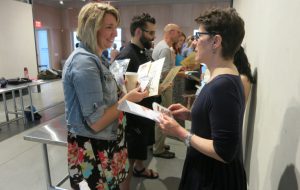
Check out the pictures from yesterday night’s screening of Paradox and discussion with Charles Atlas and Lia Gangitano, Director of Participant Inc, at the Mid-Manhattan Library.

Art21 is co-presenting monthly screenings of each Season 4 episode at the NYPL throughout the spring.

Reminder: Charles Atlas with Lia Gangitano at NYPL tonight

April 7th, 2008
by Kelly Shindler

atlas-blog-nypl.jpg

Art21, BOMB, & the Mid-Manhattan Library
present

a film screening and conversation

Art:21—Art in the Twenty-First Century Season 4 episode Paradox
After the screening Lia Gangitano, Director of Participant Inc., will join consulting director and video artist Charles Atlas for a conversation and Q&A session.

TONIGHT Monday, April 7, 2008 at 6:30pm

Mid-Manhattan Library
The New York Public Library
40th Street and 5th Avenue, 6th floor
New York, NY 10016
212-340-0871

Elevators to access the 6th floor.
All events are FREE and open to the public.

Update: Oliver Herring | TASK

April 4th, 2008
by Nicole Caruth

As announced earlier this week, Art21 artist Oliver Herring (Season 3) concluded his residency at the University of Maryland on April 2nd with a Task performance. Videos such as the one above, titled “Dance Fight,” were created by UMD students and can be viewed on the UMD Task Force blog. Photos from Wednesday’s performance are available on Facebook.

More Task in 2008: In conjunction with the Luminato Festival, Herring will transform an empty outdoor public swimming pool in Regent Park, Toronto into a stage for a Task-party on June 14; Herring will perform Task at the Seattle Public Library on June 28; and on September 6, the artist, in conjunction with FLUXSPACE, will perform Task in Philadelphia for the second time.

Art21 & Mel Chin at NAEA

April 4th, 2008
by Ana Otero

Check out Art21’s photos from last week’s NAEA conference in New Orleans. Featured are Art21-featured artist Mel Chin’s SuperSession, Art21’s professional development workshop for teachers (coopted by Chin), and Art21 and Mel’s team on the ground around town.