“Imperfect Moments: Mapplethorpe & Censorship Twenty Years Later” at ICA in Philadelphia

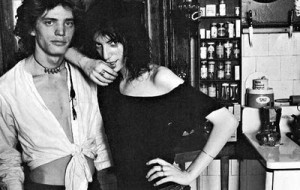
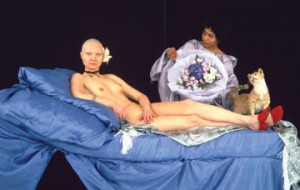
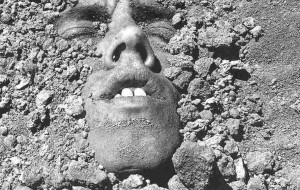
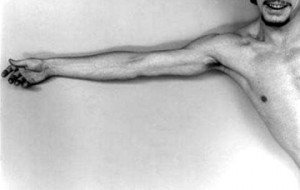
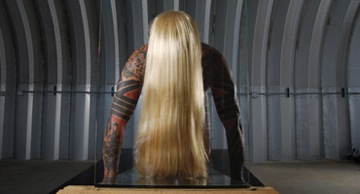
Robert Mapplethorpe, "Self Portrait," 1975
Last week, people from far and wide gathered for a special conference titled “Imperfect Moments: Mapplethorpe and Censorship Twenty Years Later,” which was co-presented by the Institute of Contemporary Art (ICA) and the Philadelphia Exhibitions Initiative at The Pew Center for Arts & Heritage.
This two-day symposium commemorated the 20th anniversary of the infamous 1988 exhibition Robert Mapplethorpe: The Perfect Moment, which sparked a firestorm of controversy when some US congressionals took offense to funds provided by the National Endownment for the Arts (NEA) being used to exhibit Mapplethorpe’s graphic sexual imagery.
The retrospective of more than 150 works, many of them depicting gay subcultures, proved too hot to handle and a number of museums found themselves on the frontline of controversy—the Corcoran Gallery of Art in Washington, DC canceled their presentation of the show and the director of the Cincinnati’s Contemporary Arts Center was tried for obscenity and acquitted—and some politicians used the ICA show as an example of how federal grants were misused by the cultural community.

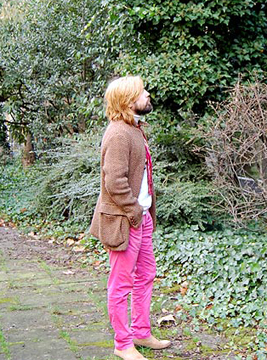
Robert Mapplethorpe, "Self Portrait," 1988
The late Sen. Jesse Helms (R-NC) spearheaded the fight against the Mapplethorpe show and introduced a floor amendment that banned NEA grants from being used to “promote, disseminate or produce obscene or indecent materials, including but not limited to depictions of sadomasochism, homoeroticism, the exploitation of children, or individuals engaged in sex acts; or material which denigrates the objects or beliefs of the adherents of a particular religion or non-religion.”
Today, Mapplethorpe is best remembered for this lightning rod moment, which catapulted the NEA into a crisis. It would soon become one of the key moments in the formation of what came to be known as the “culture wars” of the 1990s.
Now two decades later, the ICA is revisiting the controversy and has brought together world-renowned artists, critics, and scholars to examine the exhibition’s legacy, as well as the issues that artists and art institutions face today.

Patti Smith performing at the ICA. Photo via www.philebrity.com and by Dan Murphy (dandurphy.com).
Among the speakers and personalities who appeared at the Philadelphia conference were Janet Kardon, The Perfect Moment’s original curator; Patti Smith, a former Mapplethorpe lover, collaborator, and subject, who performed last Thursday night (pictured above); an artists’ panel on “The Question of Freedom,” featuring Karen Finley, Tim Miller, and Andres Serrano—all related to one or another controversy involving the NEA; and an institutional panel moderated by Robert Storr, Dean of the School of Fine Arts at Yale University, on “The Question of Courage.”
For those of us that weren’t able to attend the conference, Tyler Green of Modern Art Notes broadcast the event using his Twitter account. Among his feed I’ve culled the following quotes and observations…by no means an exhaustive list:
- [Michael] Brenson: Piss Christ title not used in NYT[imes] until 1998 #
- [Andres] Serrano: Jesse Helms put me on the map. Jesse discovered me. #
- Karen Finley makes first ’stimulus package’ joke. Undergrads laugh. #
- [Robert] Storr: Big institutions should speak up more when small institutions come under (various) attack(s) more often than they do. (Me: Amen.) #
- Brenson, Storr: Felix G[onzales]-T[orres] as making conscious response to Mapplethorpe through interactivity of his work. #
- Raymond Learsy: If the Feds think sooo little of the arts (via minor NEA $ increases), maybe art should tell the feds to get out of art. #
- [Kathy] Halbreich: 1989 culture wars inst[itution]s have become irrelevant: NEA, Corcoran, SECA. (True.) #
- All panelists: Important for institutions and staff to remain engaged and in conversation with people who oppose/disagree with you. #
- Role of journalism, criticism in artistic controversy much discussed. Now, what happens next time because arts journalism is almost gone #
Twenty years down the road, I’m not sure if we, as a culture, are less shocked by some of the images in The Perfect Moment, but Green’s last point is particularly poignant today as we see dozens of newspapers and mainstream media outlets slashing arts critics and journalists from its staff. Who will be the people that speak out against censorship when another issue like this emerges? Who are the professionals who can parse the political posturing from valid issues surrounding the arts? My suspicion is that blogs, such as this one, will have to fill that vacuum. The cultural life of America is far too important to be left to the political tide.
The shock of the unseen.

“Looking eternity in the eye.” (All photos by Luodanli.)
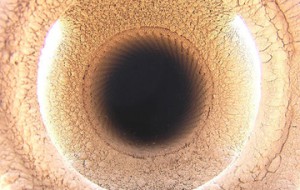
Almost four years ago, in the course of my web wanderings, I stumbled on the photographs of an Army serviceman who had been deployed to Iraq. To this day, I know little about him — only that his online handle was Luodanli, he was stationed in Taji, and he had a family waiting for him back in the States. Somewhat sporadically, Luodanli would post a batch of photos to Flickr. The images rarely revealed much about his personal life, but they were beautiful, often bordering on abstract — such as the sand-clogged interior of a piece of artillery, above
What does any of this have to do with the idea of shock in art? On the surface, not much. Initially, I’d contemplated all sorts of “shocking” subjects for my final post here on Art21: nudity, racism, excrement, violence — even farm animals in formaldehyde. But given the state of our planet, it all seemed rather frivolous. Gaza is burning. Yesterday, the AP reported that more than 4,200 U.S. servicemen have died in Iraq. (Not to mention the tens of thousands Iraqi dead.) And then, of course, there’s our economy. Or lack thereof. In keeping with the times, I considered writing about the work of war photographers such as Matthew Brady, Robert Capa and James Nachtwey. (I have an abiding admiration for people who have the capacity to click a shutter at a time when I’d be running for cover.) I also considered doing something on works related to war, perhaps pieces by Goya and Picasso and Omer Fast. But then I thought that these images, collectively, might seem too familiar, or bear too much resemblance to what we take in on a daily basis.
That’s when I thought of Luodanli’s pictures — and their pithy captions (which I’ve appropriated for the purpose of this post). They bear none of the obvious markers of war. Yet we know that it’s happening somewhere beyond the edge of the frame. The images are artfully composed and find beauty in objects that, to soldiers, must be mundane. But what did Luodanli witness that went unrecorded? Who knows. Each of us could probably hazard a guess. Sometimes, what remains unseen is the most shocking thing of all.
Many more images after the jump.
Interview with Eleanor Antin Part 2
Following is the second part of my conversation with Eleanor Antin, continued from Part 1 yesterday…

JF: One thing that has been important in my own work with students and colleagues is related to your suggestion about the viewer continuing to look with a playful mind, continuing to search for new meaning and relationships. How do you suggest people slow down and go about doing this in a shopping mall culture, especially with so much access to an art world that summarizes and simplifies?
EA: I hate malls. I hate shopping. When I find an artwork that interests me in a gallery or museum, I can sit with it for a long time, letting its possibilities open up to me. The problem is everybody else. My classical Greek and Roman works are allegories, and while allegories were obviously pleasurable and interesting to a medieval or renaissance audience, they’re not the way busy Americans in that hypothetical mall tend to see the world. But I have some tricks up my sleeve. My images are often funny. They can be beautiful. Some are haunting because they’re melancholy as well. Yet where do these emotional undertones come from? Why is that big strong man sitting in front of an old suitcase filled with heavy rocks? We’ve seen him carrying suitcases before. Is that what he carries around?? Rocks? Why? What does that mean? And why is that woman lying on a funeral bier with moonlight spilling down on her while a blonde adolescent girl awkwardly, perhaps fearfully, stoops to catch a ball that any second now, will be thrown by an older man with a demented grin? We’ve seen him before too, with the dead woman, though she was very much alive then.
Each image is its own allegory and since the characters reappear, we recognize them, we know something about them, so they are part of a meta allegory that hopefully is interesting enough to stop the people in that hypothetical mall and even against their will (after all, they probably want to get back to the car before they’re caught in traffic), force them to stop and really look. Because they’re curious. Maybe they’re disturbed. Maybe they’re laughing. Beautiful and sensual and comic images can seduce even self-absorbed people into entering the artist’s world and maybe recognizing something about their own. Or maybe it’s simply that my work possesses what the great anthropologist Malinowski would have referred to as a high coefficient of weirdness.

JF: You mention having “tricks up your sleeve” to get viewers to look closely at the images you create. I would think that part of it involves taking a variety of risks. Is risk-taking important in order to make these pictures funny, haunting, beautiful, or melancholy? How do you go about taking risks in your work? Is it conscious, or do opportunities present themselves and you go with it?
EA: For some reason I don’t really comprehend, people think my work is very risky as if I’m walking on a high wire, while as far as I’m concerned, I’m just walking over a crack in the pavement. Some people find my concentrated indifference to the fit of my work with the scene a dangerous game. And I do make some effort to have relevance to the going scene; after all, I’m not a hermit, I know what’s going on in the world. But the scene is often trivial and it’s always transient. I’ve watched a lot of scenes come and go—remember I’ve been around a while and seen artists waste a lot of time on work that 4 or 5 years later has become little more than the emperor’s clothes in the fairy tale. Art is too important to come off of a fashion designer’s runway.
Myths, metaphors, and more: Interview with Eleanor Antin, Part 1
Last month I had the good fortune to speak with Eleanor Antin (Season 2) in a series of lively and engaging emails that included her thoughts on preparing for exhibitions, working with allegories, making “controversial” or “risky” art, teaching art, and working with actors (vs. models). Below is the first of two parts. Tune in tomorrow for the nail-biting conclusion. Many thanks to Eleanor for being so candid (and patient!), as we worked on the interview right through the holidays.

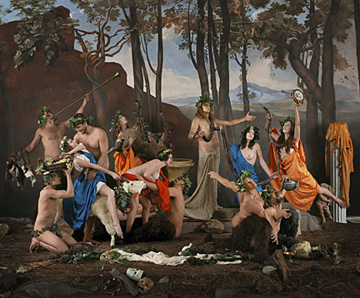
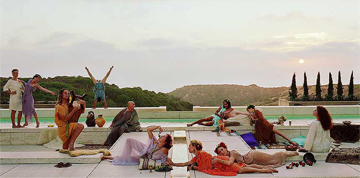
Eleanor Antin, The Death of Petronius from The Last Days of Pompeii, 2001. Chromogenic print, 46 5/8 x 94 5/8 inches. All images courtesy Ronald Feldman Fine Arts, New York.
Joe Fusaro: When you share a series of work or create a proposal for an exhibit, what are some things you think about going into the process?
Eleanor Antin: Historical Takes at the San Diego Museum of Art was a mini retrospective of the work I’ve been doing over the last eight years. Earlier, I had a full retrospective from the late 60’s through 1999 at LACMA and I traveled with that huge show to several museums, including St. Louis and the UK while wondering, ‘where the hell do I go from here?’ Somewhere around that time, one sunny afternoon, I was driving down the mesa to La Jolla, the ocean sparkling blue green below me, La Jolla gleaming in the bay, when suddenly I had an apperçu that hit me with a strange sad power. La Jolla was Pompeii, rich and gleaming, without a clue that it was on the verge of annihilation. Pompeii was where the rich and powerful had gone to escape the heat, stink, and mosquitoes of the Roman summers, where those senators fortunate enough to live that long in the notoriously insecure world of imperial Rome went to retire. Extend the metaphor, and you have the ancient empire merging with ours, where affluent citizens lived the good life innocent of the destruction lurking just around the corner.
So since then, I’ve been working with myths, metaphors, characters, and settings invented out of the ancient world of classical Greece and Rome, all the time aware that these are really my neighbors. Maybe we don’t have a volcano on our doorstep, but with global warming, climate freakiness, wild fires, water loss, disease migrations, economic destabilization, terrorist vengeance—hey, we’re on a roll here….

Love’s Shadow, 1985. 16mm film, black-and-white, 2 1/2 minutes.
For me a show is always motivated by a generative metaphor, a kind of poetic image which opens up to related ideas, images, ambiguities, dreams, sensations. Nothing is closed, there is no end. If the viewer wants to keep looking and has a playful mind, my work can be like a hall of mirrors, expanding and suggesting new meanings which, in turn, may suggest others. Poussin and Magritte are among my favorite artists. They may have different sensibilities but their works are always restless and fluid. Unfortunately, I find the art world too ready to summarize and simplify. I’m often embarrassed by the simplistic takes even well-meaning critics may have on my work. I become a couple of declarative sentences in a stranger’s mouth.
JF: Why do you think some people consider your work controversial? How do you respond to this reaction?
EA: I’m confused when people consider my work “controversial.” Or the word most often used is “brave.” I don’t know what they mean. This isn’t Soviet Russia or Hitler’s Germany—yet. Those countries may have been intellectually monstrous and physically murderous but they seemed to think artists were important enough to persecute. Here, relatively few people care what artists do. This allows us freedom even if it assures us of irrelevance. So to call me brave is silly.
A well-known curator once said disapprovingly to me, “you always do whatever you want to do.” What should I do? What he wanted to do? You can say the art world cares what we artists do. But who are they, this art world? Dealers? Curators? Critics? Collectors? Other artists? Fellow travelers? I’ve been with a great dealer, Ronald Feldman, since 1977 and he respects artists and assumes we will do whatever we want to do. Curators come and go. Critics have deadlines and space constraints. Collectors? Oh, please! They don’t know what they want until somebody tells them. Hopefully they have intelligent advisors, but they often don’t. Other artists, yes, they’re the best part of the art world, though many of them seem to feel that there’s a war out there, so they’re often in survival mode. They won’t always tell you how much your work means to them and that can make you unhappy, or even sometimes buggy, but hell, if they get ideas from you and you stimulate or provoke their work, isn’t that a good thing after all? It just means that there’ll be more good art around.
Teaching with controversial subject matter

On the topic of art and controversy, I thought I’d share a teaching-related story of my own. Previously to working at Art21, I was an associate educator at the New Museum, where I ran a high school program called G:Class. While the museum was closed during construction of its new building, I relied on Chelsea galleries to explore curricular connections to contemporary art. As a way to help develop a sense of network and inter-connectivity among students in different classes across the city, I developed a mail art project on the heels of Frank Warren’s Post Secret, connecting it to a Ray Johnson exhibition and the documentary about his work, How to Draw a Bunny. I asked each student to create a postcard-sized artwork to be sent to another student through the mail. Students had to investigate something they feared, something they loved, or if they were really ambitious, both. They also had to consider that this work would travel through the United States Postal Service and the student who received it would respond with another piece of mail art.
A week after I assigned the project, we met at Feigen Contemporary gallery to present the finished project and begin our tour. It was a small group of 12 students and the discussion was dynamic, involving talking about process and the ideas that inspired their creations. One student sheepishly presented two postcards. One of his postcards featured a detailed graphite rendering of an erect penis and, on the other side, a vagina. The second postcard featured a red background with stick figures in different sexual positions with a white substance smeared on the other side (it was Elmer’s glue.)
I could feel my face burning and imagined that it must be beet red. Here I was, exposed in front of these students. How was I going to deal with it? I saw the student shrink because of my reaction, so I took a deep breath and knew that if I didn’t acknowledge my own emotional reaction I would not be able to deal with this situation responsibly. I told the class I was a bit shocked and embarrassed and in admitting that, I was able to regain my composure.
I asked the student what he was trying to communicate. He told me he questioned why certain behaviors and images are deemed “appropriate,” while others were “inappropriate.” Why are certain things considered pornographic, but billboards in Times Square or primetime television shows are not? Why are some things considered private while others are public? These comments intrigued me and were justifiable concerns. We had a productive conversation about these issues as a group, while acknowledging how his artwork failed to communicate this nuanced idea and just shocked us. It was one of those difficult moments in teaching where a boundary was definitely crossed but presented a rare and important learning opportunity for both the student and myself.
I returned to the school and next week armed with reproductions of certain artworks that explored elements of sex, sexuality, and issues of privacy. These examples included work by Paul McCarthy, Wangechi Mutu, Marina Abramovic, and Keith Haring. We talked about these artists’ works, the ways in which sex and sexuality are part of daily culture, and how artists use different strategies to question ideas of the public and private, sex, and sexual identity. While this “lesson” would never be part of my regular class preparation, it provided a rare opportunity to address issues relevant to students in an open and respectful way.
Wangechi Mutu, Yo Mama (2003) and Paul McCarthy, Tomato Head (1994)
I’m curious how other educators have tackled similar scenarios. How has sex and sexuality come up in your classes? What were those situations and how did you deal with them? Please share your stories by leaving a comment below.
Using contemporary art to help open conversations
What’s the place of contemporary art in schools? What’s the place of “controversial” contemporary art in schools? And what’s our responsibility as teachers?
The very best contemporary art speaks a language our students can understand. One of the great gifts of Art:21 is that we can introduce our students to artists who LOOK and SOUND like they do, and who are making art that deals with issues that are important to them.
Kids grapple with issues of sex and identity early on. Stereotypes abound: girls are princesses, boys are athletes; girls are good at art and boys are good at math. Beautiful people are tall, light-skinned, with clear complexions and good hair and are very, very thin. What’s a regular every day kid to do?
A few years ago we presented a show called Sugar and Snails. It was created in response to a desire to have open conversations with our students about issues of gender identity and body image. Even at very early ages kids deal with questions like these, and it’s our job to help them make healthy choices.
Samantha Salzinger’s Skin Deep Series provided opportunities for our middle and upper school students to directly confront issues about beauty. For adolescent girls AND boys conversations about eating (or not), complexions, hair, makeup, tanning, tattooing and piercing, exercising and all sorts of other physical issues are every day occurrences. Salzinger’s large format portraits of patients recovering from plastic surgery called into question all of our assumptions, both student and adult, about the price of beauty.

Samantha Salzinger, from the Skin Deep Series
Our students responded with works of their own. Human sexuality teacher Debbie Roffman asked middle school students to create collages that highlighted the stereotypes and subliminal sexual messages in popular culture. Their work showed their understanding that sex sells everything from beauty products to cars to home appliances. In their collages, the students created thoughtful, funny, often startling pieces and raised our awareness about how the media helps reinforce stereotypes.

Nikki S. Lee, #7 from The Skateboarders Project (2000)

Nikki S. Lee, The Tourist Project #9 (1997)
Photographer Nikki S. Lee’s work really called into question the whole idea of fitting in. In her Projects, Lee identifies a group (tourists, Hispanics, yuppies, elderly people, lesbians, and others) and works to transform herself to be as much like them as possible. That’s Lee herself in the foreground of the skateboarders piece and second from left in the tourist piece. Our students looked at works like these and (almost without fail) took a closer look at how they, too, reinvent themselves to conform to a group norm. It happens very early, doesn’t it, when “everyone” has a particular shoe or backpack or haircut? Nikki S. Lee’s work provides an opportunity to talk to kids about it.
It’s work like this that helps open conversations with kids about issues that make a difference.
Check out more about Nikki S. Lee in this month’s Art Education magazine: Identity in Flux: Exploring the Work of Nikki S. Lee by Amanda Allison. It includes lesson plans for grades 9-12 that explore identity within contemporary subculture groups. January 2009, Volume 62, No.1.
Carolyn Sutton is Director of Arts at The Park School in Baltimore and a member of Art21’s National Education Advisory Council.
Found Art: 10 Ways to Die of Electric Shock
Disaffected hipster meets his maker. All images courtesy of Bre Pettis.
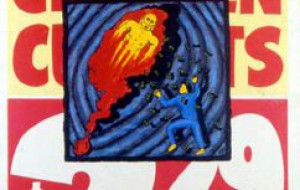
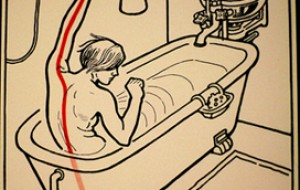
Since we’re talking “shock” here at Art21, I decided to plug the word into Flickr to see what it’d turn up. It was a jackpot. I discovered a set of graphic designs from a 1932 German book that featured dozens of renderings of ways in which you can die (or get seriously hurt) by electric shock. It’s freaky.
The set of images, dutifully photographed by mechanical wiz Bre Pettis during a trip to the Technisches Museum in Vienna, are irresistible. They come from Electroschutz in 132 Bildern, a pre-War tome about which I know next to nothing, and whose exact purpose eludes me. But the drawings rock (or is it shock?)—stark Raymond Pettibon-meets-Los. Bros.-Hernandez-meets Alfred Kubin-style imagery that just drips with the anticipation of something big. The red arrows over the black-and-white figures beckon clinically, like instructions: Grab lamp with frayed wiring. Put foot in tub. Electrocute. Simple, yet absurd. And totally macabre and grody.
Here’s a round-up of my 10 favorite shocking images from the set. Do not try this at home.
Crying Wolf

Here’s one of the biggest problem with controversy in contemporary art: once it sparks, people stop really looking.
I didn’t see UCLA’s Wight Biennial this year. LA Times critic Christopher Knight didn’t see it. And it’s quite possible that Diane Haithman, also of the LA Times, didn’t see it either. Nonetheless, we all felt compelled to respond to the “dust up” that occurred when a certain piece was removed from the exhibition without the artist’s consent.
Using an event or artwork that you haven’t actually experienced to talk about issues you think are important can be an immensely problematic move. But it’s a move people make all the time, especially in fields like journalism, where quick turnaround is the name of the game. And while commenting on what you haven’t experienced sometimes leads to interesting discussions, this kind of negligence is almost always bad for the art.
As controversies go, the 2008 Wight Biennial is a fairly small one, but that doesn’t mean it’s not indicative of what often happens when artwork becomes the focus of press-fueled debate. The Wight controversy, as I first encountered it in the LA Times and White Hot Magazine, went something like this…
The Wight, a bi-yearly student-curated exhibition at UCLA, is nearly installed. On September 23, artist Maya Lujan arranges her large-scale work, White Magic and Xanadu, in the gallery, hanging a black velvet mandala on the wall. The next day, she receives an email from Alex Segade, Matthias Merkel Hess, Jennifer Gradecki and Wu Ingrid Tsang, the show’s curators, asking her if the wall piece is necessary. She enters the gallery on September 25, the night of the opening, and finds that her mandala has been de-installed without her permission. A showdown of sorts ensues (and now I’m referencing White Hot’s account), in which the curators tell Lujan to either accept the removal of her wall piece or to de-install the whole work. Lujan chooses to remain in the show and, in the aftermath of this purported censorship, it is suggested that the curators were unsettled by the mandala’s resemblance to a swastika. Perhaps they removed it so as to avoid controversy.
This story could certainly be (and has been, for a handful of bloggers and art writers) the basis for some age-old conversations about censorship, the power of symbols, the artist’s freedom of expression, the license of curators, etc. But what if these are just default issues that become easy to talk about whenever art “controversies” arise? Swastikas are loaded symbols and censorship certainly has a sordid history, but what happened in a small, student-curated exhibition full of emerging artists is likely a little more complicated.
Wight curator Alex Segade said of the Times‘ coverage of the show, “I noticed the knee-jerk suggestion that the students or the department were too ‘politically correct’ to show [Lujan’s] piece. The article played right into a simplistic view of art school that simply isn’t its reality.” According to Segade, “we had explicit depictions of anal sex, a vagina smoking a cigarette, and posters of the logo for the SLA, a terrorist group, in the show.” The Wight’s curatorial committee was by no means averse to provocation, which suggests that the swastika-related censorship claim may be a slack abbreviation of the decisions made surrounding the exhibition.
“I have wondered why the work itself has not been considered on a critical level, and why other work in the show has gotten no attention at all,” Jennifer Gradecki, also a member of the curatorial committee, wrote via email. “As a student and an artist, this emphasis is disconcerting.”
I’m a big fan of what Jennifer Doyle said in her recent post on this blog, about how even the simplest works of art often contain some difficulty. Art, especially thoughtful art, should be difficult. It should take time. It should be experienced, considered and reconsidered, before it’s really done its job. The problem with the over-simplification that usually accompanies art world controversies is that the art doesn’t get its due.
here.
Difficulty, Part 2: Bad Feelings

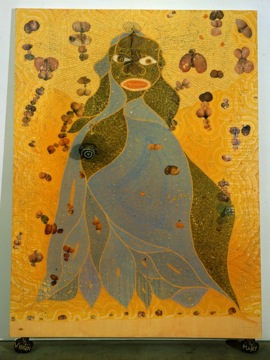
Chris Ofili, Holy Virgin Mary (1996)
I started thinking about the word “difficulty” in relation to controversial art because the things in art which grab me, even shock me, rarely line up with the scandal that art produces. The first time I saw Ofili’s Holy Virgin Mary, I was shocked by its color-saturated beauty and then totally freaked out by the beaver shot-butterflies, which I only understood as porn clippings when I was within a couple feet of the canvas. It’s a chilling and eloquent visual comment on colonial desire—on the art world’s hope of “discovering some new form of Hottentot” (in the words of Rebecca Harding Davis).
Controversial art often challenges the production and regulation of pleasure in museums and galleries. We are taught to expect very specific forms of pleasure from visual art. And the range of feeling allowed the spectator in the museum seems much narrower than that which we enjoy in other spaces. Artworks can be difficult in their affective intensity—in other words, when they describe and provoke “bad feelings” like sadness, anger, or anxiety.
Why are we prepared to accept the value of “feeling bad” when we read a novel, but not when we go to our museums? Why is it “easier” for us to watch an upsetting movie than it is to keep company with contemporary art that makes similar emotional demands on us? Continue reading »
Difficulty, Part 1: Deceptive Forms of Simplicity
What if, instead of talking about what makes an artwork controversial, we focused on what makes an artwork difficult?
Difficulty has long functioned as a keyword in poetics and music criticism. Generally, when a literary critic identifies a poem as “difficult” she makes no value judgment; the word is used to describe the poem’s accessibility (not only in terms of comprehension, but in terms of pleasure as well). A poem can be hard to read—actively so—and still be very good, and very moving. A poem can also be “easy,” accessible, and also be formally elegant and deeply compelling. “Easy” poems are sometimes difficult, though, in that they can be so simple that they challenges our sense of what a poem is (William Carlos Williams wrote poems like this). Similarly, music can be difficult to play, and difficult to listen to—difficulty is part of music’s vocabulary. And, like poems, music can be incredibly simple in its structure and yet be very challenging for the audience (think: John Cage’s 4′33″).
What if, instead of focusing on what makes something controversial, we focused instead on this line between the simple and the difficult? What if we start a conversation about Tony Smith’s Die (1962), for example, with “What makes this hard to talk about?” and “What information do you need in order to ‘get’ this work?” Questions like these help us to understand what lies behind the controversy that certain works leave in their wake.

Tracey Emin, My Bed (1998) and Tony Smith, Die (1962)
For instance: like Smith’s Die, Tracey Emin’s My Bed (1998) is controversial because it looks so simple—Emin’s viewers tend to ask “couldn’t I just exhibit my bed?” and wonder why it “counts” as “Art.” It can be grasped at a glance, but like Die, it also tells stories that can only be accessed via familiarity with its art historical context. Emin’s installation comments on how work by women artists will always be read as personal no matter what they do, so one might as well just exhibit one’s bed. It also, to a certain extent, cites Die. Smith’s six-foot sculpture deliberately recalls the dimensions of a coffin, and, like a coffin—or a bed—it seems to be waiting for a body (this made it famously challenging for Michael Fried, who found it more “theatrical” than “sculptural” and, for this reason, controversial). You can’t “get” that side of art like this without doing a little work yourself. Even the simplest works, in other words, often contain within them their own forms of difficulty.
Andy Warhol, Torso (Double) c. 1982
Andy Warhol loved controversy and made work that was labeled “obscene.” His Torso series openly flirts with pornographic convention. It isn’t formally difficult. It’s easy to figure out what’s going on, and it doesn’t demand that much from us—except in the way that it positions the viewer in a homoerotic relation to the image, which is a challenging experience for some. In that sense, its difficulty, and its controversial dimension, is specific to how the viewer feels about looking at the image.
We arrive at the following question: is simplicity itself what makes some work controversial?