Spring is that time of year when anyone in school, students and teachers alike, are in a frenzied countdown, holding their collective breath until they are officially out for the summer.
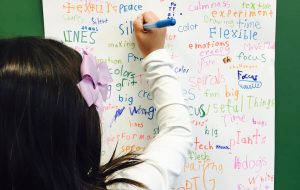
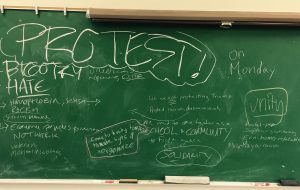
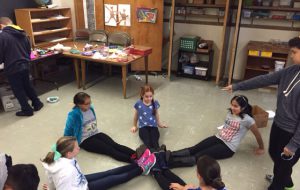
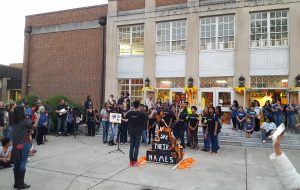
Art21 is excited to announce that soon after the big exhale, an exceptional group of teachers will join us in New York City for the fifth year of Art21 Educators.
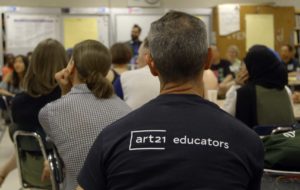
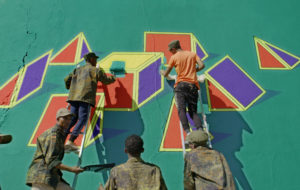
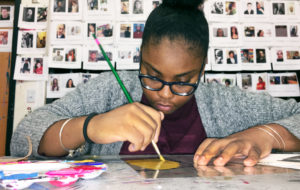
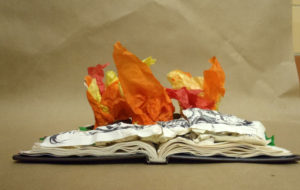
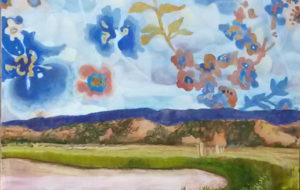
Art21 Educators is a program for practicing teachers, museum educators, artists, and university faculty from a wide range of disciplines. Our alumni and new participants comprise a dynamic community (75 and growing) who are curious and passionate about contemporary art, and committed to transforming education through the work of living artists.
All educators are required to apply with a partner who can provide additional support and feedback, as well as opportunities for collaborative and interdisciplinary teaching. Six pairs are selected annually. Our 2013-2014 Art21 Educators are:
Renee Bareno + Sara Fromboluti, The Aaron School, New York, NY
Carol Barker + Anna Grimes, Turquoise Trail Charter School, Santa Fe, NM
Thomas Dareneau + Domenic Frunzi, Boyertown Area High School, Boyertown, PA
Rebecca Belleville + Eric Pugh, Maritime Industries Academy, and Baltimore Polytechnic Institute, Baltimore, MD, respectively
Ryan Schmidt + Erin Shafkind, South Shore PreK-8, and Nathan Hale High School, Seattle, WA, respectively
Alyssa Greenberg + Rebecca Mir, Jane Addams Hull House Museum, Chicago, IL, and Voelker Orth Museum, Bird Sanctuary and Victorian Garden, Queens, NY, respectively
This July, the group will meet for the first time to participate in eight intense days of workshops and discussions about Art21’s films and curricular resources, which includes visits to galleries, museums, and artists’ studios for intimate conversations with curators and Art21-featured artists. After the summer, we’ll continue working as a group (though virtually) to share the different ways that we are introducing contemporary art and artists in classrooms throughout the country.
Congratulations to this year’s participants!
Editor’s Note: In the coming weeks, we’ll post in-depth profiles of our 2013-2014 Art21 Educators, telling you more about their interests and lives as teachers.
Five Years of Teaching with Contemporary Art
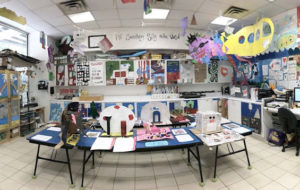
Hindsight is all about understanding something after it has happened. When I go back to my very first post for this column on May 7, 2008 I had only a vague idea about how I was going to write a weekly column that focused on teaching with contemporary art. I had plenty I wanted to share as a new member of Art21’s education team, but was a little doubtful regarding how deep the well was. I mean… every week?
But now I understand the rhythm became a teaching tool for me. It sort of forced reflection when I needed it and allowed for me to share things when it was exciting to do so. Five years and 284 posts later, here we are, in a new place on the Art21 blog, with thematic writing every eight weeks, and Teaching with Contemporary Art posting every other Wednesday afternoon instead of weekly. I can’t say a lightening of the load is unwelcome. It offers an opportunity for digging deeper into the thematic strands Art21 will offer readers and it also allows a little extra time to do the pausing and reflecting that lead to better-quality posts.
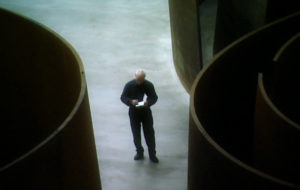
Thinking about the column recently, one thing I realized is how much I love interviews. I love preparing them, participating in them and even occasionally transcribing them (with two fingers, of course). During these past five years I have been lucky enough to share conversations on the blog with Eleanor Antin, Janine Antoni (twice… talk about doubling your pleasure), Tod Lippy of Esopus, and Jessica Hoffmann Davis, not to mention unique and inspiring teachers such as Maureen Hergott and Julia CopperSmith. I’ve learned from talking with each of them that good questions and actual dialogue allow for moments of understanding that really can change practice. More specifically, I think about things like Janine Antoni’s comment on creativity and risk:
The thing that I’m interested in is that the creative process is never in a straight line, so if you teach in a straight line you won’t get the best results. To create you have to be out on a limb and to teach requires the same risk.
Looking backward I can’t help but look forward. Five years from now I hope to still be writing this column, perhaps in a different form. I look forward to more interviews with Art21 artists and contemporary art educators, especially those in our Art21 Educators program. But more than anything else, I look forward to a slow change in the tide, where American education becomes less obsessed with quantification and more obsessed with quality of experience. And I look forward to sharing the place that new visions of art education will have in the shift.
See you in two weeks.
Drawing with the Lights Out
Sometimes the best thing we can do is turn out the lights.
Over the past few weeks my high school freshmen have been looking into why artists use abstraction as a way of making art. To start the unit we viewed the work of Art21-featured artist Elizabeth Murray, and thought about how artists bridge the perceived gap between painting and sculpture. As a result, students created their own works that joined drawing or painting with sculpture. After the first half of the unit we began thinking about how certain kinds of approaches such as exaggeration, simplification, and rearrangement of certain elements, can be ways of utilizing abstraction.
As we looked into a series of classic abstract works—including Marcel Duchamp’s Nude Descending a Staircase (1912), Romare Bearden’s Out Chorus (1979-80), and Joseph Stella’s Brooklyn Bridge (1939)—I decided to go against my inclination to do all of the looking and talking first and sketch later. While the room was simply lit by the glow of the projector, I asked students to identify specific strategies used by each of the artists on the screen and then utilize them while making their own sketches and testing out ideas.
I was surprised by the fact that students did not try to copy the art on the screen but instead tried to incorporate different approaches and strategies in their own ways. When I asked students to utilize abstraction to show movement in some way, they used Duchamp’s Nude Descending a Staircase as a starting point but I didn’t see anyone create their own version of a person on the stairs. While looking into Stella’s Brooklyn Bridge, I asked students to abstract a place they had seen or traveled to and was pleasantly surprised at the fact that there wasn’t another bridge in the bunch. Sketching in the (almost) dark was actually working!
For the longest time I had assumed, wrongly, that students should view a series of images before trying to make sketches inspired by those images. Instead of asking them to be inspired by what they saw it became even more effective in this instance to sketch inspired by what they were actually seeing.
PLEASE NOTE: Starting next month, the Teaching with Contemporary Art column will post every other week beginning May 8, which just happens to be the column’s fifth anniversary (yes, it’s been five years!). We will begin investigating our first thematic strand, “Hindsight,” over the months of May and June. More info on the exciting changes to Art21′s blog to come.
Aperture Makes a Great Magazine Even Better
Periodicals such as Esopus, BOMB and Aperture are some of my very favorite magazines to read and teach with. Between the fantastic artist-on-artist interviews in BOMB and the magazine-as-art quality of Esopus, there is plenty to work with. In the past, I have assigned readings for students to compare, interviews for students to build on, and even specific featured artists to use as a starting point when creating works of their own. But the recent spring edition of Aperture really makes me smile.
Aperture has re-envisioned what was already a high quality magazine and made some beautiful and exciting changes. Aside from the magazine looking even better (their new art directors, A2/SW/HK, have decided to make the magazine slightly larger, expand on the number of pages and use a different coated stock), each issue will, “cohere around an inquiry into a field or topic.”
Sound familiar?
The “relaunch” of Aperture is set up around “a broad set of concerns for photography today” and introduces “a range of vital questions with a view to animating—and reanimating—key ideas on photography.” Some of the questions and topics investigated this spring include What matters now in photography? and Are institutions ready for a new wave of photographic innovation?
As an educator who has a deep interest in the fact that so many students have access to photography and the ability to take pictures, Aperture’s decision to focus future issues on questions and specific thematic topics is a welcome change to a magazine that already had my vote as one of the best periodicals for art educators to teach with.
Bringing Them Back Home

Vija Celmins. “Night Sky #10,” 1994-1995. Oil on linen mounted on wood. 31 x 37 1/2 inches. Courtesy McKee Gallery, New York.
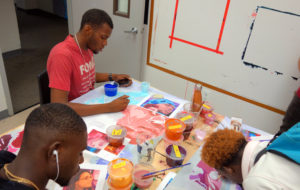
This week, it’s my pleasure to host a group of alumni coming back to the high school in order to help with our second annual Portfolio Day—an in-school trip to the art studio for the purpose of seven straight hours of art making. All students who participate in Portfolio Day are completing two separate portfolios for our advanced Studio Art class and this day is a chance to both add significantly to the portfolios and make art for an extended period of time—usually for a much longer stretch than any of my students have ever spent in one sitting (or standing).
Having a alumni join us in order to give feedback and help during the course of the day allows for students to interact with graduates who are either in college, in the field, or even still struggling to find their way after high school. All offer multiple opportunities to share how engaging with contemporary art—seeing shows, making art, writing about ideas and projects, etc.—broadens the possibilities for reflecting and responding to the world around us.
Maybe one of the best parts about inviting alumni to present workshops, attend Portfolio Days, and gather at special school events involves the process of seeing these young artists (not to mention personalities) develop. While it may be easier to “keep in touch” via social media after our students move on to other schools and places and phases in their lives, there is no substitute for the act of seeing and working with alumni face-to-face in order to bring back home some of the learning and street wisdom that accumulates.
Who are some of your standout students from previous years? Where are they today?
Zarina’s Paper Like Skin
Zarina: Paper Like Skin, on view through April 21 at the Guggenheim Museum in New York, is a must-see for those who haven’t experienced her work in person and/or those who have a love for paper that goes beyond its most popular application as ground for things like drawing, painting, and phone bills. Being someone who fits both categories I was thrilled last week to have the museum’s opening hour on a weekday to really sit with this artist’s work and let it sink in. Zarini Hashmi (the artist goes by her first name only) takes paper beyond being a surface for mark making and allows it to serve as a vehicle for sculpture, mapping, poetry, and even meditation.
One of the many works that caught my attention immediately upon entering the show was woodcut called Dividing Line (2001). While I cannot say why, the combination of title and line, cut at a jagged angle across the paper, was almost enough on its own to introduce the idea of borders, specifically in this case between India and Pakistan. So often we teach about gesture as art educators, but gestures that don’t use the human figure as a starting point aren’t valued nearly as much. This was a case where gesture, a line (in woodcut no less), told an entire story. Further into the exhibit Zarina’s mixed-media works that mapped places she had lived and worked over time, also told stories through a specific way of making marks, guiding the viewer through the story behind the gesture.
Zarina’s pin drawings, created by piercing different sheets of paper hundreds of times with a variety of needles, invited me to sit and meditate on the rhythm of lines, shapes, textures, and the context for this series. Back and forth my eyes traveled across the twenty works and occasionally I had to remind myself that I was in fact looking at holes in the paper and not listening to the quiet rhythm of each work being made. Yet I was. I also contemplated the relationship to, perhaps, Oliver Herring’s knitted sculptures and homage to Ethyl Eichelberger.
If you love paper and are interested in an artist that gets plenty of MPG out of her medium, this is for you. If you teach about and with paper, don’t miss it.
Well Beyond Everyday
If you are even remotely interested in how everyday materials can become bizarre and (sometimes) brilliant sculpture, there are three shows ready and waiting for you in New York’s Chelsea galleries: Nayland Blake’s What Wont Wreng at Matthew Marks; B. Wurtz’s Recent Works at Metro Pictures; and Mark Dion’s two-floor delight titled Drawings, Prints, Multiples and Sculptures at Tanya Bonakdar. In all three cases, viewers (especially contemporary art educators) are treated to new works by artists who are playful with their materials and simultaneously manage to teach us about the issues and concerns that drive their work.
Nayland Blake’s exhibit greets viewers with a vinyl poster of himself—donning a leather cap and harness, black sunglasses, and his signature beard—presented under the name of “The Spectre.” The handful of sculptures and installations on view actually have enough space in the tiny gallery for viewers to examine how Blake incorporates themes of gender, identity, and community in his work as “a modern-day flaneur.” And like any good sculptor, his work invites you to look into vs. at it. I found myself walking around and around works such as Buddy, Buddy, Buddy and Oh, both standouts because of simple layering that allows for a constant mind-game of associations. Continue reading »
Home and (or) Away

William Kentridge creating video animation for “Breathe” (2008) in his studio, Johannesburg, South Africa, 2008. “William Kentridge: Anything Is Possible,” production still, 2010. © Art21, Inc. 2010.
Some of the best field trips actually take place inside the school building.
For the past two years, I have organized a “portfolio day” each spring for my advanced juniors and seniors in order for them to, essentially, be locked in the studio for the day. We set aside one full school day for art making with the intention of adding to their portfolios already in progress. It doesn’t cost the school district anything, we get great gas mileage, and we even order pizza for lunch.
The benefits of having an in-school field trip of this nature are obvious at first: students get to spend an entire day focused on art making instead of one or two periods at a time. They get to work on one or more pieces vs. breaking up their process over many days. I cannot say enough about the progress we made during our first two portfolio days in 2011 and 2012, and am looking forward to a similarly successful day this year.
While many teachers have the ability to take great trips with their classes to museums, cultural institutions, and local art organizations, sometimes it is extremely beneficial to plan a trip to our own classroom studio where the sole focus for the day is an extended stretch shaping student work instead of chopping up the process into much shorter blocks of time. This can allow for not only art making but also important time for reflection, discussion, and stepping back from works in progress in order to really see them.
Teaching with New York Close Up | Liz Magic Laser and David Brooks
If you haven’t checked out New York Close Up lately, you really should.
Two recent films, Liz Magic Laser Talks To The Hand and David Brooks Is In His Element, are just two more examples of how the series can make strong interdisciplinary connections. Both offer viewers the chance to see contemporary artists as researchers, analyzing information learned in order to inform their work. Liz Magic Laser examines hand gestures in contemporary presidential State of the Union addresses as she builds a multi-sensory performance piece. David Brooks, on the other hand, uses his experience as a volunteer with conservation biologists in the Amazon basin region of South America to allow for more opportunities to be “in the field” (literally) and for hands on experience with the wildly diverse ecosystems of the this region—to “witness evolution itself.”
Early in Liz Magic Laser’s piece, just shortly after you find yourself hypnotized by the rhythmic clicking of the camera shutter, the artist describes thinking about “the choreography that is being used to persuade the public.” This intense interest in and examination of gesture, particularly through presidential addresses, becomes a driving force in the collaboration with two Merce Cunningham-trained dancers for her work The Digital Face. Viewers find themselves winding through a systematic and complex investigation into the kinds of things gesture can communicate, which certainly has implications for how students create arguments, art works and even public presentations.
The most recent David Brooks film is likewise a layered glimpse into the “front end” of his art. For Brooks, his work with conservation biologists utilizing a consistent multi-disciplinary approach serves as a model for his own artistic practice. An intriguing part of the film involves the fact that you don’t see one of the sculptures influenced by his volunteer work until the very end, and even then you are left wondering a bit more about what it looks like and what it would be like to walk among the fishes.
Teaching with Liz Magic Laser and David Brooks can include a comparison of how each artist approaches their research differently and how they interact with their collaborators in distinct ways. It can also include a frank discussion about the possibilities when it comes to how contemporary artists approach the creative process.
Time is Running Out: Join Us for Art21 Educators

Marina Abramović, “The Hero”, 2001
Video; 14 minutes 19 seconds
Courtesy the Marina Abramović Archives and Sean Kelly Gallery, New York
One last reminder: There are less than two weeks left to apply for year five of Art21 Educators. Join us for this yearlong professional development experience that begins with a unique and inspiring week in New York City this summer, followed by collaborative work and support from Art21 and new colleagues throughout the 2013-2014 school year.
If you are a K-12 teacher interested in learning more about contemporary art and teaching with contemporary art in your classroom, Art21 Educators is for you. You will have the opportunity to explore ways to enhance your curriculum, visit and talk with Art21 artists, see some beautiful exhibitions, and enjoy a variety of Art21 films…and that’s just our first week together.
To get your application rolling, simply click here. We look forward to meeting you this summer!